 Hal Brands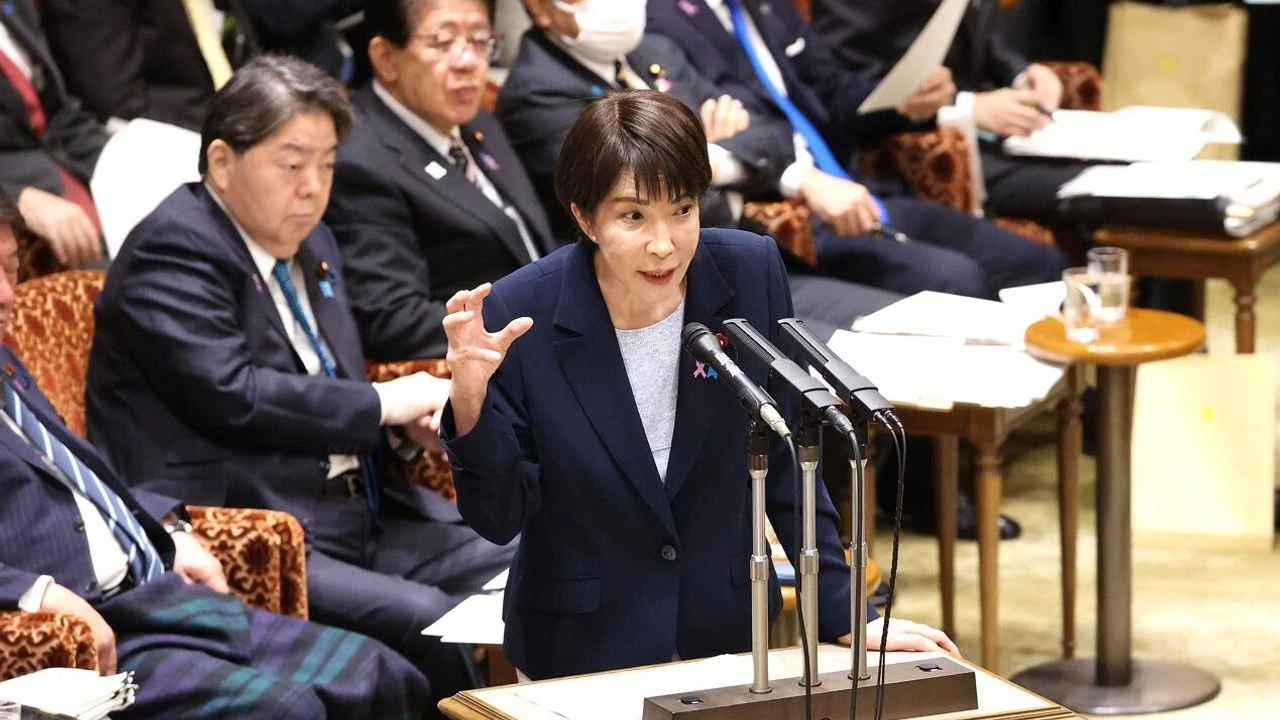

Pity the strategically exposed US ally. Threats from a revisionist cohort, composed of China, Russia and their fellow travelers, are surging. Uncertainty about America’s political stability and geopolitical commitment is becoming more pronounced. It’s an unnerving time for states that have long sheltered under America’s alliance umbrella. Around the world, so-called middle powers are devising strategies to cope with the pressure.
Some of America’s European allies are pursuing strategic autonomy — a continent that can chart its own course in a fragmenting global landscape. Canada’s prime minister, Mark Carney, made himself a Davos darling by saying both the US and China are “using economic integration as weapons” and suggesting that smaller states should buck Beijing and Washington alike. Hedging has become more common, from Southeast Asia to the Middle East. But America’s single most important ally, Japan, has made a different choice.
I recently visited Tokyo, for meetings with national security officials and other leading analysts. It’s not hard to find expressions of concern — however muted — at recent patterns of US conduct. What you won’t hear, from responsible observers, are suggestions that Japan should go it alone or break with the US.
Japan is hugging America tight, even as it invests urgently in its sovereign strengths and alternative relationships. It seeks to raise the collective barriers to Chinese aggrandizement, while managing — and quietly limiting the downsides of — American ambivalence.
As a result, Japan is becoming steadily more valuable to Washington and the stability of the Pacific region. It is also, more subtly, equipping itself for the greater dangers it would face if the US eventually does pull back from the world.
Japan’s strategy represents the best choice for an era in which America is unreliable but indispensable — even if that strategy won’t spare Tokyo from nasty challenges.
A New Age of Foreign Policy
We’re entering the fourth age of modern Japanese foreign policy. Since the 1850s, Japan has repeatedly remade itself in response to sweeping global changes.
In the mid-19th century, the industrial revolution threatened to make Japan a laggard in an era of expanding Western empires. The upshot was the Meiji Restoration and the building of a modern economy and a mighty military. In a few short decades, Japan made itself a major power that thrashed China and later Russia in short, sharp wars.
A second transformation came in the interwar era. After World War I, Japan briefly embraced parliamentary democracy. But after the world economy collapsed and fascist states gained ascendancy during the 1930s, Japan turned to militarism, violent expansion and a quest for a massive, self-sufficient Asian empire. The country briefly conquered nearly a quarter of the world, before conflict with the US brought a shattering defeat.
After that disaster, a third era began, as Japan made peace with US power. Japan’s leaders abandoned an independent foreign policy and came to rely on US protection. The country was democratized under US occupation; it was revived, and then thrived, as part of the Western community. A transformed Japan helped transform East Asia, which came to enjoy unprecedented prosperity, stability and peace.
But today, the global environment is deteriorating, and a fourth transformation is underway. Beijing’s military buildup is challenging Japan in the East China Sea and imperiling the security of the Western Pacific. China is menacing Taiwan, which guards Japan’s southwestern approaches, and spoiling to settle old scores with Tokyo.
Japanese strategists fear that parts of Southeast Asia have already slipped into Beijing’s sphere of influence. Defense planners worry about a Chinese move on the disputed Senkaku Islands or perhaps an invasion, blockade or customs quarantine of Taiwan.
More broadly, the relative peace of the post-Cold War era is giving way to an age of competition and conflict. The international economy is fracturing as rivalry roils trade relations. The environment around Japan has become more perilous than at any time in decades — as questions about the dependability of Tokyo’s superpower patron become more pointed.
Weary Superpower
These doubts are rarely aired in public. At last month’s Shangri-La Dialogue in Singapore, Japanese defense minister Shinjiro Koizumi voiced his belief that America’s commitment to Pacific security remains unwavering — and publicly asked the US defense secretary, Pete Hegseth, to affirm that commitment (he did). Still, the fact that Koizumi asked the question says something.
For years, however, Japanese officials have worried about America’s geopolitical staying power. Nearly two decades ago, US President Barack Obama declared that the US must focus on nation-building at home rather than nation-building abroad. His refusal to enforce his own “red line” against chemical weapons use in Syria sent geopolitical shock waves through Tokyo.
In 2016, presidential candidates of both major parties repudiated the Trans-Pacific Partnership trade agreement (which Japan later helped resurrect as the Comprehensive and Progressive Trans-Pacific Partnership). Then came America’s often erratic, and sometimes abrasive, diplomacy in the time of President Donald Trump.
The basic view in Tokyo is that blowback from the excesses of globalization, and the excesses of America’s post-9/11 wars in the Middle East, plunged the US into protracted geopolitical fatigue and political upheaval. Trump himself is both a manifestation of and a catalyst for that upheaval.
In his first term, Trump questioned the value of US alliances. In his second, he has rocked the global economy with tariffs, threatened to steal territory from allies and cast doubt on US security commitments. His chaotic leadership makes it difficult for allies to understand, let alone influence, what is happening in Washington.
His apparent interest in a world split into spheres of influence has ominous implications for democracies in the shadow of Russian or Chinese power. Then there is the impact of still-more recent events.
Trump’s furious assault on Iran in February was an impressive display of US military power: Japanese officials hope that this muscle-flexing will intimidate Moscow and Beijing. But the war also caused global economic pain and depleted US weapons stockpiles. It diverted US military units from the Pacific and caused delays in the sale of Tomahawk cruise missiles to Japan.
More fundamentally, the war has raised questions about the quality of US decision-making, given that Trump blundered his way into — and has struggled to get out of — a long, messy crisis. Meanwhile, Trump’s recent diplomatic détente with China, and his public ambivalence about US support for Taiwan, raises eyebrows in Japan.
To be clear, Japanese security officials see value in Trump’s calls for allies to spend more on defense. No one I spoke to believes that America is in irreversible decline. But they worry that the US is entering a period of internal conflict and geopolitical unreliability. That problem, one close observer of Japanese strategy told me, is the “unspoken agenda” whenever the country’s diplomats confer with Asian counterparts.
This is an epic challenge for a country that has flourished in the world America created. And it has elicited a remarkably ambitious response.
Binging on Defense
That response began to cohere well before the current prime minister, Sanae Takaichi, took office. Nearly 20 years ago, Shinzo Abe sought to jettison Japan’s historical baggage and make it a “normal nation.” During his second stint as prime minister, in the 2010s, Abe pushed back against Chinese expansion by positioning Japan as a staunch defender of a free and open Indo-Pacific.
In recent years, Japan has vastly raised defense spending. Tokyo has supported Ukraine against Russian aggression while contesting Chinese coercion in the Western Pacific. Takaichi’s immediate predecessor, Shigeru Ishiba, declared that Japan must “confront the realities of the severe security environment.” And now, Takaichi — a political protégé of Abe who won a landslide election in February — is poised to carry Japanese grand strategy forward, through a three-pronged approach.
The first prong involves strengthening Japan by scaling up its own capabilities. Military spending has nearly doubled since 2022, from 1% to 2% of GDP. Japanese officials say that this aggressive rise will continue: Although the precise target remains hazy, Tokyo may well be spending 3% of GDP or higher by the early 2030s. By that point, Japan could have the world’s third-largest military budget, after China and the US, and a military bristling with long-range missiles, attack submarines, aerial and maritime drones, and other advanced weaponry.
Forthcoming strategy documents — a new National Security Strategy and National Defense Strategy are due at the end of this year — will depict threats starkly as a way of generating public support. The Self-Defense Forces are deploying more sophisticated weapons and stockpiling equipment in Japan’s southwestern islands, near Taiwan.
Japan’s military is also preparing for future wars by incorporating recent lessons. Tokyo is seeking to marshal productive capacity to sustain a protracted war of the sort on display in Ukraine. The SDF is deploying advisers to NATO’s Ukraine command in Germany, to absorb insights about drones, electronic warfare and other tools.
Defense Minister Koizumi and other top officials have even mentioned the possibility that Tokyo might build nuclear-powered attack submarines — a step toward breaking Japan’s nuclear taboo that perhaps could eventually lead to acquiring nuclear weapons. The notion of a quiescent, pacifist Japan is outdated: Tokyo is building the strengths of a military heavyweight.
The second prong of Japanese strategy involves cultivating an extensive network of relationships. For decades, Japan based its foreign policy on a bilateral alliance with Washington. These days, it may be the most enthusiastically multilateral player in the Pacific.
Tokyo has built quasi-alliances, featuring progressively deeper military cooperation, with Australia and the Philippines. Flourishing strategic partnerships link Tokyo to countries from India to Southeast Asia. Japan plays a strong role in the Quad, an informal security grouping of Australia, Japan, India and the US; it is trying to maintain momentum in smoothing its historically fraught relationship with South Korea.
Tokyo has pledged funds to aid Southeast Asian countries, such as Malaysia and Thailand, suffering from high energy prices, lest economic distress open doors to Chinese influence. It is pursuing critical minerals partnerships with Australia, Canada and Indonesia as an answer to Chinese economic pressure.
The forthcoming National Security Strategy will tout “collective autonomy” — the notion Japan can only preserve its freedom of action against hostile powers by working closely with a growing group of friends. Chinese propagandists incessantly warn about the return of Japanese militarism — but in most of Asia, Tokyo’s power is a welcome counterweight to Beijing.
Energetic industrial diplomacy links these first and second prongs. In April, Japan lifted most remaining restrictions on arms exports. It is cutting deals to sell hardware such as missiles and frigates to the Philippines, Australia and other countries. The idea is to strengthen friendly countries — and jump-start a historically lethargic Japanese defense-industrial base so it will be ready for future crises.
New ‘Golden Age’
None of this is meant to displace the alliance with Washington: The third prong of Tokyo’s strategy promotes deeper cooperation with the US.
Japanese leaders have assiduously avoided public spats with Washington, while accommodating US demands for asymmetric trade concessions and massive investment pledges. Takaichi and Trump toasted a “new golden age” for the alliance; the president publicly endorsed the prime minister before her election triumph early this year.
The rhythm of military exercises is intensifying. The SDF and the Pentagon are working to fortify Japan’s southwestern islands as littoral strongpoints, and to build the command arrangements and deep interoperability that will make the alliance fit for battle. China’s rapid nuclear-weapons buildup is encouraging closer collaboration to sustain US extended deterrence. Japan isn’t distancing itself from Washington; it’s trying to anchor the US more firmly in the region.
Indeed, Japan’s Plan A is to make itself stronger and more regionally connected, and thereby make itself a more valuable, more attractive US ally. Of course, the same initiatives also start to flesh out the Plan B Japan will need if the worst happens and the Americans do, one day, go home.
Growing Challenge, Shrinking Population
It’s no exaggeration to call this a revolution in Japanese foreign policy. The country’s political leadership is convinced that bold moves are needed for survival; a cadre of powerful civil servants, many of whom have eyed China warily for a generation, is steering the bureaucracy in that direction.
Amid danger and uncertainty, the democratic world needs a Japan with greater heft and energy. The reforms of Takaichi and her predecessors should solidify Japan’s status as America’s most vital ally — the country whose capabilities and cooperation are essential to balancing Chinese power and preserving a congenial world. But don’t underestimate the challenges ahead.
One challenge is that democratic resistance earns autocratic enmity: Japan’s policies make it a target for Beijing. In November, Takaichi said that Japan would view a Chinese blockade of Taiwan as a life-or-death situation, implying that Tokyo might have no choice but to get involved. China’s response was calculated fury.
The Chinese consul general in Osaka threatened to behead Takaichi on social media. (The post was quickly deleted.) China conducted aggressive maneuvers in the East China Sea and imposed economic sanctions on Japan involving heavy machinery and shipbuilding. Beijing is trying to make an example of the Japanese prime minister; higher levels of pressure and coercion are likely the new normal for Japan.
Second, there’s uncertainty about whether Japan and its friends can keep pace with the Chinese challenge. Beijing’s buildup, conventional and nuclear, is unrelenting. Chinese military activities are expanding: One Japanese official told me he never imagined he’d see two Chinese aircraft carriers operating beyond the First Island Chain — the string of islands running from Japan southward to Indonesia — as they first did last year.
Despite the efforts to create greater regional connectivity, the Western Pacific still lacks a firm multilateral framework for meeting aggression. China’s military capabilities are increasing faster than America, Japan and their friends have been able to respond. In Tokyo, a stove-piped bureaucracy can be frustratingly sluggish on economic security and other pressing issues. Japan is raising its game impressively, but it may not be enough.
Third, the price of Tokyo’s ambition will be steep. Takaichi has elevated security above solvency. She has thrown fiscal caution to the wind by raising defense spending while also seeking to slash consumption taxes.
Energy subsidies, brought on by the Persian Gulf crisis, are further straining the budget. The government has few answers for how Japan will ultimately pay for its defense buildup, risking a bond-market revolt that could stop Takaichi’s program in its tracks.
The fourth challenge is existential. Japan’s demographic trajectory is abysmal: In 2024 its fertility rate of births per woman was just 1.1 (far below the replacement level of 2.0). The country’s population will plummet in the next few decades, further taxing the economy. A shrinking military-age population will make it far harder for the Self-Defense Forces to fill their ranks.
Pathways for immigration are expanding. But Japan’s homogeneous society lacks a culture of assimilation that helps new arrivals become Japanese. In the near term, Japan is bulking up geopolitically. Over the longer term, it faces stark, catastrophic decline.
The Era of Japanese Power
Challenges are inevitable: The one-two punch of Chinese assertiveness and American belligerence is battering the global order under which Japan prospered. In fraught conditions, all paths forward are dangerous. But Japan’s approach is tailored to the realities of our time.
Pulling the US close remains imperative, because, for the foreseeable future at least, there is no other option for checking Chinese power. Broadening Japanese relationships is vital, because greater collective effort will be required to salvage an environment in which Japan and its friends can flourish. Hedging against American retrenchment is prudent, but fretting loudly about the prospect pays few dividends — and feuding openly with Washington pays fewer still.
Japanese strategy recognizes stubborn facts, even while subtly positioning the country for worst-case futures. Tokyo, Washington and other democratic societies around the globe will fare better if the coming age of peril is also a new era of Japanese power.
Source: https://www.aei.org/op-eds/japan-is-becoming-the-superpower-of-the-middle-powers/