 Troy Stangarone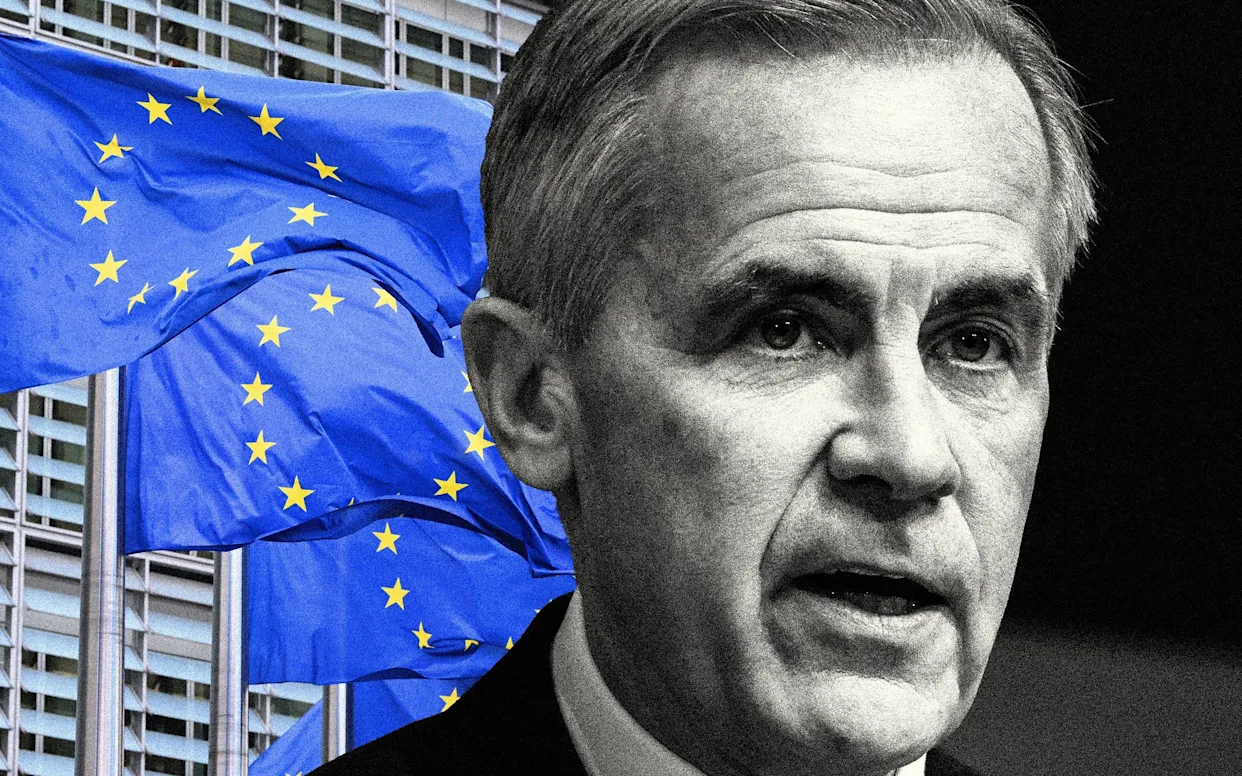

Since the outbreak of the Iran War, the world’s middle powers have not acted to secure their mutual interests through cooperation.
When Canadian Prime Minister Mark Carney announced to an audience at the 2026 Davos Conference, “We are in the midst of a rupture, not a transition,” he was speaking to a world struggling to adapt to geopolitical shifts and a United States turning away from international leadership. In calling for middle powers to work together, he presented a path forward shaped by common values rather than an unrestrained superpower. But achieving that vision requires action. With the global economy strained by the Iran War, Carney has so far missed a defining opportunity to put his call for cooperation into practice.
Since Iran declared the Strait of Hormuz closed on March 4, 20 percent of the world’s LNG and crude oil have been blocked. Production has fallen sharply as well. Output from OPEC member states declined by nearly 8 million barrels per day in March, significantly more than the extra 1 million barrels per day supplied by the United States. The result is a cascading shortage of crude oil, jet fuel, fertilizer, and industrial feedstocks such as naphtha, now rippling across global supply chains.
Despite the scale of the shortages, there has been little coordination among countries to handle the ripple effects from the disruptions. The lone exception has been British Prime Minister Keir Starmer’s efforts to build a coalition to provide maritime security in the Strait of Hormuz once the conflict ends. Instead, the response has been fragmented, reactive, and overwhelmingly focused on domestic repercussions rather than collective problem‑solving.
Although the International Energy Agency coordinated an initial release of crude from strategic reserves, it has not attempted a broader effort to direct supplies to the countries facing the most acute shortages. At the same time, major exporters of refined petroleum products are restricting supply, heightening shortages elsewhere.
This lack of coordination is especially pronounced in Asia, where many countries depend on Persian Gulf energy. China, a major producer of refined products, is supplying only limited amounts of fuel. South Korea, another key exporter, capped most refined petroleum exports at their 2025 monthly level and imposed tighter restrictions on the industrial feedstock naphtha. Seoul is also the world’s largest exporter of jet fuel, but demand for higher‑value products has also sharply reduced Korea’s jet‑fuel exports.
Despite having some of the world’s largest crude oil reserves, Japan initially signaled that any releases from its strategic petroleum reserves would be for domestic use rather than to support countries such as Vietnam facing shortages. Still, more recently, it signaled it would ensure normal supplies to Australia.
In the absence of coordinated action, countries are striking bilateral deals. South Korea reached an understanding to be the priority destination for crude from the United Arab Emirates and has reportedly secured an additional 273 million barrels of crude from various countries. It is also expected to import naphtha from Russia. Japan has taken a similar approach, seeking new supplies from the United States, Russia, Brazil, and others. These deals may ease domestic pressure, but they do little to stabilize global markets or support more vulnerable states.
This leadership vacuum reflects a deeper structural problem. If the United States is stepping away from its traditional leadership role and China is unwilling to take up the mantle, the world is left without a central coordinator in a crisis. This gap creates space—and necessity—for the kind of middle‑power cooperation Carney described.
What is needed, rather than ad hoc responses, is a loose coalition capable of managing supply shortages. Traditionally, this would have been overseen by the United States. During the 2008 financial crisis, Washington elevated the G20 to a global coordinating body and brought countries together to manage the response. But with Washington focused on an “America First” agenda that looks to allies to support its goals rather than help allies and partners manage the consequences of its actions, leadership needs to come from new sources.
Japan is slowly stepping into this role, having recently announced it would provide $10 billion in financial support to help Southeast Asian countries purchase oil on the global market. It is a meaningful step, but not yet a strategy. With the Middle East truce in a fragile state and significant time needed once a peace agreement is reached to restore supplies, what the world still needs is deeper cooperation to move supplies where they are most needed.
Canada can play a central role in this effort. As a major energy producer with diplomatic reach, it was well-positioned to coordinate during the crisis. The first step should have been a clear, data‑driven assessment of global supply levels and emerging shortages. With that foundation, middle‑power cooperation could have helped smooth disruptions and reduce the economic shock of the war through coordination.
As Carney noted in Davos, these are more challenging times. If middle powers are going to take on a greater role in world affairs—whether because the United States pushes them to do so or out of necessity to preserve an international order that has benefited them—they need to stress-test their abilities during a real-world crisis and support a larger interest than their own. The US‑Israeli war against Iran offered a prime opportunity for such leadership, and countries could still benefit from coordinated action, with uncertainty around when the Strait of Hormuz will open. For now, Carney’s call to action remains unfulfilled.
*Troy Stangarone is a non-resident fellow at the Carnegie Mellon Institute for Strategy and Technology. Previously, he was the director of the Hyundai Motor-Korea Foundation Center for Korean History and Public Policy and the Deputy Director of the Wilson Center’s Indo-Pacific Program. Mr. Stangarone is also currently a columnist for The Korea Times and The Hankook Ilbo, as well as a contributing author for The Diplomat. He is co-chair of the Steering Committee for the North Korea Economic Forum at the George Washington Institute for Korean Studies and a member of the Korea-America Student Conference’s National Advisory Committee.
Source: https://nationalinterest.org/feature/where-are-mark-carneys-middle-powers