 Adnan Boynukara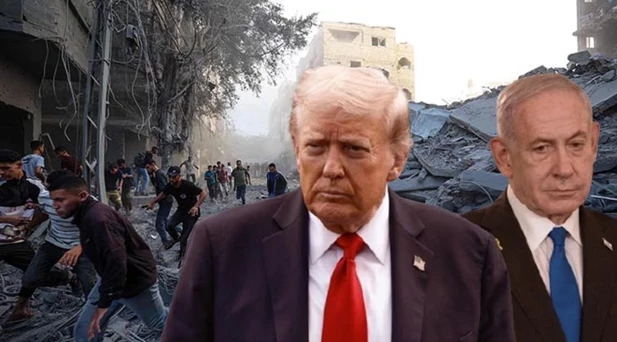

The war in Gaza has not only shattered the lives of millions of Palestinians; it has also wounded the conscience of the world. For months, images poured in without pause— the ruins of Gaza City, displaced families, bombed hospitals, schools, and places of worship… While the physical destruction continued, a deeper rupture emerged: two intertwined crises defining global politics.
The first is the Israel problem: decades of occupation, massacres, excessive military force, and the continuation of all this without any sanctions. Israel has become the main threat to global security and peace. The second is the automatic, unquestioning support of Israel by various institutions of the United States (US)—such as the Senate, Congress, foreign policy, defense, and intelligence. This support, driven by the influence of a political and bureaucratic elite, presents a significant problem for the country both morally and strategically. These two problems expose the collapse of a world order that once claimed to defend justice, law, and human dignity.
The Israel Problem: Impunity, Occupation, and Massacre
Israel has been occupying Palestinian territories in violation of international law for more than half a century. United Nations resolutions have called for a political solution involving Israel’s withdrawal, the recognition of Palestinian rights, and guarantees for their sovereignty. Despite these resolutions, the occupation has deepened, and the violence has reached genocidal levels. Legal experts, human rights organizations, and even some Israelis describe the current administration as apartheid. The most recent occupation of Gaza is not an isolated incident, but part of an ongoing structural problem of a permanent siege.
The Israeli government justifies every massacre it commits by invoking the “right to self-defense.” However, mass killings, the destruction of civilian infrastructure, the obstruction of access to basic needs, and even the targeting of hospitals render this justification void. Each cycle of violence further deepens the moral chasm between Israel’s security narrative and the humanitarian catastrophe. Practices once presented as temporary control measures have, in effect, become indefinite policies of domination.
The settlement of Israelis on Palestinian property, land annexation, and daily movement restrictions are not byproducts of the conflict, but the infrastructure of a regime of asymmetry. In other words, they are the system that perpetuates the imbalance of power between the parties, and the structures and practices that enable this system to function. At its core, the Israel problem stems from a mindset that, enabled by US vetoes and abstentions at the UN, makes the occupation of Palestinian territories, the seizure of property, and the normalization of civilian casualties possible.
The US Problem: Unconditional Support and Surrender
The role of the United States in this equation goes far beyond that of a mere ally. The US is the patron, protector, financier, and political facilitator. For decades, Washington has financed Israel’s military power, acted as the greatest obstacle to international accountability, and exhausted its own credibility by repeating Israel’s narratives. American taxpayers provide Israel with billions of dollars in military aid every year. US diplomats routinely veto resolutions in international forums calling for ceasefires or investigations into human rights violations. Within the American political class, criticizing Israel is taboo, and questioning the relationship invites accusations of disloyalty or antisemitism.
This situation has created a state of political paralysis, preventing the US from acting in accordance with the principles it claims to uphold. It “defends” human rights in Ukraine but blocks investigations in Gaza. It constantly invokes the notion of democracy while financing occupation. It condemns war crimes in some regions while ignoring those in Gaza. The cost of this is not limited to human lives; it is also the moral degradation of power. The US elite’s submission to Israel’s political priorities has particularly undermined Washington’s diplomatic credibility worldwide. From Africa to Latin America to Asia, many countries perceive the US’s human rights rhetoric as selective, calculated, and interest-driven.
The US-Israel relationship was once justified as a strategic alliance in an unstable region. Today, that relationship has evolved into a complex structure shaped more by ideological and religious allegiances and balances of interest than by strategy. Political elites in the US offer unconditional support for Israel based on a belief in power and religious supremacy. As a result, the emerging US-Israel issue is no longer merely a matter of policy—it is also a matter of identity.
The Changing Moral Geography of the World
What has unfolded in Gaza has also reshaped the moral geography of global politics. For decades, Western states—led by the United States—claimed to define the moral standards of the international system. They drafted human rights treaties, funded humanitarian institutions, and positioned themselves as the guardians of law and freedom. However, Gaza has exposed a fundamental double standard. When international law is applied to Russia, the West demands accountability. When the same law is applied to Israel, it is deemed “politicized.” This inconsistency is clearly visible to the rest of the world. The agitation displayed by some Western leaders in their efforts to cover up Israeli massacres is a concrete indication of the extent of moral decay and the erosion of values.
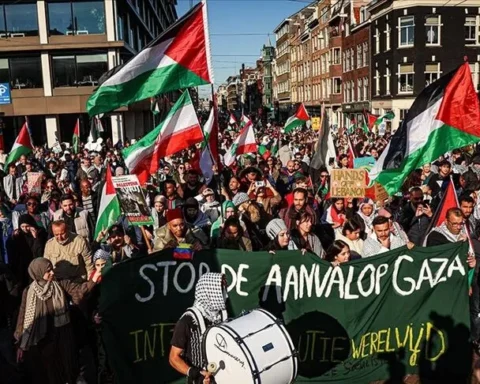
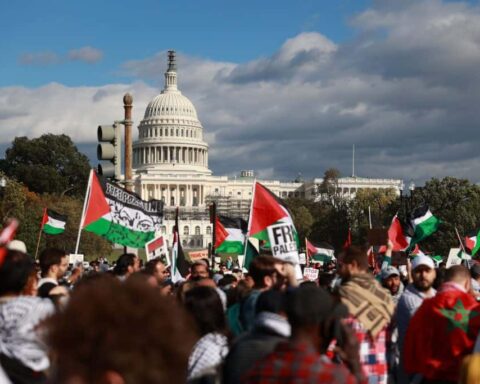
Globally, the crisis has accelerated a long-accumulating transformation. The West’s monopoly on “moral legitimacy” is no longer accepted. Countries that once remained silent now speak the language of decolonization, solidarity, and justice. Movements across Asia, Africa, and Latin America view Palestine not as a regional issue but as a symbol of a broader struggle against the arrogance of old and new empires. In Western societies as well, public opinion has shifted. People are now questioning the moral foundations of unconditional support for Israel—because they see the pursuit of justice for Palestinians as a moral imperative consistent with universal values.
The Price of Moral Blindness
The tragedy is that both Israel and the United States have lost the moral capital that once supported their legitimacy. Israel’s entrenched policies of seizing Palestinian property and ongoing occupation are deepening its international isolation. In the case of the US, its blind defense of Israel’s actions and its use of human rights and the rule of law as instruments of strategic interest have revealed the insincerity of its claims. This moral blindness is the result of a deliberate political choice. In other words, rather than doing what is right, leaders shape their decisions based on fears of potential backlash stemming from the corrupt relationships they are entangled in. In Washington, bipartisan allegiance to Israel has become a theological matter. In Tel Aviv, military superiority has replaced political imagination. The result is a partnership based not on the values of justice and peace, but on ideology, religion, and inertia.
A New Moral Order
The war in Gaza has revealed the collapse of the old order. The world cannot accept a hierarchy when it comes to the protection of humanity. The life of a Palestinian child cannot be worth less than that of an Israeli child. The principles of international law cannot be subject to alliances or partnerships. To resolve the “Israel problem,” the world must demand true accountability. This requires independent investigations, the elimination of impunity, and the enforcement of international decisions. States cannot defend human rights on one hand while financing human rights violations on the other.
For the United States to resolve its problem, its citizens must recognize that the country is being led by individuals who unconditionally support the policies of its key institutions—such as the Senate, Congress, foreign policy, homeland security, defense, and intelligence—toward Israel. Nevertheless, it is important to deepen and sustain the debates that began with the occupation of Gaza. Let us not forget: a democracy that cannot be questioned cannot renew itself. This crisis demonstrates that the challenge facing the global community is not merely political but also moral. Therefore, it is necessary to build a new international morality—one that is based on equality, law, and humanity, and does not bow to power.
Regaining Conscience
The war in Gaza has made one thing clear: the crisis is no longer confined to the Middle East. What is happening is a test of the world’s moral integrity. To speak of peace while tolerating permanent occupation is hypocrisy. To claim leadership while ignoring the law is self-deception. The “Israel problem” and the “US problem” are, in fact, the same problem. It is a problem of power severed from conscience, morality, and human values. History shows that empires collapse not only through overexpansion but also through moral exhaustion. Unless both countries and their supporters bridge the gap between their ideals and their actions, this exhaustion will only deepen.
This is a time not only for political realignment but for moral awakening. The world no longer needs “protectors” or “guardians.” What is needed is truth, justice, and courage. No nation is above the law, and no people are beneath it. Let us not forget: if our conscience falls silent, power will impose its own rules. After all the massacres that have taken place, the world can no longer remain a bystander. Each of us must take responsibility on behalf of humanity. The right to life of a Palestinian child is equal to the right to life of every child. Therefore, the law must not be subject to alliances or balances of interest. History has recorded the downfall of societies and leaders who failed to demonstrate moral awakening.
Now is the time to act for justice, equality, and humanity.