
 Jonas E. Alexis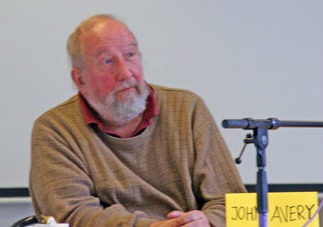

An Interview with Mathematical Physicist and Theoretical Chemist John Scales Avery
The late John Scales Avery earned a B.Sc. in Theoretical Physics from MIT and an M.Sc. from the University of Chicago. He later studied theoretical chemistry at the University of London, where he received his Ph.D. in 1965. Avery served as an Associate Professor in the Department of Chemistry at the University of Copenhagen and later held the title of Lektor Emeritus. He authored dozens of technical articles published in scientific journals and wrote numerous books and works on mathematics and science. Among these is Calculus and Differential Equations (Copenhagen: University of Copenhagen Press, 2004).
Jonas E. Alexis
————————-
JEA: I have enjoyed your writing very much. You argue that:
“Nations possessing nuclear weapons threaten each other with ‘Mutually Assured Destruction,’ which has the very appropriate acronym MAD. What does this mean? Does it mean that civilians are being protected? Not at all. Instead, they are threatened with complete destruction. Civilians here play the role of hostages in the power games of their leaders.”
You also told me that our leaders “do not have a correct imaginative idea of what a nuclear war would be like. The lack of understanding was similar to the situation just prior to World War I. Science and technology had changed the character of war, but leaders had not understood the full extent of the change.”
As a noted mathematical physicist and theoretical chemist, could you describe what a nuclear war would actually be like? What would be the immediate and long-term consequences for human life, the environment, global civilization, and future generations?
JSA: Physicists like myself bear the collective responsibility of having opened Pandora’s box of nuclear fission on a world that is completely unprepared to deal with these new and dangerous powers. Albert Einstein summarized the situation very well when he said: “The unleashed power of the atom has changed everything except our ways of thinking, and thus we drift towards unparalleled catastrophes.”
Science and technology have completely changed the character of war, and this is especially true of nuclear war, which today has the potential to destroy not only human civilization but also much of the biosphere.
As bad as conventional arms and conventional weapons may be, it is the possibility of a catastrophic nuclear war that poses the greatest threat to humanity. There are today roughly 15,000 nuclear warheads in the world, with an explosive power equal to roughly half a million Hiroshima bombs.
To multiply the tragedy of Hiroshima by a factor of half a million makes an enormous difference, not only quantitatively, but also qualitatively. Experts who have studied the question believe that a nuclear catastrophe today would inflict irreversible damage on our civilization, genetic pool, and environment.
High-yield nuclear weapons exploded near the earth’s surface would put large amounts of dust into the upper atmosphere. Nuclear weapons exploded over cities, forests, oilfields, and refineries would produce firestorms of the type experienced in Dresden and Hamburg after incendiary bombings during the Second World War.
The combination of high-altitude dust and lower altitude soot would prevent sunlight from reaching the earth’s surface, and the degree of obscuration would be extremely high for a wide range of scenarios. Global agriculture would be damaged to such that a famine involving billions of people would result.
One argument that has been used in favor of nuclear weapons is that no sane political leader would employ them. The idea of Mutually Assured Deterrence (MAD) rests on this flimsy assumption. However, the concept of deterrence ignores the possibility of war by accident or miscalculation, a danger that has been increased by nuclear proliferation and by the use of computers with very quick reaction times to control weapons systems.
I believe that the blindness of our leaders today is analogous to the errors of leadership that led to World War I. None of the power-holders who started that catastrophe war had any idea what it would be like. In spite of the massive casualties that had been produced by the use of breach-loading rifles during the American civil war; in spite of the deadly effectiveness of the machine guns used by colonial powers in Africa and elsewhere, Europe’s leaders seemed to be unaware of the extent to which science and technology had changed the character of war.
The start of World War I has another lesson to teach us: What started as a small Austrian operation to punish Serbia, escalated uncontrollably into a global disaster. There is a danger that “limited” NATO provocations of Russia might also escalate into a global catastrophe.
JEA: You also argue that “when the threat of war is maintained,” certain individuals and institutions benefit from it. Who are these beneficiaries, and what motivates them to support or perpetuate a climate of conflict and insecurity? More specifically, what political, economic, or ideological interests are served by keeping the threat of war alive?
JSA: Because the world spends 1.7 trillion (1.7 thousand billion) dollars each year on armaments, it follows that very many people make their living from war. This is the reason why it is correct to speak of war as a social institution, and also the reason why war persists, although everyone realizes that it is the cause of much of the suffering that inflicts humanity.
We know that war is madness, but it persists. We know that it threatens the future survival of our species, but it persists, entrenched in the attitudes of historians, newspaper editors, and television producers, entrenched in the methods by which politicians finance their campaigns, and entrenched in the financial power of arms manufacturers, entrenched also in the ponderous and costly hardware of war, the fleets of warships, bombers, tanks, nuclear missiles and so on.
It is plain that if the almost unbelievable sums now wasted on armaments were used constructively, most of the pressing problems now facing humanity could be solved, but today the world spends more than 20 times as much per year on weapons as it does on development.
Today’s world is one in which roughly ten million children die each year from diseases related to poverty. Besides this enormous waste of young lives through malnutrition and preventable disease, there is a huge waste of opportunities through inadequate education. The rate of illiteracy in the 25 least developed countries is 80 percent, and the total number of illiterates in the world is estimated to be 800 million.
Meanwhile, every 60 seconds, the world spends roughly 2 million U. S. dollars on armaments. In the United States, giant corporations such as Lockheed and Halburten pocket the Pentagon’s money, but similar arms profiteering occurs throughout the world, even in Sweden. Ironically, the nations most heavily involved in exporting arms to the developing countries are the five permanent members of the UN Security Council.
JEA: In your recent article, “NATO Threatens Europe With Annihilation,” you argue that NATO “is an aggressive tool of the United States” and that it is “threatening to drive Europe into an all-destroying thermonuclear war with Russia.”
Have NATO leaders and policymakers seriously considered the potential human, economic, and environmental costs of such a conflict? If so, why do they continue to pursue policies that increase tensions? What do they hope to gain, and do they believe that the potential benefits outweigh the enormous risks involved?
JSA: Europeans themselves have nothing at all to gain by provoking Russia, and they have everything to lose. However, we are in the habit of relying on the United States for help. We remember World Wars I and II, in both of which US participation was decisive. However today the situation has changed, and European participation in aggressive wars initiated by the US is turning Europe into a target for retaliation. It is time for Europe to declare its independence.
JEA: You have cited former UN Assistant Secretary-General Hans Christof von Sponeck, who argues that NATO “violates the UN Charter and international law.” From your perspective, why do NATO leaders continue to pursue policies that Russia views as unacceptable or threatening? Why has it been so difficult for Western policymakers to recognize and address Russia’s security concerns? Do you believe that the current conflict is, at least in part, the result of an unwillingness to understand how Russia perceives NATO’s actions and expansion?
JSA: Former UN Assistant Secretary-General Hans Christof von Sponeck used the following words to express his opinion that NATO now violates the UN Charter and international law: “In the 1949 North Atlantic Treaty, the Charter of the United Nations was declared to be NATO’s legally binding framework. However, the United Nations’ monopoly of the use of force, especially as specified in Article 51 of the Charter, was no longer accepted according to the 1999 NATO doctrine. NATO’s territorial scope, until then limited to the Euro-Atlantic region, was expanded by its members to include the whole world.”
Article 2 of the UN Charter requires that “All members shall refrain in their international relations from the threat or use of force against the territorial integrity or political independence of any state.” This requirement is somewhat qualified by Article 51, which says that “Nothing in the present Charter shall impair the inherent right of individual or collective self-defense if an armed attack occurs against a Member of the United Nations until the Security Council has taken measures necessary to maintain international peace and security.”
Thus, in general, war is illegal under the UN Charter. Self-defense against an armed attack is permitted, but only for a limited time until the Security Council has had time to act. The United Nations Charter does not permit the threat or use of force in preemptive wars, or to produce regime changes, or for so-called “democratization”, or for the domination of regions that are rich in oil. NATO must not be a party to the threat or use of force for such illegal purposes.
According to Principle VI of the Nuremberg Principles, which were adopted unanimously by the UN General Assembly in 1946: The crimes hereinafter set out are punishable as crimes under international law: a Crimes against peace: (I) Planning, preparation, initiation or waging of a war of aggression or a war in violation of international treaties, agreements or assurances; (ii) Participation in a common plan or conspiracy for the accomplishment of any of the acts mentioned under (I).
Robert H. Jackson, who was the chief United States prosecutor at the Nuremberg trials, said that “To initiate a war of aggression is therefore not only an international crime, it is the supreme international crime, differing from other war crimes in that it contains within itself the accumulated evil of the whole.”
Regarding the feeling of Russians about massive NATO military exercises on its border, we can remember how the United States felt during the Cuban Missile Crisis. At that time, the world came extremely close to an all-destroying thermonuclear war. We might not have such good luck today.
JEA: You conclude your recent article by saying: “Do the people of Europe really want to participate in the madness of aggression against Russia? Of course not! What about European leaders? Why don’t they follow the will of the people and free Europe from bondage to the United States? Have our leaders been bribed? Or have they been blackmailed through personal secrets, discovered by the long arm of NSA spying?”
It has been reported that many people in Europe and other parts of the world oppose NATO’s continued expansion and interventionist policies. Why does NATO present its actions as efforts to promote democracy, security, and freedom, while these policies have contributed to conflict, instability, and human suffering?
JSA: In Europe, in the United States, and in other countries where democracy has been replaced by the oligarchy, all citizens without exception have the duty to work with dedication to restoring “government of the people, by the people and for the people”. But no country has the right to initiate aggressive wars under the pretense of bringing democracy to another country. People have the right life under governments of their own choosing.
JEA: You write, “To save itself from the danger of nuclear annihilation, Europe must declare its independence from America, just as the United States once declared its independence from Britain.” E. Michael Jones, who has been writing on some of these issues for decades, has said something similar. “The greatest threat to the social order,” he declared, “is the United States of America.” Why do you think thinkers such as Jones have reached these conclusions? Are their criticisms rooted in a rejection of democracy and freedom, or are they primarily concerned with the consequences of American foreign policy, military interventions, and global influence?
I maintain that the answer is no. Critics such as Jones do not argue that the United States is a threat to the social order because they oppose democracy or freedom. Rather, they contend that for decades many U.S. policymakers have ignored practical realities and embraced an ideological vision that promises a kind of heaven on earth but repeatedly produces the opposite result.
The wars in Iraq, Afghanistan, Libya, Syria, and the conflict in Ukraine are often cited as examples of policies that were justified in the name of democracy, human rights, or international security but ultimately resulted in instability, destruction, displacement, and prolonged human suffering. The problem is not democracy itself but the tendency of powerful states to pursue ideological goals without fully considering the long-term consequences of their actions.
But trying to suspend the laws of nature is a very small offense compared to what the elites and oligarchs in the United States and Britain have done in the past. The United States and Britain even helped overthrow a democratically elected government in Iran for oil. It is therefore shameful that these same elites continue to talk about “democracy” while spreading their political and ideological ideas throughout much of the Middle East and Europe. What is your view on this?
JSA: In the 1980s, Gorbachev’s reforms effectively granted self-government to the various parts of the Soviet Union, and he himself soon resigned from his post as its leader, since the office was no longer meaningful. Most of the newly independent parts of the old USSR began to introduce market economies, and an astonishing world witnessed a series of unexpected and rapid changes: On September 10, 1989, the Hungarian government opened its border for East German refugees; on November 9, 1989, Berlin Wall was reopened; on December 22, 1989 Brandenburg Gate was opened; and on October 3, 1990, Germany was reunited. The Cold War was over!
This was an opportunity for global cooperation, and an opportunity for a peace dividend through which the colossal sums wasted on wars could be used for constructive purposes. However, the end of the Cold War was seen by neoconservatives as an opportunity for the United States to dominate the world by means of military force as “the world’s sole superpower”. The Project for a New American Century was founded, a think-tank that included Dick Cheney, Donald Rumsfeld, Paul Wolfowitz, William Kristol and Robert Kagan.
Among US powerholders, the mood of triumphalism and exceptionalism has continued ever since. However, today it is clear that in attempting military domination of the entire world, the neoconservatives have bitten off more than they can chew. The lust for world dominance is hubris, a form of collective insanity, and as we know from ancient Greek dramas, hubris is always punished by the gods.
Source: https://www.unz.com/article/are-nato-and-the-oligarchs-pushing-toward-mutually-assured-destruction/