
 James Piereson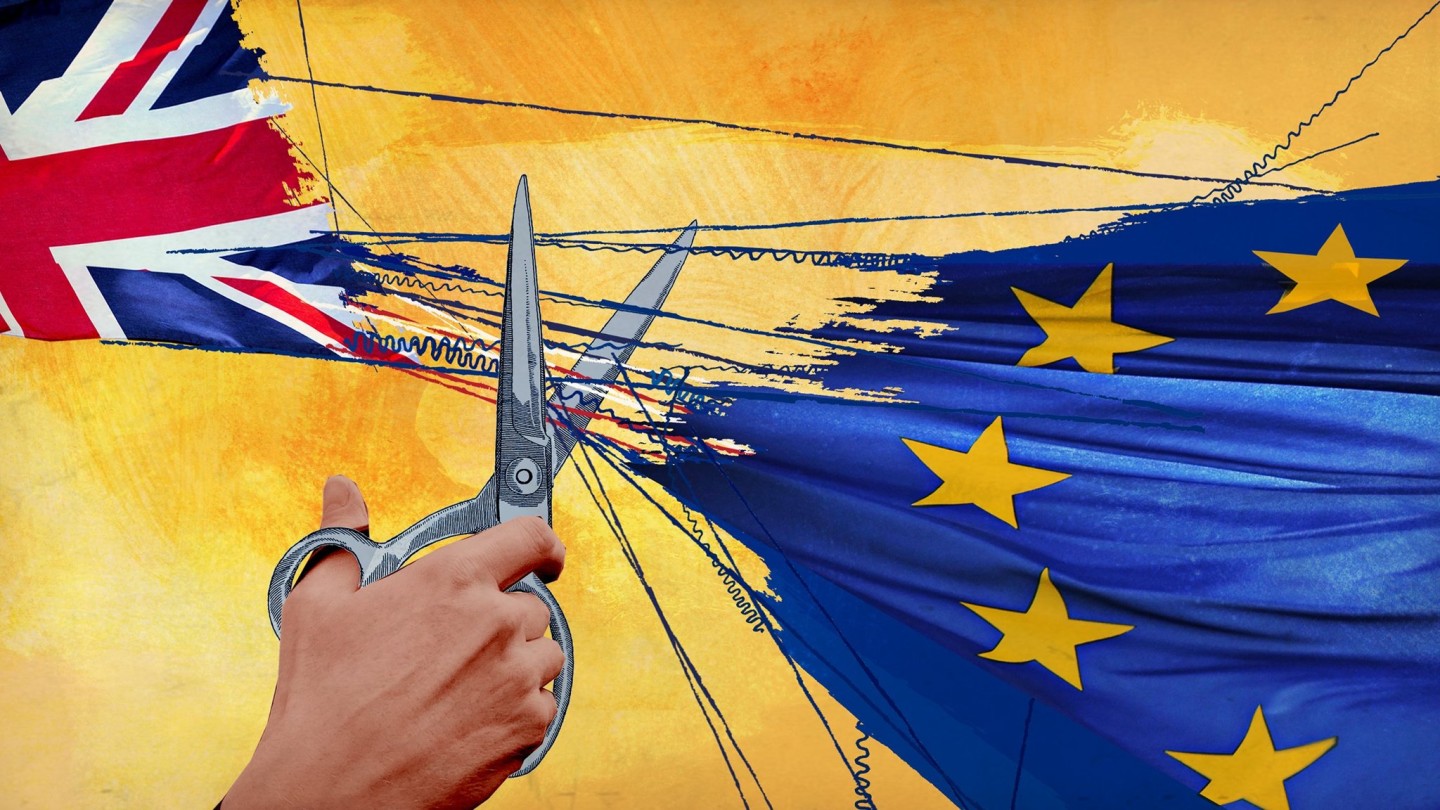

On European economic troubles.
The electoral collapse of the Labour and Conservative Parties in the United Kingdom has caused journalists and opinion columnists once again to blame all of the country’s problems on the 2016 decision by British voters to leave the European Union. This is nothing new: for years writers at leading publications such as The Wall Street Journal and The Economist have forecast that the Brexit vote would cause Britain to fall behind Germany, France, and other continental countries in economic growth and innovation. It is an article of faith in those circles that Brexit was a mistake and is today much regretted by the voters who once supported it. Labour’s catastrophic losses in last week’s local elections have provoked further ruminations along these lines: Britain is now coming apart politically as a delayed consequence of the Brexit vote.
Gerard Baker and Walter Russell Mead, two prominent and generally on-target columnists at The Wall Street Journal, published essays last week blaming Brexit for the lack of enthusiasm expressed by voters for Britain’s two major parties. Mr. Baker wrote an article with the headline “A Decade After Brexit, British Politics Is Coming Apart.” He argues that, ten years after the referendum, it is now clear that voters shot themselves in the foot with the decision to leave the European Union, which has caused “political instability, economic malaise, and social disorder” to become “the hallmarks of modern Britain.” Meanwhile, Mr. Mead contended that Brexit unleashed a wave of populism in Great Britain that has disrupted the major parties without bringing forth constructive alternatives. He notes, correctly, that a populist upsurge has engulfed other countries as well, including Germany and the United States, albeit not as dramatically as has happened in the United Kingdom.
But is it really the case that Brexit is the cause of Britain’s current political and economic woes? It would be more accurate to say that Brexit was a sign or symptom of deeper issues in Britain and Europe that still persist, a decade after that vote.
A large contributing factor to the Brexit vote was a decision by Germany to admit five to six million immigrants into the country between 2014 and 2016, including more than a million refugees fleeing a civil war in Syria. Germany’s leaders had no plan by which these migrants might be assimilated either into Germany or Europe as a whole. By the rules of the European Union, those immigrants, once admitted into one member country, could freely travel across borders to other countries, including Great Britain. Predictably, Germany’s decision led to a rise in crime, disorder, and terrorism across the continent, along with a strong electoral backlash against the governing party.
The British people responded to developments on the Continent in 2016 by voting to leave the European Union. As the leader of the UK Independence Party, Nigel Farage, said at the time, “We have to, in this campaign, make people understand that EU membership and uncontrolled immigration are synonymous with each other.” That may have been an exaggeration, but it is clear that the rising number of foreign migrants was a major issue for British voters.
What, in the minds of their critics, should the British voters have done in response to irresponsible decisions made by foreign leaders with consequences affecting the United Kingdom? If the German chancellor Angela Merkel had not acted as she did, then the Brexit vote almost certainly would have yielded a different result. Political leaders across Europe, along with the journalists who upheld them by repeating their talking points, have themselves to blame for the Brexit vote. Merkel’s decision, however, was not a singular or isolated act. President Biden proceeded to do much the same thing over the course of his term in office by opening America’s southern border to 10–15 million illegal immigrants, with similarly disastrous consequences for the country and his party.
Economic stagnation was another significant factor behind the Brexit vote and remains the main source of discontent in the United Kingdom and continental Europe. The problems caused by unbridled immigration are exacerbated by slow growth that encourages voters to blame economic hardships on immigrants.
Over the past fifteen years, after the global economy recovered from the deep recession of 2008–09, real GDP growth in Great Britain has averaged a meager 1.7 percent per year, or roughly half the rate of growth achieved over several decades from 1960 to 2007. The situation in Germany is even worse. From 2010 through 2025, GDP growth averaged just 1.3 percent per year. The numbers are identical for France: real GDP advanced in that country by an average of 1.3 percent per year from 2010 through 2025.
Nor is it the case that, following the 2016 referendum, the continental powers pulled ahead of Great Britain in economic growth. From 2017 through 2025, the British economy grew at a rate of 1.5 percent per year, Germany at 0.7 percent, and France at 1.5 percent. It is then wrong to argue that, after the Brexit vote, the German and French economies performed at higher levels than the British economy. Indeed, all three economies are stagnating, for reasons that have little or nothing to do with Brexit.
Joseph C. Sternberg, also writing in The Wall Street Journal, noted that the British, German, and French economies have fallen behind the United States over the past fifteen years:
The widening gap between American and European prosperity is among the most important facts of the global economy. The clearest manifestation is the chasm in per capita gross domestic product: $94,400 in the U.S., compared with $65,300 in Germany, $61,000 in the United Kingdom, and $52,000 in France. . . . Since 2007, European per capita incomes have more or less stagnated while the U.S. has enjoyed another growth spurt.
Sternberg wonders what will happen when voters in these countries realize how poor they have become. He need not speculate: the consequences are already apparent in the electoral collapse of the major political parties in those countries.
Voters in Britain, France, and Germany are unhappy with their stagnating economies, which stifle opportunity, impede wage growth, and decrease living standards. Political leaders in all European three countries have adopted ruinous economic policies: heavy regulation, overly generous welfare programs, and (especially) wrongheaded climate policies that drive up energy prices without doing much to improve the environment.
Worse still, these policies have been adopted and approved by leaders on both the left and the right, as we saw in the United Kingdom. In 2020, the Conservative prime minister Boris Johnson unveiled an ambitious climate program designed to ramp up investment in renewable energy and to phase out the use of fossil fuels by 2050. In pursuit of the “green agenda,” there is no substantial difference between the Labour and Conservative Parties. Mr. Johnson, now out of office, recently acknowledged that he “went too far, too fast” in pushing his climate policies.
The two major parties in Germany went even further in this direction, adopting policies designed to have reached “net zero”—the near elimination of emissions from fossil fuels—by 2045. As in the United Kingdom, these policies have led to soaring electricity prices and a backlash from voters, who are moving away from the two major parties, the SPD and the CDU, and toward a new anti-establishment party, Alternative for Germany.
Many critics dismiss this reaction by voters as a new form of populism, but it looks very much like a rational response to a situation in which leaders across the political spectrum have pursued disastrous economic policies.
Europe’s troubles might be fixed, albeit slowly, by new leaders with new policies, as happened with Margaret Thatcher’s revolution in Britain in the 1980s. In practice, this means lower taxes, limits on government spending, encouragement of business and investment, and more realistic climate policies. Writers and editors at The Wall Street Journal and The Economist know all this, which makes one wonder why they continue to blame Britain’s current travails on Brexit.
Source: https://newcriterion.com/dispatch/brexit-is-not-the-cause-of-britains-woes/