 Doç. Dr. Mehmet Rakipoğlu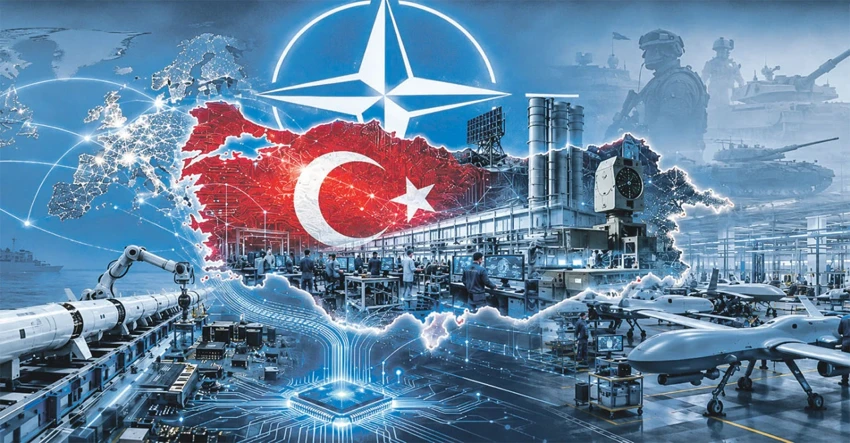

The NATO Summit of Heads of State and Government is being held in Ankara on 7–8 July 2026. This summit carries significance that goes beyond an ordinary meeting of leaders in the Alliance’s 77-year history. Indeed, NATO Secretary General Mark Rutte’s description of the summit as “perhaps even more important than The Hague,” together with U.S. Secretary of State Marco Rubio’s statement that it could be “the most important summit in history,” encapsulates the scale of these expectations. As Türkiye marks the 74th anniversary of its membership in the Alliance, which it joined in 1952, hosting the summit for the second time since the 2004 Istanbul Summit carries symbolic as well as structural significance.
NATO 3.0: A Return to Collective Defense and the Defense Industry Axis
The transatlantic (U.S.–Europe) tensions that deepened with the inauguration of the Trump administration in January 2025 have become increasingly evident through the reduction of the number of U.S. troops stationed in Europe, the transfer of command of NATO’s major regional headquarters (Naples in Italy, Norfolk in the United States, and Brunssum in the Netherlands) to European Allies, and the opening of debate over the position known as “SACEUR”—the Alliance’s highest-ranking military command, which has been held by an American general ever since NATO’s founding. The concept of “NATO 3.0,” shaped within Washington’s policy framework, envisions the Alliance moving away from “non-essential” tasks such as crisis management and cooperative security (that is, activities not directly related to defense, including stabilization and training missions in non-member regions) and returning to pure collective defense—the principle that an attack against one Ally is regarded as an attack against all Allies—and deterrence, that is, appearing strong enough to prevent an adversary from daring to attack. Within U.S. policy circles, this process is referred to as a “return to factory settings.” As Elbridge Colby, Under Secretary of Defense for Policy (the senior official responsible for policy formulation at the U.S. Department of Defense), has emphasized, the end of the post-Cold War era of unipolarity, during which the United States was the world’s sole dominant power, makes it imperative for European Allies to assume significantly greater responsibility.
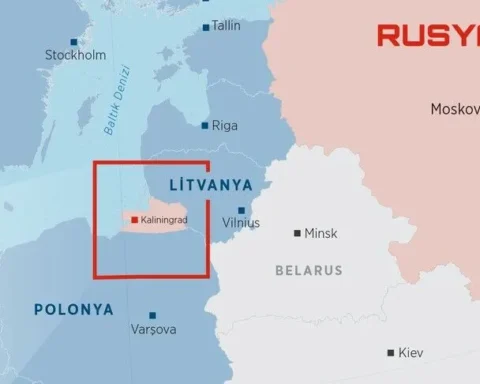
The financial foundation of this transformation was laid at the 2025 Hague Summit, where the Allies pledged to increase their defense spending to 5 percent of Gross Domestic Product (GDP), representing their countries’ total annual economic output, by 2035. However, the common conclusion of pre-summit analyses was that increasing expenditures alone is insufficient; the real question is whether those resources are translated into genuine combat power on the battlefield—that is, into “combat capabilities” (the capacity in terms of combat-ready personnel, weapons, and equipment). Rutte’s statement, “Money is important, but we must rapidly convert it into combat-ready capabilities,” reflects this perspective. Indeed, the Allies are far from uniform in their approach to this objective: while Poland and Lithuania, both bordering Russia, have increased their defense spending to more than 4 percent of GDP, countries expected to lead European security, such as Germany and France, remain within the 2–2.09 percent range. This asymmetry indicates that the debate over “fair burden-sharing” (the balanced distribution of costs and responsibilities among Allies) will also occupy a central place on the agenda in Ankara.
In this context, the NATO Defense Industry Forum, to be held as part of the Ankara Summit, is planned to be the most comprehensive industrial gathering in the Alliance’s history, with defense contracts worth tens of billions of dollars expected to be signed. Against the backdrop of the stockpile shortages and standardization problems exposed by the Russia–Ukraine War, the growing strategic importance of defense industrial production on NATO’s agenda is transforming the summit into a negotiation platform driven not only by military considerations but also by defense-industrial considerations. Standardization refers to the ability of weapons and ammunition produced by different countries to operate compatibly with one another; indeed, the war demonstrated that such interoperability—based on common standards known within NATO’s technical terminology as “STANAG”—had not been sufficiently achieved among the at least fifteen different artillery systems and fifty different types of ammunition employed by the Allies. The sustainability of support for Ukraine presents a similar test. While assistance continues through the initiative known as PURL, which enables the rapid procurement of U.S. weapons by Europe and Canada by transmitting Ukraine’s list of requirements to NATO, the contributions made to these packages by non-NATO countries officially recognized as partners, including Japan, Australia, and New Zealand, demonstrate how the Alliance’s global partnership network has become increasingly intertwined with the defense industry.
Türkiye’s Concrete Contribution: Industry, Personnel, and the Drone Ecosystem
Türkiye is one of the few Allies at the center of this transformation. While its defense spending stands at approximately 2.33 percent of Gross Domestic Product (GDP), it is expected to reach the 5 percent target sooner than many other Allies. Moreover, the share of the total defense budget allocated to weapons and equipment procurement never fell below 25 percent between 2014 and 2025—a consistently strong performance exceeding NATO’s 2014 benchmark of 20 percent. With approximately 495,000 active-duty personnel, the Turkish Armed Forces remain the second-largest military within the Alliance.
The transformation of Türkiye’s defense industry presents an even more striking picture. The Bayraktar TB2 unmanned aerial vehicle (armed drone), produced by Baykar, is exported to numerous Allied countries, from Albania and Romania to Croatia and Kosovo. Otokar’s armored vehicles are deployed in Estonia and Romania; ASELSAN’s electronic warfare systems (technologies designed to disrupt an adversary’s radar and communications or protect friendly systems against such attacks) are in service in Poland; and TUSAŞ’s HÜRJET jet trainer is included in a joint production agreement with Spain. The Memorandums of Understanding (MOUs) signed by Baykar with Italy (Leonardo) and France (Safran), by ROKETSAN with Italy and Spain, and by HAVELSAN with Italy in the field of unmanned maritime vehicles (non-binding agreements documenting the parties’ intention to cooperate) demonstrate that the Turkish defense industry has evolved beyond being merely an exporter and has become a strategic partner of Europe’s leading defense companies. NATO Secretary General Mark Rutte’s characterization of the scale of Türkiye’s defense industry ecosystem as a positive asset for the security of all Allies further illustrates how this transformation is perceived within the Alliance.
This picture also reflects the growing prominence of unmanned and autonomous (self-operating) systems on the modern battlefield. The fact that more than 80 percent of battlefield destruction in the Russia–Ukraine War—from target detection to strike execution—was carried out by such systems, together with NATO’s confrontation with “gray zone” pressure following the violation of Polish airspace by Russian drones on 10 September 2025—that is, low-intensity threats that stop short of a formal declaration of war yet continuously test established boundaries—demonstrates that the Alliance requires not merely more drones, but a combat network architecture (an integrated combat system in which different weapons, sensors, and command systems operate in coordination) capable of learning and adapting more rapidly. Türkiye has positioned itself as an actor making a direct contribution to NATO’s eastern flank and Black Sea security through the proven effectiveness of the Bayraktar TB2 in Nagorno-Karabakh, Libya, Syria, and Ukraine, as well as through the concrete procurement decisions of Poland and Romania. This role has been further reinforced by the successful unmanned take-off and landing of the next-generation Bayraktar TB3 from Türkiye’s amphibious assault ship, TCG Anadolu, during the large-scale Steadfast Dart exercise in 2026. This tangible contribution has made Türkiye a partner regarded as a point of reference at a time when European Allies are urgently working to rebuild the defense industrial base they scaled back after the Cold War.
The Central Country Doctrine
Türkiye’s position within NATO lies at the center of the Alliance’s three core missions: collective defense, crisis management, and cooperative security. The country is simultaneously a Black Sea power, a Mediterranean actor, a key stakeholder in the Caucasus, an active participant in Middle Eastern diplomacy, and a rising defense industry giant. The Montreux Convention, which regulates the passage of countries through the Bosporus and the Dardanelles under specified conditions, functions not merely as a legal instrument but as an integral component of the regional security architecture. Likewise, the Black Sea Grain Initiative, launched through Türkiye’s mediation and enabling Ukraine’s grain exports via the Black Sea during the war, has provided tangible evidence of Ankara’s ability to maintain dialogue with both Kyiv and Moscow. This capacity for balancing should not be regarded as a liability but rather as a strategic asset for the Alliance—particularly at a time when, as illustrated by Germany’s failure to secure a non-permanent seat on the United Nations Security Council, Europe must rebuild its global influence not only through its institutional weight but also through broad geographical connections.
Nevertheless, this doctrine also faces structural constraints. The use of veto powers by Greece and the Greek Cypriot Administration within the mechanisms of the European Union prevents Türkiye–EU defense cooperation from reaching its full potential. Although the emphasis on political solidarity was reinforced at the Ankara Summit, no change in this position is expected. At the same time, the U.S. interpretation of NATO 3.0 seeks to reduce the role of missions considered “additional,” such as partnership policies and training activities, with the termination of the NATO Training Mission in Iraq and the relocation of its headquarters to Italy serving as a notable example. Elements that Türkiye has traditionally attached importance to, such as the Istanbul Cooperation Initiative, which governs relations with the Gulf countries, may generate friction within this reprioritization, as Ankara has placed particular emphasis on the participation of the Gulf countries and NATO’s official partners in Asia at this year’s summit. Consequently, while Türkiye and NATO 3.0 display strong alignment with regard to burden-sharing and hard power capabilities, a possible downsizing of the Alliance’s partnership architecture may create new challenges.
In addition, the gradual reduction of the U.S. military presence stationed in Europe forms another part of the broader picture. While more than 36,000 U.S. troops remain stationed in Germany and more than 12,000 in Italy, the figure in Türkiye is limited to approximately 1,660. This demonstrates that Ankara’s influence within NATO derives primarily from its own production capacity and geostrategic position rather than from the presence of U.S. military forces. Indeed, measures such as the cancellation of the planned deployment of 4,000 U.S. personnel to Poland indicate that transatlantic divergence has evolved beyond rhetoric into a concrete process of realignment.
Ultimately, the Ankara Summit represents a critical juncture at which NATO’s industry-driven reorganization intersects with Türkiye’s transformation from a peripheral country into a central country. The summit is not expected to resolve all existing tensions; rather, its principal function is to establish a roadmap for the next five to ten years. Assessing progress in the Allies’ defense investments, ensuring the continuity of support for Ukraine, deepening transatlantic industrial cooperation, strengthening political solidarity, and evaluating the effectiveness of the southern flank initiatives highlighted by Türkiye’s role as host constitute the summit’s principal tests. Türkiye possesses more than sufficient capability to make a substantive contribution to the NATO 3.0 process; the fundamental question that remains is whether the Allies will demonstrate the strategic foresight required by this era.