 Justin Mitchell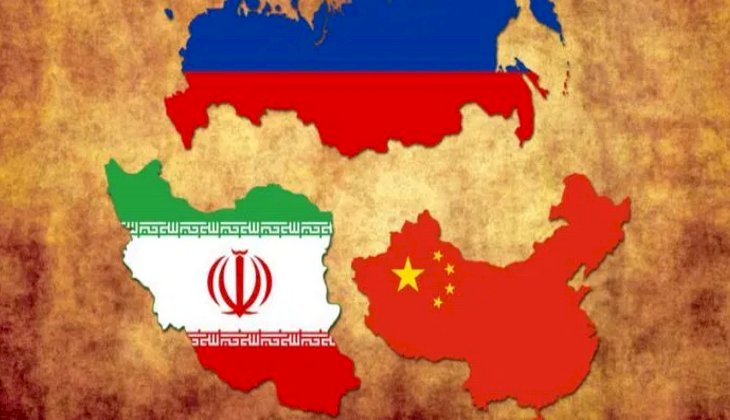

Both Moscow and Beijing stand to benefit from a prolonged war between the United States and Iran.
Iran is isolated, fighting a war for its survival. Yet China and Russia, Iran’s supposed partners, are conspicuously absent. Both countries condemned the attacks on Iran and called for an end to hostilities, but both stopped short of sending significant military aid. Meanwhile, the United States deploys additional personnel to the Middle East, including Marines and the 82nd Airborne Division, in preparation for a potential ground invasion.
Analysts comment that China’s lack of action is“the clearest sign of Beijing’s disorientation” and that Russia’s inability to aid a “key ally is undoubtedly embarrassing.”
Rather than indifference or neglect, however, both countries have more disciplined definitions of their national interests that restrain them from direct involvement. Additionally, both powers are likely to gain strategic advantages the longer the United States is involved in the war.
China regards Asia and its immediate neighbors as the central focus of its foreign policy and military strategy. While the Middle East is important to China’s energy and trade, Beijing has never viewed it as more critical than Taiwan, Japan, or Europe. Throughout its modern history, China avoided formal alliances. The only security treaty China has is with North Korea, dating to 1961, and the strength of that commitment is questionable.
While China has delivered arms to Iran over the years, its security relationship pales in comparison to China’s security ties with Russia or North Korea. Iran is neither a deep security partner nor located in China’s priority theater, giving Beijing little reason to intervene on its behalf.
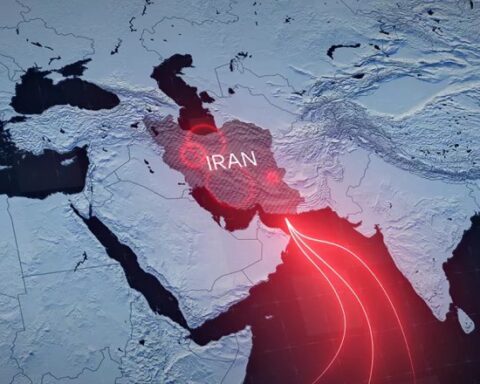
Energy is the primary driver of China’s relations with Iran. In 2025 alone, China purchased over 80 percent of Iran’s oil exports, representing 13.4 percent of its overall oil imports. The closure of the Strait of Hormuz, which would cut off most oil exports from Iran and the other Gulf states, will affect China’s energy portfolio.
A prolonged war in Iran and interruption of oil flows may force China to rethink its implicit strategy of outsourcing Middle East energy security to the United States. Yet China’s oil stockpile can cover 120 days of imports, and alternative providers, such as Russia, can cushion the blow.
Even with this disruption to the oil market, the United States’ diversion of attention and redirection of American firepower from the Indo-Pacific to the Persian Gulf benefits China. China’s military planners, whose focus is overwhelmingly on their country’s immediate neighborhood, will probably celebrate the diversion of US military power from China’s periphery to the Middle East.
The United States is already diverting weapons from the Indo-Pacific, including a THAAD interceptor battery from South Korea, to Iran as the war eats into America’s dwindling supply of interceptors and missiles. The Pentagon has also moved ground and naval forces from the Indo-Pacific to the Middle East. These include the USS Tripoli and a Marine Expeditionary Unit from Japan, and the USS Abraham Lincoln strike group from the South China Sea.
Russia does not view Iran as a critical component of its foreign and defense policies. The Russian 2023 Foreign Policy Concept emphasized Russia’s “nearby abroad” as the most important countries, with Iran grouped with the Middle East toward the end. Unlike China, Russia is not dependent on the Middle East for oil and gas, and has limited trade with Iran.
Russia has security arrangements with Belarus, members of the Collective Security Treaty Organization (CSTO), and has “comprehensive partnership and strategic cooperation” with China. Russia has conducted numerous arms deals with Iran, including a€500 million ($589 million) deal for 500 “Verba” shoulder-mounted launchers and 2,500 9M336 missiles. However, Iran is not important enough to Russia to warrant a security guarantee.
Like China, Russia has the potential to emerge as a major beneficiary of this war, particularly in energy. Iran’s closure of the Strait of Hormuz will compel countries, including China and India, to increase oil imports from Russia. The dramatic spike in global energy prices, coupled with the suspension of oil sanctions, could bring much-needed revenue to Russia’s fossil-fuel-dependent economy.
America’s involvement in Iran also benefits Russia’s war with Ukraine. The US operations consume military resources, namely missile interceptors. Every THAAD, Patriot, and Tomahawk missile diverted to Iran will be kept from the frontlines of Ukraine.
Russia also has the opportunity to support Iran in targeting American personnel by providing intelligence to identify US military targets throughout the Middle East. Russia can indirectly assist Iran from a distance and still profit from the war without risking a confrontation with the United States.
Chinese and Russian restraint is evidence of strategic discipline, not neglect. An overstretched and depleted US military benefits China in the Pacific and Russia in Ukraine. The longer this war continues, the more both countries stand to gain.
* Justin Mitchell is a DC-based foreign policy analyst with an MA in International Relations from Syracuse University. He was a Spring 2023 Marcellus policy fellow and studied in Almaty, Kazakhstan, for an academic year. Justin’s research interests include Central Asia, diplomacy, Eurasia, geopolitics, Russia, and US defense and national security policy.
Source: https://nationalinterest.org/feature/why-russia-and-china-arent-helping-iran