 Jasim Al-Azzawi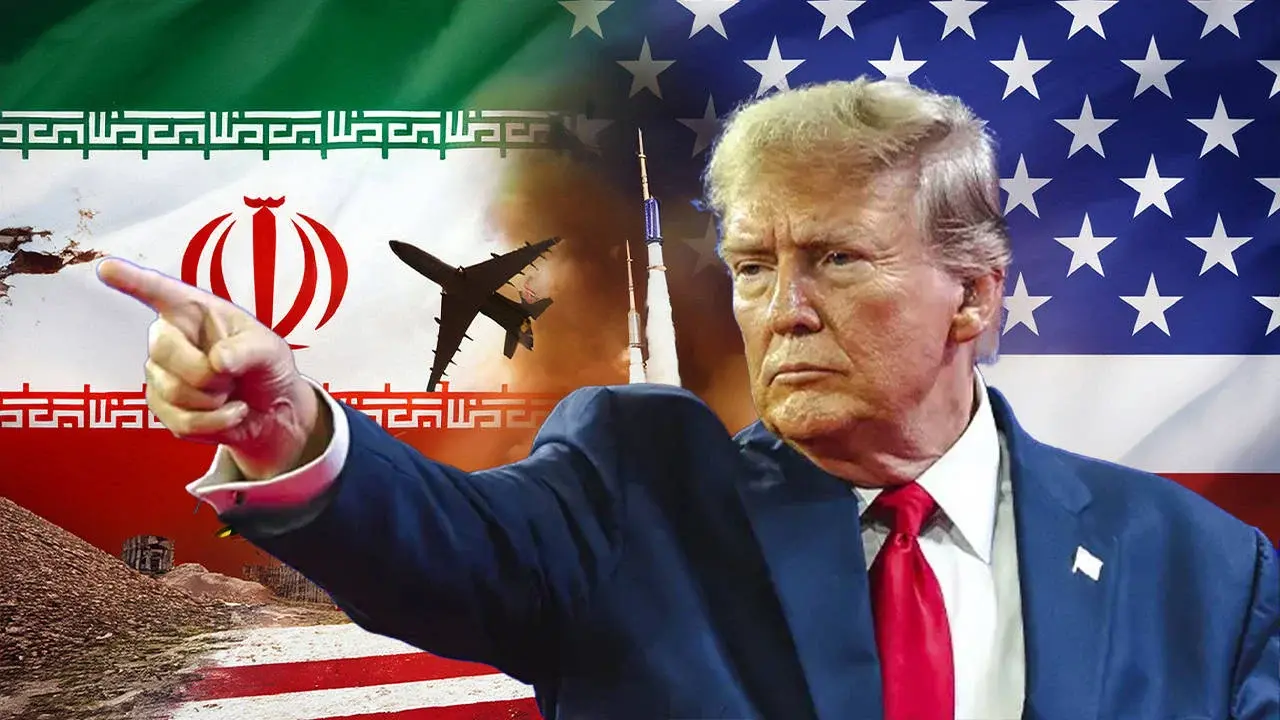

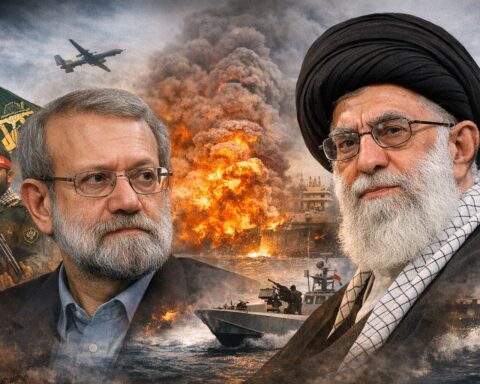
As American naval forces assemble in the Indian Ocean, diplomats started negotiations in Muscat on Friday; the region is standing at the precipice. President Trump, buoyed by his recent spectacular success in Venezuela, is entering these talks with Iran with demands that can only be described as maximalist. The conditions are so extreme that even the most seasoned diplomats are calling them a dead-on-arrival.
As reported by the Israeli newspaper Maariv, the United States has made five core demands of the Iranian government. The demands are the transfer of 400 kilograms of enriched uranium, the destruction of Iranian nuclear facilities, the destruction of its ballistic missile capability, the end of its missile program, and the end of its support of its allied forces in Yemen, Iraq, Syria, and Lebanon. These are not opening demands; these are ultimatums issued under the guns of an approaching American naval Armada.
“I would say he should be very worried,” Trump told NBC News when asked about the Iranian Supreme Leader Ayatollah Ali Khamenei. Trump’s candor is the candor of a man who is sure of the outcome. Having recently forced the surrender of Venezuelan President Maduro, Trump is convinced he can repeat the same fantastic performance with the Iranian government. But Iran is not Venezuela. Iran has spent forty-five years preparing for this moment and may well thwart Trump’s ambitious plan. Seasoned observers are convinced that decapitation or extraction is impossible to achieve in Iran.
“Following the 12-day war, we have changed our military doctrine from defensive to offensive by adopting the policy of asymmetric warfare,” declared the Chief of Staff of the Iranian Armed Forces, Major General Abdolrahim Mousavi, this week while visiting an IRGC missile facility. “We think only of victory. We have no fear of the enemy’s superficial might.” Such a defiant position may indicate that Iran is prepared to fight.
This change in military doctrine is the Iranian response to the devastating strikes it faced last June. Having lived through the period when President Trump claimed Iran’s nuclear program was obliterated, the Iranians have recalculated. They are now adopting a military doctrine that is all about swift and decisive action, “swift and decisive and would not conform to US calculations,” to quote Mousavi.
The most interesting demand made by President Trump is the one that Iran will find the hardest to comply with: the dismantling of the Iranian ballistic missile program. As noted by Bronwen Maddox, the Director and Chief Executive of Chatham House, “the missiles are the only shield that’s preventing its adversaries from toppling its regime. Without it, Iran will be bare and exposed to Israeli air power and US stealth bombers—and no Iranian government could survive that.”
Israeli Prime Minister Benjamin Netanyahu knows this and is using it to negotiate with the US. “Iran proved time after time that its promises cannot be trusted,” Netanyahu declared this week while meeting with US special envoy Steve Witkoff. “Tehran is using negotiations to kill time and transfer offensive weapons to hiding places,” Israeli officials declared to Channel 14.
“Let’s admit the truth,” declared Israeli Energy Minister Eli Cohen on 103FM. “There is no value to a diplomatic agreement with Iran.” This attitude, however, is part of a more profound concern in Israel, namely, that Trump will indeed make a deal, however weak, that will ensure the survival of the Iranian regime.
The regional aspect, too, introduces a new element of instability into the conflict. Hezbollah Secretary-General Sheikh Naim Qassem has already declared that his organization will not remain neutral in a potential conflict. “We are determined to defend ourselves,” he stated in a televised speech on 26th January. “The next war is a war for all of us.” Moreover, international actors, he revealed, had asked Hezbollah whether it would defend Iran in the event of a US-Israeli attack, and Hezbollah responded by saying, “Hezbollah is included and targeted in any potential act of aggression. We will choose in due course how to act.”
US Secretary of State Marco Rubio says negotiations must be held on “Iran’s ballistic missiles, support for proxy networks across the region, and their treatment of their own people.” However, Iran has very clearly stated that its missile program is “off the table.” Iran’s top official said in an interview with Reuters that Iran is willing to be flexible on the level of uranium enrichment, which could be reduced from 60 per cent to 3.67 per cent, as provided in the JCPOA. However, the missiles are non-negotiable.
US diplomat Alan Eyre, who has negotiated with Iran on its nuclear program, said: “Opting for indirect talks is the diplomatic equivalent of a surgeon taking a hit of ether and then putting on gloves before a difficult surgery.”
The White House also has few illusions about the talks, an unnamed official said: “We’re very skeptical that these talks are going to be successful, but we’re doing it anyway out of respect for our allies in the region, who are begging us not to pull out of these talks prematurely.”
The scepticism is warranted. President Trump has assembled an overwhelming force: aircraft carriers, fighter jets, and bombers on bases in the region—this is no bluff. His approval ratings are at an all-time low, and nothing gets Americans on their feet like bombing the old enemy. The hostage crisis of 1979 is still a painful memory in the US, and President Trump knows how to tap into that pain.
Iran has also seen many of these negotiations come and go, has endured sanctions, assassinations, cyberattacks, and bombing raids against its people and its government. Iran has learned how to be strategic, how to survive, how to wait out its adversaries. But will President Trump be able to wait out Iran, which thinks in terms of decades, not days?
The most likely outcome is the one that both sides are preparing for. Yet, it is one that neither side may fully want: military strikes, Iranian retaliation, regional escalation, and an inconclusive outcome in which neither side wished to go to war, yet could not avoid it. Trump will declare whatever happens a success. Iran will declare that it has defended its sovereignty. The region will count its dead. And the two sides will prepare for round three in a year or less.
Trump’s five demands are not only impossible to comply with, but they are intended to be rejected. And in the current state of affairs, rejection leads inexorably to the second strike, a conflict that neither side wants, yet each side believes it can achieve. The question is no longer whether or not a second round of strikes on Iran will happen; it is only a matter of when, and whether or not the fires that are lit can be contained before they consume the entire region.