 Joel Kotkin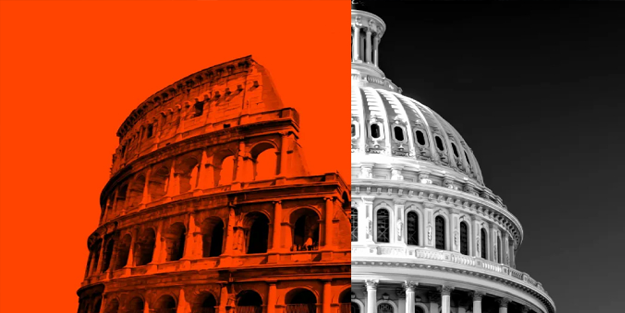

Ever since I was in high school, Rome has fascinated me. I studied Latin for six years, including two in college, and have kept my interest for the next fifty years.
In the past three years I also have spent considerable time in the Eternal City, and its history provides lessons, both positive and negative, particularly for a citizen of what is essentially the world’s pre-eminent empire, the United States.
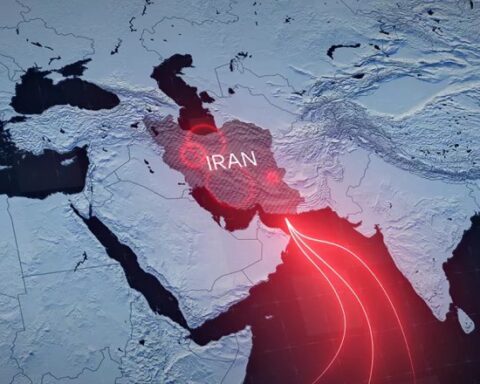
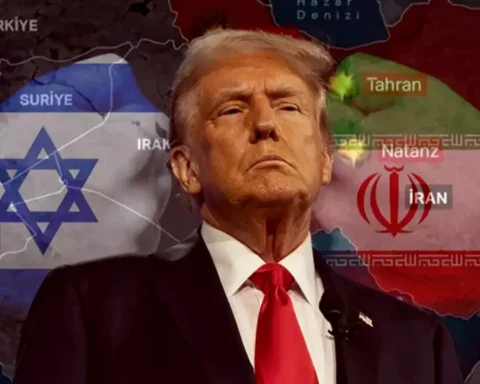
As is clear in the current conflict with Iran, the US, despite some competition from China, has the world’s most fearsome armed forces. Coupled with its savvy ally Israel, it has systematically downsized Iran’s own nascent empire, although the Islamic Republic, like all dying regimes, is capable of lashing out, particularly against far less warlike neighbors. It even seems capable of firing missiles at a largely defenseless, weak-willed Europe.
Today the once great imperial continent resembles the 2nd and 3rd century BCE Greece that Rome steamrollered with relative ease. Europe, like Greece, keeps a mainly cultural allure, as it did for the conquering Romans. Today many educated Americans still rightfully appreciate its cultural heritage. But Europe is no longer a major driver of history; Americans come there not to build wealth and innovate, but to recreate in cities, like Rome, that offer a lifestyle far more gracious than on offer in America.
Being an imperial power, of course, has its downsides. Like the Roman Republic, ours is suffering the erosion of the basics of self-government. Our government increasingly adopts a semi-dictatorial paradigm determined in four-year stretches. This occurs under both Democratic and Republican regimes. Congress is consistently pathetic, just like the Roman Senate in the late stages of the Republic. To be sure, even under the brutalist Trump, the constitution still holds, but the long-term accretion of executive power is deeply disturbing.
However the current conflict ends up, which is far from certain, something has to be done with the Iranian regime, and a solution was not going to come from the EU, much less the ineffective United Nations. There is much room to worry about negative ramifications of certain moves—like destroying Iran’s future by wiping out its electrical grid—as my friend Robert Bryce suggests. But at the same time, a messianic and terrorist state building the capacity to hit Europe or even the US with long range missiles is clearly a threat to global order. Even some pro-Trump conservatives, like Oren Cass, fear the war will distract the administration from its domestic agenda.
But who else can stop the messianic mullahs and their agenda of Islamic radicalism? History shows that imperial power, preferably aligned with allies, is the only way to enforce the essentials of global order. It was not the “rules based” order, beloved by the debilitated old elites, that vanquished the former Soviet empire but American economic and military power. Similarly, only Rome could sweep the Mediterranean pirates out of vital sea lanes or keep urbanized Europe from repeated assaults from nomadic peoples that threatened civilization as occurred in the Dark Ages.
In the 19th century this protective role of global arbiter—largely assuring the freedom of navigation—was played by a Britain, now a shadow of its aggressive, self-assured imperial self. The current EU, veering towards what one commentator called “fortress liberalism,” is hardly an adequate successor.
Empires always face challenges from other powers. China will likely be America’s key rival, much as Parthia, ironically found in today’s Iran, was Rome’s major antagonist in the Middle East. But looking at the global realities of the 3rd century CE, the only meaningful other empire was in China, then as now an inner-directed autocracy powered by its ancient culture and sense of identity. Together, Rome and Han China accounted for roughly half the world’s population. In the longer-term future new power centers are likely to appear, notably in India, but none is likely to overshadow the US in coming decades.
Today’s America empire—Rome became an empire during their Republic days—remains the only power that can challenge aggressor powers like Iran. One can talk about diplomacy and “rules” until one is blue in the face, but without the military power of the US, we would soon live in a world where any bunch of lunatics could hurl potentially nuclearized missiles at Europe, India and eventually the US and Japan.
The durability of America’s hegemony ultimately depends on us. Sadly, Trump is part mad emperor but too old to truly be the next Caligula or Nero, whose misrule threatened Rome’s order. His power is also more limited by the Constitution, the courts, and soon by a likely electoral shift to the Democrats, who seem anxious to reprise the kind of decline so clear in the United Kingdom.
Repeating Europe’s path would be tragic. But to have a realistic and sustainable empire you need someone better than a vindictive narcissist like Trump who thinks in simplistic, often vulgar, and brutal terms. A successful global hegemon needs instead far-seeing leaders like Augustus, Trajan or Marcus Aurelius, men whose statues still inhabit the onetime caput mundi, capital of the world.
As the successful emperors knew well, a brutalized military state can only persist for so long without offering something to the people within its orbit. If the American empire is to achieve the greatness of Rome, it needs to also provide the modern equivalents of roads, aqueducts, sanitation, and trade relations that kept the imperial state practical for a millennium, and if Byzantium is included, almost two.
As we marvel at Rome’s past achievements, we also need to develop a rationale for the imperial order. Despite its brutality and cruelty, Rome also projected a cosmopolitan civilization ideal. Rome, besides its military power, also extended its writ beyond its native people. From its origins it grew, as opposed to the nativist Greeks, by incorporating others into its civilization.
Ultimately Rome was ruled by Emperors from Spain, North Africa, and eastern Europe. Even Jews, their capital destroyed and its people scattered, played a vital role, including as incubators of Christianity. My time here, living for a month in a Trastevere neighborhood once home to the first Roman synagogues as well as Jewish chronicler Josephus Flavius, attested to the diversity of the Roman universal idea.
After all, belief in your country’s destiny is perhaps the most critical part of lasting imperial power. Neither resurgent nativism nor European style decadence can sustain civilizational greatness. If America wants to be, like Rome, where all roads lead, it needs to develop its polyglot culture of achievers. Rome’s mythology sustained it for centuries, as others embraced its ideal. However egregious its excesses, the US would do well to match the Roman achievement.
* Joel Kotkin is the author of The Coming of Neo-Feudalism: A Warning to the Global Middle Class. He is the Roger Hobbs Presidential Fellow in Urban Futures at Chapman University and and directs the Center for Demographics and Policy there. He is Senior Research Fellow at the Civitas Institute at the University of Texas in Austin. Learn more at joelkotkin.com, follow him on Substack and Twitter @joelkotkin.