 M. Reza Behnam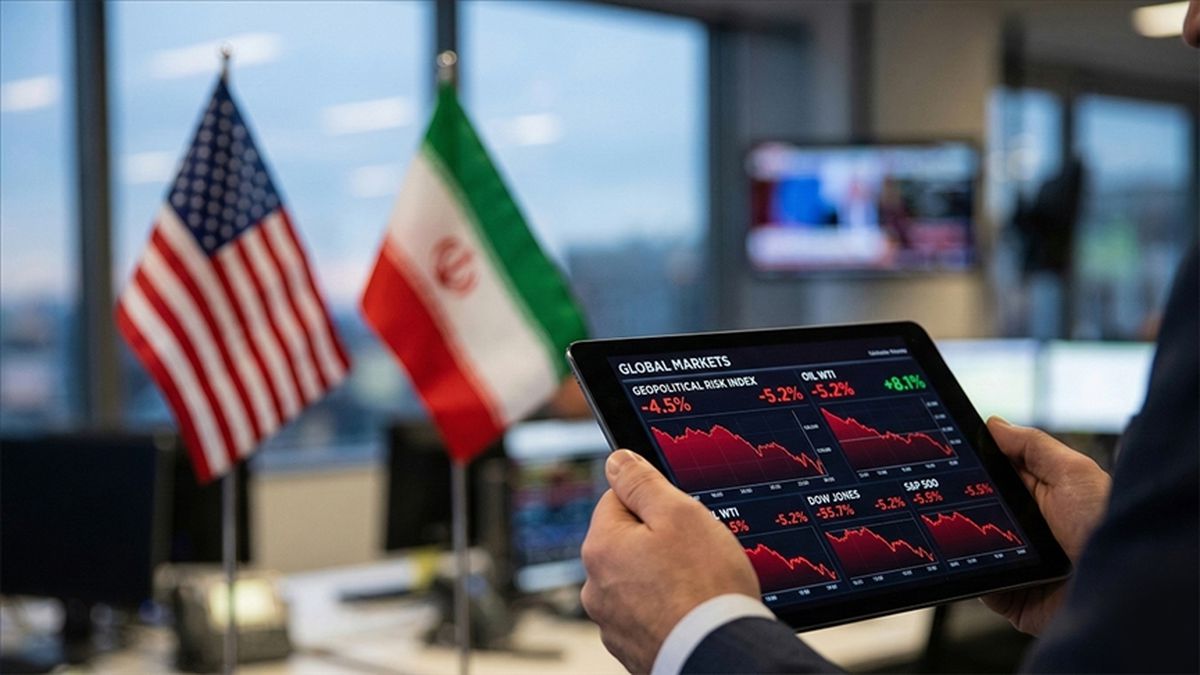

Like most of America’s wars in West Asia, the current joint U.S.-Israel attack on the Islamic Republic of Iran is about securing control over the region’s energy resources and preserving oil currency policies; practices that have fueled its expansive economy since the end of the Second World War.
Ultimately, this conflict, which has sent shockwaves through the global economy, boils down to who will reign in West Asia, control the world’s energy lifeline, and dictate the rules of global finance.
Beneath the veneer of geopolitical diplomacy and rhetoric about global order, the true catalyst for U.S. wars in the Persian Gulf—from the 1990 invasion of Kuwait to the current Iran war—has always been monetary supremacy, “money.” They have been rooted in oil revenue, debt leverage, and the staggering economic stakes of global energy and currency dominance.
Washington’s hardline stance, economic strangulation and military interventions have been designed to enforce compliance. Countries, like Iran, that resist U.S. hegemony face severe financial and military pressures, because their defiance challenges America’s regional security architecture and unipolar dominance over the global financial system.
Since the 1970s, the “petrodollar system” has been the invisible engine of American prosperity and power. However, the economic scaffolding that has buoyed its global hegemony is fraying, as geopolitical shifts and de-dollarization trends gradually erode the U.S. dollar’s absolute grip on global energy markets.
To make sense of how we reached this point, it is important to consider how the U.S. dollar achieved its global dominance and shaped our current economic reality.
In June 1974, the United States and Saudi Arabia signed a landmark economic and military cooperation agreement, establishing what has come to be known as the “petrodollar system.”
This consequential bargain was born in an era of political and economic uncertainty—inflation, Vietnam War and the 1973 Arab oil embargo. With the U.S. economy in a nosedive, then-President Richard Nixon, anxious to maintain the global demand for dollars, persuaded the Saudi government to finance America’s debt with its petroleum wealth. He convinced them to price their oil exclusively in U.S. dollars and to invest their surplus oil profits in U.S. Treasury bonds. In exchange, Washington agreed to provide the Saudis with weapons and protection. By 1975, all Organization of Petroleum Exporting Countries were pricing their oil in dollars.
The Saudi policy of pricing crude exclusively in U.S. dollars compelled all purchasing nations to convert their native currencies before making purchases. Increased international demand for the dollar made it the world’s singular reserve currency and preferred medium of exchange. To meet the increased need, Washington simply fired up the printing presses.
Over the years, Washington’s staunch support of the repressive Saudi regime has been driven by a strategic imperative: to ensure that its client state remains committed to the 1974 bargain.
This favorable pricing and trading arrangement has allowed Washington to entail massive deficits, to borrow and spend with abandon without triggering financial collapse. It has financed America’s numerous military adventures and provided the tools to wield economic sanctions and enforce its foreign policy.
Although a web of motives have fueled Washington’s interventions in West Asia, punishing currency dissenters was prominent in its past wars in Iraq and Libya.
In Iraq, for example, President Saddam Hussein’s fate was sealed when in 1999, he switched to trading Iraqi oil in euros; and officially converted his $10 billion reserve fund, held at the UN Oil-for-Food program, to euros in 2001. President George W. Bush’s invasion in March 2003 not only quashed Iraq’s euro threat, it sent a clear warning to other countries considering an alternative oil transaction currency.
Under U.S. occupation, the country’s oil exports were quickly reverted to the dollar norm. Additionally, UN Security Council Resolution 1483, drafted by the Bush administration and passed with U.S. pressure in May 2003, allowed the United States to control Iraq’s oil revenue, which they continue to do today.
The U.S.-led intervention and overthrow in 2011 of Colonel Muammar Qaddafi can be viewed through the same prism. For decades, a number of African countries, led by Qaddafi, had been attempting to establish a pan-African currency based on Libya’s gold-backed dinar (estimated at around 143 tons of gold and a similar amount of silver) to reduce the continent’s dependence on the U.S. dollar, the euro and French franc in future oil sales.
Qaddafi’s life, along with his plan for a unified African currency, ended violently when NATO forces, led by the U.S., France and Britain, invaded Libya. It is worth noting that within weeks and in the midst of fighting, the poorly-organized anti-Qaddafi forces had created a Central Bank of Benghazi as the new monetary authority, replacing Libya’s state-owned bank. The invasion also solidified France’s primacy in the post-Qaddafi oil sector.
Countries have grown weary with America’s dominance of the world economy, and with its use of military force to punish currency dissenters. Consequently, dependence on the dollar as the global reserve currency has begun to weaken.
The intensity of U.S. rancor toward Iran is directly related to its efforts, along with Russia, to break free from the petrodollar monopoly. To survive decades of punishing U.S.-Western economic sanctions, Tehran has had to pioneer non-dollar trade alternatives.
For example, in 2003, Iran shifted its foreign-held assets and reserve funds out of dollars. By 2008, it formalized the total elimination of the dollar from its crude transactions; and in 2012, began conducting its energy deals with China in renminbi (yuan).
When the U.S. and Israel launched the Iran war in February 2026, Tehran, as it said it would do if attacked, blocked the Strait of Hormuz to vessels going to and from ports of the U.S., Israel and their allies. And in mid-March, Iran formalized a non-dollar transit system in the strait.
Under the transit system, secure passage is guaranteed and permits granted to commercial vessels and oil tankers of primarily “friendly” nations that agree to pay transit fees in Chinese yuan (the petroyuan) or stable coins; and requires all ships traversing through the strait settle their cargo transactions in yuan.
America’s historical economic dominance has provided leverage to project unparalleled geopolitical and coercive power; an undisputed advantage it is now fighting fiercely to protect.
Ultimately, the escalating conflict in West Asia is a high-stakes stress test for the petrodollar, with Washington battling to maintain currency dominance, and adversaries attempting to actively bypass or dismantle it.
The international community is slowly shifting to a multi-currency world. Ironically, the current war, as well as Washington’s over-employed sanctions regime against Iran, Russia and China, have catalyzed and hastened the erosion.
A weakened U.S. currency sets the stage for short and long-term consequences for the country. International confidence in U.S. markets as an economic safe haven has begun to fracture. The historical belief that America is a well-governed country with stable legal, economic and financial institutions explains why central banks have allocated approximately 57 percent of global reserves to U.S. dollars.
Whenever it ends, the Iran war will have major implications for the U.S.-centered economic order. The long-term outlook points to a weaker currency, as war costs—estimated at $12 billion a week—escalate and the national debt ($39+trillion) grows. A natural consequence of this dynamic is increasing austerity domestically and a lessening of American geopolitical influence globally.
The United States could achieve significant economic benefits by cooperating with the international community to progressively overhaul global monetary structures. Such a promethean transition, however, would require Washington policymakers to forego their imperious myths, exceptionalist ideologies and subservience to Zionist interests that have been foundational to America’s weaponization of the world financial system.
Source: https://znetwork.org/znetarticle/the-us-israel-wars-on-iran-follow-the-money/