 Zeeshan Aleem

Trump has exhibited a total lack of coherence on why he began a new war — or how it will end.
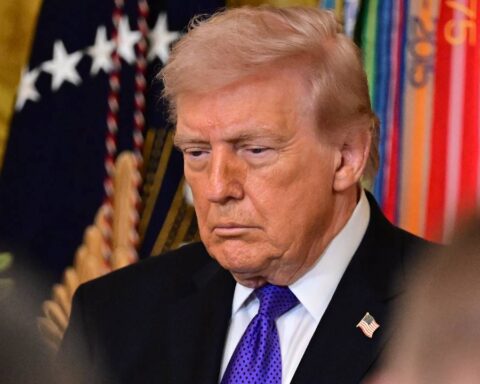
President Donald Trump rarely demonstrates foresight or careful strategic thinking. But that tendency is taking on a new level of destructiveness in his war of aggression on Iran. The most powerful man on Earth is cavalierly bombing and reshaping one of the most geopolitically explosive regions in the world — and has offered nothing even approaching a coherent explanation for why he’s doing it or what he’s aiming to achieve. It was bad enough for America to have a mad king. Now the world is seeing the rise of a mad emperor.
In the run-up to negotiations with Iran last week, Trump developed a colossal build-up of military assets near Iran and threatened to use force against the country if it didn’t make what he deemed sufficient concessions in negotiations over its nuclear program. But he hardly bothered to make any case to the public as to why this was urgent or necessary, given that he had, by his own account, “totally obliterated” Iran’s nuclear facilities in strikes last year, and the Trump administration’s belief that Iran was not enriching uranium. There was also zero evidence that Iran had the capacity to strike the U.S. with its ballistic missiles.
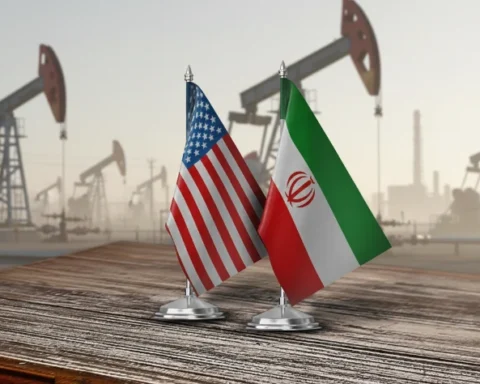
During negotiations in Geneva on Thursday, Iran indicated it wasn’t interested in limiting its ballistic missile program (which, again, by all known accounts cannot reach the U.S.) or its support for militant proxies in the region. But according to Omani mediators, Iran made significant concessions on stockpiling uranium. That would seem to suggest things were moving in the right direction. But two days later, Trump began joint strikes with Israel against Iran, and, for the second time in less than a year, vaporized diplomatic efforts with Iran by bombing it.
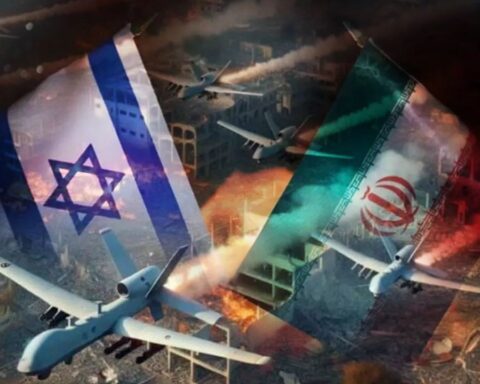
The strikes were not narrowly targeted at Iran’s already-damaged nuclear capacities or ballistic missiles. It was an assault on Iran’s entire political power structure. The U.S. and Israel killed Iran’s supreme leader, Ayatollah Ali Khamenei, who was not only the most influential autocratic authority in the country, but also a hugely important religious figure for Shia Muslims across the region. They also killed many senior officials in Iran’s government and security forces, including the secretary of Iran’s Defense Council — the man who was overseeing negotiations with the U.S. over the country’s nuclear program. They attacked Iran’s navy and destroyed the headquarters of the Islamic Revolutionary Guard Corps.
Trump posted a video statement on Truth Social as these attacks began and, bafflingly, cited grievances from decades ago, including the Iran hostage crisis of 1979. He also announced sweeping ambition for regime change. He told the country’s elite paramilitary, the IRGC, to surrender or face death. And he called for the Iranian people to “take over your government” after the bombardment ended.
And since then, Trump has zigged and zagged in a manner that, even by the very low standards for communication we’ve acclimated to with Trump, almost defies belief:
In a confusing move, Trump said he is open to diplomacy with the very government that he is seeking to decapitate. Trump told The Atlantic on Sunday that he was open to negotiating with Iran’s government. “They want to talk, and I have agreed to talk, so I will be talking to them,” he said of Iran. It is hard to imagine how these talks will proceed given the ongoing bombing campaign and Trump’s habit of stabbing Iran in the back at the negotiating table over and over again.
In an interview with The New York Times on Sunday, Trump envisioned multiple future scenarios that were completely at odds with one another. One of them involved a Venezuela-style solution, in which the Iranian government largely remains intact but takes on new leadership that’s more pliant to U.S. demands; another one involved Iran’s citizens overthrowing its government. He also imagined, in a frighteningly naive bit of speculation, a scenario in which the IRGC — the security force that helped slaughter thousands of Iranian protesters just months ago — simply handed over its arms to the public.
In a Saturday interview with The Washington Post, Trump said, “All I want is freedom for the people.” That’s the language of revolution and nation-building.
Trump has offered dramatically different assessments of how long the U.S. combat operations will last. He has said at different points it could last “two or three days,” or “four or five weeks” or longer — “Whatever it takes.” He has not ruled out boots on the ground.
On Monday, Defense Secretary Pete Hegseth said the Iran operation was “the opposite” of a nation-building war. He also offered this absurd riddle of a statement: “This is not a so-called regime change war, but the regime sure did change and the world is better off for it.”
Put this all together and it’s clear as day: The Trump administration does not know what it’s doing, and it does not have a plan. Instead, it appears that Trump’s mind is shuffling through various fantasies, unimpeded by any knowledge of Iran, which hold his attention for minutes or hours at a time.
Our federal government has launched a war of aggression against a nation of 90 million people and is deciding to casually play it by ear as the conflict rapidly evolves into a regional conflagration. The president shows no signs that he grasps how difficult it would be to achieve any of the scenarios he’s outlined, or the many ways in which Iran is not Venezuela. The president seems clueless about how he easily could corner himself into a longer, bloodier intervention than he anticipated because he has no clearly defined mission or criteria for success. And it’s hard to imagine he has given any thoughts to long-term effects or the suffering of Iranian civilians.
In many cases, Trump’s shoot-from-the-hip attitude is not irreversibly consequential, because courts or activists force him to rescind an illegal or unpopular domestic policy and the country carries on as it did before. But when it comes to starting wars and assassinating political leaders, there are no do-overs, easy resets or take-backs. Trump is unleashing his worst instincts on the global arena now, and the stability of the entire Middle East — and the global economy — are at stake. And the worst part may be there are no signs the rest of the federal government will act effectively to rein in his adventurism.
Source: https://www.ms.now/opinion/trump-iran-war-plan-attack