 Hugh J. Curran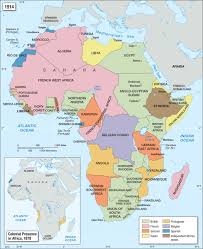

Until gaining independence, the Sahell nations of Mali, Niger and Burkina Faso have been among the poorest countries in Africa. They were known as French West Africa, having been colonized during the “Scramble for Africa” in the 1880’s and 1890 s and after gaining independence in 1960 formed an “Alliance of Sahel States”(AES).
Having taught courses on “conflict resolution” concerning the Sudan, DRC Congo, Cameroon and Nigeria, it was clear to me that almost all African nations share a similar history of having been colonized by Europeans with the primary intention of resource extraction. The Congo was the most notorious in this respect, led by Belgium’s King Leopold between 1885 to 1909, a man who made a pretense of being humanitarian while extracting wealth in the form of rubber during the “rubber boom”. Joseph Conrad’s “Heart of Darkness” explored some of the themes of European imperialism and racism prevailing at that time, while Irish born Roger Casement, a British Consul, revealed in published articles, the pillaging by Leopold’s agents and his private mercenary army’s systemic brutality
In a similar vein Sudan suffered from an 1898 invasion of Khartoum by a joint British-Egyptian force under General Kitchener. The British colonizers favored South Sudan by encouraging Christian missionary endeavors while allowing the north Sudanese to be governed by an Arab-Muslim elite.
Britain’s method of control of Sudan followed their colonial policy of encouraging division among indigenous groups in order to maintain control, thus exacerbating civil unrest between north and south Sudan. When they departed in 1956 the British left a deeply divided country with South Sudan eventually separating from north Sudan. We now see the consequences of these divisions with the two Sudans devastated by a series of armed conflicts, recently described as the “world’s largest displacement of indigenous people with an inevitable hunger crisis.”
In terms of the Sahel region, other causes of conflict include control of gold mines, the extraction of fossil fuels, and newly developed lithium deposits, as well as climate change throughout the Sahel, a savannah stretching from Senegal to Sudan. This has turned marginal areas into sparse grazing for nomadic livestock herders, while outsiders, such as the UAE Emirates and Russia have been supplying military equipment to favored factions, thus increasing the violence in conflict areas.
More beneficial assistance has come from China, which has provided much-needed infrastructure, offering loans and humanitarian assistance in exchange for access to mining and resource extraction. In the AES Alliance in West Africa, they have begun investing heavily in Lithium mining.
The Sahel nations of Mali, Niger and Burkina Faso (AES) share some of same the extreme conditions experienced by Sudan and the Congo in terms of European colonization. In 1960 they declared Independence from France and in 2022-2024 the military juntas of the Alliance of Sahel States (AES) rejected U.S. and France’s military aid in favor of military aid from Russia, China, Turkey and the UAE. But terrorism and poorly planned trade agreements have brought serious difficulties. Having survived the Mali War and Boko Haram insurgency, the AES states have expelled not only the French military presence but also U.S. drone facilities. It has also pledged to suspend military rule and return to civilian rule,
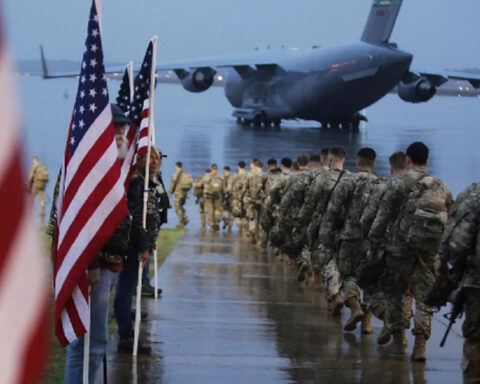
The U.S. has several thousand personnel in East Africa under U.S. Africa Command (AFRICOM) and up to 30 bases in Africa carrying out “security, surveillance and counterinsurgency missions”. Up until recently, one of the most beneficial organizations for aid in Africa has been USAID, which provided economic and security support, so its loss, following the U.S. “Shutdown” of health and humanitarian aid programs, has resulted in the rise of insurgencies and the increase of regional violence.
What the Sahel Alliance (AES) is facing beyond internal problems and insurgencies is desertification. Prolonged droughts are endemic in the Sahel savanna, a 600 mile-wide swath of northern Africa. The Sahel reaches to Northwest Cameroon and includes Lake Chad which has been a main provider of water to indigenous people for generations, but now has lost 90% of its capacity due to climate change and over-grazing.
There are serious attempts at re-invigorating the Sahel with the “UNCCD Great Green Wall Initiative” which spans 22 African countries. This international project uses traditional as well as newly applied forestry & farming practices and has raised $14 billion to “support a target of completion by 2030. There are numerous localized success stories as it continues to expand to a projected 8,000 km x 15 km wide strip extending across Africa. Already 30 million hectares of land have been rehabilitated and 350,000 “green jobs” created.
Africa is a vast continent with 54 nations and a population of 1.5 billion inhabitants in an area that could fit Canada, the U.S., China, India and Europe, with room to spare. It is all too easy for American media to misunderstand the larger context and to focus only on civil wars and other forms of conflict while distorting the nature of a resource- rich continent where many highly-motivated people have survived centuries of brutal colonization.
In Nigeria alone fossil fuel extraction provides a major part of its economy. It also has the largest seminary in the world, with many of its graduates serving in Europe, the U.S. and Canada. Nigeria has been humorously described as having an “edifice complex” with very large churches and mosques built for its 100 million Christians in the South and 100 million Muslims in the north
There are over thirty nations investing in Africa who are benefiting from its rich resources. Some, under pressure from humanitarian organizations, provide educational opportunities as well as healthcare benefits. Canadian mining corporations, for instance, have invested $40 billion in Africa, but have had to face civil lawsuits before being compelled to be more accountable and to provide help to families of miners.
Africa can find its way to conflict resolution if only those who foment violence would stop providing weapons to extremists and to the “grievance culture” that divides small countries such as Mali, Niger and Burkina Faso into militant factions. It would be more helpful if Western media focused on the more positive side of indigenous cultures and the high levels of optimism and aspirations that motivate the youth of Africa.
Source: https://www.juancole.com/2026/05/colonialism-african-nations.html