 Taha Özhan

Gramsci’s observation on the “transitional period”—or, more precisely, a single sentence of his—which has been rediscovered in recent years, has become a brilliant phrase invoked to explain virtually every crisis, whether relevant or not. Writing from within a Marxist theology, conceptual framework, and intellectual universe while examining the pains of the transition from capitalism to socialism, Gramsci has been transformed into a convenient “resource” through which everyone—from neoliberal financiers to spokespeople of the radical left, from climate change activists to CEOs of major oil companies, from populist politicians to academics, from football coaches to executives of high-tech companies—can readily explain their own crises. The phrases from Prison Notebooks—“interregnum,” “the old is dying and the new cannot be born,” and, above all, “morbid symptoms”—have been consumed so relentlessly that they have themselves become instruments of rhetorical terror. What remains of Gramsci’s original intent today is merely a floating signifier, stripped of both its context and meaning through endless repetition in the language of spokespeople for rival ideologies or entirely unrelated sectors, until it has been reduced to banality. What Gramsci actually meant is no longer of any consequence. After all, everyone now has the opportunity to explain their own crisis, transitional period, maladies, and perceived threats by invoking a single quotation. In the end, the popular invocation of Gramsci functions as a portable metaphor through which different actors legitimize their anxieties, agendas, and diagnoses of the present, each accompanied by their own identification of fenomeni morbosi.[1]
Despite this entire picture, Gramsci’s “crisis of authority”—which he also used as the title of a subsection while discussing “the emergence of the new”—may be far more illuminating in explaining the upheavals unfolding across the globe today. Before formulating the aforementioned sentence, Gramsci introduces the “crisis of authority” by examining the problem that arises when the ruling classes “no longer lead” but govern solely through “domination.” As the global geopolitical crisis deepens today, the challenge confronting the entire world manifests itself in a similar “crisis of direction and domination” afflicting the global order constructed by Washington after 1945. It is precisely in the sense Gramsci intended that this concept also describes our present crisis, in which values, rules, law, ideology, and established conventions have been plunged into turmoil.
We are confronting the crisis of a hegemon that seeks to withdraw from the very order it created while refusing to relinquish its dominant power. Although this crisis, taken as a whole, represents the West’s struggle to come to terms with the new global economic and geopolitical realignment, its name today is none other than the “American Problem.” It is precisely here that we find common ground with Gramsci. What we share with him lies neither in his writings nor in a sentence distorted through hermeneutic corruption. What truly connects us to Gramsci is the place where he wrote these lines: prison. Gramsci spent ten years in Mussolini’s prison while writing his notebooks. Today, we read those notebooks from within the “American Prison,” where we have lived for the past eighty years—a prison whose walls rise a little higher and whose rules grow a little more oppressive with each passing decade. The most fundamental difference between the two prisons is that ours is the world’s first prison built by its own inmates with astonishing love and zeal—a prison people struggle to enter and never to leave.
Until the middle of the twentieth century, empires stood before our eyes in all their splendor, embodied in the cities they built and the armies they commanded. Beginning in the second half of the last century, however, an empire, for the first time, came to operate in one respect through invisible structures. This transformation corresponds to a projection of American power that extends far beyond the visible centers of its domination, such as its global military deployments. Today, the American Empire rests upon and sustains its power through subterranean and invisible infrastructures: fiber-optic cable networks, the flow of information, the internet, massive data centers, financial payment systems, the supremacy of the dollar, restrictions on the sale and use of weapons, formal and de facto penal systems, tariff and (primary/secondary) sanctions regimes, contractual networks, complex semiconductor manufacturing systems, intellectual property rights, and the instruments of cultural hegemony—in short, an “Underground Empire” built upon these very infrastructures. Many of these infrastructural systems, originally developed as the natural outcome of globalization to facilitate the expansion of trade, have, in American hands, been transformed into both weapons and a system of control and punishment that is exceedingly difficult—or prohibitively costly—to evade.[2]
The Construction of the Invisible Empire
For years, the evangelists of the new age proclaimed that the old world had been divided by “walls,” whereas the new world was interconnected through “networks.” Eventually, they were also captivated by the notion that the world was “flat”—the very premise upon which this architecture of control was built. Global trade was no longer merely the exchange of goods; it had become a function in which the entire world was integrated as a decentralized component of production, transportation, and distribution. The fundamental task of the global order was to ensure the seamless operation of this function. This two-dimensional flat world was no longer a realm of empire (imperium) but merely a sphere of commerce (emporium). At least until September 11, it was hardly easy to stand against this glittering narrative and its accompanying rhetoric. Everyone wanted to advance along the “flat road.” After September 11, however, it became clear that the entire web of economic, financial, commercial, legal, communications, and security networks—which had interconnected the world so thoroughly that it appeared flat—could rapidly be weaponized in American hands, transforming the world into a global prison order. The United States was no longer merely the sole superpower left standing after the Cold War. It had also become a state possessing more forms of superpower than at any previous point in its history. It is one of history’s ironies that the driving force behind the vigorous construction of American global network imperialism, domination, and control was the liberal worldview itself—a worldview that believed so deeply in the free circulation of goods, services, capital, information, and labor that it came to regard the world as flat; that believed the individual would be protected by those very networks against the power of the state; that held a return to authoritarianism to be impossible; and that professed faith in the arrival of the end of history. If today we are to speak of an almost flawless form of global fascism, then we may also say that it was produced by the theology of dogmatic liberalism.
Virtually every component of the global communications, financial, commercial, and legal infrastructure that the United States has now brought almost entirely under its control originated as private-sector initiatives inspired by liberal aspirations. Especially after September 11, the American Empire, under the banner of the “War on Terror,” appropriated this global infrastructure with remarkably little effort and virtually no resistance, bringing it completely under its domination and transforming it into a weapon of its own. The most enduring forms of domination are often not recognized as domination at all. Instead, particularly over the past century, this mode of domination has been experienced as order, necessity, habit, rationality, and common sense. The strength of the post-World War II order lay not only in its capacity to punish but also in its ability to define the world so comprehensively that alternatives were condemned as irrational and dangerous. The American Prison was built upon financial, legal, military, diplomatic, institutional, technological, and cultural infrastructure. The system operating through the prison’s extensive infrastructure of dependency came to be accepted not as an instrument of power but as a neutral framework within which legitimate actors were obliged to operate. Countries that often sought, of their own accord, to enter and remain within this prison saw no difficulty in internalizing domination as order, hierarchy as rules, and imposition as globalization. The liberal narrative, with its totalizing and essentialist power, likewise encountered little difficulty in suppressing dissenting debates and alternative approaches.
Yet it would also be impossible to claim that this system, despite never possessing a genuinely universal and neutral architecture in the broadest sense, failed to produce benefits. For a considerable period, the American-led order provided certain segments of the world with stability—an eighty-year span during which, for the first time since Rome, no direct war occurred between the major military powers—along with access to capital, an escape from poverty and access to basic services on a scale unprecedented in previous centuries, minimum levels of development, technological diffusion, access to information and education, military protection, and institutional predictability. This order constituted a historically specific hierarchy built upon American material superiority and the broader normative authority of the West. It also universalized certain rules that were, in essence, difficult to contest, while normalizing the discourse of “interdependence,” which in practice remained fundamentally one-sided.[3] By institutionalizing a world in which many states remained formally independent yet were structurally constrained, it constructed the global prison.
As is well known, over time, prisoners adapt to prison life. They internalize its routines, learn its codes, become dependent upon the imposed order, and gradually lose the habits of autonomous existence beyond the prison walls. Much of the world has undergone a similar process under American hegemony. States became dependent on the dollar,[4] the U.S.-centered financial infrastructure, Western institutional approval, the American-led security order, technological layers beyond their control, and cultural codes they did not define. Indeed, in the hands of elites who transformed dependence on this system into a love affair, participation in the system and access to its infrastructure came to be internalized as privileges and even as expressions of sovereignty. Going even further, liberal fanaticism openly declared war on freedom of thought, forging a dogmatic alliance united by the conviction that every conceivable alternative was nothing more than an unhealthy and dangerous fantasy.
Although the American Prison is built upon the global system’s political economy and security infrastructure, it ultimately derives its continued existence from the privileges and guarantees provided by the American Empire. Yet as the United States enters a process of transforming into a nation-state, it will no longer be possible to preserve and sustain the existing prison in its present form. It is precisely at this juncture that Gramsci’s emphasis on the “crisis of authority” inevitably comes to the fore. For the stability of both the hegemon and the order it administers depends upon its subjects continuing to believe, despite all its shortcomings, that the system remains sufficiently legitimate, necessary, and beneficial. Although that belief has now largely disappeared on a global scale, the need for Washington endures. Even Europe—which has long treated its relationship with the United States as though it were a marriage—has begun to pass through the stages of denial over its impending divorce from Washington.
For years, Washington did not merely rule the postwar order; it also led it. It fused its military and economic power with intellectual authority. It persuaded much of the world that its supremacy was not only advantageous to Washington but also a source of stability for the system as a whole. In this narrative, the dollar was not an instrument of structural power but a neutral global public good. International institutions did not operate in favor of particular powers but according to rules that served the broader international community. Legal universalism was not an imposition but a civilizational foundation open to all who wished to join it. American military leadership provided security and protection rather than dependence. Globalization was not asymmetric integration but a network of reciprocal partnerships. The liberal order represented not the convergence of privileged interests but the expansive horizon of progress itself. This discourse and mode of operation legitimized domination, made the existing order appear livable, and even led many to experience the prison as though it were a home. The system’s categories, caste structure, and penal order came to be accepted as legitimate realities. The prisoners were no longer prisoners but participants. The prison’s iron bars were entirely financial.[5] In a way no previous empire had ever achieved, financial mechanisms were transformed into a flawless geopolitical lever. Inside the prison was safer than the outside!
The Infrastructure of Domination
The dollar’s role as the global reserve currency, the central position of U.S. capital markets, the correspondent banking system, debt structures, and the global architecture of dollar clearing endowed Washington with an extraordinary capacity to discipline without resorting to military occupation. A state that chose to confront the United States did not initially have to face military force. More often than not, what it encountered was a form of exclusion that poisoned life inside the prison: exclusion from the clearing system, finance, liquidity, investor confidence, insurance, and the ordinary mechanisms of global exchange. Its banks would become financial pariahs. Trade contracts would begin to collapse. Its debt would suddenly become toxic. Its companies would retreat from risk-taking. Procurement and supply chains would be disrupted, and its foreign trade would grind to a halt. Not only the free movement of goods but also that of its citizens would be curtailed. In this way, a fully weaponized system of interdependence was constructed.[6]
This world was not, as the liberal evangelists claimed, a flat, frictionless, and politically neutral marketplace. It was a highly centralized system organized around strategic chokepoints and composed of interconnected economic and technological networks. Global finance was concentrated around dollar clearing and financial messaging networks. Communications became concentrated around U.S.-based digital platforms and information infrastructures. Semiconductor manufacturing was globally dispersed, yet the critical intellectual property and design tools remained in the hands of a small number of American companies. Each of these layers constituted a component of a broader architecture of American domination. In other words, the American Prison—a system of mutually reinforcing institutional and technological relationships that increasingly made participation in modern life synonymous with dependence on infrastructures managed, directly or indirectly, by the United States—had been constructed.
The United States, particularly after September 11, learned how to transform this centrality into an instrument of discipline. What began as efforts to track terrorist financing gradually evolved into a more coercive and surveillance-driven model of governance. Sanctions expanded from narrowly defined targets to entire sectors and, ultimately, to entire countries. More significantly, the far more destructive regime of “secondary sanctions” emerged. The internet was no longer merely a medium of communication; it also became a domain of surveillance through which U.S. authorities could obtain strategic intelligence via platforms and companies operating under American jurisdiction.[7] With the smartphone revolution—fully integrated with the internet—large-scale individual monitoring was effectively transformed into an electronic shackle imposed upon virtually all of humanity. Moreover, this prison system made it “almost impossible to spend even a single day without America”[8] not only for states but also for ordinary individuals. Legal systems, security institutions, and the judiciary quickly adapted to these developments. The period that witnessed the most extensive control, domination, and surveillance in human history came to be celebrated as the most liberal era.
The true achievement of this new regulatory order lay in its ability to transform not only state institutions but also market actors into agents of self-regulation. Banks became excessively compliant. Companies avoided transactions that might trigger regulatory scrutiny. Governments adjusted their policies preemptively. American sanctions, anti-corruption enforcement, export controls, transparency requirements, and financial regulations extended far beyond the territorial boundaries of the United States. Even a transaction entirely lawful under domestic legislation could become subject to punishment if it touched infrastructure or financial systems falling under U.S. jurisdiction. The familiar scenes of helpless American police officers forced to stop at state borders because their authority ended there, or fugitives regaining their freedom after crossing into Mexico, came to an end. Legal enforcement acquired the capacity to pursue individuals, institutions, money, and data across borders. A system originally constructed in the name of transparency was gradually transformed into an instrument of total control. The objective was not merely to punish “enemies,” but to demonstrate to everyone the cost of deviation.
Security constituted the outer wall of the prison. The American-led order rested not only upon money and rules but also upon alliances, military bases, patrols, intelligence networks, arms sales, and the promise that the United States would remain the indispensable guarantor of stability. For many countries—particularly in Europe, parts of Asia, and the Middle East—this umbrella became the sole source of security, thereby creating a profound strategic vulnerability. Before long, protection and dependence became inseparable, eroding strategic imagination altogether. Over time, this dependence evolved into a form of strategic conditioning. Indeed, the American framework itself became the grammar of strategic reasoning. International institutions further deepened this captivity. Safeguarding American interests as well as the ideological and strategic priorities of the Atlantic bloc, these institutions evolved into disciplinary mechanisms that appeared to create space for their participants while, in reality, reinforcing the operation of the existing order.[9]
One of the most privileged wings of the American Prison was NATO, constructed for the Western camp. Not all of its inhabitants belonged to this wing for the same reasons. At the very least, those reasons began to change after the alliance’s founding years and the early, heated phase of the Cold War. While much of Europe experienced NATO for decades primarily through the protection afforded by the American security umbrella, Türkiye recognized at a relatively early stage that this relationship had never been an unconditional security partnership. The American arms embargo imposed after the Cyprus Peace Operation, together with repeated attempts at military, political, and technological sanctions in subsequent years, demonstrated how the alliance could, when necessary, be transformed into a punitive mechanism even against one of its most critical members. Nevertheless, Ankara never regarded NATO merely as an institution that generated security. Rather, it viewed the alliance as a strategic gateway providing access to the military, economic, technological, and diplomatic infrastructure of the Western system. After all, the cost of remaining outside was often greater than the cost of negotiating from within. The security architecture, command structure, weapons supply chains, intelligence networks, and culture of joint operations all imposed a Washington-centered strategic grammar. For precisely this reason, NATO’s greatest achievement lay not so much in its military deterrence as in its confinement of its members’ security outlook and worldview within the boundaries of the American order, thereby eliminating independent strategic judgment. In the case of Türkiye—the alliance’s only non-Western member—the consequences of this reality were experienced as both a democratic deficit and a foreign policy crisis, as the intellectual framework of its military elite produced, for many years, a heavy-handed tutelary regime that profoundly shaped the country’s domestic political and social order.
One of the deepest layers of the prison was its cultural and epistemic software. It was through this software that much of what people thought—and how they thought—was shaped. In one respect, it also paved the way for the “end of history” moment. For once imagination itself had been colonized and transformed into a set of instructions, an intellectual crisis and an erosion of values became inevitable across the world. Theses proclaiming the end of ideologies, the end of religions, and the end of alternatives began to circulate freely and were readily embraced by elites, academia, politics, and the media. As a result, a global crisis of values, ideology, and politics became unmistakable. The world became largely flattened along the axis of depoliticization. Taken together, these dynamics suggest that the global geopolitical crisis we are witnessing today represents a profound crisis of authority that extends well beyond the question of the redistribution or realignment of power. This, in turn, means that the present pains of “the new not yet being born” will be both qualitatively different from and more severe than those experienced during previous hegemonic transitions. In earlier eras—particularly from the seventeenth century onward, during the maturation of modern capitalism—there existed a remarkably clear picture of the political-economic framework of the rising and challenging power. Today, however, although it is evident which power is ascending, no global order-building actor—or new hegemonic power—can be assigned the role of generating legitimacy for that power, least of all the rising power itself.
The Collapse of Authority: The Hegemon Losing Its Legitimacy
In the past, every rising hegemonic power possessed not only military and economic capabilities but also the “language of legitimacy”—or, in other words, the software of its age. The concept of order, which emerged with the construction of cities in antiquity, came in later centuries to provide its own distinctive software as well. In the fifteenth and sixteenth centuries, the Ottoman Empire rose through the ideal of Nizam-ı Âlem and a multicultural imperial order. In the seventeenth century, the rising hegemonic power was distinguished by such recognizable features as commercial capitalism, the work ethic, and the bourgeois order. During the eighteenth and nineteenth centuries, the hegemonic powers of the age gave rise to constitutional monarchy originating in England and France, commercial liberalism and later classical liberalism, the transition from mercantilism to free trade, revolutionary republicanism, and parliamentary constitutionalism. In the last century, the United States, as it emerged as the hegemonic power, likewise presented the world with a global software centered on liberal democracy, capitalism, and later liberal institutionalism. Today, one of the principal factors plunging this transitional period into profound turmoil is the absence of any convincing framework, value system, civilizational vision, or conception of humanity capable of generating legitimacy for the rising power. While the declining hegemon increasingly assumes the role of a “predator”[10] and a “rogue”[11], the rising China sees the world merely as a marketplace to which it can deliver its containers.
At this point, there is nothing surprising about this state of affairs. For the past eighty years, liberal internationalism has functioned less as a universal project than as an anti-political mechanism designed to conceal the global hierarchy. Put differently, globalization may not have succeeded in making the world flat, but it has narrowed humanity’s horizons and corrupted its intellectual imagination to such an extent that, unlike previous hegemonic declines, it has prevented the emergence of a new axis of values and a new political opening. If anything genuinely “new” is to emerge today, the dismantling of the walls of the American Prison would in fact signify the removal of that mask. What is remarkable is the panic displayed by the prisoners at the very prospect of the prison disappearing. Yet even this is hardly surprising. The debate over the “new” points neither to a value system of its own nor to a genuine systemic alternative. Indeed, the prisoners are anxious not only about the prospect of the prison walls coming down but even about criticism of the prison system itself. They fear the disappearance of the existing order more than the potential “monsters” Gramsci warned of. The most widespread and conspicuous criticism, in fact, is that those who built the prison are no longer willing to defend it.
The failure of a new order to emerge—or the ambiguous picture presented by global power realignment and balancing—stems, above all, from the fact that the current process of power consolidation is not unfolding in the aftermath of a major crisis culminating in war, as was the case in the past. Yalta ultimately emerged from the determination of exhausted powers to avoid another global conflict. Historically, global geopolitical and spheres-of-influence competition ultimately unfolded within zones whose boundaries were accepted by the competing powers, whether formally or de facto. Consequently, today’s spheres of influence neither generate equilibrium nor contribute to stability. In earlier periods, geographical location alone was sufficient to secure strength within a sphere of influence. Today, however, neither China, nor the United States, nor any other power can disengage from the alliance systems, overseas military bases, trade networks, and financial architectures—many of which they themselves created—in order to rely exclusively on geographical spheres of influence or transform them into sufficient resources for maximizing power.[12]
It is just as hypothetical for the United States to attempt—under the central premise of its new National Security Strategy—to retreat exclusively to the Western Hemisphere and declare it its ultimate sphere of influence as it is for China or any other power to seek refuge solely within its own geographical region or attempt to exclude rival powers from it. Beyond these competing spheres of influence, another development is driving the system into crisis: the situation within the United States itself. America’s structural crisis, camouflaged by Trump’s rhetoric of political intimidation, continues to deepen. The very country that built and led the post-1945 order is now politically unstable. Under ordinary circumstances, this would be an unexpected development for a country whose economic and military strength so clearly distinguishes it from the rest of the world. Yet the anomalous combination of being politically unstable while remaining economically and militarily powerful is transforming the United States into an even more destructive actor during this transitional period. It is precisely for this reason that the description of the United States as a “rogue and predatory state” can now be employed with remarkable ease in mainstream American media and academic discourse.
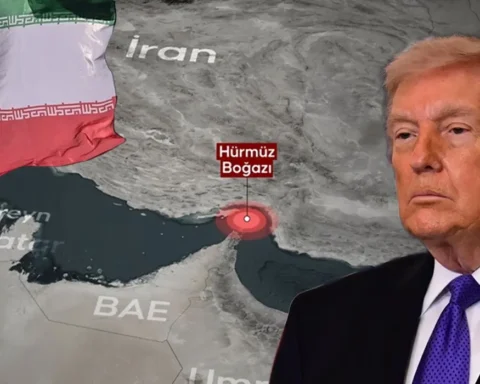
At this stage, the era of weaponized interdependence has entered a new phase. Others now possess strategic chokepoints as well. We have seen how Iran—widely expected to be brought to its knees within a matter of weeks—was able to transform the Strait of Hormuz into a geopolitical lever. Beyond this recent example, China has for many years been preparing for vulnerabilities associated with strategic chokepoints. It has established its own export control regime and sought not only to secure access to critical technologies but also to dominate key segments of industrial and regulatory supply chains. Rare earth elements provide the clearest example. The significance of this development lies not in any weakening of the United States, but in the fact that the prison’s disciplinary mechanisms are no longer unilateral. A system once controlled by Washington as a major strategic advantage is now evolving into a contested arena in which its centrality is no longer beyond dispute.
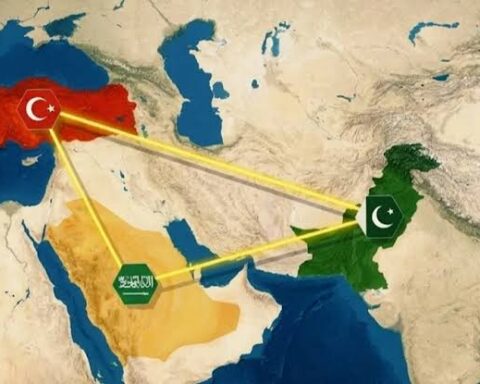
The consequences of this transformation are already visible in the fragmentation of the global economy. States’ risk-mitigation strategies are increasing interest in alternative payment systems. Regional technological initiatives are acquiring new strategic value. Supply chains are now being redesigned not only for efficiency but also to reduce strategic exposure. Even where viable alternatives remain limited, the desire to lessen vulnerability to American coercion continues to grow. For middle powers, this is a matter of vital importance. They are not detached observers of the crisis; they are prisoners still living inside the prison even as American authority steadily erodes. Their economies remain tied to the dollar system. Their elites continue, in many cases, to be educated within Western epistemic frameworks. Their security institutions are still shaped by decades of U.S.-centered assumptions and capabilities. On the one hand, they are directly experiencing the American Problem; on the other, they lack the institutional and structural capacity to step outside the system—whether entirely or even to any meaningful extent.
For this reason, rhetorical appeals to multipolarity currently serve middle powers only as leverage in their negotiations over the “American Problem.” Indeed, this multipolarity has little practical significance beyond relations with China, which has effectively been assigned the role of the “second pole.” Ultimately, China has yet to assume a geopolitical position that amounts to anything more than a catalyst and a source of strategic leverage for the rest of the world in its bargaining with Washington. When this geopolitical limbo is compounded by China’s lack of an imperial vision and its unwillingness to assume hegemonic responsibility, it becomes even clearer just how difficult the emergence of “the new” truly is.[13]
From the American Prison to the G-2 Prison
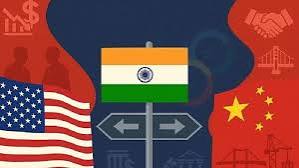
When the United States was a rising power within the global system, its isolationist tendencies were readily apparent. Once it became the hegemonic power, however, it embraced unilateralism. Today, it has entered a dangerous new phase characterized by the convergence of isolationism and expansionism (the expansion of spheres of influence), a phase in which it has increasingly come to be described as a “rogue state.” At the same time, it continues to sustain an open confrontation with the rising power, China, in a manner felt across the entire world. Taken together, these developments suggest that global geopolitics is not, in the classical sense, merely a “sum of crises,” but rather that we stand at a transitional threshold where the old order is dissolving while the new has yet to become institutionalized. For this reason, global uncertainty is no longer a temporary geopolitical, security, or economic problem. Rather, it is the manifestation of a structural transformation of the global order unfolding simultaneously across all these domains. At the center of this transformation stands the U.S.–China axis—that is, the de facto G-2 world that is taking shape.
The fundamental question confronting the emerging world order is no longer whether China will continue to rise or whether the United States can preserve its dominant position. China has already risen. The United States remains a great power, but one in decline. The real question is whether the rest of the world will be confined within the de facto G-2 order established by Washington and Beijing. For the world, this represents a paradoxical architecture of power in which both conflict and cooperation between the United States and China impose significant costs. Open confrontation between Washington and Beijing carries the risk of fragmenting the global economy into competing blocs through technology, trade, semiconductors, supply chains, finance, sanctions, tariffs, and trade security. Conversely, a bilateral accommodation would bypass rules-based multilateralism and inevitably reduce the rest of the world to an object of bargaining between the two great powers. Put differently, unless the world beyond the United States overcomes its anxiety over the disappearance of the American Prison and turns toward alternatives, it may well find itself confined within a G-2 Prison as well.
The G-2 order need not emerge as a formal alliance or as an explicitly negotiated partition of the world. Instead, the world may find itself confronted by a hostile duopoly. The United States and China may compete, negotiate, punish one another, and periodically stabilize their relationship. What makes the G-2 framework particularly difficult for the rest of the world is that it takes shape regardless of whether these two powers are friends or adversaries. In other words, whether Washington and Beijing cooperate or confront one another, the rest of the world bears a heavy cost. Over roughly the past quarter century, the United States has exercised an increasingly coercive dominance over global finance, sanctions, the dollar system, military alliances, advanced defense networks, and much of the institutional architecture of the postwar order. China, meanwhile, has come to dominate production capacity, critical supply chains, rare earth processing, infrastructure finance, industrial scale, and increasingly the technological ecosystem of the future in an equally coercive and unilateral manner. One power weaponizes money, markets, military protection, and sanctions. The other possesses the capacity to weaponize manufacturing, minerals, infrastructure, and industrial dependence. One of the most dangerous developments for the world in recent years is that both the United States and China have begun to realize that each can benefit from a form of manageable competition. This means that the rest of the world is no longer caught between good and evil, but rather between two thoroughly transactional forms of power, neither of which offers a global vision or a coherent framework of values.
This is, of course, not another “end of history” moment. What must not be forgotten is that economic interdependence, economic security, and geopolitical competition constitute, at their core, an impossible trinity. Whether hegemonic or not, no power can simultaneously command more than two of these three elements. With the return of geopolitical competition—after its brief eclipse following the Cold War—it is impossible for Washington to escape this impossible trinity without paying a price. Likewise, it is unrealistic to expect China, which aspires to establish a G-2 order at the expense of both the United States and the rest of the world, to dominate this trinity—or even just two of its constituent dynamics—on a global scale at the same time.
For decisive geopolitical struggles throughout history have tended to begin not when they are universally recognized, but while the principal actors still appear to be operating within the same international order. As James Burnham famously observed in the introduction to his 1947 book The Struggle for the World: “World War III began in April 1944.” What Burnham meant was that the Cold War began not after the Second World War, but during it. It began concealed beneath the appearance of an alliance, while American and Soviet soldiers were still fighting a common enemy. By the same logic, one might argue that World War IV began on November 9, 1989, with the sledgehammer blows struck against the Berlin Wall. While the West celebrated the end of history, China embarked upon its long, patient ascent by drawing lessons from the collapse of the Soviet Union, exploiting open markets, making full use of the opportunities created by multilateral institutions, weaponizing domestic poverty, and quietly transforming the architecture of globalization built under American leadership into an instrument of its own rise. Today, this struggle has entered its most critical phase. The two great powers have become locked in a competition whose outcome will determine the fate of this century. Meanwhile, the world watches with growing unease as it contemplates the future of the American Prison while simultaneously witnessing Washington and Beijing jointly laying the foundations of the G-2 Prison.
Nevertheless, the crisis we are experiencing today still retains the character of a cyclical phenomenon rather than a full-fledged wave. Since the Cold War, the rhythms of moments of systemic fragility have exhibited a certain degree of regularity. We have not yet radically broken out of the existing order—or its prevailing inclination. To understand this situation, it is useful to consider the historical movements of price revolutions and long waves.[14] Geopolitical waves often move with frequencies and temporal patterns comparable to those of price movements and broader political-economic cycles. To speak of a major geopolitical wave, we would need to identify a similar sequence of development and relative price patterns, corresponding movements in wages, rents, and interest rates, together with the same dangerous volatility that characterizes their later stages. From this perspective, it is reasonable to conclude that the crisis we are passing through remains cyclical rather than having entered the phase of a full geopolitical wave.
What must not be forgotten, however, is that every major price revolution in modern history began during periods of prosperity. Each ultimately culminated in a profound global crisis. We cannot yet say that such a wave has fully emerged today. Just as price revolutions follow distinctive rhythms and threshold dynamics, major geopolitical ruptures mature through the erosion of balances of power, the disintegration of alliance structures, and the intensification of strategic competition. Wars are more often the consequence of these accumulated tensions than their cause. Many of history’s decisive geopolitical ruptures have taken root not during periods of poverty and systemic collapse, but rather at moments when the existing international order had reached its zenith and economic growth and the accumulation of power were accelerating. The crisis we face today is therefore not the product of a collapsed order but the inevitable historical reckoning generated by an order that has reached the limits of its own success. At this moment of reckoning, unless humanity once again proves capable—as it has at critical junctures in the past—of generating its own alternative, the world may no longer possess even the strength to choose between the “American Prison” and the “G-2 Prison,” neither of which embodies an imperial vision. The central question is not what the global regime transition will produce, nor which power will ultimately prevail, but whether humanity can once again construct a genuine political horizon capable of generating legitimacy, providing leadership, and transcending domination itself. For we have reached a point where the issue has evolved beyond competing models of governance, social organization, or economic systems; it has become, above all, a question of human dignity.
References
- The single sentence Gramsci wrote in 1930 first entered political theory when Stuart Hall employed it as a significant conceptual tool in his critique of Thatcherism during the 1980s. It was later transformed into a dramatic slogan after Slavoj Žižek rendered it rather freely in 2010 as “the time of monsters.” When Gilbert Achcar adopted the sentence as both the title and epigraph of his 2016 book, it gained even greater visibility within academic and political discourse. After 2016, with developments such as the Arab Spring, Brexit, and the election of Trump, it evolved into a viral reference invoked by virtually everyone to explain their own crisis, becoming a portable metaphor entirely detached from its original philological context. Indeed, Achcar himself felt compelled to publish a corrective essay in 2021 questioning this popular interpretation. ↑
- Farrell, Henry, and Abraham Newman. Underground Empire: How America Weaponized the World Economy. Penguin, 2024. ↑
- Drezner, Daniel W., Henry Farrell, and Abraham Newman, eds. The Uses and Abuses of Weaponized Interdependence. Brookings Institution Press, 2021. ↑
- Eichengreen, Barry. Exorbitant Privilege: The Rise and Fall of the Dollar. Oxford University Press, 2012. ↑
- Mulder, Nicholas. The Economic Weapon: The Rise of Sanctions as a Tool of Modern War. Yale University Press, 2022. ↑
- Fishman, Edward. Chokepoints: American Power in the Age of Economic Warfare. Penguin Random House, New York, 2025. ↑
- Goldsmith, Jack, and Tim Wu. Who Controls the Internet?: Illusions of a Borderless World. Columbia University Press, 2006. https://scholarship.law.columbia.edu/books/175 ↑
- “Life without US Tech: What Happens if Washington Pulls the ‘Kill Switch’ on Digital Services?” Financial Times, May 11, 2026. https://www.ft.com/content/4c3aad70-e0cb-46a2-95d5-15d11b6bf818?syn-25a6b1a6=1 ↑
- Walt, Stephen M. The Hell of Good Intentions: America’s Foreign Policy Elite and the Decline of U.S. Primacy. Farrar, Straus and Giroux, 2018. ↑
- Walt, Stephen M. “The Predatory Hegemon: How Trump Wields American Power.” Foreign Affairs, March/April 2026. ↑
- Kagan, Robert. “America Is Now a Rogue Superpower.” The Atlantic, March 30, 2026. ↑
- Mearsheimer, John J. The Great Delusion: Liberal Dreams and International Realities. Yale University Press, 2018. ↑
- Kim, Woosang, and Scott Gates. “Power Transition Theory and the Rise of China.” International Area Studies Review 18 (2015): 219–226. ↑
- Fischer, David Hackett. The Great Wave: Price Revolutions and the Rhythm of History. Oxford University Press, 1996. Fischer identifies three complete monetary waves in European history, each consisting of a price revolution, a wartime crisis, and the emergence of a new equilibrium, while arguing that the persistent inflation of the twentieth century marked the beginning of a fourth wave. ↑
Source: www.perspektifonline.com