 Simone Urbani Grecchi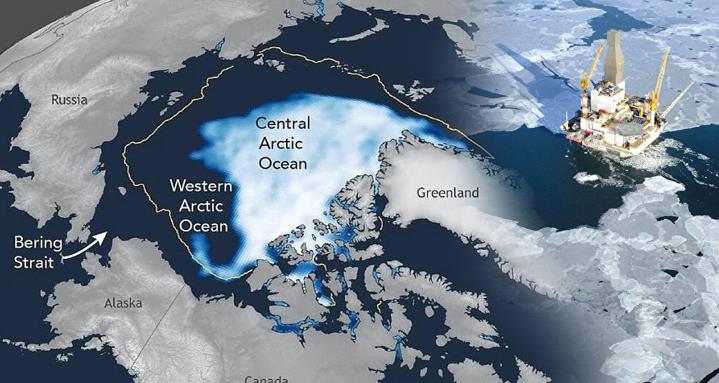

The Davos announcement on Greenland eased tensions but left unresolved the core issues of sovereignty, self-determination, and the fragile balance between U.S. power, NATO cohesion, and Europe’s strategic weakness.
The 2026 World Economic Forum ended with the announcement of a surprising agreement on the prospects for cooperation between NATO countries on Greenland. Thanks to NATO Secretary General Rutte’s diplomatic efforts, the use of force by the U.S. appears to have been averted—a solution initially proposed by Trump but actually rejected by many in the U.S., including vice president J.D. Vance, speaker of the House Mike Johnson, and senior advisor Steven Miller. However, while the announcement was enough to tone down the discussion on the Arctic island’s future, the details of the agreement and how the currently unresolved issues will be addressed remain unclear.
What form will this agreement take? Having set aside the military option for now, one possibility is that Washington could negotiate an even greater room for maneuver on the island than it currently enjoys under the 1951 agreements. Trump appears rather lukewarm about this option, arguing that it would be difficult to convince the American electorate of the need to defend a concession (“who would defend a lease?“). Beyond the catchy phrase, history is littered with similar solutions, as demonstrated by London’s defense of Hong Kong during the period when the enclave was under British control. Alternatively, it cannot be ruled out that the U.S. could “purchase” sovereignty over more or less extensive areas of the Arctic island, just as the U.K. enjoys absolute sovereignty over its military bases in Cyprus. As things currently stand, though, an acquisition by Washington remains a remote possibility, as the Constitution stipulates that the president cannot spend money Congress has not appropriated.
Regardless of the type of agreement announced, the issue of the island’s self-determination remains. A principle used flexibly by the West to suit its own objectives, authoritative sources have argued that allowing Nuuk to hold a referendum would risk alienating Greenland from the EU and NATO. In reality, in a world characterized by a values-based foreign policy (such as that advocated by Europe), this risk should not even be considered. Instead, in yet another sign that countries’ interests often override principles, both the U.S. and EU want to keep Greenland in the West’s fold and seem to fear a public vote on the matter.
As Canadian prime minister Mark Carney himself emphasized, “the rules-based order has been a useful fiction“. Therefore, as Justina Budginaite-Frohely of the Atlantic Council argues, “if Europe wants to ensure that no one does in Greenland what the United States did in Venezuela, then it must stop relying solely on rules and begin building a reality that makes coercion unthinkable“. The extent to which the EU is capable of building such a ‘reality‘, in the current context dictated by the EU Treaties, remains an open question. Contrary to what authoritative scholars claim, Europe’s vulnerability lies not in its dependence on the U.S., but in the weakness of its institutions, the absence of a common foreign and defense policy, and its energy dependence.
Also, it has been argued that Trump’s approach may have permanently damaged transatlantic relations. On the one hand, this is unlikely to be the case, especially since, U.S. strategic interest in Greenland has been repeatedly expressed, even by presidents open to cooperation between nations (e.g., Wilson in 1916, Truman in 1946, and Eisenhower in 1956)—without damaging relations. On the other hand, however, at least three errors have apparently been made in tackling the Greenland issue. First, unlike previous requests, the White House has dangled the threat of force. While power relations have always influenced the resolution of international disputes, military intervention against an ally before diplomatic channels have even been explored would be a worrying novelty. Second, this approach risks alienating Greenlanders, much to the detriment of the U.S.’ own plans. As recently as last April, a popular vote in Greenland expressed a clear desire for independence. Today, failing to rule out military intervention may have changed the Greenlanders’ mindset. Third, according to the agreements with Nuuk, the referendum on the island’s independence must be approved by Copenhagen. Until yesterday, Danish authorities were open to authorizing such a referendum. Today, granting such authorization could be politically toxic, as it could be interpreted as a cave-in to American pressure. Thus, a referendum on today appears further away than it did even just a few weeks ago, with potentially negative consequences for the Trump administration (as recent polls would indicate) and, above all, for Greenlanders, who see the prospects for independence receding.
European capitals seem to have been blindsided by the Davos announcement. While this is nothing new (for context, see the EU’s marginal role in the Ukraine negotiations), a US-NATO-Denmark format could actually yield a workable agreement, given that Trump likely sees in Rutte a trustworthy partner. But some aspects should not be overlooked. First, the agreement between Trump and Rutte has been only announced, while its details remain undisclosed. Second, any decision to withdraw from NATO by the U.S. will need to be approved by a two thirds majority in Congress. However, in dealing with the White House Rutte appears to play the role of a CEO grappling with an absolute majority shareholder exasperated by his partners’ inaction, with all the consequences this may have on the alliance’s stability. Third, European NATO member states’ progress to allocate 5% of their GDP to defense spending is far from certain, and may at some point derail the talks.
While it is impossible to predict Trump’s position on Greenland in a few months, it is unlikely to be influenced by the outcome of the November midterms elections. Moreover, the US Constitution gives the president broad leeway to enter into international agreements/treaties even without formal Senate approval. Trump’s popularity is declining, but as he nears the end of his final term, he may (a) feel even freer to “leave his mark” and (b) continue to counter legislation in Congress, by vetoing laws and issuing executive orders (very frequent in his first year).