 Mark Toth - Jonathan Sweet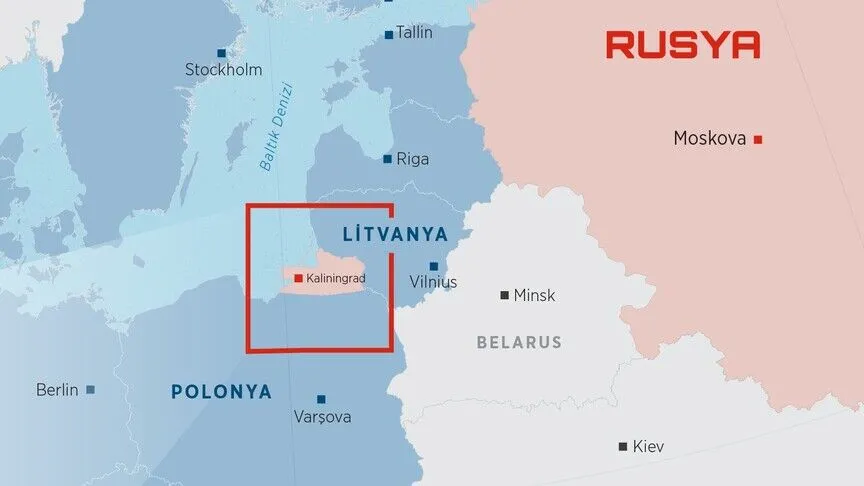

Moscow is hellbent on messaging to NATO that Kaliningrad — its exclave that is nestled between Poland and Lithuania on the Baltic Sea — is the new nuclear red line in Europe.
In the wake of “The Wargame” — a British TV miniseries being aired by Sky News that explores the United Kingdom’s potential responses if attacked by Russia — the Kremlin sent a formal demarche to NATO, accusing the 32-member alliance of pursuing a “dangerous and reckless course” by threatening Kaliningrad.
The Russian diplomatic note also declared that “Russia [is willing] to use the entire arsenal of forces and capabilities at its disposal, including nuclear weapons, in order to defend its territory, should NATO countries undertake any attempt at isolating the Kaliningrad Region from the rest of the country.”
Brussels quickly brushed it off. NATO formally reminded Moscow that the organization is a defensive alliance and that “None of NATO’s exercises or activities pose a threat to the territory of the Russian Federation.”
NATO also called on Russia “to end its unprovoked full-scale invasion of Ukraine” and “to cease its irresponsible nuclear rhetoric.”
It should have also called out Moscow’s misdirection and hypocrisy. The impetus for “The Wargame” series stems, in part, from repeated calls on Russian state-controlled media to nuke European capitals in retaliation for their support of Ukraine.
In September 2022, Olga Skabeyeva, known as “Putin’s Iron Doll,” agreed with her guest on Russia One’s “60 Minutes” that Russian President Vladimir Putin should have nuked Queen Elizabeth’s funeral and turned the United Kingdom into a “Martian wasteland.” Skabeyeva’s guest panelists lamented the missed opportunity, given that many world leaders, including then-President Joe Biden, were in attendance.
Four years later and Moscow is still at it. Margarita Simonyan, the head of the RT network and a Putin loyalist, accused the British media of playing “a little game of ‘Let’s pretend we’re going to war,’ terrifying their audience with fantasies of a clash with Russia.” Somewhat inconsistently, she then reiterated Moscow’s willingness to use nukes.
But it is Russia that is playing games here. Faced with ever-growing setbacks in Ukraine — Moscow is now not only suffering from strategic drone strikes but also losing captured territory due to Ukraine’s Operation Vivaldi — Putin is desperately looking for new ways to end Europe’s support of Kyiv.
Russia’s kinetic hybrid war against Europe is one way. Nuclear bluffing — a card Moscow has played since the start of the war — is another. The only difference now is that Putin is attempting to make Kaliningrad the new flashpoint.
But in doing so, Putin is unwittingly showing vulnerability. Kaliningrad is a hollowed-out shell of what it was before Russia’s invasion of Ukraine. As Polish Foreign Minister Radosław Sikorski pointed out earlier this month, “There are hardly any [Russian] troops [in the Kaliningrad exclave].”
Although Kaliningrad is still the headquarters of the Russian Baltic Fleet, the Baltic Sea itself has effectively become a NATO-controlled lake, after the accession of Sweden and Finland as the newest members of NATO.
Ostensibly, Kaliningrad’s primary defense is now its 100 or so nuclear-equipped Iskander-M missiles that are permanently based there. It has been denuded of most of its conventional military forces — including its once 12,000-strong 11th Army Corps — dispatched to Ukraine in 2022.
The 11th Army Corps still exists, but barely. It was mostly wrecked in Kharkiv during Ukraine’s successful 2022 counteroffensive.
Meanwhile, Kaliningrad — once rightly feared by Brussels as Russia’s unsinkable aircraft carrier strategically positioned in the middle of NATO territory — is highly vulnerable. Moscow’s nuclear Armageddon bluffing is simply the latest attempt by Putin and his Kremlin cronies to paper over this problem.
Nuclear bluffing aside, Russia is really just attempting to convince NATO it has military capabilities that now exist only in theory. In the past, Moscow has intentionally used Kaliningrad to threaten the Suwalki Gap — the 40-mile-wide land corridor connecting Poland and the other western NATO powers to their Baltic allies. Russia, every four years, conducts a joint military exercise with Belarus that often practices seizing this gap in order to cut Lithuania, Latvia and Estonia from the rest of NATO and its ground forces.
Notably, in 2025, this exercise included “a simulated use of [Russian] nuclear weapons.” Its strategic intent was clear enough: to bully Poland, the Baltic States, and the rest of Eastern Europe into submission.
Putin knows how the game is played. His armies ostentatiously practice attacking and defeating NATO, while Brussels conducts defensive exercises designed to simulate repelling Russian military forces from Europe. “The Wargame” — especially given that it was a harmless television show about a hypothetical — did not change the asymmetry of this situation.
Kaliningrad as the new red line is simply a Russian red herring. It is being used by Putin as domestic cover as his special military operation falters in Ukraine, and to deter NATO from responding to Russia’s growing kinetic hybrid war against the West.
*Mark Toth writes on national security and foreign policy. Col. (Ret.) Jonathan Sweet served 30 years as a military intelligence officer and led the U.S. European Command Intelligence Engagement Division from 2012 to 2014. They are the cofounders of INTREP360 and the INTREP360 Intelligence Report on Substack.
Source: https://thehill.com/opinion/national-security/6119493-kaliningrad-is-just-putins-red-herring/