

 Ahmet Demirhan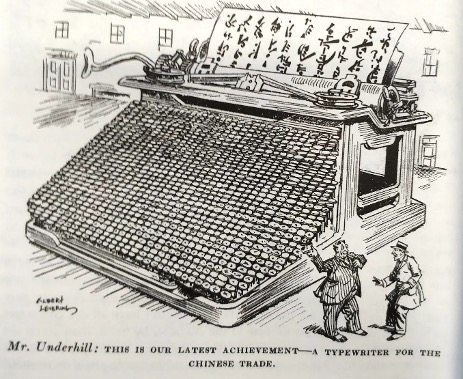

One of the rules regarding how the opening ceremony of the modern Olympic Games—based on legends about various games believed to have been played by the Greeks in Olympia in ancient times—should be conducted was established in 1921 by the International Olympic Committee, which oversees the organization of the Games on an international scale. According to the regulations published by the Committee, each participating country would march in a parade through the venue where the games were to be held, carrying a sign bearing the country’s name and a flag accompanying it, proceeding in sequence through the area where the games would take place. A note in parentheses within the regulations specified how the order of entry into the venue would be determined: “Countries proceed in alphabetical order.”
A minor adjustment was made to these regulations in 1949. Presumably to avoid confusion that might arise from the fact that the country we refer to as “Almanya” is known, for instance, as “Germany” in English but as “Deutschland” in German, it was decided that the opening parade in the ceremony would follow the alphabetical order of the host country’s language. Thus, while Germany would be placed according to the letter “G” in the parade order at the Olympics held in London, it would, let us say, participate in the parade according to the letter “A” at Olympics held in Istanbul. The idea behind such a practice is to eliminate the privilege created by a predetermined order by allowing the use of the host country’s alphabet. In this way, it is claimed that the regulation, by shifting to a relative application, is organized not according to the alphabet used by a single nation but according to a universal logic.
However, the first “glitch” regarding this rule—though it could have arisen in countries using the Greek, Arabic, or Cyrillic alphabets—strangely emerged at the 1964 Tokyo Olympic Games. Of course, Munich and Moscow had also hosted the Olympics before Tokyo. At the 1972 Munich Olympic Games, following Greece—which, as the legendary initiator of the Games, was designated to lead the parade at every Olympics—Egypt was placed second, and Ethiopia followed in third place. Still, for those familiar with the Latin alphabet version used in German, grasping the logic of this renders the resulting “glitch” invisible: in German, Egypt is called Ägypten; Ethiopia is called Äthiopien. Therefore, while this practice may not be very understandable for the Japanese or Chinese world, it is not seen as much of a “glitch” either. Similarly, in the order of the 1980 Moscow Games, Austria follows Greece, and Afghanistan comes after Austria. However, this too is regarded as a matter easily understood by those who know that the third letter of the Cyrillic alphabet, “в” (pronounced “v” in the Latin alphabet), comes before the 22nd letter, “ф” (pronounced “f” in the Latin alphabet)—that is, by those who can read an alphabet—and thus the “glitch” once again becomes invisible.
However, how the order would be determined according to Japanese writing is not a situation that can be easily understood by those familiar with the idea of an alphabet. Because the Japanese writing system, as a version of the Chinese writing system, possesses a distinct character, the possibility arises that the parade might, for the first time, be organized using a “non-Western” and even a “non-alphabetic” form of writing. The Japanese overcome such a “glitch” by determining the order in the parade according to English rather than Japanese. In other words, the order is arranged according to the country names in English. However, the expressions “non-Western” and even “non-alphabetic” are significant here and bring the issue of an alphabet problem to the forefront.
Of course, a confusion is observed at the 1988 Seoul Olympics: Greece is followed by Ghana and Gabon. However, probably due to the scale of China’s investment in the Games, the “alphabet problem” is brought to public attention for the first time at the 2008 Beijing Olympics. That is, beginning with the broadcasting organizations airing the ceremony, the press starts, for the first time at the Beijing Games, to speculate on what the expressions “non-Western” and “non-alphabetic” actually mean. Thus, the Beijing Olympics are remembered in Olympic history as the first Games held in a country whose writing system is “non-alphabetic”—that is, the first Olympics in which the parade did not proceed according to the alphabetical order of countries.
Of course, in this presentation, while the ordering system observed in previous Olympics had, at least for Western eyes, a structure that could be understood, the fact that the system applied in Beijing was entirely unique also plays a role. To illustrate through the example of Turkey, our country enters fourth in the parade at the Beijing Olympics—after Greece (which enters first as the legendary organizer of the Olympics and thus the so-called original owner), Guinea, which enters second, and Guinea-Bissau, which enters third. Turkey is followed by Turkmenistan and Yemen. The sequence then continues with the Maldives, Malta, Madagascar, and so on. To make the issue clearer, let us say that Jamaica in 19th place is followed by Belgium in 20th place; and Andorra in 90th place is followed by Tonga in 91st place. In other words, if we look, for instance, at the first seven entries, the sequence proceeds as G, T, Y, M according to an alphabetical order. But why was such an order established?
The Chinese Olympic Organizing Committee, with the approval of the International Olympic Committee, decides to adopt a practice that has been known in China for centuries in the writing of country names in Chinese characters. Accordingly, countries are ranked based on the number of brush or pen strokes required in the rendering of their names in Chinese characters. For example, Turkey’s name in Chinese characters is written as 土耳其 (Tu’erqi): the first character, 土, which produces the “tu” sound, requires three brush or pen strokes. Consequently, Turkey requires more brush or pen strokes than the character 几, which produces the “ji” sound at the beginning of the Chinese rendering for Guinea, 几内亚 (Jineiya), and which requires two strokes. For this reason, Turkey is placed after Guinea in the ranking. Nevertheless, this criterion for ordering is also insufficient. Because the Chinese rendering for Yemen, 也门 (Yemen), also contains three strokes. So how, then, should the ordering be determined?
According to a principle claimed to have been traditionally used in China, the total number of brush or pen strokes required to form a Chinese character—eight in total—is adopted as a second criterion for ordering. The total of eight stroke types consists of dot, horizontal, vertical, left-falling diagonal, right-falling diagonal, rising, downward- or right-curving, and hook-shaped strokes. Accordingly, the Chinese renderings of country names are arranged by also taking into account their features within this principle. In this sense, since the “tu” (土) component in Turkey’s Chinese name consists of horizontal, vertical, and horizontal strokes, and considering their positions in the ranking, a 2-3-2 hierarchy is observed; whereas Yemen’s “ye” (也), consisting of downward-curving, vertical, and downward-curving strokes, corresponds—according to the ordering in the principle—to a 7-3-7 hierarchy. In this sense, since the name “Turkey” comes before the name “Yemen,” Turkey appears before Yemen in the parade.
It should also be noted that if, instead of resorting to a system claimed to be traditional for such an ordering, the Chinese Olympic Committee had adopted, for instance, the Pinyin system—which organizes Chinese ideograms or characters according to the Latin alphabet—the sequence would have taken on an entirely different arrangement. Of course, it should also be remembered that there are various alternatives to the Pinyin system; however, in an arrangement based on the Pinyin system, Ireland—written as Aìěrlán after Greece—would have been in second place instead of 159th; Ireland would have been followed by Egypt, written as Aījí, and Ethiopia, written as Aīsāiébǐyà, which are currently ranked 146th and 147th. However, the Pinyin system—developed by Chinese linguists nearly a decade after the Chinese Communist Revolution; generally referred to as “characters,” though sometimes described as ideographic; possessing a field of use parallel to Chinese writing; regarded not as a “Chinese alphabet” but as the use of Chinese in harmony with the Latin alphabet; and whose emergence is also connected to the history of developing a phonetic alphabet that began with modernization in China and therefore requires separate consideration—already contains an arrangement based on the Latin alphabet; thus, the logic would once again return to the logic of the alphabet, and China’s “non-Western” and “non-alphabetic” characteristic might not have attracted attention.
From this perspective, the fact that the Chinese arrange their own written characters according to what they claim to be traditional brush or pen strokes (there will, of course, be those who argue that this alienates China from the global public; however) should be seen as a subtle and cunning move displayed at the opening of an Olympic Games watched by millions around the world. From this perspective, what needs to be noted is that—setting aside the question of what a Chinese typewriter might look like, which is difficult to imagine for those who use the Latin, Arabic, Cyrillic, or similar alphabets (though not for those who use hieroglyphic writing, as we will return to later)—in a technological field calibrated to the Latin alphabet, ranging from Morse code to all kinds of software that are extensions of Turing machines, and from computer codes to optical scanners, China chose to present itself at the Olympics as a country “without an alphabet” in a way that prompts curiosity about what and how the Chinese actually do things. This does not resemble wondering how the Chinese, Koreans, Japanese, or speakers of languages with distinct characters (such as Filipinos who use the Tagalog script) are able to send these messages in brief communications.
Indeed, how do nations without an alphabet adapt technological products that require software to their own writing systems? Being “non-Western” may perhaps be understandable; but what does “without an alphabet” mean?
Answering this question by invoking the concept of globalization, as is generally done, would be an oversimplification, despite the fact that technological software is of Latin origin. A brief investigation may show us that, despite all these different characters, a Chinese typewriter does indeed exist. However, this is not the real question; the real question is how those who possess an alphabet imagine those “without an alphabet,” and what this truly means. In this sense, claiming that China has begun to adapt to informational developments by leaving Chinese characters behind is another form of oversimplification. Clearly, the Chinese are able to adapt themselves to such technologies with ease. Moreover, such oversimplification is not new when it comes to Chinese characters and can, for instance, be traced back to Leibniz’s thoughts on China.
Therefore, to view the demonstration of techno-linguistic skills by the Chinese or other “non-alphabetic” peoples as the emergence of a new and “universal” system—independent of any language—triggered by globalization is akin, in a way, to Heidegger’s writing of Being with a strikethrough because he could never fully grasp it within language, to his writing of Being as such in order to show it beyond mere presence; and to Derrida’s attempt to render the gaps or absences within writing a part of grammatology; it resembles, along with Chinese characters, the erasure of all writing systems, whether alphabetic or not. From writings on the history of the Chinese typewriter, we can readily see, for example, that the failure of brands such as Remington and Olivetti to enter the Chinese market stemmed from the difficulty of imagining a Chinese typewriter; and that this, in turn, served to conceal the techno-linguistic skills of the Chinese.
There has never been an “alphabet universalism”; acting as if there were should be regarded as equivalent to assuming that the “alphabet” has been universalized. Especially in information technologies, which have come to be referred to as “communication,” the fact that imagining—and even implementing—a Chinese typewriter appears not merely difficult but impossible, and that certain prototypes designed by renowned typewriter companies were not found usable by the Chinese and could not be used by them, is not an issue that can be resolved simply by saying, “because the Chinese have no alphabet.”
Because—even if not in a pandemic sense—there is no “virus” in China in terms of coding; and claiming that all “viruses”—whether those that paralyze computers or are coded as tools for theft—are “alphabet”-based is equivalent to this; thus, considering how the coronavirus spread from China to the entire world, it reveals the absurdity of, for example, U.S. President Donald Trump calling this virus the “Chinese virus.” If there is no “alphabet” in China, and if the programming languages used in technolinguistics are also “alphabet”-based, then there cannot be a “Chinese virus.” But we know that this is possible. Classifying writing systems into three categories—alphabetic, ideographic, and pictographic—as is generally done today is also a form of “alphabet” logic.
At the very least, in order to tie the subject together within the context of this text, it may be appropriate to compare the Chinese arrangement of the opening ceremony lineup of the Beijing Olympic Games—based on their own characters under the guise of a supposedly traditional practice—with the expression on the face of German Chancellor Friedrich Merz during a performance staged for him during his visit to China in February 2026. The Chinese delivered their message to the world at the Olympic Games: We have no alphabet; we write our script with characters formed by brush or pen strokes. This, of course, may constitute a source of astonishment for those with an “alphabet” and even serve as a basis for a new attempt at exoticization, frequently encountered in missionary reports or travelogues from the Enlightenment period.
However, during the performance staged for him on his trip to China, as “robots” designed in a “humanoid” manner put on a show, there was more on Merz’s face than the expressions of a Western tourist visiting the Great Wall or the Forbidden City. When considered with a sober mind, the “robot” performance—which could be likened to a high school student’s show who, if given the opportunity, might draw the Turkish flag in the sky with drones—gave rise to signs on Merz’s face that reflected astonishment and bewilderment alongside a smile, curiosity, and interest. It is also possible to find similar themes behind the supposed difficulties of imagining that the parade at the opening of the Beijing Olympic Games was organized by those “without an alphabet,” or even of envisioning a Chinese typewriter.
This can generally be described as the difficulty of imagining China as possessing an “alphabet,” or even the difficulty of attempting to conceive China through frameworks such as human rights, democracy, the rules necessary for an international order, and similar constructs.
* Photo: A cartoon of a “Chinese typewriter” published in Life magazine in 1927