 Sayid Marcos Tenorio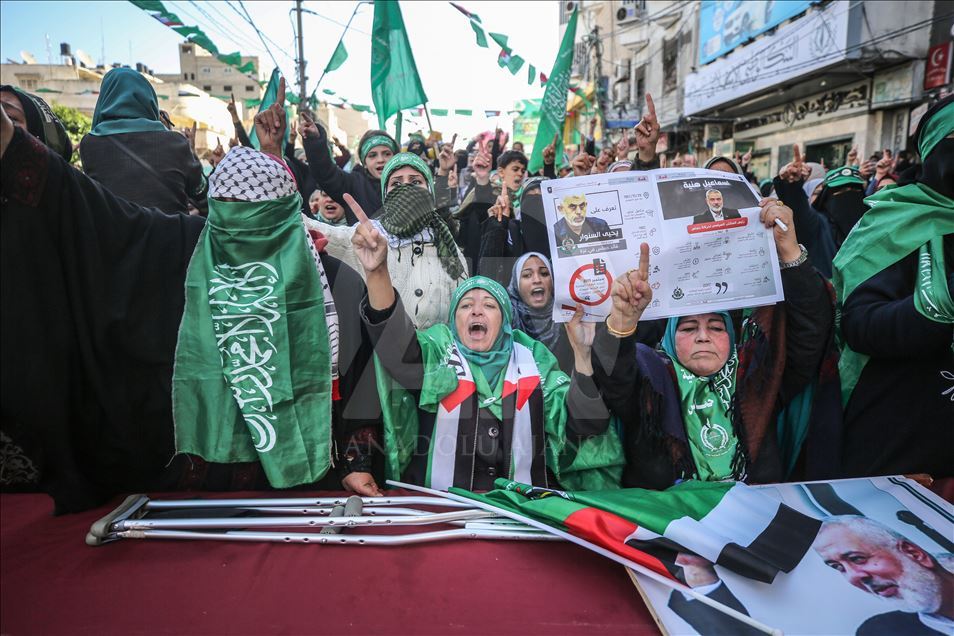

The emergence of the Palestinian Resistance Movement (Hamas) in the course of the First Intifada, 38 years ago, must be understood within the historical context of an ongoing process of colonisation, military occupation and the systematic denial of rights to the Palestinian people.
It was not an isolated episode nor a gratuitous radicalisation of the liberation struggle, but rather a qualitative shift in the Palestinian national struggle, through which a people subjected to Zionist apartheid refuses to accept submission as its destiny, asserting instead its historic right to freedom, land and dignity.
Hamas embodies the collective refusal to accept the loss of its land, the desecration of its sacred sites and the destruction of its social and political life, affirming itself on a daily basis as an organic part of the Palestinian national liberation struggle, with its own political project and a vision that goes beyond military immediacy.
The struggle for the liberation of Palestine has never been confined to the rhetorical or symbolic plane. It has materialised as concrete political practice, forged in refugee camps, in besieged cities, under blockades, bombardments, arbitrary arrests and the ethnic cleansing imposed by the Zionist occupation.
The memory of the martyrs occupies a central place in this trajectory. Not as an abstract exaltation of death, but as an affirmation that the Israeli occupation is sustained by extreme violence and that resistance is the inevitable response to the systematic denial of the Palestinian people’s right to life.
The extensive list of Palestinians killed, wounded, imprisoned and persecuted dismantles the narrative that stubbornly presents this as a clash between equivalent parties. The battles fought across the entire expanse of Palestine demonstrate that there has not been a single period of genuine peace under occupation.
Since its founding, Hamas has acted on multiple fronts: in direct confrontation with military aggression, in political struggle, in the construction of a national consciousness of liberation and in combating colonial narratives that seek to depoliticise the Palestinian question.
The Movement has systematically opposed all projects that sought to liquidate the Palestinian cause through unequal agreements, simulated peace processes or “normalisation” initiatives that ignore the reality of occupation, apartheid and genocide.
Its presence in the national liberation struggle has profoundly marked the recent history of Palestine, not only through armed resistance, but through its capacity for social mobilisation, popular organisation and symbolic confrontation with the colonial discourse that seeks to reduce Palestine to a “humanitarian problem”, erasing its moral and political dimensions.
Territorial fragmentation, the existence of distinct legal systems for different populations, spatial segregation, forced population transfer and the systematic denial of political and civil rights are not rhetorical accusations, but facts widely documented by international human rights organisations.
Despite this, the response of the so-called “international community” remains marked by selectivity and hypocrisy, even though international law explicitly recognises the right of peoples under colonial domination and foreign occupation to self-determination and resistance.
However, when it comes to Palestine, this right is systematically denied. Palestinian resistance is criminalised, while the occupier enjoys impunity, diplomatic protection and military support from the great powers.
In this scenario, unity is not an abstract ideal, but a strategic requirement. The political and geographical fragmentation of the Palestinian people was deliberately produced as an instrument of colonial domination. The continuity of resistance does not stem from ideological obstinacy, but from historical, moral and legal coherence.
Only Palestinian national unity, through the convergence of national energies, can confront a colonial project that relies on military power, imperialist support and international complicity.
A people deprived of sovereignty, expelled from its land and subjected to an apartheid regime cannot be compelled to accept injustice as a permanent condition. Liberation is not a concession from the occupier, but a right to be realised by the oppressed people.
Thirty-eight years later, Hamas’s message remains clear and current: Palestine has not been defeated, nor erased. The ruins of Gaza, the siege of cities and the continuous expansion of colonial settlements do not demonstrate the failure of resistance, but rather expose the brutality of a colonial system sustained by violence and international omission.
As long as there is occupation, there will be resistance. As long as injustice and apartheid exist, the struggle for the liberation of Palestine will remain legitimate, necessary and historical. The history of Palestine is, above all, the history of a people that refuses to disappear.
Source: https://www.middleeastmonitor.com/20251217-hamas-at-38-the-resistance-to-erasure-continues/