 Hal Brands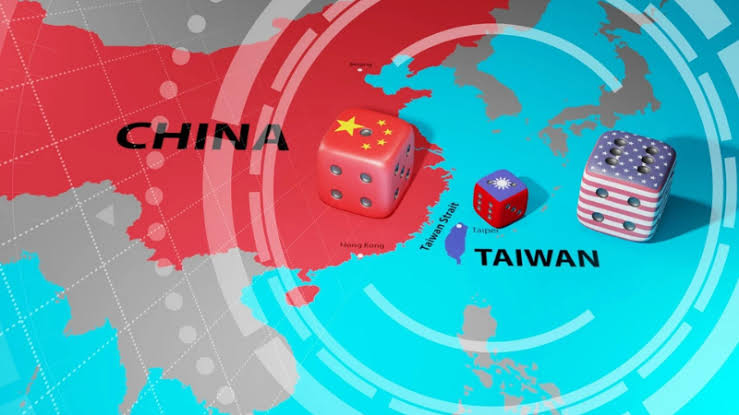

Something ominous is happening in the western Pacific, and the US isn’t ready for it.
Earlier this month, the Chinese Coast Guard contacted three ships in international waters near eastern Taiwan, demanding they identify their points of origin and destination. China didn’t stop these vessels. But it was asserting a right to police maritime traffic near Taiwan — and, perhaps, previewing a major crisis that could be just a year or two away.
Many China-watchers worry that a Taiwan crisis might occur next year. According to US intelligence agencies, General Secretary Xi Jinping has ordered the People’s Liberation Army to be ready for action against Taiwan in 2027. Yet the critical moment might instead be January 2028. That’s when Taiwan holds its next presidential election, and when Xi might decide to force the issue.
Admittedly, things seem calm now. The last major Taiwan crisis occurred nearly four years ago, when then-House Speaker Nancy Pelosi visited the island. US-China relations seem to be at a temporary truce: Xi and President Donald Trump committed to “constructive strategic stability” at their May meeting in Beijing.
But don’t be fooled.
Xi is assembling the military strength to subdue Taiwan and force unification with the mainland, while steadily increasing the day-to-day pressure in actions short of warfare. Taiwan is consistently ringed by Chinese naval vessels. Chinese forces challenge Taiwan’s airspace and waters; they conduct short-notice exercises that simulate an invasion or blockade. Beijing continually pummels Taiwan with cyberattacks, disinformation and espionage. Things only seem calm because Xi has normalized this malign, multifront war of nerves.
China’s goal is to win without fighting, while readying the military hammer if a fight proves necessary. Xi seeks to demoralize the Taiwanese population and sow doubts about America’s support. He hopes that an isolated, vulnerable society will ultimately accept coerced unification. And sooner, rather than later: The 73-year-old Xi doesn’t have all the time in the world.
His strategy thus requires bringing a compliant Taiwanese government to power. Which makes the 2028 election a flashpoint.
Chinese propaganda outlets deride Taiwan’s president, Lai Ching-te, as a pro-independence radical. Xi won’t stand by if Lai rallies his Democratic Progressive Party base with strong statements about Taiwanese sovereignty. Xi could seek to influence the election through sharper coercion — for instance, missile tests and large, nerve-wracking military drills — meant to show that a Lai victory will bring four more years of danger.
Yet since 2016, such pressure has pushed Taiwanese voters away from Beijing’s preferred candidates. A second possibility, then, is that Xi will react badly to an electoral outcome he doesn’t like.
Xi’s favored candidate is Cheng Li-wun, the woefully naive chair of the opposition Kuomintang (KMT), who traveled to Beijing this spring to seek closer ties with the mainland. But Cheng won her position in a closed vote limited to KMT party members. She has played politics with Taiwanese security by blocking critical parts of a special budget meant to arm the island against the Chinese threat.
Cheng’s policies may repel moderate voters who already distrust the KMT on national security issues. Lai — despite his low but improving approval ratings — could squeak through to reelection. Or perhaps the KMT will win by ditching Cheng in favor of a more strategically sober candidate.
Either way, Taiwan would have a government that won’t go nearly as far or as fast on unification as Xi wants. The resulting frustration could cause him to dial up the pressure even more.
That wouldn’t require an invasion. Building on the Coast Guard’s recent moves, Xi might impose a “customs quarantine” instead. Beijing might selectively harass air and maritime traffic to Taiwan. It could demand that ships bound for Taiwan first clear customs on the mainland. The point would be to shock the Taiwanese system by showing how easily China can suffocate the island — and how hard it would be for the US to push back.
Breaking a quarantine would be difficult under any circumstances, because it would require the US to exert counterpressure on Beijing — perhaps trade, financial and technological sanctions combined with international diplomatic condemnation and preparations to break the quarantine militarily, if necessary — without bringing unwanted escalation. Unfortunately, Trump’s climbdown in the trade war he started last year has given Beijing the impression that Washington won’t risk a contest in coercion.
Indeed, Trump has signaled that he has little appetite for a Taiwan crisis; he is slow-rolling arms sales to avoid spoiling his next meeting with Xi, planned for September. The Pentagon is more focused on the threat of invasion than on a quarantine or other gray-zone scenarios. And in early 2028, the US will be consumed by its own electoral madness. Xi might push hard in hopes of breaking Taiwan while Washington’s attention is elsewhere
There are steps the US should be taking to prepare. Trump should conclude a planned $14 billion arms sale to Taipei, showing he won’t appease Xi at the cost of Taiwan’s security. The US needs to refine options for hitting China’s economic pressure points, such as further constricting its access to jet engine components and advanced semiconductors. It should intensify preparations with Japan and other partners to assist Taiwan in a crisis. To its credit, the Trump administration is expanding such military cooperation through more ambitious multilateral exercises, deploying missiles and other advanced capabilities, and other means. And while hugging the Lai government tight, Washington should also discourage hot rhetoric in the election campaign.
Firm deterrence and prudent diplomacy will both be necessary if “constructive strategic stability” turns into the next great Taiwan crisis come 2028.
Source: https://www.aei.org/op-eds/a-taiwan-crisis-is-coming-and-xi-may-not-wait/