 Dylan Neri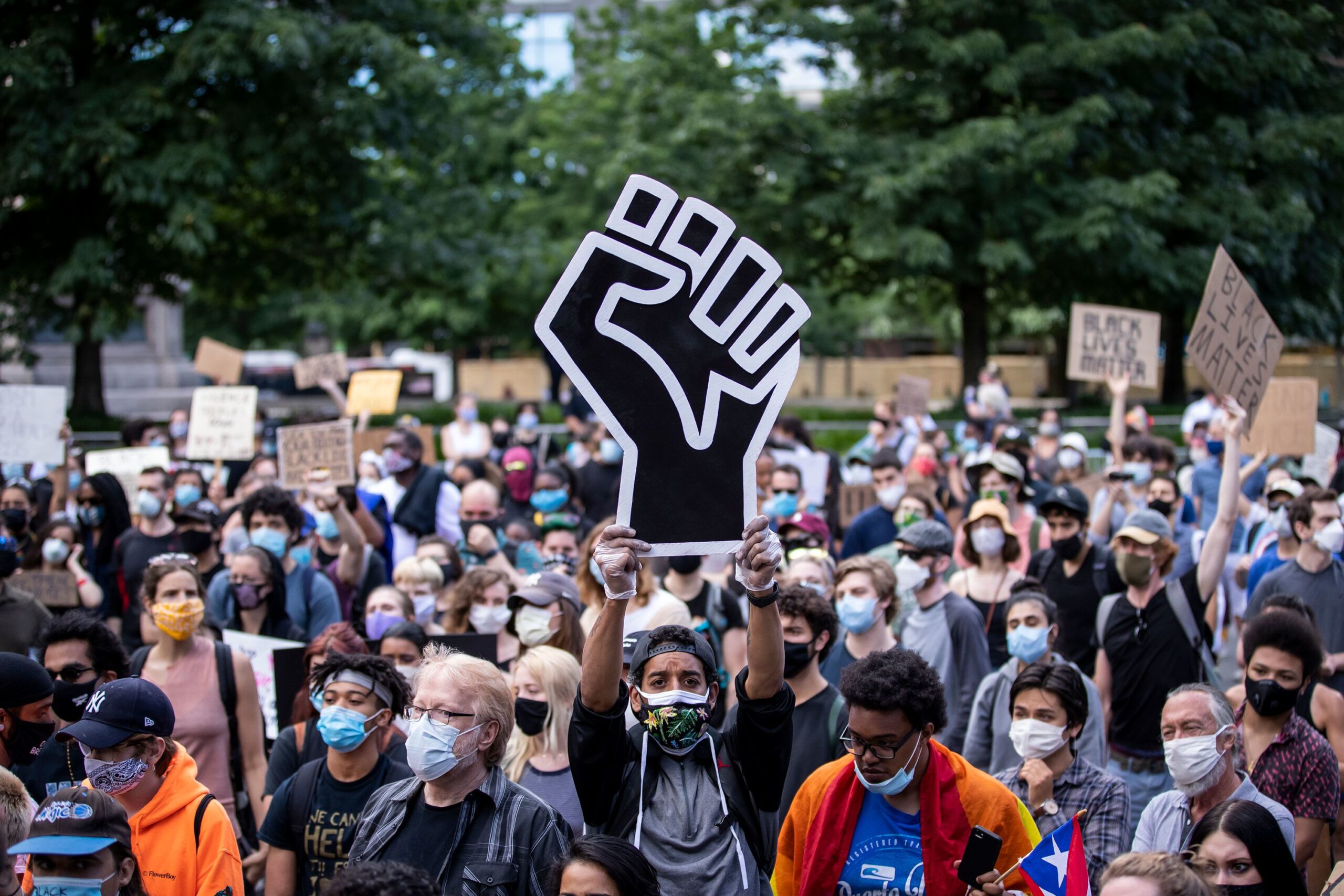

The average citizen, far from being Aristotle’s ‘political animal’, is largely ignorant of political affairs; but he is aware of one thing: nothing works. And why shouldn’t he be aware? Everywhere he looks he sees decay. Public transport, the roads, the health service, housing, education. Then there’s the cultural decay; the increasingly worthless wages; the homelessness. Those with enough money to avoid the very worst of it are growing tired of the endless delights of the consumer economy. Superficial ostentation and overpriced bars and restaurants just don’t cut it for the human spirit. (For if all the world were playing holidays…) And those non-consumers (and thus ‘non-citizens’), who can’t afford to partake in the endless pleasures of a ‘healthy business environment’, or ‘modernity’, or ‘progress’, are beginning to stir, their ranks beginning to swell, though the cause of their anger and apathy is not clear to them; or to anyone else for that matter. With a privately run portable propaganda machine in the pocket of every consumer and no education to counter it – not to be understood in the conservative, citizen-making sense as ‘good schooling’, but instead as a culture of reading and free and open discussion, without which it is nearly impossible to understand how we got here or where we are going – and the modern left’s emphasis on cultural and ‘racial’ identity over universal human solidarity (severed as the body of the left is from its head, the working class) the average person, and the exceptional elite, intellectual, prophet, blames the traditional scapegoat, the immigrant.
That said, it is clear that immigration is, as they say, ‘an issue’ in our progressive society, because the importation of a labour force which, by its exploitation, will drive down wages and standards (the free market ideal) is sure to cause conflict among those who must compete with them for increasingly scarce resources (the very poor). Particularly if the indigenous population has become accustomed to certain standards of living and working (or at the very least, the principle of such standards) owing to hundreds of years of preliminary class struggle. Particularly if, as in parts of Newcastle, such as its perennially forgotten west, much of the former working class has transmuted into a conservative, homeowning neo-peasantry, which looks to the ruling class to guarantee its meagre existence by beating down the precarious workers and immigrants who trouble their peace and security. That the importation of cheap labour from those formerly outsourced centres of exploitation now extends to middle-class professions is deliciously ironic but deeply dangerous if reality is not to be faced with any seriousness. For then a serious man will come along and ‘tell it as it is’. Which is to say he will lie; but because everyone else lied before him in order to maintain the status quo, his lies will seem to be true; or at the very least better than more sanctimonious and obviously deceitful lies. And much of the credulous and poorly educated population is ready to believe.
Because everyone is aware: nothing works. Everyone, it seems, but for those in power (and the intellectuals who rely on them for a living). For another phenomenon of our time is the growing disconnect between the opinions of the electorate and the decisions of those in charge. Hence the increasing number of people across the West, especially the poor, who no longer vote. Who recognise that they must play no meaningful role in society, merely observation and survival. Who know that they are better off praying, or else accepting their fate.
The startling thing about this is that it does not lead to mass popular action against the ever denser concentrations of power and wealth (essentially a tautology) but to the resignation that ‘democracy’ does not work – accepting without question the definition of democracy as offered by those who deny it – and that ‘if only a good politician might come along and fix this mess…’ (The prayers for the tardy though eventual return of the prophet at the end of days.) Thus Walter Lippmann’s manufacture of consent is really the manufacture of apathy. The ‘consent’ merely represents the agreement that the masses must not be trusted to guide policy; that popular democracy is the most dangerous form of government; that a ruling elite is necessary for the perpetual prosperity of mankind, for the endless pursuit of happiness, as demonstrated by Sisyphus (finance options available). Jefferson may be the author of the world in which we live, but it’s the spirit of Hamilton that survives in an age when nobody reads.
But this isn’t completely true. Mass popular action is simmering under the surface in the council estates, in the slums, on the streets, in the JobCentres and the pubs. Hence the flag protests; hence the riots of 2024. What is missing is organisation.
As Rana Dasgupta has argued convincingly in his work End of Nations the clearest historical parallel with modern capitalism is the early period of the British Empire, when new (free) markets were blown open by private power and the primitive populations rescued from further ignorance of Christ and Smith. In our modern version (that is, the farce, not the tragedy) the privateers and heralds of ‘progress’ (always defined by those who bring it) are played by the multinational technology companies and financial institutions. Then as now the distinction between private and state power was ambiguous (irrelevant?); the one necessitated and fed the other. Or to quote the journal International Affairs: ‘Private US internet capital and digital platforms such as Alphabet, Meta, Amazon, Apple and Microsoft are acquiring forms of infrastructural power exercised traditionally by the US state.’ Thus President Trump’s ‘science’ advisor, Michael Kratsios, argued that the ‘best way forward for America was for Silicon Valley to chart its own course independently without government intervention.’ Then as now the organisation of industry (and therefore labour) was unnecessary. The immediate problem for the state was merely sustaining the minimum lifeforce of an insecure and apathetic population to keep it from rioting (or dying; labour, housed as it is within the mortal constraints of the human flesh, unfortunately must be kept alive). The gradual ceding of rights only began with the eventual organisation and unionisation of labour against the importation of free market forces at home.
And yet, since the early 1980s (the advent of the neoliberal coup) union membership rates have decreased drastically; a 2019 report found that ‘while 51 percent of employees were union members in 1983, only 24 percent were in 2019.’ The drop was ‘consistent across both men and women, across age groups, and in both the private and public sectors.’ And though ‘the latter remains substantially unionised’ (in fact less than half of public sector workers are members of a union), about 82 percent of all workers are employed in the private sector, and only 12 percent are in a union. In the modern state, with its ideological commitment to maximum worker insecurity and total employment – despite the fact that ‘stagnant real wages that have characterised the UK since the mid-2000s in spite of low unemployment levels are at odds with the conventional view that unemployment and wage growth are negatively associated’ – the essential conditions for a worker-based movement are rapidly deteriorating. And with the ceaseless propaganda assault on the welfare system, those who, for whatever reason, wish no part in the consumer economy are increasingly reduced to a ‘choice’ between starvation and meaningless work for its own sake (or ‘bondage’). In a previous age the justification for such treatment of the poor, the paupers, the peasants, the ‘mentally ill’, the radicals, the vagabonds was their innate sinfulness. Today our leaders, children of the Enlightenment as they are, use a rational vernacular, and we call such people ‘scroungers’ or ‘lazy’, or worse. ‘Starve or work’ is the slogan of the worker in our modern democracy; and more of them are taking their chances, in the hope that fasting might bring forth revelation.
But class consciousness and worker unionisation, though useful prerequisites for meaningful popular action, are not essential. As E. P. Thomposon showed us, the working class of England forged itself into being out of darkest ignorance in reaction to the inhuman atomisation and cultural degradation caused by rapid industrialisation. Before that the radicals of Christopher Hill’s history of the English Revolution – the Diggers, the Levellers, the Ranters, the Quakers – threatened ‘to turn the world upside down’, arguing only that authority must always justify itself, whether sacred or secular, and that if it could not, then it had no right to survive. And before them the peasants; and before them…
Education and organisation merely give reason and direction to the latent impulse of human nature; an impulse perennially distorted by an elite minority claiming moral and intellectual authority. This is essentially the origin of the modern state. Hence Thomas
Paine’s perfect logic in taking the justification for government authority – ‘a necessary evil’ – and universal human rights back to Eden; that is to say, either these things are innate and unarguable or else they derive from Protean human ideals. Hence Milton’s defence of those ‘known laws of ancient liberty.’ The point is, we must decide in advance. The history of revolution is the history of the force of the human spirit, which can only take unjust and arbitrary degradation for so long.
The people are aware: nothing works. And yet this is cause for optimism. For it is only a short mental step to the realisation that this is no coincidence; that in fact everything works, when viewed from the proper perspective. The perspective of private power. The essential contradiction within the modern economic system is that it creates the parallel society that will destroy it.
The swelling mass of that most terrifying of citizens, the ‘masterless man’, with nothing to lose and everything to gain, will eventually rediscover what it already knows: that man is a political animal, and his destiny lies within the latent power of the masses; that is, within the ideal of true democracy and the free expression of the human spirit.