 M. Yalçın Yılmaz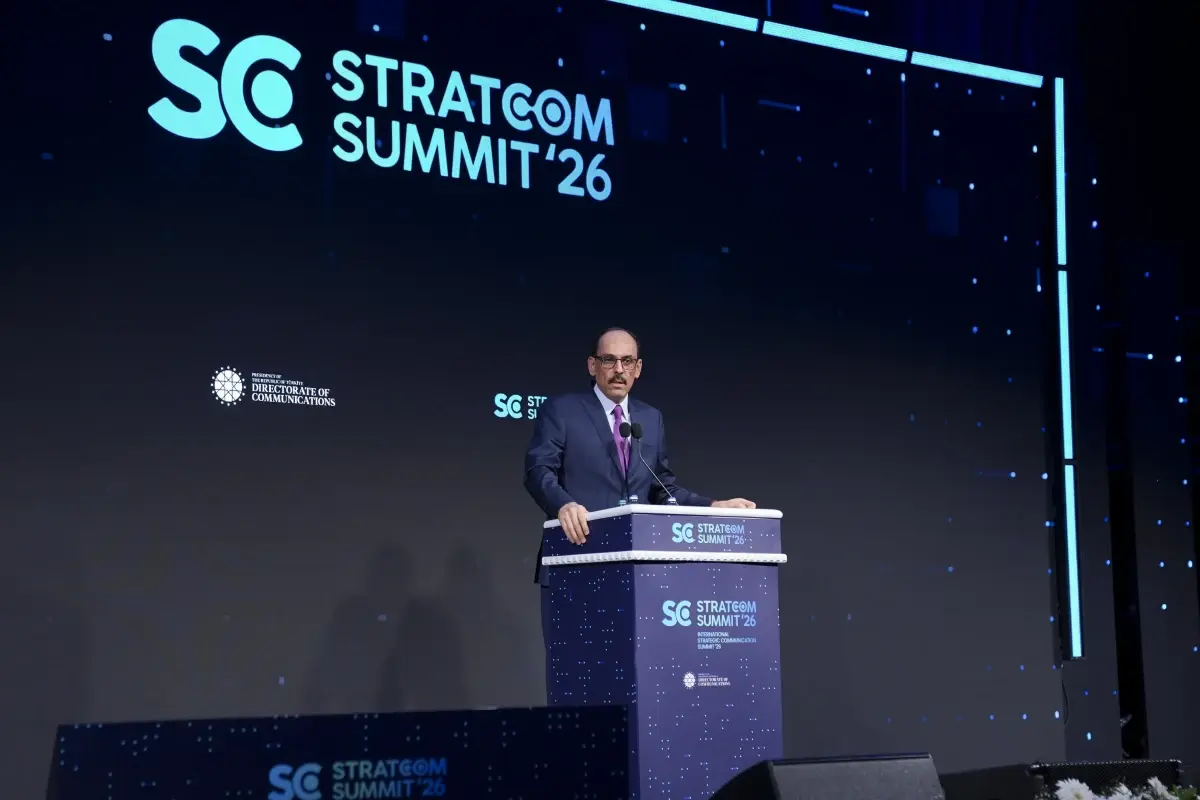

The speech delivered by Director of the National Intelligence Organization (MIT) Prof. Dr. İbrahim Kalın at the STRATCOM Summit on March 28, 2026, at first glance was read as a security assessment of the war environment we are in. The conceptual density in the later parts of the speech, however, was reduced by some merely to intellectual inquiry and idealism. When we focus on what lies between the lines, we are able to search for the answer to the question of what İbrahim Kalın— who, at the top of the security bureaucracy, possesses far more data than any of us regarding the course of the world—actually wants to say.
Indeed, the current political backdrop of the text is extremely clear. The Russia-Ukraine war has entered its fifth year. Destruction continues in Gaza. The effects of the Syrian process are still ongoing in the region. And amid all this, the Israel-U.S. versus Iran war, which began on February 28, continues to unsettle the world despite a partial ceasefire. Kalın devotes a significant portion of his speech precisely to these issues. He describes Türkiye’s efforts to prevent the war, its determination to remain outside the conflict, and its efforts to prevent the entire region from turning into an inferno
But reading the speech solely on this level would be incomplete.
Because after listing the developments on the ground, Kalın moves the speech to another plane. There, it is no longer only about war, diplomacy, and security. There is truth. There is knowledge. There is narrative. There is wisdom. In fact, there are concepts—such as postmodernism, the informational catastrophe, the dark enlightenment, and the conception of being—that we are not accustomed to hearing in a speech by an intelligence chief. This, in turn, inevitably raises the following question: Is Kalın here merely interpreting a war, or is he trying to construct a new intellectual and geopolitical framework on behalf of Türkiye?
In my opinion, the second possibility is stronger.
THE SUM OF CRISES OR THE CRISIS OF THE SYSTEM?
One of the most striking aspects of the Stratcom speech is that it does not present current developments as disconnected events. The Russia-Ukraine war, Gaza, Syria, and the Iran file are not listed as separate headings. Instead, they are presented as interrelated parts that feed into the same international fracture. Kalın’s expression, “a world system based on unpredictability, fragility, and the arbitrary use of power,” is decisive here. In other words, what is being described is not merely the increasing diversification of wars, but an international system whose capacity to produce wars has increased while its legitimacy to resolve crises has weakened.
This perspective shows that the dominant view in Ankara does not consider the issue solely within the framework of regional security, but that the search for diagnosis and treatment is shaped by a broader dimension of systemic crisis. In other words, in Kalın’s speech, the chaotic atmosphere we are currently facing is essentially treated as a form of the deterioration of order.
THE FIRE OF DISCORD AND THE FATE OF THE PEOPLES OF THE REGION
One of the most political statements in the speech is the emphasis that “this war does not only target Iran’s nuclear capacity, but also seeks to create the groundwork for a fratricidal conflict that will last for decades among Turks, Kurds, Arabs, and Persians.” What is being described here is not “destabilization” in the classical language of security; it is a deeper, more social, and more historical rupture. The speech emphasizes that the war does not merely threaten the states established in the 20th century, but also targets the social fabric of the region.
Expressions such as “not fueling the fire of discord” and “extinguishing the fire within our own chest if necessary” indicate that Türkiye sees itself not as a party to the war, but as a center striving to prevent this fragmentation. This language also carries a claim to moral superiority. However, what is truly important here is that it gives the impression that the role Türkiye has assigned itself in regional politics may no longer be limited to diplomatic mediation alone. This is because the idea of a “security architecture based on the region’s own dynamics,” repeatedly emphasized throughout the speech, appears to signal a broader pursuit. It would be unreasonable to expect more beyond these statements. We can understand that Ankara intends to continue the constructive and restorative stance it adopted in the Syrian field in the recent past in the arenas of Lebanon, Iraq, and even Iran.
In the second part of the text, as İbrahim Kalın moves from geopolitics to epistemology, he argues that the grand narratives of postmodernism do not bring about a freer, fairer, or more rational world; on the contrary, they pave the way for a darker era in which truth is denied, knowledge is instrumentalized, and reality is rendered arbitrary. The emphasis on the “dark enlightenment” comes into play exactly at this point. Inspired by the British thinker Nick Land, this concept, which illustrates the fate of the post-cyberculture (accelerationist) human, essentially reminds us that war is not so much a military crisis as it is the result of a mental and conceptual degradation.
FROM HEIDEGGER’S CABIN TO STRATCOM
Here, it is necessary to recognize the intellectual quest of the 1990s in Kalın’s intellectual background. The emphasis on “truth,” “being,” “knowledge,” “wisdom,” and “meaning” in the STRATCOM speech is not coincidental. İbrahim Kalın seeks to bring together the language of the security bureaucracy with a critique of modernity, and at times with the wisdom tradition of Islamic thought. This is not an easy synthesis. Yet, one senses that this is precisely what is being attempted.
Ultimately, Kalın reads today’s geopolitical crisis not only as a crisis of hegemony and power distribution, but also as a crisis of meaning and truth. Therefore, the solution is not merely more hard power, more defensive lines, or proactive diplomacy. It is also about developing a political intellect that can construct its own narrative, think with its own concepts, and is not confined to the linguistic universe of others.
WHAT DOES “TELLING OUR OWN STORY” MEAN?
What stands out in the final part of the speech is: “A story you have not named is not your story. If you speak using someone else’s syntax, even if you use your own words, you have not established your own language.” These statements are not only about communication policy. They concern how Türkiye will present itself to the world—and even how it will conceive of itself.
For this reason, reading the speech solely under the heading of “strategic communication” would be limiting. What is truly being proposed here is that Türkiye should combine its security vision with its capacity to construct narratives. In other words, the security wall and intellectual sovereignty are constructed within the same sentence. This suggests that the speech has moved beyond being a routine threat assessment by an intelligence chief and has transformed into a proposal for a broader intellectual framework on behalf of Türkiye.
For this reason, I read this speech not merely as a current crisis assessment, but as a draft outlining how Türkiye should position itself intellectually and geopolitically in the face of the new global disorder. Here, Kalın is not only explaining what the state is doing in the midst of war. He is also trying to provide a sense of direction regarding how Türkiye should think from now on.
Perhaps that is why the real issue is not the war itself.
The real issue is where Türkiye will stand—not only militarily, but also intellectually—in this new dark age produced by these wars.
By stepping away from the context of the speech on which this article is based, we may ask ourselves whether we can free ourselves from our habits or preconceptions in the face of the situation we are confronting today. When unforeseen decisions and necessities arise on the social level before Ankara, will we remain confined within the limits of our thinking, or will we shape our mental boundaries with our own truth and build peace in our geography? That is the real issue…
Source: https://www.star.com.tr/yazar/ibrahim-kalin-ne-soyluyor-yazi-2011225/