 Prof. Dr. İbrahim Kalın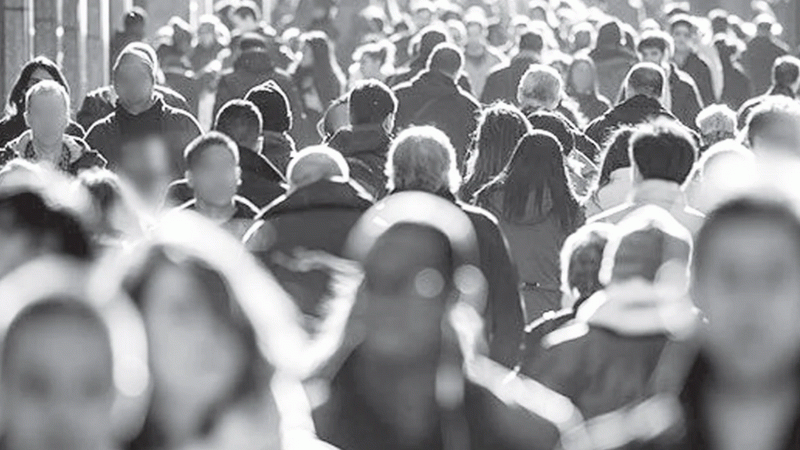

Source: YARIN Magazine, December 2002
When one reads the kind of news that measures the pulse of Türkiye, one cannot help but ask this question. On one side: suicides, fits of frenzy, divorces, corruption, fights, streets without sidewalks, neighborhoods without trees, malnourished children; hours consumed in public transportation vehicles that are little more than tin cans; dark, airless masses of concrete; homes devoid of aesthetic sensibility, crammed to the brim with objects… On the other side: human relations growing ever more decayed, coarsened, and rigid; friendships wearing away; faces perpetually sullen, sorrowful, anxious, tense; people who laugh only because they can say, “to hell with everything, damn it”; masses who no longer read, who merely stare at TV screens, newspaper headlines, and shop windows, whose vocabulary has shrunk to three hundred words…To speak about anything beyond political corruption and the struggle to make a living, to think, to reflect, to strain one’s mind has become a luxury in Türkiye. To speak of art, poetry, fairy tales, legends, drama, theater; of music beyond arabesque and pop; of calligraphy and marbling, of local history, of nature has now moved beyond the imaginative reach of “ordinary” people.
Set against all this: the Carrefours, Capitols, and skyscrapers taken to be the very symbols of modernization; five-star hotels serving people from entirely different worlds; “European-style” and modern workplaces; people who dress differently, speak differently, think differently, live in different places, feel different things (and do not feel others), whom we are led to believe to be the symbols of modernity… The singers, folk musicians, and presenters whose faces we see only on TV screens and magazine covers, whom we embrace no matter what they do, about whose “art” we have no idea of its quality or level —and even if we did, no one would pay any attention— whom we listen to only to be “entertained” or to wallow in melancholy, and we, who, in the face of all of them, are made to believe that we must listen to and watch these people every single day… The luxury cars, yachts, fireworks displays, expensive restaurants, and the people of “high culture” (as we are made to believe) who go to these places, which we see through the sooty, steamed-up windows of the buses in which we struggle to remain standing, crushed, and about which we have nothing beyond a sigh—no opinion, no stance—“damn, why don’t we have these?”…
True; as Ibn Khaldun said, cultural and artistic development is closely related to the level of material prosperity. But we are not speaking here of art as a field of knowledge. What we must reflect upon is the aesthetic refinement, courtesy, nobility, and grace of everyday life—gradually disappearing, being marginalized, and squeezed into a corner in the face of billboards, sensational news, and slogans.
One cannot help but feel compelled to ask: Is there really such a vast chasm between “high culture” and folk culture? Those who produced the most remarkable works of our history—our caravanserais, mosques, fountains, gardens that open up the soul, courtyards, bird palaces, houses with bay windows; the carpets into whose every knot the painstaking devotion of the eye has been woven; the wooden spoons, sandals, caftans, hand embroideries, jewelry, and spurs that we now place behind glass cases in museums because we can no longer produce their like today; the tombstones, ceramics, and miniatures that give us both peace and sorrow, each one carved with meticulous care—how far removed were they from our modern “ordinariness”? Since the distinction between art and craft—which we introduced in order to fit our own tradition into Western artistic molds, yet which has no historical or philosophical legitimacy—we have been trying to explain the cultural and aesthetic degeneration we have experienced through the schema of high culture and popular culture. At times, we also attempt to account for this by referring to the alienation of art (or the artist): in order to transform creative talent into a concrete work of art, the artist must become “to some extent” alienated from the society, history, language, and culture in which they live.
However, the transformation that Türkiye is undergoing is unfolding at a depth that cannot be explained by such assumptions. Those who produced the cultural sphere and aesthetic sensibility that we admire today, that we sometimes take pride in, perhaps even sigh over, were also “ordinary” people. They too lived through the hardships of their own times: they witnessed invasions, took up arms and went to the front; they withstood the enemy, bandits, disease, and the cold. They fought with tax collectors charged with collecting levies; they brought their children into the world in fields and gardens without midwives or doctors; they lived in homes without electricity, water, heating, or television; in the face of epidemics they were left helpless, exhausted, and most often died… And so one must ask whether the “hard times” and hardships we experience today are in fact heavier, more intractable, more irreparable than the difficulties experienced by other societies in other periods of history or in other parts of the world today.
Despite all this, what has been left to us is a cultural fabric endowed with aesthetic refinement—one that contains the labor of the hand, the light of the eye, love and compassion, tolerance and affection. This heritage that we consume in front of television screens does not hold value merely because it belongs to us. This cultural and intellectual constriction—a consequence of the distorted modernization we have experienced, of Westernization without becoming truly modern, and of degeneration without becoming Westernized—has rendered our present, our streets, our homes, our workplaces, our schools, our hospitals, our government offices, our buses, and our recreational spaces unlivable. In the name of preserving the status quo and maintaining stability, we are unaware of what we have lost and what kind of price we have paid. Despite all our claims to pride and nobility, today we have neither a Yunus Emre, a Mevlana, an Ahmed Yesevi, a Pir Sultan, a Sheikh Bedreddin, a Köroğlu, an Akşemseddin, nor a Mimar Sinan; nor do we possess the intellectual and spiritual effort to appreciate them, to comprehend them, and perhaps to carry them into the present beyond historical nostalgia and romanticism.
Our vulgarized cultural fabric has opened the way, in the name of the people, to the basest and ugliest forms of populism. Whether one engages in art or in commerce, the “market” has now become the sole criterion that determines our scale of values. Forms of relations, slanders, attacks, hatred, and hostilities that would put Hobbes’s aphorism “man is a wolf to man” to shame have become part of our “routines” that disturb no one. To the chaotic state of mind of our people—plagued by unemployment rates above twenty percent, by brain drain, and by being made to believe that they are not “worthy men” and thus turned into devotees of the “American Dream”—we respond by banning black rubber shoes in schools through a governor’s decree. We put forward the economic crisis as an excuse for every ugliness, every disorder, every excess, every laziness, every negligence, every indifference; and thus, each morning when we wake up—let alone others—we lose yet another piece of our self-respect. Saying “we’ll never amount to anything,” assuming that everything best exists in Europe, we fall into the traps we ourselves have set dozens, perhaps hundreds of times. We belittle each of our falls by saying, “there are plenty of people like us who fall,” and tolerate it with a false arrogance. Just as a vile criminal finds comfort among his own kind in prison, we think that since everyone behaves this way, it is therefore “normal” for us too to become somewhat corrupted, coarse, and wayward. We do not merely think this; we do it every single day.
With a mindset that looks down upon the so-called “backward” cultures of its own geography and walks bent over before the “advanced world,” we drift on, directionless and without purpose. Neither have we understood the West we imitate, nor have we been able to free ourselves from the mentality of “We came here to die—go all the way, brother.” Thanks to Westernism—which we are made to believe represents reason, rationality, progress, science, modernity, tolerance, and civilization—we have erected around ourselves intellectual and political walls that would rival the Inquisitions of the Middle Ages. Our recent history is filled with hundreds of examples that could give a history lesson to American President Bush, who said, “You are either with us or against us,” and, I am sure, would ease his mind. While we turn against one another—labeling each other as rightist-leftist, Alevi-Sunni, Islamist-secularist, progressive-reactionary, statist-anarchist, Turkist-Kurdist, Fenerbahçe supporter–Galatasaray supporter, Müslüm fan–Orhan fan—and shed each other’s blood, it is hard to fathom with what kind of rage, hatred, hostility, and enmity we have acted and continue to act. Where will the Anatolian people—so deeply at odds with themselves, carrying entirely different identities behind the masks they wear, forced to carry them; and on the other hand always giving, regarding the claiming of their rights as a disruption of order—go from here? Which tragic adventure, whose end is already known, will they follow? When will they be able to look at themselves in the mirror and, without shame, without hesitation, without reluctance, draw meaning from that image and smile at their children? When will they be able to raise their voices against injustice without fear, without being intimidated, without being suppressed, without being labeled?
It is true that Türkiye faces deeply rooted political, economic, and social problems. It is also true that these problems are connected to the picture described above. However, the habits, preconceptions, assumptions, and tendencies that render the overcoming of these problems impossible are issues we have produced within our own mental world, within our impoverished moral and spiritual sphere, and then projected onto the public domain. The day we stop seeking fault always in others and instead look at ourselves in the mirror with courage and honesty, we will see that most of these problems can be overcome. For this, there is no need to wait for elections, new government decisions, a fall in inflation, the arrival of foreign aid, the replenishment of our foreign exchange reserves, or our accession to the European Union. The beautiful days that every Anatolian youth, mother, teacher, businessman, worker, student, civil servant, postman, governor, soldier, officer, undersecretary, minister, repairman, and simit seller longs for, sighs over, perhaps even keeps hidden within as a hope without revealing it to anyone, will cease to be mere fantasy and nostalgia and become a reality only when we shake ourselves out of the slumber of inertia into which we have fallen, rise up, and take the first step.
Source: YARIN Magazine, December 2002