 Harlan Ullman

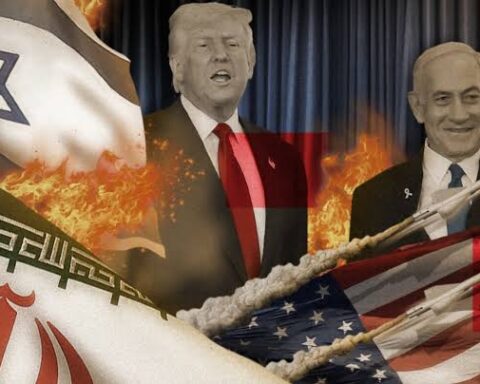
As President Trump considers his future options to ending the war, or “excursion” into Iran, predicting his decisions has become a game of chance. Yet, few have asked the same question about how the leadership in Tehran is calculating its future courses of action.
Both sides have agreed to a fragile truce that has been interrupted with attacks and counterattacks and threats to withdraw from negotiations.
The White House has used the equivalent of Henry Kissinger’s overzealous statement that peace in the Vietnam War was “at hand” making similar misdeclarations about the conclusion of the joint U.S.-Israeli attack on Iran. But all wars eventually end. The question is how and when.
Let us imagine what Iran’s leaders might be thinking. First, despite the overwhelming superiority of American military might, the war at best is a standstill. Second, Iran has depleted many of America’s most expensive missiles in repelling drone attacks, keeping as much as 70 percent of its missile force in reserve. And it is replenishing both drones and missiles at pace.
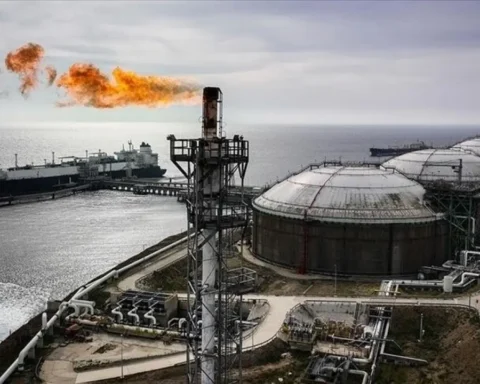
Third, it has made great strategic use of the Strait of Hormuz in blocking ships carrying not only oil and liquid natural gas, but helium essential in chip making and nitrates needed for fertilizer. The impact has put great stress on international economies and raised prices for gas and fertilizer to the point that average Americans are taking the brunt of these costs — which they do not like. That in turn has led to the rapid decline of support for the war as well as the president’s tumbling approval ratings.
Fourth, Iran reads and observes U.S. media. It will see that Trump is losing at home on a number of issues. Most importantly, the House of Representatives passed a bill requiring the president to request authority from Congress to continue the war. Regardless of whether the Senate concurs or Trump vetoes the bill, Iran must perceive this as signs of crumbling enthusiasm for the war.
And Trump’s withdrawal of the $1.8 billion bill to award reparations to those targeted by government — presumably including those who participated in the Jan. 6, 2021 Capitol riot — is a further sign of weakness.
Fifth, Iran believes it has great leverage in its ability to target the Gulf states and drive a wedge between them and America. The ultimate mass destruction weapon is the ability to destroy the desalination plants on which the Gulf states are entirely dependent for fresh water. This would have catastrophic consequences.
Sixth, Iran now believes it is winning and will outlast the U.S., concluding it will buckle and take a knee in ending the war. But few Americans are likely to understand how Iran can tolerate thousands of attacks and Trump’s threats to turn the country “back to the Stone Ages.” Unfortunately, this inability to understand how opponents may think could lead to failure, as it did in Vietnam, Afghanistan and Iraq after 2003.
I have previously argued that Trump would likely try to spin his way out of this imbroglio by declaring victory no matter the ultimate settlement. That still seems to be the most sensible course of action. And the longer this conflict continues, Iran’s position could strengthen.
Iran’s leadership also knows that as the primary season ends, Republican members of Congress who no longer face a challenger may decide to represent their constituents’ desires instead of being cowed by a president who lacks the ability to threaten their reelection.
All this is speculation. Iran’s leaders could reasonably take note of the horrendous state of the economy and the amount of destruction to its infrastructure that has been done by the U.S. and Israel. And a cornered Trump could make good on his promise to destroy the country’s bridges and infrastructure. That is not impossible.
Yet the administration believed that the initial attacks killing the old leadership would force a surrender or regime change and ignored the results of war games in which Iran blocked the strait and hit its neighbors. It could be repeating the same deadly errors.
And in time, we will find out how this does end.
*Harlan Ullman is senior adviser at Washington’s Atlantic Council, chairman of a private company, and principal author of the doctrine of shock and awe. His next book, “Who Thinks Best Wins: How Decisive Strategic Thinking Will Prevent Global Chaos,” co-written with former U.K. defense chief, Field Marshal The Lord David Richards, is due out this Fall.
Source: https://thehill.com/opinion/national-security/5912676-iran-war-trump-options/