

 Baki Laleoğlu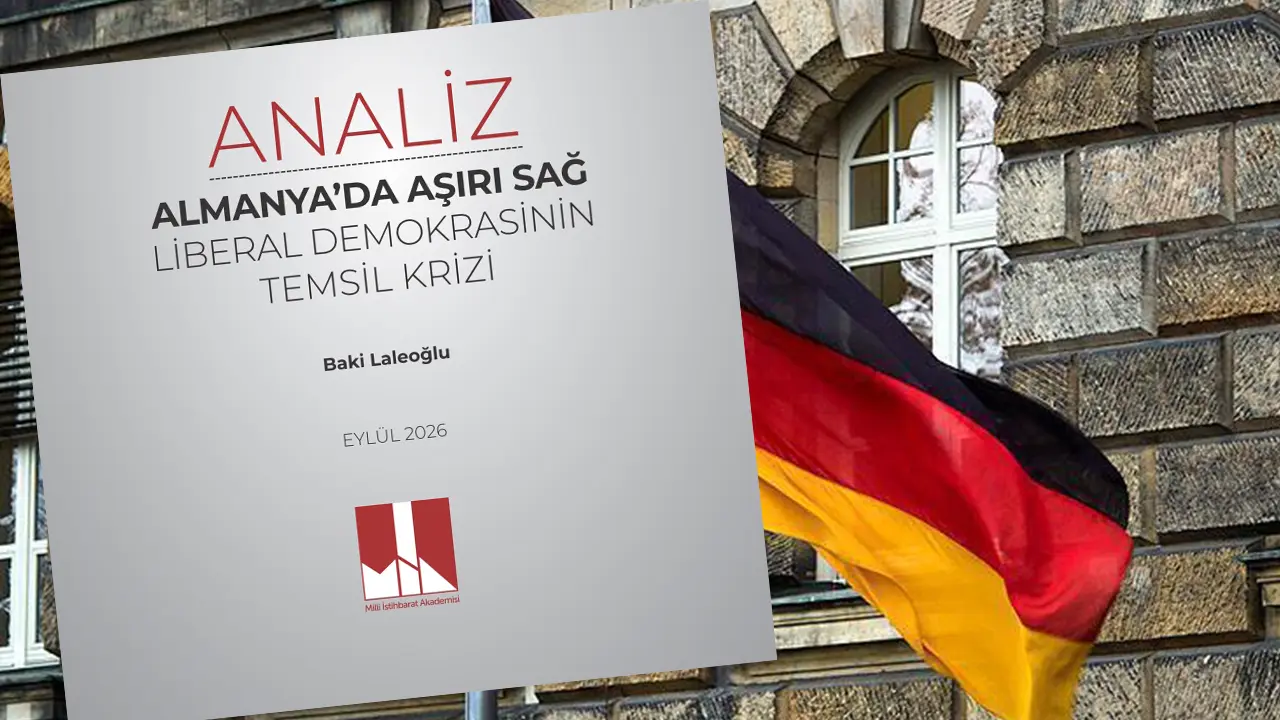

Can the growing strength of the AfD be explained by migration or economic crises alone? A recent analysis points to a deeper problem of representation and belonging in Germany.
The rise of the far right in Germany is no longer discussed merely as the electoral success of a particular party. Support for Alternative for Germany (AfD), the changing language of mainstream parties on migration, and debates about belonging all lead to the same question: How well can democratic institutions represent people who feel excluded from politics?
Baki Laleoğlu’s September 2026 analysis for the National Intelligence Academy, “The Far Right in Germany: The Crisis of Representation in Liberal Democracy,” offers a structural answer. Its central argument is that the far right’s rise is not simply a reaction to recent crises. Developments such as the migration wave, the pandemic, and rising energy prices are treated as factors that intensified a longer-standing lack of trust and a problem of political representation.
Why crises alone do not explain the rise
Migration in 2015 and 2016 brought issues ranging from border security to housing to the center of German politics. Then came the pandemic, the energy shock following Russia’s invasion of Ukraine, and the rising cost of living. It is hardly surprising that these developments affected voters. Yet the fact that not everyone facing the same problems turned to the AfD suggests that economic indicators alone cannot provide a full explanation.
The analysis draws attention to a sense of “relative loss” rather than absolute poverty. A voter may not have lost their income but may still feel less secure than before, believe their region has been left behind, or think their way of life is no longer valued in politics. The AfD brings these different concerns together in a powerful story about loss of control: the country’s borders, economy, and decisions are no longer in the hands of its people.
In this story, migrants, European Union bureaucrats, Berlin’s political circles, or the media can each be cast as “the other” at different times. The AfD’s ability to place separate grievances within a single framework helps explain its appeal to a broad electorate. It also makes it difficult to understand the party merely as an expression of protest by low-income voters.
An old wound in eastern Germany
German reunification in 1990 was a political turning point, but its social consequences were not felt equally everywhere. In the former East Germany, privatization and changes to the industrial economy affected many people’s jobs and expectations for the future. According to the analysis, another problem was that decisions and institutions were largely shaped by personnel from western Germany.
Economic inequality was therefore accompanied by a question of recognition. Some eastern voters felt not only that their regions received less investment, but also that their own histories and voices were belittled. This experience matters when explaining the AfD’s strength in eastern states. At the same time, it would be wrong to treat eastern Germany as a uniform electorate; this historical rupture does not determine every political preference in the region.
Laleoğlu’s analysis also traces the intellectual roots of Germany’s far right to older nationalist traditions. The legal and political constraints placed on far-right organizations after the Second World War did not entirely erase that past. Contemporary far-right politics, however, tends to reach new voters through populist and anti-establishment language rather than by reproducing historical symbols unchanged.
How the AfD brings different voters together
It is difficult to reduce the AfD’s electorate to one social class or political background. According to the 2025 figures cited in the source analysis, former nonvoters formed the largest group among those newly turning to the party. Others came from parties including the CDU/CSU, SPD, and FDP. This suggests that its support is not limited to a settled ideological core.
The party’s appeal lies in connecting specific complaints to a broader claim about representation. An energy bill, migration policy, and the loss of services in a rural area are different problems. The AfD turns them into parts of a single message: “The political elites are not listening to you.” This language gives voters a way to name their grievances and identify those they hold responsible.
An important distinction is needed here. Treating all AfD voters as if they held identical views would be misleading, but so would overlooking the effects of the party’s exclusionary rhetoric. Understanding why a party attracts support also requires examining what its language means for migrants and minorities.
The greatest impact may come without entering government
Whether the far right enters government is not the only measure of its political influence. The AfD may also shape which issues other parties emphasize during elections and how they discuss them. The spread of tougher language on migration, asylum, citizenship, and national sovereignty within mainstream politics is one of the central risks identified by the analysis.
For the European Union, this influence is not confined to the dramatic possibility of Germany one day leaving the bloc. If reluctance to transfer powers to common institutions grows and demands for national control over borders and migration become stronger, the direction of European integration may change from within. There is a further tension: Europe faces pressure to act more jointly on defense and technology at the very moment when calls for greater national autonomy are gaining ground.
The picture for Türkiye is also mixed. In the AfD’s political outlook, Türkiye is placed outside Europe in debates about cultural belonging, yet is regarded as an important partner in trade, security, and geopolitics. According to the analysis, such an approach could shift relations away from membership and shared norms toward a more selective, practical framework. This cannot be described as an automatic gain or a certain loss for Türkiye; the outcome would depend on the policies adopted in each area.
The question of belonging for Turkish and Muslim communities
For Turks and Muslims living in Germany, the debate extends beyond migration policy. Many were born in Germany and hold equal citizenship rights, yet political language can still revive the question: “Do you really belong here?” If dual citizenship, family reunification, or cultural ties to other countries are repeatedly treated with suspicion, the sense of belonging among younger generations may be affected.
This risk does not mean every political debate will directly lead to a loss of rights. But if the idea spreads that citizens with migrant backgrounds must continually prove themselves, the distance between legal citizenship and social acceptance will grow. This is precisely the point stressed by the analysis: the far right’s impact can sometimes be felt in the boundaries of everyday discussion before it appears in changes to the law.
What will matter in the years ahead
The analysis sets out three possible developments for Germany. In the first, the AfD and similar movements gain an enduring place in local government and on the political agenda. In the second, mainstream parties move closer to far-right language in an effort to win voters. In the third, democratic institutions respond to regional inequality and gaps in representation through more inclusive policies. These possibilities are not mutually exclusive; they may unfold at different times and in different states.
Germany therefore faces a challenge larger than any single election result. Its institutions must confront violence and discrimination while also rebuilding ties with people who feel unheard. Unless political representation, economic security, and equal citizenship are strengthened together, the grievances voiced by the AfD may persist in other forms. That is why the debate in Germany matters for Europe as a whole: the rise of the far right has reopened the question of whose voices democracy hears and whom it accepts as a full member of society.
Source: Baki Laleoğlu, The Far Right in Germany: The Crisis of Representation in Liberal Democracy, National Intelligence Academy, September 2026. This article summarizes and retells the main arguments of the source analysis for a magazine audience.
