 Doç. Dr. Mehmet Rakipoğlu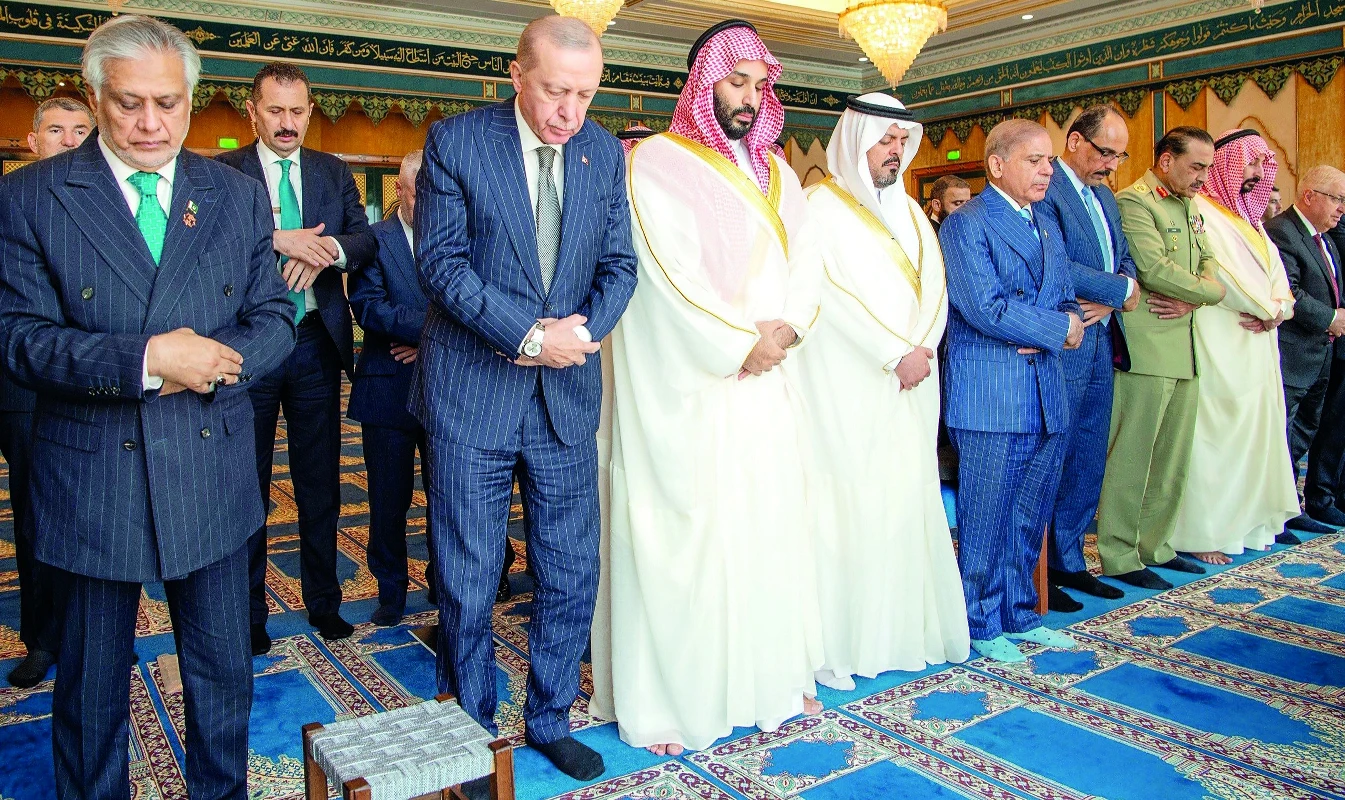

The Mecca Joint Defense Agreement, signed on August 7, 2026, between Türkiye, Saudi Arabia, and Pakistan, coincides with a number of critical points in regional dynamics. Indeed, the agreement signed among the three most important powers of the Islamic world not only places cooperation between Ankara, Riyadh, and Islamabad on a concrete footing, but also has the potential to change Middle Eastern geopolitics. Its being built upon the collective security understanding embodied in NATO’s Article 5 can be read as a restructuring of the regional security architecture.
For the Gulf, the agreement signifies a transformation of the security doctrine. Indeed, the security logic in the Gulf—established in 1945 between Roosevelt and King Abdulaziz, under which the U.S. provided military presence and guarantees while regional countries secured energy supply, and later institutionalized after the Carter Doctrine and the Gulf War—had faced serious challenges in recent years. Particularly over the past fifteen years, Washington’s pivot to the Asia-Pacific, the U.S. failure to take concrete military steps to protect the Gulf despite the Houthis’ 2019 attacks on oil facilities in Saudi Arabia, the withdrawal from Afghanistan in defeat during the Biden era, and the exclusion of regional countries from decision-making processes during the Iran crisis while they bore the costs have all contributed to the erosion of this equation. Therefore, the Mecca Agreement can be evaluated on rational grounds in the context of the transformation of relations with the U.S., particularly with regard to Saudi Arabia within the broader Gulf region. Through this agreement, Saudi Arabia demonstrates its will to free itself from the U.S. monopoly on security provision and to transform into an actor that no longer merely expects security, but builds networks among regional actors.
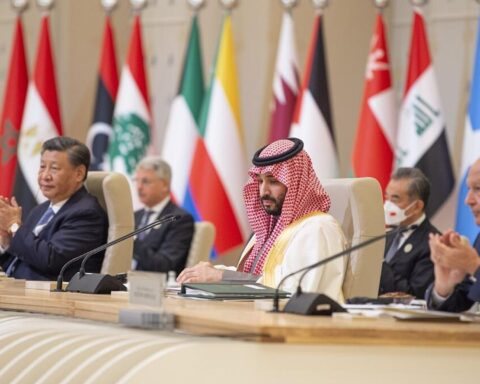
For Ankara, the agreement is seen as the concrete outcome of the principle of “regional ownership.” President Recep Tayyip Erdoğan’s characterization of the agreement and the principle of regional ownership as an arrangement confirming the right of self-defense under Article 51 of the UN Charter also demonstrates Türkiye’s contributions to the new regional security architecture in the Middle East. Saudi Foreign Minister Faisal bin Farhan’s description of the agreement as a turning point, and Pakistani Prime Minister Shehbaz Sharif’s characterization of the signing as a historic step taken “in the shadow of the Haramain,” also indicate that the Mecca Agreement has brought military cooperation among the countries of the Islamic world to a new level.
Deterrence Produced Through Nuclear Ambiguity
It is particularly noteworthy that the understanding of joint defense in the agreement is combined with Pakistan’s nuclear status. Although Pakistan is not officially considered a nuclear power because it is not a party to the Treaty on the Non-Proliferation of Nuclear Weapons (NPT), it is regarded as a de facto nuclear-armed state. The possibility that the nuclear capability possessed by Islamabad could indirectly bring Türkiye and Saudi Arabia under a nuclear umbrella provides a major strategic advantage for the countries that are parties to the agreement. However, the possibility that Israel, which reads this process as a threat, and Iran, which remains outside the process by its own choice, could become further radicalized may also bring negative scenarios to the fore.
However, the ambiguity left in the agreement as to whether Pakistan will transfer nuclear technology to Saudi Arabia and Türkiye likely stems from a conscious choice. Indeed, deterrence often derives its strength from not being tied to a concrete commitment. Indeed, during the bilateral pact Pakistan signed with Saudi Arabia in 2025, a similar nuclear implication was raised and later withdrawn. The 2025 Saudi-Pakistan pact and the GCC mutual defense agreement, which has been in force since 2000, had not in practice translated into a response associated with NATO’s Article 5. Therefore, based on previous similar initiatives, the possibility that the Mecca Agreement may likewise fail to evolve into a concrete military pact like NATO can be taken into account. What distinguishes the Mecca Agreement from the others, however, is that Israeli aggression threatens all Islamic countries and that Gulf security has reached an extreme level as a result of Iran’s retaliatory actions. In addition, another point distinguishing this agreement from other initiatives may be the diplomatic weight rather than the concrete military mechanisms the parties will produce; indeed, at the beginning of the Iran war, Riyadh was able to use its strengthened partnership with Islamabad to quietly shape negotiations with Tehran.
On the other hand, the nuclear issue left ambiguous sends a concrete message against Israel, the common threat bringing these three countries together, without triggering proliferation debates. With the Mecca Agreement, Türkiye and Saudi Arabia, although they do not possess official status, produce deterrence through nuclear ambiguity by signing a joint defense agreement with a nuclear-capable actor. At the same time, the trio of Saudi Arabia, Türkiye, and Pakistan possesses complementary power resources: Türkiye’s defense industry, military achievements, and doctrinal experience; Saudi Arabia’s financial wealth; and Pakistan’s nuclear capability and population exceeding 250 million are combined.
Potential for Geographical Expansion and Economic Corridors
The clause in the agreement stating that it is “open to other regional countries” indicates that the tripartite structure is not a closed framework. However, the truly critical point is that this new security architecture must now be read not through land borders, but through maritime lines. The fourteen-member Multinational Maritime Defense Alliance, established on July 30 under Saudi Arabia’s leadership, had formed a broad coalition along the Red Sea–Bab el-Mandeb–Gulf of Aden line without NATO-like binding commitments; the Mecca Agreement, signed one week later, offers a narrower but much more binding core. Thus, two layers of the same architecture emerge. The first of these layers is an inclusive maritime coalition on the outside, while the second is a capacity-intensive defense core on the inside. According to this reading, Pakistan’s presence here stems not only from its nuclear capability, but also from its control over the Arabian Sea–Indian Ocean gateway through Karachi and Gwadar; Türkiye represents the western end of the line through its presence in the Eastern Mediterranean and the Horn of Africa, while Saudi Arabia represents the center through its position bordering both the Red Sea and the Persian Gulf. When Türkiye’s military presence in Somalia, its base in Qatar, and its maritime jurisdiction agreement with Libya are read together, the Mecca Agreement can be seen less as a beginning than as the institutionalization of an emerging maritime-centric security geography.
Through this agreement, Ankara is already expanding the umbrella it has extended to Qatar, Syria, and Libya. In addition, the Mecca Agreement places Türkiye in a stronger position within India-Europe trade and energy networks. Statements from Ankara also indicate that the agreement will contribute to exports and energy supply by strengthening the security of maritime trade routes, which is significant at a time when uncertainties in Hormuz persist. Pakistan’s step must be read together with its ongoing defense cooperation with Egypt and Jordan. Therefore, in the coming period, different countries, particularly Egypt and Qatar, can be expected to join the alliance, and the trio may even take concrete steps regarding the Yemen issue. At this point, it can be said that Egypt is the most critical candidate for accession to the agreement. Indeed, Cairo’s participation could effectively transform the structure into a quadrilateral arrangement by placing Suez at the center of the architecture. On the other hand, the accession of Qatar and Jordan to the agreement could add political depth to the new security architecture. By contrast, the inclusion of Syria, Iraq, and Libya could shift the architecture from a maritime axis to a land axis, thereby diversifying the strategic logic behind the Mecca Agreement. In addition, Damascus’s long border with Türkiye and its developing contacts with Saudi Arabia have already drawn Syria into the de facto sphere of influence even without its becoming an official party.
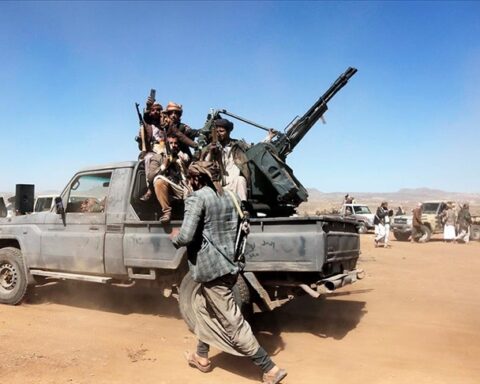
The second overlooked geography is Africa and the Red Sea. Türkiye’s engagement in Somalia, Saudi Arabia’s diplomatic role in the Sudan crisis, and Pakistan’s maritime experience in the Gulf of Aden are transforming the Horn of Africa into a common agenda. Following regional tests such as Iran and Israel, the greatest challenge facing the new order established by the Mecca Agreement may come in the Red Sea against the Houthis. While Houthi attacks targeting Saudi Arabia continue, Riyadh’s deepening cooperation with Pakistan and Türkiye raises the possibility of military steps that could change the balance in Yemen in the coming months. In this scenario, rather than a ground operation, the first concrete outcome could be an increase in intelligence sharing, the use of unmanned systems, and air defense coordination against the Houthis in the Red Sea. Therefore, the first and most tangible outcome of the Mecca Agreement may be the production and enhancement of deterrence rather than war or conflict.
The U.S.-China Axis and Israel’s Position
It can be argued that Ankara and Riyadh have taken this step not to break away from the Western system, but particularly as insurance against U.S. unpredictability. Regional states’ doubts about U.S. reliability have been accumulating for more than a decade; the purpose of the new pacts is not to replace the U.S., but to reduce dependence on it and diversify alternatives. Indeed, what matters most is not the establishment of a formal military alliance, but the fact that regional states have begun to reassess their understanding of security. This can also be read as an indication that Riyadh has abandoned its pursuit of an Article 5-like guarantee from Washington. This situation is also consistent with the U.S. effort to shift its own regional role from that of a security guarantor to that of an actor regulating security. For now, Washington views this process as burden-sharing. However, it can be said that U.S. support for these processes is conditional. Indeed, if initiatives such as the Mecca Agreement become entirely independent of the U.S., become intertwined with Chinese investments, or directly affect Israel’s concerns, Washington’s position may change. Moreover, the fact that Pakistan procures a large portion of its modern weaponry from China may cause Ankara and Riyadh to feel indirect pressure to diversify their own supply chains as the tripartite relationship deepens.
The question of whether the agreement constitutes a front against Iran is also important. Türkiye’s ongoing economic-diplomatic relations with Tehran and Pakistan’s mediating role, together with Pakistan’s long border with Iran, are indications that there is no open confrontation; Tehran’s reaction is also more likely to take the form of indirect pressure through the Houthis and affiliated groups in Iraq than of interstate conflict. The agreement should be read not as preparation for confrontation with Tehran, but rather within the framework of “normative deterrence.”
Israel’s reading of the process, however, is quite different from Iran’s. Israel does not view this agreement favorably. Indeed, the Mecca Agreement establishes a relationship of interdependence among the three countries by extending cooperation among Islamic countries beyond the military sphere into the political and economic domains as well. Such interdependence could also provide the parties with a basis for taking joint and more decisive steps against the Israeli occupation in Palestine. Indeed, strengthened tripartite solidarity could also produce an effect that limits Israel’s aggression to the extent that it narrows Israel’s margin for unilateral action. Tel Aviv’s avoidance of making an official statement for a considerable period after the signing can also be read as a concrete indication of this unease. Although Israel is not named in the text of the agreement, it is clear against whom the structure established effectively creates a balance. The Israeli government could turn this into a “they are forming an alliance against us” narrative in domestic politics and harden its security discourse; by contrast, the opposition could draw the opposite conclusion and argue that the pursuit of agreements with regional countries has now become inevitable. Nevertheless, the defense-oriented framing of the agreement text keeps the likelihood of the bloc being drawn into a direct military confrontation low. Therefore, the foremost objective established by the Mecca Agreement is not to draw Israel into war, but to deter aggression by raising the political and strategic costs of unilateral moves.
In conclusion, the Mecca Agreement establishes a multi-layered equation extending from Pakistan’s nuclear ambiguity to the potential for maritime-centric expansion in the Red Sea, and from repositioning along the U.S.-China axis to deterring Israel. At the center of this agreement, which is of critical importance for the history of the Middle East, lies not conflict, but the production of deterrence. Although it appears limited and flexible as of today, it can be read as the first and largest institutional step toward becoming a military alliance that produces concrete outcomes alongside expanding participation, increasingly institutionalized mechanisms, and changing regional conditions.