 Fawaz A. Gerges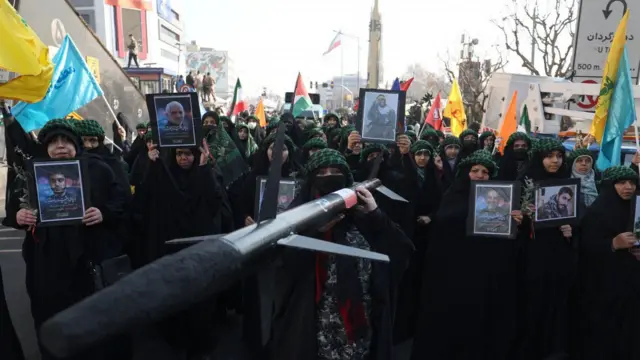

A Pliant Autocracy in Iran Won’t Solve America’s Problems in the Region
Over the past few weeks, U.S. President Donald Trump and his team have voiced contradictory objectives for the war they, together with Israel, launched against Iran. But it is clear that after Supreme Leader Ali Khamenei was killed, Trump hoped to deal with a transactional authoritarian figure. He called “what we did in Venezuela”—forcing the replacement of one autocrat, President Nicolás Maduro, with another, Delcy Rodríguez—a “perfect scenario” for Iran and insisted on being “involved with the appointment” of Khamenei’s successor, “like Delcy in Venezuela.” A week and a half ago, he again said he wanted to negotiate with the remaining elements of Iran’s clerical regime, although he complained the terms weren’t “good enough yet.”
Trump may have a particularly overt appreciation for authoritarian rulers. But the belief that authoritarianism guarantees stability in the Middle East has long shaped the United States’ foreign policy—and, to a lesser extent, Europe’s. After the chaos that followed the Arab Spring in 2010–11, Western governments worked with autocrats who, they hoped, could keep the region quiescent—wealthy Gulf monarchs who could underwrite their neighbors’ growth or strongmen who could bring a measure of stability to countries such as Egypt. The same logic shaped U.S. and European policy toward Iran during a wave of protests in 2022–23, when Washington limited itself largely to rhetorical support, targeted sanctions, and efforts to keep diplomatic channels open. Advancing security, energy, and geopolitical goals has taken precedence over sustained support for human rights and democratic activism.
But the idea that authoritarian rule undergirds stability in the Middle East is a dangerous myth. By nearly every measurable indicator, the Middle East has been moving in a more autocratic direction since the Arab Spring uprisings. This consolidation of authoritarianism has not led to stability. Instead, the same set of conditions that drove popular protest in Iran before the current war—high youth unemployment, abject poverty, rising inequality, systemic corruption, water shortages, unsustainable debt, accelerating ecological threats, and a lack of hope—are present across much of the region. The wealthy Gulf monarchies were the exception, but these countries with their small populations never represented the region, demographically or socially. Their success, if anything, has obscured the instability of the greater Middle East.
The United States now runs an especially grave risk by building its policy around authoritarians. Such a strategy risks tying the United States more closely to brittle regimes whose survival depends on coercing rather than persuading their people, increasing the likelihood of sudden instability. It also leaves Washington exposed when these regimes face internal crises, forcing a choice between doubling down on unpopular partners or confronting the consequences of their collapse.
AN OPENING FORECLOSED
By triggering state collapse, civil strife, and a rise in militant Islamism, the 2003 U.S. invasion and subsequent occupation of Iraq reinforced a mistaken belief, in U.S. and European policy circles, that the Middle East was unsuited for democracy and that stability and order should take precedence. By the end of the first decade of this century, even U.S. officials who once openly sought to engineer democratic transformation had tempered their ambitions. (Early in her 2005–9 term as secretary of state, for instance, Condoleezza Rice repeatedly stressed that authoritarian allies only promised “false stability,” but by the end of her term, she emphasized the need for “responsible governance.”) The Iraq war also poisoned perceptions of liberal democracy among Middle Eastern publics. It placed would-be reformers in an impossible position: they were expected to support the United States’ war of choice, only to be abandoned as violent extremism spread and Washington shed commitments to reform. Increasingly, democracy came to be seen not as a vehicle for self-determination but as rhetoric the United States would use to obscure its desire to control the region’s energy resources.
The Arab Spring uprisings, which began in Tunisia and Egypt, briefly revived the idea of people power, puncturing the wall of fear that sustained authoritarian rule. The protests spread across the region, including to Iraq’s marginalized Sunni communities. But they were crushed almost at birth by a coordinated counterrevolution led by powerful regional states and reinforced by external backers. As violence engulfed Libya, Syria, and Yemen, Western leaders began to equate democracy in the Middle East with instability rather than renewal. In March 2011, when Saudi Arabia and the United Arab Emirates sent troops to crush Bahrain’s protests calling for political reform, U.S. and European governments looked the other way. With tacit U.S. support, Saudi Arabia and the United Arab Emirates financed the restoration of military rule in Egypt, while Russia’s intervention in Syria (closely coordinated with Iran) ensured the survival of Bashar al-Assad’s regime. A policy of restraint took hold in Washington—prioritizing stability, deferring to regional allies, and avoiding meaningful support for democratization that might disrupt the status quo.
Authoritarian rulers in other Middle Eastern countries actively reinforced the new Western interpretation, warning that political opening would inevitably empower Islamist movements. Their words recast democratic participation not as a path to accountable governance but as a gateway to disorder. It is true that no society emerges overnight from decades of personalized, coercive rule as a consolidated democracy. But the new narrative discounted the possibility of democratic transition at all, making a return to authoritarianism appear the safer option.
AN AUTHORITARIAN WAVE
The Arab Spring’s violent aftermath also made Kuwait, Qatar, Saudi Arabia, and the United Arab Emirates look better by contrast. Scholars of the Middle East long underestimated the Gulf monarchies’ durability. But their hereditary rulers sustained a traditional form of legitimacy, reinforced by dynastic continuity and vast oil wealth that cushioned social discontent. After the Arab Spring, U.S. and European governments increasingly viewed the Gulf monarchies as islands of stability in an otherwise volatile region—and as the Middle East’s new center of economic and geopolitical gravity. Russia’s invasion of Ukraine in 2022 reinforced that shift as Europe scrambled to reduce its dependence on Russian energy and turned back to the oil- and gas-rich Gulf. This recalibration coincided with the rise of assertive younger rulers—Mohammed bin Salman in Saudi Arabia, Mohammed bin Zayed in the United Arab Emirates, and the emir of Qatar, Tamim bin Hamad al-Thani—who projected power more openly and decisively than their predecessors.
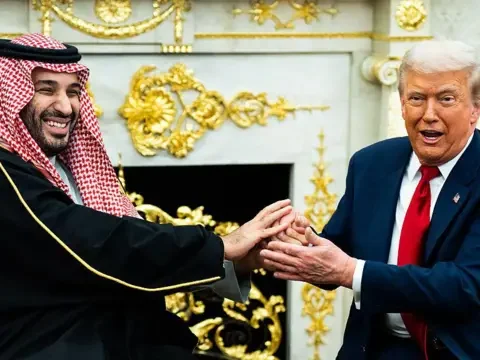
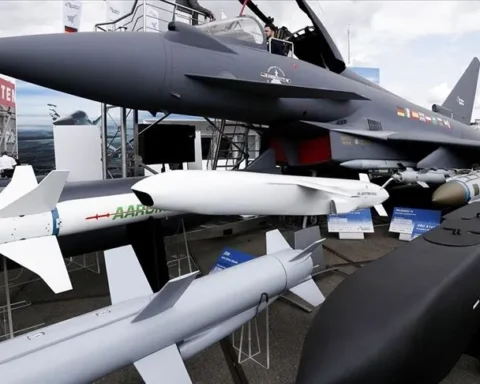
Long before Trump effusively embraced the Saudi crown prince (“He’s an incredible man . . . there’s nobody like him”), U.S. and European leaders had already established close security partnerships, massive arms deals, and a dense network of military bases across the region. Between 2011 and 2020, nearly half of all U.S. arms exports went to the Middle East, with Saudi Arabia alone accounting for roughly a quarter. Washington reinforced these ties through massive arms deals with over $100 billion under President Barack Obama and a further $110 billion agreement under Trump. By spearheading initiatives such as the Abraham Accords, the United States elevated Gulf states as central pillars of the regional order. The priority was regime stability, not political reform.
Meanwhile, authoritarianism took even deeper root elsewhere in the region. Today in Egypt, human rights organizations estimate that more than 60,000 political prisoners are detained, many without trial, under sweeping counterterrorism laws. Independent media outlets have been blocked or brought under pro-state ownership. After a popular uprising ended the Sudanese dictator Omar al-Bashir’s rule in 2019, a fragile civilian transition was overturned by a military coup in October 2021 that drew Western condemnation but little sustained pressure or support for democratic forces. In the late 2010s and early 2020s, Algeria enforced a clampdown on journalists, activists, and opposition figures, with vague charges of “undermining national unity” used to criminalize dissent.
Tunisia—once the Arab Spring’s brightest hope—slid back into authoritarianism by 2021, with activists and even former parliamentarians imprisoned on politicized charges. Under President Recep Tayyip Erdogan, Turkey’s democratic backsliding has accelerated over the past decade; the arrest of Istanbul’s popular mayor in March 2025, the sweeping crackdown on independent media, the politicization of the courts, and the criminalization of protest and political dissent form a broader pattern of repression. Morocco has tightened restrictions on dissent, responding to protests over corruption and economic hardship with arrests, prosecutions, and the use of lethal force. And although Iraq has not reverted to centralized authoritarianism, state authority has steadily eroded as armed factions and sectarian actors captured key institutions, weakened accountability, and blurred the line between state and non-state power.
Even Israel, the country many analysts have long regarded as the Middle East’s most robust democracy, has drifted steadily in an authoritarian direction. Prime Minister Benjamin Netanyahu has pursued a judicial overhaul to weaken checks and balances. After Hamas’s October 7, 2023, attack, he expanded executive authority under emergency powers and narrowed the country’s space for dissent—and delayed a reckoning with his own corruption charges.
This accelerating authoritarianism was driven by elites’ fear of Arab Spring–style mobilization. But it was sustained by a permissive international environment. As U.S. and European governments prioritized counterterrorism, migration control, and energy security, they largely abandoned democracy activists once instability emerged. Middle Eastern governments learned that crushing dissent carried few external costs.
POWER POSE
But overall, the Middle East’s authoritarian leaders have not delivered security. Instead, rising repression has gone hand in hand with deepening economic misery and social fragility. Iran is, of course, the most obvious example. Before February’s U.S.-Israeli attack, inflation already regularly exceeded 40 percent and the rial had lost almost all of its value relative to the dollar. U.S. sanctions broke the backbone of Iran’s economy, but widespread economic mismanagement and the dominance of Revolutionary Guard–linked business networks compounded the crisis.
The regime’s response to the U.S.-Israeli attacks showed how authoritarian systems under pressure escalate rather than concede. Instead of capitulating, Tehran expanded the conflict across the region, prioritizing regime survival and wreaking economic disruption throughout the world. But away from the current headline-grabbing conflict, other authoritarian states in the Middle East and North Africa are in crisis, too. Sudan has collapsed completely and is mired in a devastating civil war; tens of thousands have been killed and more than 12 million displaced. In Egypt, increased repression has clearly coincided with rising economic distress. Since 2022, the country has undergone successive currency devaluations, with the pound losing more than half its value against the dollar; inflation peaked in 2023 at nearly 38 percent and remains well over ten percent. External debt has climbed beyond $160 billion, and despite GDP growth between four and five percent, the World Bank estimates that roughly a third of Egyptians—about 33 percent—live below the national poverty line. The narrowing of political space has constrained public debate over economic policy, reinforcing a cycle in which centralized decision-making and a lack of accountability worsen fiscal fragility.
Similar patterns are visible across the region. In Algeria, economic strain and declining revenues are fueling protests amid a tightening political crackdown. In Tunisia, a fiscal crisis and high unemployment are driving rising social unrest and renewed authoritarian consolidation. Even Jordan, often considered a stable country, is not immune from the problems afflicting its neighbors. Its public debt hovers near 90 percent of GDP, youth unemployment exceeds 40 percent, and growth remains weak.
By now, it is clear that autocrats in most Middle Eastern states have been unable to secure basic living standards for their populations. Iran’s recent trajectory—from waves of domestic protests to the insistent pursuit of escalation in a devastating war—offers a clear warning: in the short term, repression can suppress dissent. But over time, it is a recipe for both continued unrest and a brittle government that responds poorly to crisis.
FALSE SECURITY
In 2024, the United Arab Emirates pledged what was billed as a lifeline for Egypt’s economy, $35 billion into the Ras El-Hekma coastal development. Saudi Arabia, for its part, has committed tens of billions of dollars into regional development through its Public Investment Fund, and Gulf states have, over the past two decades, injected money into Jordan and Iraq. Yet such projects are concentrated in real estate or state-led megadevelopments, which do little to address underlying structural weaknesses. No major foreign investment will change the negative outlook in Algeria, Egypt, Iraq, Jordan, Syria, or Tunisia. Absent meaningful political and economic change, Middle Eastern institutions will continue to grow weaker, investment will become less attractive, and talent will flee the region. The real danger is gradual decay. Many Middle Eastern regimes will look stable until a budget crisis, political upheaval, or leadership change suddenly exposes how fragile they have become.
Trump’s embrace of authoritarians only makes the moment more dangerous. In the past, U.S. presidents avoided openly endorsing authoritarian rule in the Middle East. Trump has decisively broken with this tradition. His 2025 National Security Strategy calls for “dropping America’s misguided experiment with hectoring these nations . . . into abandoning their traditions and historic forms of government,” effectively endorsing authoritarian rule as the Middle East’s natural order. According to his administration, a successful U.S. policy is one that “accepts the region, its leaders, and its nations as they are”—a message that Middle Eastern strongmen will hear as explicit approval to repress their citizens.
Trump has publicly praised strongmen, dismissed domestic opposition, and aligned himself with leaders facing internal legitimacy crises. During a September Oval Office appearance with Erdogan, Trump called him “a tough guy” and joked that he “knows about rigged elections better than anybody.” Last October, Trump praised Egyptian President Abdel Fattah el-Sisi as “very tough,” commending him for maintaining low crime and contrasting Egypt favorably with the United States. He has repeatedly bullied Isaac Herzog, Israel’s president, to grant Netanyahu a pardon for his corruption charges. The implication is unmistakable: repression works and due process is weakness.
Trump may have hoped for a Venezuela-style outcome in Iran. Iran, however, is not Venezuela: not only does it have a regime motivated by ironclad Islamic ideology, it is an ancient civilization with multilayered institutions boasting long histories. The assumption that coercion can make authoritarian regimes compliant has been repeatedly proved wrong in the Middle East, where external pressure often hardens regimes.
And even if Trump does achieve some sort of “deal” with a purportedly pliable authoritarian cohort in Tehran, it is a mistake to believe such a group’s power will remain solid—or that such a partnership will help Washington in the long term. Trump’s open embrace of authoritarians in the region has deepened popular resentment of the United States. By aligning so closely with autocratic regimes, Trump further implicates the United States in their abuses, reinforcing anti-American sentiment. Popular agency in the Middle East has been suppressed, but it has not been extinguished. Authoritarian regimes everywhere exist in permanent tension with their societies, and the Middle East is no exception.
* FAWAZ A. GERGES is Professor of International Relations at the London School of Economics and the author of The Great Betrayal: The Struggle for Freedom and Democracy in the Middle East.
Source: https://www.foreignaffairs.com/iran/myth-authoritarian-stability-middle-east