 Prof. Dr. Erol Göka

“Transcendence” briefly refers to the state of a being, principle, or reality existing “beyond” what is experienced, perceived, or naturally bounded. Its opposite is “immanence.” In philosophy, it denotes a reality that cannot be fully grasped through experience, the senses, or the categories of the mind—something that lies above or outside of them. In theology, it signifies that God is utterly distinct from and superior to the universe, nature, and humanity. In Islamic thought in particular, based on the notion that Allah is completely separate from and exalted above the created order, transcendence is both one of the divine names (“al-Muta‘ālī” among the asmāʾ al-ḥusnā) and one of the attributes of God, referring to the highest dignity, honor, and sovereignty. It is an expression of reverence attributed to Allah.
In more general usage, we use the term “transcendent” to describe a quality that carries a situation, idea, or value beyond conventional limits. Its derivation from the Turkish verb aşmak (to exceed, to go beyond) encompasses nearly all of these meanings, as it originates from the notion of “crossing a boundary.” In modern psychological sciences, human transcendence is especially emphasized by existentialists. In our book Psychology, Existence, Spirituality, drawing on this existentialist perspective, we defined “spirituality” as “the search for all transcendent dimensions and meanings within human experience—encompassing both religious elements and all forms of subjective experiences of the Sacred; the way a person lives their faith in daily life, engages with and gives meaning to the ultimate conditions of human existence, and thereby constructs meaning in their life.”
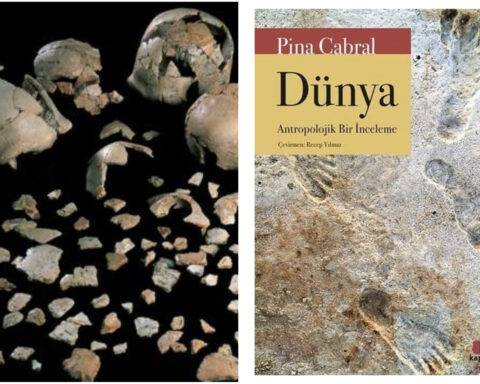
The transcendent nature of human beings—or more precisely, the human mind—is among the foremost issues that modern anthropology continues to debate without ever fully resolving. João de Pina-Cabral’s book The World: An Anthropological Study also delves extensively into the transcendent character of the human mind and personhood.
“At the beginning of the 20th century, most of the founders of anthropology—McLennan, Lubbock, Tylor, and Frazer—‘firmly believed in the laws of social evolution and the interdependence of institutions, and they were all… agnostic and hostile to religion.’ As Max Weber put it, they were wholeheartedly committed to the modernist project of disenchanting the world. However, the situation changed with the methodological revolution of the 1920s, led by Malinowski; those who came after were not of the same mindset.” Anthropology, by its very nature as a discipline, almost stood in opposition to this disenchantment project and challenged it directly.
“After the 1920s, although Christianity was no longer dominant among professional ethnographers, a) they treated the transcendent experiences they documented with great care and respect, consistently taking them ‘seriously’; and b) many were engaged—more or less explicitly—in a form of non-Christian spiritual quest: Examples include Steiner’s engagement with Judaism, Leach with Humanism, Srinivas and Madan with Hinduism, Needham with Buddhism, Lienhardt and Douglas with Catholicism, and Turnhull with alternative forms of spirituality.” It was said that Evans-Pritchard’s studies on indigenous peoples were what “convinced him to become Catholic.”
In any case, like Evans-Pritchard himself, many contemporary anthropologists argue that the experiences they describe—such as shamanism—are genuinely transcendent; “cannibal metaphysics” are now presented as fully valid human experiences. In this regard, contemporary anthropology is almost divided in two, and there is a crisis at the center.
Before delving into this crisis, let us restate what we have said in other words: At the beginning of the 20th century, anthropologists such as Tylor and Frazer believed that “religion, magic, shamanism, and the like were simply mistaken ideas of primitive people, and that as science advanced, these superstitions would inevitably disappear.” But things changed after the 1920s. A new generation—Malinowski, Evans-Pritchard, and others—spent extended periods in the field and observed the following: “These people are not foolish or misguided; they simply do not think like us. Yet they are entirely coherent within their own worlds. Moreover, the ‘transcendent’ experiences they undergo—those involving the sacred, the mysterious, and unseen forces—are genuinely real.”
Today, two major schools of thought exist. The first defends the old classical position, asserting that on one side lies the real world, and on the other, illusions such as religion and magic. The second group, comprising thinkers such as Viveiros de Castro, Descola, Latour, and Kohn, takes the exact opposite stance. According to them:
“Each person inhabits their own world, their own ontology (understanding of being). For Amazonian natives, the jaguar is a person, stones are alive, the forest thinks. We should take this seriously—and perhaps even start thinking this way ourselves. Let us re-enchant the world; let everything be alive and sacred…”
João de Pina-Cabral, however, does not side with either camp. To resolve the crisis, he proposes a remarkably simple third path: “There is neither a single world nor a thousand separate worlds.
Transcendence—that is, the sense of the sacred or the mysterious—is not something learned from the outside; it is a natural part of the process by which a human personality is formed.” We will return to this point and further elaborate on Cabral’s proposal.
“How are we to overcome the mind/matter, subject/object, and human/nature dualisms that Western thought has rigidly imposed since the 17th century—and at the same time take the transcendence experiences of others seriously without surrendering ourselves to either a naïve relativism or a new animist pantheism?” I believe this question encapsulates Cabral’s anthropological perspective and his intellectual positioning. Another conclusion I draw from his work is that the solution he proposes rests on the following three pillars:
i. A return to Evans-Pritchard’s 1934 article defending Lévy-Bruhl, and the revival of the concept of participation;
ii. A modern anthropological reading of Anselm’s Ontological Argument—particularly through the interpretation of Collingwood, who doubted that human nature is as rational as commonly believed—according to which transcendence is not something “taught” externally but is an inevitable product of personal ontogenesis;
iii. The definitive abandonment of the representationalist understanding of the mind, thanks to radical embodied/enactive cognition theories (e.g., Varela, Thompson, Hutto, Myin, Chemero, among others).
Of course, in order to fully grasp these three pillars that Cabral offers as a solution, one must have a solid grounding in anthropology. Leaving the details of Anselm’s Ontological Argument—worthy of closer examination—to the curious and to another article, let us, as far as we are able, try to explore the remaining aspects of Cabral’s proposal.
Let us begin with the third point—namely, that anthropologists must abandon representationalist theories. Cabral holds that embodied cognition theories, which have emerged in recent neuropsychological research, have dismantled the representationalist paradigm. A child’s cognitive process is not linguistic; rather, it is supported by complex systems of concretization, including language. Therefore, “the possibility of consciously accessing one’s own thought processes should not be taken for granted, because there is very little evidence that our own thought processes—even those that employ imagery mediated by symbolic forms of language—can be recalled in a comprehensive, direct, and conscious manner. Uncertainty affects not only those who are communicating with others, but also those who are alone.”
As a typical example of the new “disenchanting” approach that arose in response to the positivists during anthropology’s foundational period, Cabral examines Eduardo Kohn’s How Forests Think: Toward an Anthropology Beyond the Human (2013). In this work, Kohn proposes moving beyond the human in order to “situate distinctively human modes of existence as both emerging from and remaining continuous with a broader, living semiotic field.” He regards life itself as something that causally produces thought. Although anthropologists such as Connolly and Bennett disagree, Kohn himself acknowledges that stones do not think—but with this outlook on life, he attempts to reunite thinking and meaning.
Up to this point, all seems reasonable. But then he makes a more radical claim: “If thoughts exist beyond the human, then we humans are not the only selves in the world.” With this, he proposes a generalization of animism: “If thoughts are alive and living beings think, then perhaps the world of the living is enchanted.” In this way, much like Taussig, Viveiros de Castro, and many anthropologists before him, Kohn aims to preserve the genuine “strangeness” of how the world presents itself to the Ecuadorian Runa among whom he lived—a word he appears to be particularly fond of. However, he goes a step further in his refusal to resolve, deny, or diminish the true mystery of what the forest and its beings convey to the Runa. He seeks transcendence within immanence.
According to Kohn, since all life is directed (i.e., exhibits intentionality), all life thinks—and since to think is to describe, all life expresses itself. Hence: “Dogs are what they are because they think.” He defines the self as “a form that is continually recreated and propagated across generations in order to adapt more effectively to surrounding worlds.”
Cabral opposes both the positivists and the opposing views exemplified by Kohn. His position can be summarized as follows: “The fundamental mind is not conceptual, but orientational… The point is that in order to develop conscious, content-bearing thoughts, one must first be immersed in a particular world through the fundamental mind.” When a baby is born, it does not initially distinguish between “self” and “world.” It is intertwined with its mother, the home, sounds, and smells; it does not perceive itself as separate from them. The early anthropologist Lévy-Bruhl called this state of intertwined being participation. As the child grows, it gradually learns the distinction between “I am here, and the world is out there.” But that original sense of fusion never fully disappears. Even in adulthood, it can return with great intensity—in prayer, in a shaman’s trance, while alone in a forest, in the face of death…
In other words, the feeling of “contact with invisible forces” experienced by a shaman, a Nuer, an Azande, or a Catholic is actually just a re-emergence of that same early participatory experience we all share from childhood. No one taught this; such experiences and sensations arise spontaneously as part of the natural development of personality.
According to Cabral, then, transcendence is neither a cultural construct nor a new animist projection like “forests thinking.” Rather, it is an inevitable by-product of the emergence of persons within sociality—what we might call ontogenesis. Citing Anselm’s famous words, “We had to believe first, and then we understood,” Cabral continues: The infant enters the world not through representations, but through shared intentionality and basic cognitive layers. This experience of participation is already “transcendent,” because the self has not yet separated from the world or the other; the world is within them, and they are within the world (what Lévy-Bruhl termed participation mystique). Language and propositional thought come later. Even when they do, this basic layer of participation never vanishes—it is merely covered up. This is why the transcendent experiences we so often hear about—whether from a shaman, an indigenous person, or a Catholic anthropologist—are nothing more than adult variations of this early participatory experience.
For this reason, Cabral argues, we have no need for ontological pluralism (Viveiros, Descola) or new materialist/animist “immanent transcendence” projects (Latour, Bennett, Connolly, Kohn). All we need to do is accept, as Evans-Pritchard did in the 1930s, that transcendence is not “out there” but rather lies within the social formation of persons, within their capacity to be divided and shaped by sociality. “We do not have to choose between godlessness and god-forsakenness, because transcendence is already within the process of human formation (anthropopoiesis).” In this way, Cabral develops a solid and powerful position that surpasses all major camps in contemporary anthropology—ontological pluralists, new materialists, and classical representationalists—without fully subscribing to any of them.
Pina-Cabral delivers his most elegant critique of Kohn’s How Forests Think precisely on this point:
Because Kohn fails to grasp the deep continuity between life and mind, he resorts to making the forest “think.” To do so, he expands the concept of “self” so drastically that it ultimately becomes emptied of all meaning. Yet the self begins exactly where reflexivity emerges—not in dogs, forests, or stones. However, this does not mean that such entities do not play a role in the formation of our transcendental experiences through participation in our ontogenesis.
In conclusion, Cabral says:
“There is no need to re-enchant the world, because the world was never disenchanted in the first place. Enchantment is not about assigning spirits to stones or trees—it is the name we give, in adult life, to that initial sense of unity felt by a human child growing up in deep interconnection with others and with the world.”
In short:
Let us neither deny the sacred, nor project it onto everything.
Let us seek it where it truly resides—in the process of human formation.
As children, we were all a little shamanic; as we grow up, we forget—but we can never completely forget. That’s all…
In our view as well, Cabral takes the concept of worlding from Heidegger and turns it into the foundational condition of the ethnographic gesture:
Anthropology is the worlding of worlds—that is, the revelation of other worlds (the worlds of others) by one world (the world of the ethnographer). This is possible because the world is never fully coherent; it is always underdetermined, blurred, polythetic, and open to sharing. With his perspective that “participation never dies, because to become a person one must first participate,” Cabral positions transcendence as “the inevitable result of the human child’s personalization within intersubjectivity.” In doing so, he avoids both relativist agnosticism and the new dogmatism of “everything is alive, everything thinks.”