 Turan Kışlakçı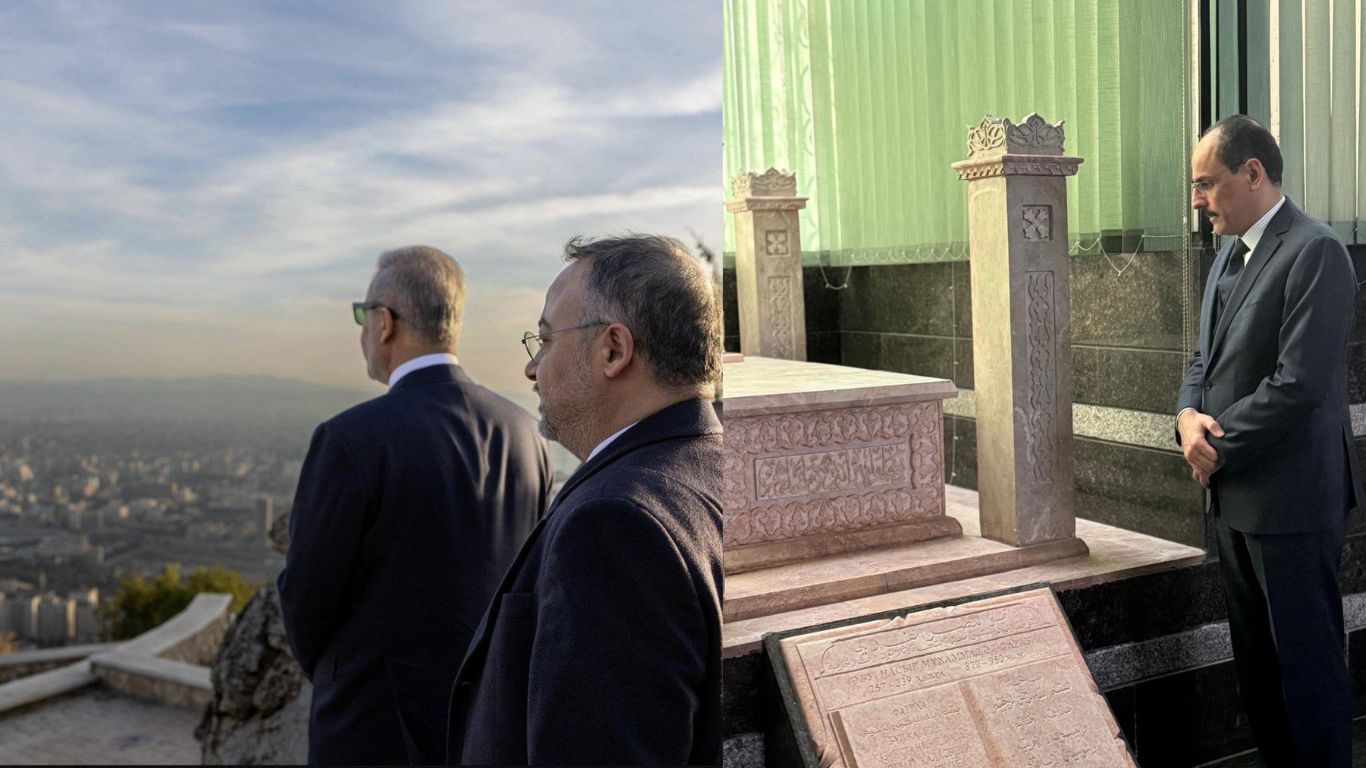

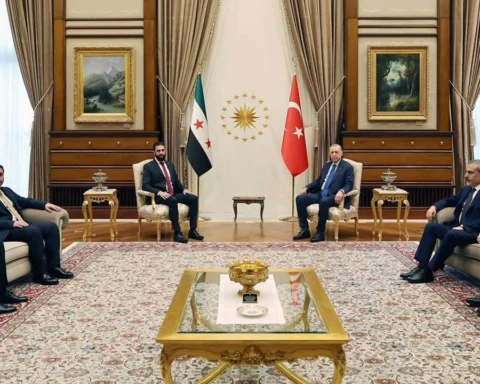
Monday’s visit to Damascus was not a routine stop on the diplomatic calendar; it was a direct geopolitical message delivered to the field, to the actors, and particularly to Israel. President Recep Tayyip Erdoğan, by sending Defense Minister Yaşar Güler, Foreign Minister Hakan Fidan, and MIT Director İbrahim Kalın to Damascus simultaneously, declared that the Syria file was no longer open to uncontrolled interventions, to power engineering shaped by unilateral airstrikes, or to foreign maneuvers that destabilize the region.This visit was not merely an attempt to establish contact with Damascus; it was a firm warning to all actors disrupting the balance in Syria—especially Israel, which has recently tried to extract political gains through military pressure.
The appointment of Deputy Foreign Minister Nuh Yılmaz as ambassador to Damascus demonstrated that this was not a temporary diplomatic gesture, but rather the beginning of a long-term and institutional political engagement. Looking down at Damascus from Mount Qasyun was not just a symbolic posture; it was a silent but powerful expression of the message that “Damascus is not abandoned,” a rebuttal to the psychological dominance created through airstrikes on the capital. MIT Director İbrahim Kalın’s visit to the tomb of al-Farabi, beyond its military and intelligence implications, served as a reminder that the geography of Syria is not a fragmentable security zone but a basin marked by historical and civilizational continuity. With this visit, Türkiye entered the field not merely with power, but with meaning, memory, and political will.
At the center of this visit was, at the same time, the deepening deadlock between the Damascus administration and the Syrian Democratic Forces (SDF). The remarks made by Foreign Minister Hakan Fidan during the joint press conference with his Syrian counterpart laid bare the essence of the matter. It had become an undeniable fact that the SDF had no intention of making progress in its integration talks with Damascus. Even more critically, the coordination of some SDF activities with Israel had emerged as the main obstacle to the ongoing negotiations with the Syrian government. Fidan’s statement that “Syria’s stability is Türkiye’s stability” clearly demonstrated that, for Ankara, this issue was not merely a matter of foreign policy but a direct national security concern.
Behind the impasse on the ground lies a shift in the balance of power. Since the summer, Israel’s intensified airstrikes against Syria have significantly weakened Damascus’s military deterrence. The Syrian army’s advance in Suwayda, followed by its forced withdrawal after the Presidential Palace and the Ministry of Defense were targeted, was not only a military setback but also a psychological rupture for all actors in the region. This turn of events emboldened the SDF. The perception that the military threat from Damascus was no longer as strong as before fundamentally altered the SDF’s position at the negotiating table.
This shift became clearly visible in the SDF’s demands. The discussions, which had previously revolved around limited topics such as the model of local governance in predominantly Kurdish-populated areas, the integration of armed elements into the army, and the future of the security structure, gave way to an entirely different discourse. Rather than negotiating the status of its own regions, the SDF now came to the table with the claim of shaping the future of the entire country. A new stance emerged—one that sought to retain everything in practice, offer only symbolic allegiance to Damascus, and, in return, reconstruct the constitutional order according to its own demands. This was not an attempt at compromise; it was a clear imposition.
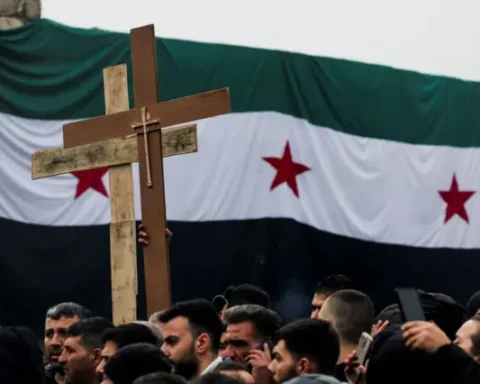
With the shift in the balance of power, the SDF did not stop at distancing itself from Damascus; it also sought to form a political and sectarian coalition against it. Attempts to establish contact with Alawite circles in the Latakia–Tartus corridor and with Druze figures in Suwayda linked to Israel were part of this strategy. However, these initiatives did not receive the expected response. Christians, Ismailis, Turkmens, and even Syrian Jews—despite their very small population—did not join this project. The equation the SDF tried to construct lacked social legitimacy.
From the perspective of the Damascus administration, two fundamental uncertainties remain decisive at this point. The question of how Israel would respond in the event of a possible military escalation still lacks clarity. The prospect of a new intervention from the south complicates Damascus’s strategic calculations. The second uncertainty concerns relations with the United States and the international community. After years of war, the Damascus regime—now seeking renewed legitimacy—must carefully consider any step that could jeopardize this process.
Nevertheless, time is running out. With the deadline for the SDF’s integration into Damascus fast approaching, signals from the field indicate that tensions are not subsiding. The recent clashes in Aleppo serve as a strong warning that the process may not be resolved at the negotiating table. If no agreement is reached, the possibility of Damascus launching a swift, limited, but effective military operation—as it did in Idlib—is now being discussed with increasing seriousness.
Türkiye’s visit to Damascus took place precisely at this critical juncture. Ankara did not merely offer diplomatic recommendations to the parties; it also reminded them of the reality on the ground. The message was clear: Syria’s stability is directly linked to Türkiye’s security, and any attempt to undermine that stability will not go unanswered. The groundwork the SDF has laid with Israel is not an acceptable option—neither for Damascus nor for Ankara.
In short, at this point, the gray areas are rapidly disappearing. The SDF will either become a genuine part of the Syrian state structure or remain outside of it. Türkiye’s strong visit to Damascus has declared that this process can no longer tolerate postponements or procrastination. The coming days will determine not only the question of integration but also the axis along which Syria’s future will be shaped…