 Marjorie Cohn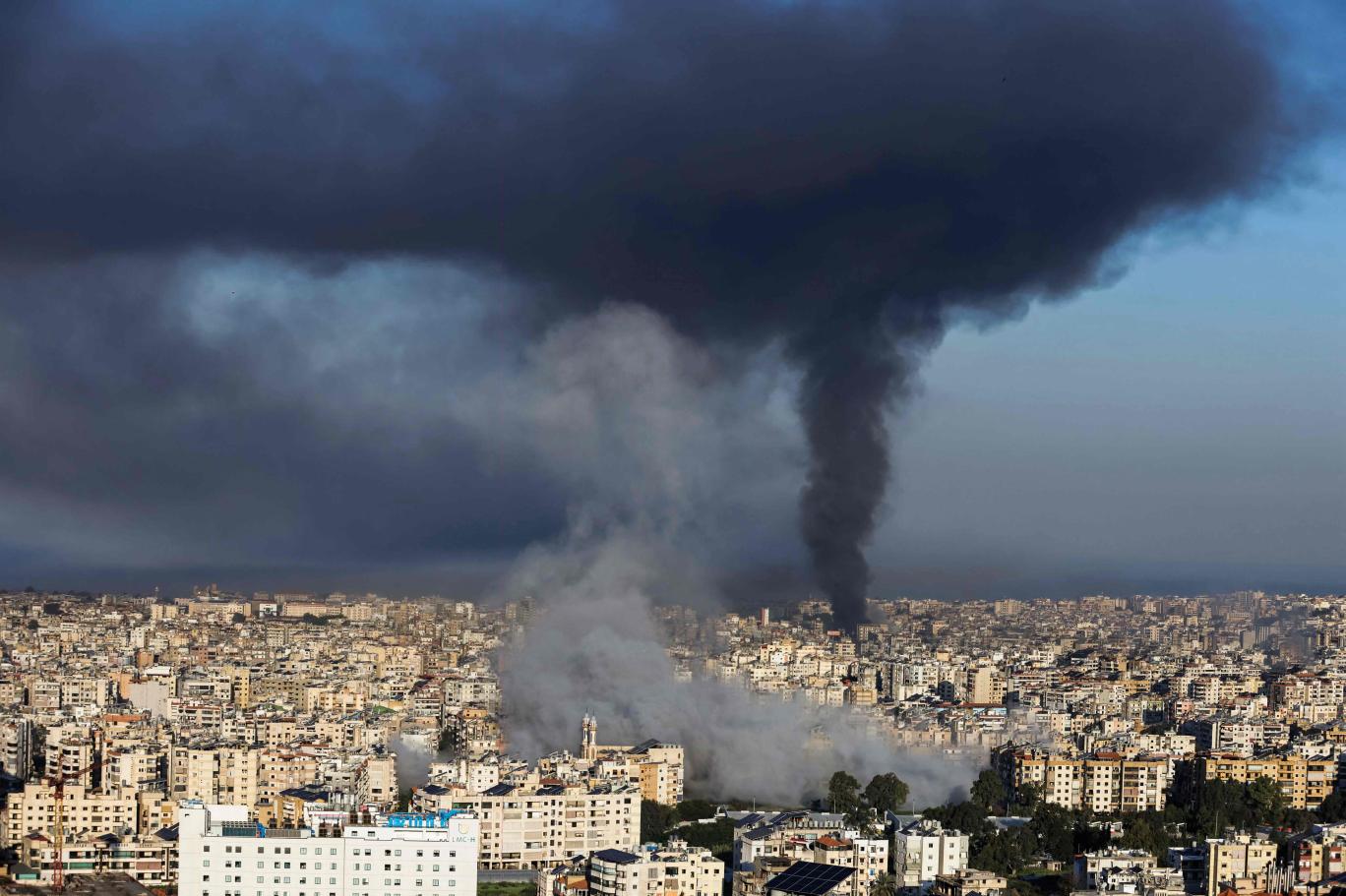

While the world’s attention is focused on the U.S.-Israeli aggression in Iran and Donald Trump’s genocidal proclamations, Israel is perpetrating genocide in Lebanon.
Trump threatened genocide in Iran on April 7, stating, “A whole civilization will die tonight.” The next day, he agreed to a two-week ceasefire. In response, Israel almost immediately intensified its assault on Lebanon, even though the Pakistani officials facilitating the negotiations between the U.S. and Iran said that Lebanon was also covered by the ceasefire.
“Just hours after the world cautiously welcomed news of a US-Israeli ceasefire with Iran, in Lebanon the nightmare for civilians has become more terrifying,” Amnesty International reported. “Israel has an appalling track record of carrying out unlawful attacks in Lebanon and displaying a callous disregard for civilian life, fueled by the impunity Israeli officials feel they enjoy.”
On January 26, 2024, the International Court of Justice determined that Israel was plausibly committing genocide in Gaza and ordered it to prevent the commission of genocidal acts. Nevertheless, the continued failure of the world community to stop Israel’s genocide in Gaza has emboldened it to replicate its genocidal strategy in Lebanon.
Israel’s Genocidal Acts
Israel is pummeling southern Lebanon and displacing much of its population. As in Gaza, the Israeli actions fall squarely within the definition of genocide set forth in the Genocide Convention.
The Genocide Convention defines genocide as acts committed “with intent to destroy, in whole or in part, a national, ethnical, racial, or religious group,” including killing members of the group, inflicting serious bodily or mental harm on members of the group, or deliberately inflicting conditions of life calculated to bring about the group’s physical destruction in whole or in part.
Since March 2, 2026, Israel has killed more than 2,020 people in Lebanon and wounded over 6,436.
On April 8, the date of the ceasefire agreement, the Israeli military launched more than 100 airstrikes “within ten minutes and across multiple areas simultaneously,” including in densely populated areas in Beirut, without warning, killing at least 303 people and injuring more than 1,150, Lebanon’s health ministry reported.
Israel is also conducting mass demolitions in several Lebanese villages along the Israel-Lebanon border. The Israeli military is rigging homes with explosives and razing them to the ground with remote detonations.
“The possibility that Hezbollah may use some civilian structures in Lebanon’s border villages for military purposes does not justify the wide-scale destruction of entire villages along the border,” according to Ramzi Kaiss, Lebanon researcher for Human Rights Watch.
Israel said it will occupy large swathes of southern Lebanon to establish a “security zone” in the entire area up to the Litani River, and displaced people will not be permitted to return to their homes until there is a guarantee of safety for northern Israeli cities. If the displacement of 2 million Gazans is any indication, that could mean long-term and even permanent displacement.
In addition, Israel is disabling Lebanon’s health care infrastructure, launching more than 90 attacks targeting hospitals, medical staff, ambulances, and first aid centers since March 2. Israel’s destruction of hospitals and medical equipment is deterring people from obtaining medical care. Although the Israeli military claims that Hezbollah is using medical facilities for “terrorist activity,” it has provided no evidence to support that claim.
Oxfam has documented Israel’s destruction of water and sanitation infrastructure in Lebanon. In four days during the first week of the war, Israel “damaged at least seven critical water sources including reservoirs, pipe networks and pumping stations that supplied water to almost 7,000 people in the Bekaa area alone.” Israel has also destroyed electricity networks, “cutting off vital supplies and services for entire towns and villages.” At least seven bridges over the Litani River, which links southern Lebanon to the rest of the country, have been struck by the Israeli military.
Israel has forced one-fifth of Lebanon’s population — more than 1.2 million people, including 350,000 children — from their homes.
Medical Aid for Palestinians (MAP), a U.K.-based charitable organization that supports the health and dignity of Palestinians living under occupation and as refugees, warns that Israel’s forced displacement orders and attacks throughout Lebanon “are instilling widespread fear among civilians, disrupting humanitarian operations, and threatening already-vulnerable Palestinian refugee communities.”
The forced displacement, MAP adds, “now threatens catastrophic consequences for health, safety, livelihoods, and dignity. Many people — particularly the elderly, people with disabilities, and those in extreme poverty — may simply be unable to flee.”
“The scale, geographic scope, and coordinated intensity of these actions indicate an intent not merely to strike military objectives, but to inflict broad suffering and create conditions of life that render civilian existence unsustainable,” the Lemkin Institute for Genocide Prevention & Human Security reported. “Israel is inflicting absolute terror on the Lebanese people.”
Israeli Genocidal Statements
Several Israeli officials have made statements indicating an intent to commit genocide.
Israeli Defense Minister Israel Katz called for the destruction of “all houses” in Lebanon’s border villages “in accordance with the model used in Rafah and Beit Hanoun in Gaza.” The Israeli military destroyed 90 percent of the homes in Rafah, in southern Gaza. In Beit Hanoun, tens of thousands of people were forced to flee and Israel burned entire neighborhoods to the ground in a scorched-earth policy.
“We need to strike and eliminate everything that’s in Dahieh, Baalbek, Tyre, Sidon, Nabatieh, everywhere,” declared former Israeli Defense Minister Yoav Gallant, who — along with Israeli Prime Minister Benjamin Netanyahu — has been charged by the International Criminal Court with war crimes and crimes against humanity.
Yair Lapid, an Israeli opposition leader, admitted that it “may be unpleasant to scrape away two or three Lebanese villages,” but asserted it would be necessary.
UN Secretary-General António Guterres warned that the “Gaza model must not be replicated in Lebanon.”
“Israel has stated it does not plan to leave Lebanon even if the current ‘war’ ends,” Qassam Muaddi wrote for Mondoweiss. “If the Gaza model is any guide, Israel appears to be moving toward expanding its border into Lebanon … Israel is in the process of re-drawing the map of the Middle East, particularly in Lebanon” to further its goal of creating “Greater Israel.”
Israel’s War Crimes and Crimes Against Humanity
The Fourth Geneva Convention considers the targeting of civilians, the wanton destruction of infrastructure, and the unlawful transfer of a population all to be war crimes.
Israel is also committing the crimes against humanity of forcible transfer, extermination, murder, and “other inhumane acts of a similar character intentionally causing great suffering, or serious injury to body or to mental or physical health.” All of those crimes are being committed as “part of a widespread or systematic attack directed against any civilian population, with knowledge of the attack” as defined by the Rome Statute for the International Criminal Court (ICC).
Although neither Israel nor Lebanon is party to the Rome Statute, any country can prosecute Israeli leaders with universal jurisdiction. Under well-established principles of international law, the crimes prosecuted by the ICC — including genocide, war crimes, and crimes against humanity — are crimes of universal jurisdiction. U.S. leaders can be prosecuted for aiding and abetting those crimes by furnishing Israel with military, diplomatic, and political assistance.
What to Do
In September 2024, the UN General Assembly passed a resolution to implement the International Court of Justice’s July 2024 advisory opinion holding that the Israeli occupation of Palestinian territory is illegal.
The resolution called for an arms embargo and other sanctions on Israel until it stops its international law violations. The General Assembly acted under the Uniting for Peace resolution, which empowers the General Assembly to take action when the UN Security Council fails to maintain international peace and security due to a lack of unanimity of its permanent members. The U.S. has vetoed six Security Council resolutions aimed at stopping Israel’s carnage in Gaza.
What can we do to stop the slaughter?
If the U.S. is set on continuing its support for genocide, we must work at the grassroots level for enforcement of the General Assembly resolution calling for an arms embargo on Israel, in order to halt its killing in Gaza, Iran, and Lebanon. Participate in the Boycott, Divestment, Sanctions movement, which is achieving increasing success. Lobby Congress to pass a War Powers Resolution calling a halt to the U.S. aggression in Iran, and to end U.S. military support to Israel. Write op-eds and letters to the editor voicing your objection to Israel’s genocides and U.S. military aggression. And support mass mobilizations to stop the killing and demand accountability for the perpetrators and their accomplices.