 Taha Özhan

The coup organized by the United States in Venezuela and the invasion plan announced in the language of a complete wheeler-dealer marked a vulgar and outright assassination of the ‘post-1945 order’—carried out by none other than its primary founding actor. We have an image in our memory of what assassinations that change the course of history can lead to. The reason why Venezuela is the least of the world’s concerns following this intervention is none other than that image lodged in collective memory. In the heat of the moment, thoughts on what the new order might look like remain unspoken for fear of Trump’s wrath, but they are nothing more than an open secret. Indeed, we cannot treat history as recyclable material. Nor can we make sharp predictions about the future. But there is no particular reason for our current confusion about what is happening. The new era, the new order, the coming years—whatever name one chooses—will be shaped by a single phenomenon: the American Problem.
Now, this problem has also been dressed up as an ideology—on the one hand through “Make America Great Again” (MAGA), and on the other through the handiwork of American Zionism. America never needed an ideology. Because America itself already was an ideology. At this point, for the first time in its history, America—now situated on such a sharp ideological axis, and under a government that possesses neither ideological consistency nor a set of values it believes in—seems to have no direction other than further amplifying the ‘American Problem’ both at home and abroad.
In this context, the year 2025 has been completed as, in every sense, a year of the American Problem. Just as the U.S. National Security Strategy published at the end of the year mirrored the crises caused by Trump, nearly all global geopolitical risks have likewise come to mirror the American Problem. The world has now entered a period in which it must manage geopolitical and economic risks within the dynamics and consequences of the American Problem. The political, economic, and geopolitical crisis that America—and much of the world—entered in the 2010s has, with Trump’s re-election, turned into a declaration of global regime change. The idea that the post-1945 order, as we know it, has come to an end has begun to gain widespread acceptance. Yet, the 80-year stretch that is now being irresponsibly debated as coming to an end has in fact been the longest period since Rome without a direct war between major powers. Moreover, for the first time since 1945, trade wars—the main axis of current tensions—have not, as they did in earlier eras, turned into military conflicts. However, we have now entered a period in which the likelihood of war(s) not breaking out in the foreseeable future is beginning to decline.
Across a broad geopolitical spectrum stretching from the Middle East to the Asia-Pacific, and from Europe to Latin America, the international system is passing through a period of “combined turbulence” in which multiple crises are entangled simultaneously; while at the same time, Washington is exhibiting a repressive and unpredictable style of engagement across multiple fronts globally—both economically and militarily. This picture opens the door to a new era in global politics, not of isolated crises, but of interlinked regional ruptures. The instability stemming from Trump is becoming ‘systemic’. Washington’s now well-established “doctrine of chaos” has clearly built a systemic stability crisis. As the new normal, actors outside the United States have begun to enhance their capacity to adapt to this situation. At this point, Trump’s second-term foreign policy has turned into a radical “strategic liquidation program” that fundamentally redefines the United States’ shift from its role as a ‘global guarantor’ to that of a ‘calculated disruptor,’ abandoning any claim to continuity.
In this process, in which institutional alliances and political coherence continue to erode, U.S. power is being used to confine every relationship, every process, and every interlocutor to a world of short-term gains. This entire flow is unfolding on a plane that has become increasingly personalized, transactional, and strategically inconsistent—shaped more by the instincts of the U.S. President than by institutional logic. This personalization has produced two structural consequences: First, policy has become volatile. The world can no longer predict where the United States will stand a few weeks from now. The resulting uncertainty forces different actors to diversify their options. However, this does not yield genuine processes or true alternatives. Because Washington may very well return to its former position tomorrow as if nothing ever happened. Second, actors have begun to see concessions not as the result of systemic pressure, but as “negotiable privileges that can be obtained through manageable provocation.”
The Trump administration clearly embraces this dynamic. It regards unpredictability as a strategic lever. This approach resembles Nixon’s “madman theory.” However, it lacks institutional security buffers. Unlike Nixon, Trump openly articulates unpredictability as a display of power. He claims that his allies and adversaries “never know what he will do,” and assumes that he can extract concessions thanks to this uncertainty. Yet unpredictability only functions as leverage when supported by reliable institutions. Without institutional continuity, unpredictability becomes indistinguishable from unreliability. As a result, instead of engaging in diplomacy to manage relations and resolve issues with Washington today, it has become necessary to make “deals”—a word Trump frequently uses with particular relish. Trust and loyalty toward these deals are also limited. Because, from the outset, Washington does not aim to build a long-term and favorable environment or resolve problems through these agreements. Rather, it strives to maximize gains from specific interactions. This situation directly affects crisis regions—from the trade agreement with China to ending the war in Ukraine, from halting Israeli aggression to enabling a stable transition in Syria.
Europe’s Fading, the Impossibility of a Pax Sinica
The two regions and actors directly shaped by the American Problem are Europe and China. Europe, which for decades has internalized the norms of a liberal multilateralism—one in which many of the costs were borne by others (security by the United States, energy demand by Russia without geopolitical cost)—is institutionally and ideologically unprepared for an era in which the outcomes are determined not by law but by power. Europe now refers to a framework of rules—at this point, a framework of chaos—without clarity on who will put them into action. Its common geopolitical vocabulary, consisting of concepts such as “risk reduction,” “digital sovereignty,” “strategic autonomy,” “strategic dependencies,” and “strategic patience,” points either to the crisis the continent is undergoing or to the fears it avoids confronting.
Beneath this set of concepts lies the reality of dependency: dependence on Russia for energy, dependence on the U.S. for security and technology, and deeply intertwined markets with China. As a result, Europe has become a ‘community of middle powers with minimal geopolitical strength’ that wields immense regulatory power but lacks a shared vision. In other words, it is experiencing the helplessness of remaining stuck in the phase of being a “normative power” in a world that is growing harsher by the day. Indeed, Washington’s coup and piracy against Venezuela—and its declared intent to follow through with an outright invasion—has been met by Europe’s “we are monitoring the situation” approach, which corresponds precisely to the level of normative power. That Trump made Europe feel this paralysis in the most vulgar way imaginable, before the eyes of the world, is itself a product of that paralysis.
On the other hand, as the liberal international order that long sustained U.S. hegemony weakens, the idea that China can fill this vacuum remains a doubtful claim. Beijing shows no appetite for global leadership. The fact that the default image associated with China in the press is that of shipping containers, in fact, sums up the situation. China seeks stability but does not wish to shoulder the “burdens of empire.” It is not in pursuit of a “Pax Sinica” (Chinese Peace); its priority is to remain inwardly focused—to preserve regime legitimacy, achieve economic rebalancing, and maintain social stability. The trade war with the United States has made it even more urgent for China to reduce its dependence on exports, stimulate domestic demand, and establish technological autonomy in critical sectors such as semiconductors and artificial intelligence. The global initiatives China has developed under the banners of “development,” “security,” and “civilization” aim not at building a new world order, but at projecting economic influence. In short, China’s rise continues to be grounded not in an ideological or visionary approach to the world, but in pragmatism. Rather than genuine alliances with depth—political, economic, and security—China offers its counterparts transactional relationships that serve Beijing’s advantage. As a result, China ultimately does not resemble a power with an imperial vision of order, but rather takes on the role of a “single-nation public company” with which one enters into relations only so long as it provides advantages in supply, quality, service, and price.
In conclusion, China aspires to shape global trade as an economically strong but strategically cautious actor, one that lacks a global vision for order and prioritizes its own interests. It prefers reactions and preparations directed at an “Awakened China” to the anxieties and expectations once reserved for a “Sleeping China.” With the waning of American dominance, the world is drifting toward a fragile “multipolarity” centered on a China that is dominant, yet reticent.
Ultimately, Beijing proceeds along a path of inward-facing realism. This stance, tested through recent crises, has offered us valuable insights. China’s reluctance to act as a provider of global public goods, its lack of vision, and its failure to propose an alternative set of rules to the existing system limit its soft power, geopolitical depth, and its ability to form partnerships that satisfy its counterparts. Rather than becoming a pioneer of an alternative order, China is building parallel dependencies that bind states through credit, surveillance, and resource extraction. Moreover, all actors who voice discontent with the current system and have deepened relations with China do not view their ties with Beijing as an alternative to their position within the existing system, but rather as leverage in their dealings with the United States. In the end, by refusing to invest effort in fixing the system’s flaws and addressing its problems, China contributes to the deepening of global fragility. This approach helps China protect its narrow and short-term interests. However, it causes the rest of the world to be squeezed between two major powers—one ‘punitive,’ the other ‘indifferent’—both of which refuse to cooperate.
This state of entrapment in which the world finds itself is, in fact, an inevitable consequence of the global geopolitical crisis that began to show strong signs around the turn of the millennium. Trump is merely a figure naturally produced by the United States, which has been experiencing this crisis in its most dramatic form. More plainly put, Trump is a product of the political space opened by Republicans who failed to seriously capitalize on the auction of liberal collapse—and he has positioned himself by declaring war on political correctness. The coup in Venezuela and the abduction of its president are, in one sense, a reflection of the political mindset built by America’s paranoid political vein, and in another, a result of global geopolitical helplessness.
Donroe’s Discovery of the Hemisphere
The presentation of a two-century-old conceptual approach as the justification for a new occupation—by a speculative contractor like Trump—has resulted in a truly surreal picture. On January 3, 2026, the President of Venezuela, Nicolás Maduro, was detained by U.S. Special Forces and removed from the country. President Trump, with an arrogant tone and in an updated form, defined the operation as the implementation of the “Donroe Doctrine.” Trump stated, “We’ve gone far beyond the original—now they call it the Donroe Doctrine. American dominance in the Western Hemisphere will never be questioned again,” thus offering a cover for state-sponsored piracy.
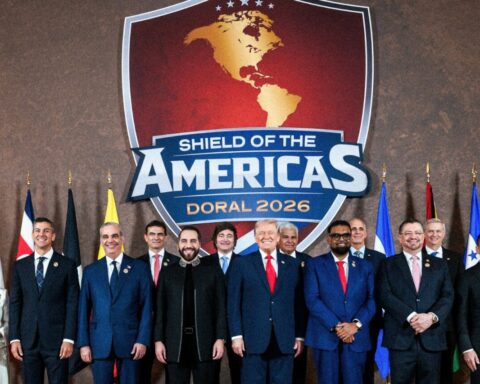
Just one month before Trump’s new doctrine statement, the United States National Security Strategy had been released, and it was interpreted as the most potentially consequential foreign policy document produced by Washington since the early Cold War era. The text officially condemned the post-1945 liberal international order and instead pointed to a doctrine grounded in civilizational realism, rigid sovereignty, economic nationalism, hemispheric primacy, and transactional alliances. In the strategy document, the Western Hemisphere was elevated above all other spheres. It was designated as the United States’ primary sphere of influence.
The Western Hemisphere is now the “top priority,” and the United States will:
- Prevent all extra-hemispheric powers (China, Russia, Iran) from establishing economic or military footholds;
- Employ tariffs, sanctions, maritime interdiction, and lethal force against cartels and human trafficking networks;
- Enforce the relocation of critical supply chains (semiconductors, rare earth elements, pharmaceuticals) to nearby regions;
- Treat illegal immigration as an act of “hybrid warfare” against the American homeland.
This can be described as the clearest declaration of sphere-of-influence politics by a U.S. administration since 1823—deliberately provocative in its language. The “Hemisphere” that Trump repeatedly emphasized in his speech following Maduro’s surrender through a U.S.-backed coup was none other than the axis laid out in the Strategy Document a month earlier.
Latin America: “Far from God, Close to the United States”
U.S. interventions in Latin America are not isolated incidents; they are part of a century-old model of domination whose most visible expressions include military occupations, coups, economic pressures, and covert operations—but which ultimately belongs to a deeper system. As Eduardo Galeano reminds us, history never says goodbye; it says, “See you later.” That phrase summarizes Latin America’s endless ordeal with the United States. From Guatemala in 1954 to Venezuela today, the United States has intervened using political, economic, or military power, turning instability in Latin America into the very fabric of the region’s order. U.S. interventions have not only been acts of aggression, but also a structural set of intrusions shaping political and economic systems—even the memory of nations.
In this sense, Díaz’s now proverbial lament, once a national observation—“Poor Mexico, so far from God and so close to the United States” (Pobre México, tan lejos de Dios y tan cerca de los Estados Unidos)—has become a regional diagnosis. Across the continent, sovereignty has often been conditional due to proximity to U.S. influence, shaped by trade agreements, debt obligations, and political pressures that extend beyond borders. Even in moments of democratic aspiration or social reform, these forces operate like invisible undercurrents—undermining independent efforts and reproducing old hierarchies.
The American Problem—which has now become the world’s main issue and will shape the coming years—is a burden Latin America knows best. Yet this is not the only issue explaining the condition of Latin America or Venezuela. Ultimately, this continent, itself a product of a colonial order, suffers from structural problems at least as severe as the American Problem. Venezuela is a striking example of how the combination of a colonial social legacy, a rentier (oil-based) political economy, weak capital accumulation, and external pressure (including U.S. power) can produce long-term institutional “gridlock.” The political, social, and institutional ecosystem shaped around a political economy in which the energy sector became a political ATM machine has led to a long-paralyzed administration.
Therefore, the issue in Venezuela is not “either colonial legacy, or U.S. imperialism, or the economy”; it is the way in which these layers reinforce each other. In the end, extremely low state capacity combined with a severe democratic deficit has resulted in a hollowed-out state capable of surrendering its head of state to an aggressive power—something that did not happen even in Iraq or Afghanistan despite actual wars and occupations. Perhaps it is worth thinking and writing more about this hollowness, which has been praised with astonishing ignorance for years. Still, it is clear that these structural dimensions of Venezuela’s fragility must become the primary concern for those who wish to build a defense capacity against the American Problem.
The internal and external factors that have brought Venezuela to the brink of collapse over the years no longer hold much meaning. A country that the United States has openly stated it will seize and manage is now facing deep uncertainty. And yet, Maduro’s removal by coup does not mean the disappearance of the Chavismo movement that brought him to power. It is also likely that Trump’s theatrical spectacle of bringing Maduro to the United States and his provocative statements have struck a nerve within Chavismo. While for now the debate is shaped by Washington’s arrogant statements and humiliations, it is essential to see that the occupation of Venezuela contains far more complications. At this point, we will see what U-turns Trump’s hyperactive and increasingly fruitless U.S. foreign policy will take in Venezuela.
What Awaits America and the World?
Venezuela may be the crime scene of the 1945 order. Yet this assassination continues to be the primary scenario expected to produce consequences for the entire world—and, of course, for the United States—in the near and medium term. In the final analysis, America is a country that has never fought directly and alone against another great power. Its greatest military loss still comes from its own Civil War. Since the late 19th century, in every war it participated in during the 20th century, it either entered with allies, relied on another power’s support to stay afloat, or fought against depleted countries like Iraq and Afghanistan. There is no doubt that American military power remains clearly superior to the rest of the world. But the main issue for this force, which has an annual spending capacity of $1.5 trillion, is securing not only financial but also political and psychological support domestically. And this assurance is currently riddled with serious vulnerabilities.
Trump has no personal or intellectual affinity with the wave that brought him to power. In fact, he embodies the very urban, Northern, hedonistic, and greedy capitalist persona that this wave despises—the archetype of the “American Psycho.” In short, the Faustian “deal” he struck with the masses who carried him into office is, contrary to popular belief, built on a fragile affinity. Trump has made clear signals that he will embark on adventures like Venezuela. (In the past, he has expressed desires toward Canada, threatened Iran, and made remarks such as “We absolutely need Greenland” and “We need to do something about Mexico” just a day after announcing his Venezuela invasion plan.) All of this points to a further deepening of America’s internal fragilities.
With the U.S. about to enter full election mode in 7–8 months, the Republican Party will inevitably come under heavy pressure. Yet, despite this, Trump and his team may persist with these policies. That is because steps that are extremely dangerous and costly for the world appear in Trump’s mind—who has gone bankrupt six (6) times—as economic opportunities. From potential geopolitical deals with Russia to energy transport talks involving his own family, from mining operations in Ukraine to the return of oil companies to Venezuela, and even turning Gaza into a tourism hub—these are the kinds of ventures at play.
It is fair to say that a new era has begun for the world. The global regime change, with the coup and occupation plan in Venezuela, will now become an undeniable reality. The aggression displayed in Venezuela may well be the opening salvo of a broader campaign reminiscent of the modern-day Lebensraum and Anschluss ideologies known from the Nazi era. Indeed, we had already heard during Trump’s first term that Russia—once seen as Venezuela’s protector—approached Washington with the idea of a swap involving Ukraine. Moreover, the U.S. National Security Strategy released earlier last month—with its exaggerated emphasis on the “Hemisphere”—offered the world a new proposal for “backyards and buffer zones.” The U.S. will likely place its backyard (Latin America), and possibly its front yard (Canada and Greenland), under full domination—while displaying indifference toward similar moves by other powers.
All of these developments are clearly reinforcing three dynamics. First, the likelihood of war(s) breaking out will significantly increase. Ongoing deglobalization and trade wars will inevitably feed the probability of conflict in a world where even the minimum standards of international law no longer function. Second, the institutions of the collapsing system are increasingly unlikely to survive. Security, regulatory, and political institutions alike will struggle to maintain their former structures within such a “managed chaos” order. Third, the crisis—currently still in a “managed” phase—will likely lose even that quality in the medium term. In such a scenario, the global and regional production and cooperation networks that the world has grown used to—and even dependent on—could suffer serious damage. Trade, financial infrastructure, raw materials, and rare earth elements will all inevitably be weaponized, yet no one has calculated the full scale of this potential doomsday scenario.
Amid this bleak outlook, a country’s defense capacity will increasingly be shaped not only by conventional military and economic power, but also by internal stability. In fact, the ultimate line of defense will be a country’s political stability. For states without nuclear capabilities or security guarantees within a strong alliance framework, the only inevitable path to preserving political stability lies in democratic capacity and internal cohesion. One of the clearest lessons from the Venezuelan example is that the U.S.-backed coup and aggression were made possible through internal collaboration. It has now become undeniably clear that middle powers with democratic deficits can neither produce geopolitical surplus nor maintain sustainable defense capabilities. When facing the American Problem—and, by extension, the secondary threats that will arise in its wake—the first and foremost safeguard must be the construction of an unquestionable wall of legitimacy.