 Collins Nweke

African Sovereignty Must Move Beyond Handshakes to Industrial Power
Collins Nweke situates Africa’s UNGA81 diplomacy within a practical test of economic sovereignty: whether wider external relationships can be converted into productive capacity, regional value chains and measurable domestic value. The argument is grounded in a structural gap. World Trade Organization data show that intermediate goods accounted for 77 per cent of Africa’s non-fuel merchandise exports in 2022, while only 12.8 per cent of those exports remained within the continent. The UN Economic Commission for Africa estimates that Africa holds roughly 30 per cent of global critical-mineral reserves but captures less than 5 per cent of the associated value added.
Nweke’s focus is not on disengagement, but on the terms and institutional follow-through of engagement. He links diplomatic multi-alignment to industrial policy, infrastructure, processing capability, technology transfer and the AfCFTA, arguing that a wider choice of partners carries limited strategic weight where value addition remains offshore. Nigeria’s expanding refined-product shipments illustrate how domestic conversion capacity can alter trade flows, while the World Bank’s work on African integration highlights the scale available through regional production networks.
The conversion chain from access to commitment, investable project, productive capacity and retained value provides a disciplined basis for assessing the economic content of post-UNGA81 agreements.
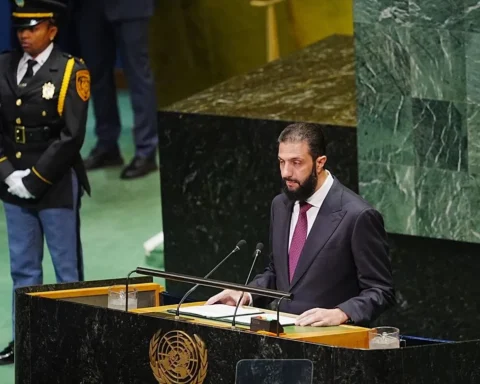
The morning after New York. The motorcades are leaving Manhattan. The bilateral readouts have been issued. Photographs of presidents, ministers and institutional leaders shaking hands have travelled across official feeds, accompanied by familiar words: partnership, solidarity, transformation and shared prosperity.
Africa was present at the eighty-first United Nations General Assembly with an agenda worth defending. The African Union pressed for a stronger voice in global decisions, reform of the international financial architecture, fairer value from critical minerals, climate justice and delivery of Agenda 2063. Its chairperson met leaders from the United Nations, the European Union, other regional organisations and the private sector. These engagements matter. In an unsettled world, access to several centres of power can reduce dependence on any single one. The substantive issue begins when the applause ends: the extent to which these engagements produce measurable change after UNGA81.
The answer should be judged in factories, power systems, laboratories, ports and regional markets. A diplomatic meeting has economic meaning only when it moves through a chain of conversion: from access to a negotiated commitment, from commitment to an investable project, from project to productive capacity, and from capacity to measurable African value. Too many partnerships stop near the beginning of that chain. This emphasis on measurable outcomes is consistent with Nweke’s earlier call to move from diplomatic activity to national value.
Many partners and the same economic position
Africa’s external relations are undeniably more diverse than they were a generation ago. Europe remains central, China is a major trading and infrastructure partner, the United States is renewing its economic-security interest, Gulf states are expanding investments, India and Türkiye have deepened their reach, and Russia has cultivated security and political ties. African governments can compare offers, resist exclusive blocs and bargain across competing interests.
That is diplomatic multi-alignment, a theme also reflected in Nweke’s argument that Nigeria should treat BRICS and G7 engagement as a question of strategic choice rather than exclusivity. It becomes structural multi-alignment only when African economies gain the capacity to choose what they produce, where value is added, how technology is acquired and which markets they can serve.
The trade evidence exposes the gap. The World Trade Organisation estimated that intermediate goods made up 77 per cent of Africa’s non-fuel merchandise exports in 2022, worth about US$312 billion. Yet these exports were still dominated by raw and semi-processed materials. Only 12.8 per cent of Africa’s intermediate-goods exports stayed within the continent, compared with roughly one-third directed to Asia and Europe. Africa is well connected to global production, but too often at the early, low-value stages.
Critical minerals make the contradiction even clearer. Africa holds about 30 per cent of global critical-mineral reserves, according to the UN Economic Commission for Africa, but captures less than 5 per cent of the associated value added. The continent may sell cobalt to one partner, lithium to another and manganese to a third. Unless processing, engineering, intellectual property, skilled employment and supplier development move closer to the mine, the buyer list changes while the economic role remains largely intact. This is diversification of destinations, not diversification of power, and it echoes Nweke’s earlier concern with African custodianship of mineral value chains.
When choice reproduces extraction
Multi-alignment carries real advantages. It can expand financing options, create competitive tension among partners and give African states more room to protect national interests. It can also reduce exposure to sanctions, political conditionality or a sudden shift in one partner’s priorities. The trade-offs are equally real. Competing powers may offer faster finance while requiring sovereign guarantees, privileged access to resources or procurement tied to their firms.
A minerals agreement may promise local processing but leave technology, pricing, insurance and marketing abroad. An infrastructure project may improve an export corridor without building links to local suppliers. Security cooperation may solve an immediate problem while narrowing diplomatic room later. Nweke has addressed a comparable balance between security engagement and sovereignty in Africa’s external relations.
There is another constraint. Processing is itself concentrated. The International Energy Agency reported in 2026 that refining concentration across energy minerals reached record levels in 2025. China accounted for more than 90 per cent of global refining in gallium, graphite, manganese and rare earths. Africa therefore negotiates with partners that often control finance, technology, offtake and access to downstream markets. A mining licence alone cannot correct that imbalance.
The practical danger is multi-partner extraction: several flags, several summit formats and several memoranda feeding the same enclave economy. Governments gain diplomatic visibility, but the structure of production changes little. The sovereignty dividend remains thin because domestic firms, workers and public institutions lack the capacity to capture more of the value chain. Nweke’s wider argument on diplomacy, sovereignty and the Global South similarly places institutional capacity at the centre of strategic autonomy.
The industrial meaning of sovereignty
Industrial policy is sometimes treated as a narrow economic portfolio. In the present world order, it is an instrument of foreign policy. A country that cannot refine its resources, supply reliable power, finance long-term investment or move goods efficiently has limited room to translate diplomatic choice into economic choice. The connection between diplomacy and domestic capability also runs through Nweke’s work on moving from gateways to factory floors and on converting external engagement into infrastructure delivery, including power systems.
Nigeria’s Dangote refinery offers a useful, if incomplete, illustration. The United States Energy Information Administration reported that Nigeria’s seaborne petroleum-product shipments averaged 561,000 barrels a day in the second quarter of 2026, up from 79,000 barrels a day in 2023. Product exports rose sharply while imports fell. That is a genuine shift from exporting crude and importing refined fuel towards retaining a larger processing function at home. Nweke has separately argued that a national champion requires a wider national ecosystem if such capacity is to translate into broad industrial value.
It does not solve Nigeria’s dependence on hydrocarbons, nor does one privately controlled asset amount to broad industrial transformation. But it demonstrates the central point: ownership of conversion capacity changes trade flows and bargaining power. Similar lessons can be drawn from Morocco’s automotive ecosystem and from efforts across Southern and Central Africa to process minerals before export. The strongest cases combine infrastructure, skills, standards, local suppliers and assured markets. Export restrictions without power, finance and technology can simply strand production or encourage evasion.
This is why the African Continental Free Trade Area matters beyond tariff reduction. The World Bank’s 2026 work on African integration notes that intra-African trade accounts for only about 15 to 20 per cent of total trade, yet it is more diversified and manufacturing-intensive than Africa’s external trade. Regional production networks can give firms the scale to process minerals, manufacture components and supply services that many national markets cannot support alone. Nweke has also framed regional connectivity through the AfCFTA as an economic corridor rather than a tariff project alone.
AfCFTA will not industrialise the continent by proclamation. It needs interoperable customs and payment systems, reliable transport and power corridors, enforceable rules, development finance and deliberate regional specialisation. The objective is not for every country to build an entire battery or vehicle industry. It is for African countries to occupy complementary stages of value chains and negotiate with external partners from the strength of a functioning regional market. The negotiating posture is consistent with Nweke’s earlier emphasis on fairer Africa-West business partnerships.
What should follow UNGA81
Every major external engagement should now face a common African conversion test. Before another communiqué is celebrated, governments and regional institutions should set out five points of accountability. This follows the same performance logic Nweke has applied to economic statecraft and to shuttle diplomacy measured by outcomes.
- Value retained: identify the share of processing, supplier spending, skilled employment, tax revenue and export earnings that will remain in Africa.
- Capability transferred: specify the technologies, licences, engineering functions and management skills that African firms and institutions will acquire.
- Regional link created: establish whether the project connects African producers and markets or merely accelerates extraction towards a port.
- Risk allocated: identify who bears price, currency, debt, environmental and demand risk when assumptions fail.
- Delivery verified: designate the institution that will publish milestones, contract terms where possible, and annual results after the summit photographs disappear.
These criteria do not reject foreign capital or force Africa into isolation. The continent needs investment, technology and markets from a wide range of partners. The issue is the quality of the bargain and the capacity to implement it. Strategic autonomy is strengthened when external relationships widen Africa’s productive options rather than lock in a familiar division of labour.
African states also need greater discipline in presenting projects. Partners can respond to bankable regional plans more readily than to broad calls for investment. Governments should take sector maps, power requirements, logistics gaps, skills plans and procurement targets into negotiations. The diplomatic calendar must follow an industrial strategy rather than substitute for one.
Beyond the handshakes
The theme of UNGA81 is “Restoring Trust, Managing Transformation: A United Nations That Delivers for All.” Africa’s wider diplomatic room is an asset and should be preserved. Its economic content, however, rests on what institutions build, coordinate and enforce after leaders return home. A state is not strategically autonomous because it can choose among buyers for unprocessed minerals. It becomes more autonomous when it can decide to refine, manufacture, regulate, finance and trade through its own firms and regional networks.
The applause in New York will fade quickly. The measure of this week now moves from the General Assembly Hall to African ministries, factories, ports, laboratories, power systems and regional markets. Handshakes can open doors. Productive capacity determines who walks through them with power. Real African sovereignty will be secured by how effectively the continent converts diplomatic access into industrial capability and measurable value at home.
“Africa has widened its diplomatic field and multiplied its external partners. Yet a wider choice of destinations for raw materials is not the same as strategic autonomy. The test after New York is whether diplomatic access becomes productive capacity at home.” – Collins Nweke