

 Ahmet Özcan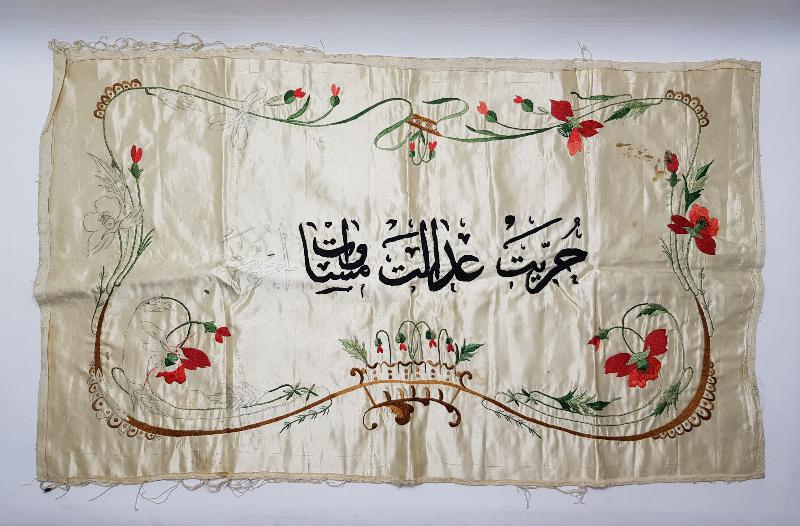

HUMANITY AND EXISTENCE
The ancient history of humanity is, in many ways, like the detailed story of a single human being. A single human being (Adam) came into existence suddenly, as if born without being asked. Then he grew and multiplied himself in order to know himself, giving rise to new human beings from each of his parts and attributes. Later, for reasons that remain unclear, he began to conflict with them, and they with one another.
Human being oscillates constantly between the drive to survive and the impulse toward self-destruction. One part of it strives to exist, to understand the world into which it was born, to become aware of its self and its existence, but another part rebels against this sudden and causeless birth, wanting to end its existence by self-destruction.
The tendency to exist clings to life through the effort of recognizing nature and itself, imitating, creating, and perpetuating its lineage, while the tendency to disappear rushes towards nothingness by killing its own kind, killing time, killing nature, and attempting to kill, destroy, and annihilate everything that gave it existence.
Millions and billions of human forms are born into this contradiction, live within it, and die. As long as the human species continues to exist, the tendency toward existence remains dominant. Yet as long as destructive impulses persist, the tendency toward nonexistence also remains alive.
Human being’s inner conflict unfolds through self-multiplication, through creating beings like itself by giving birth, and through projecting its inner self outward into an infinite number of forms. Humanity may, in fact, be nothing more than the manifestation of a single human essence, the unfolding of a single spirit.
Humans are like copies of a single person, each with different characteristics. Cloning occurs either by a single person splitting themselves into two (male and female) or simply by designing it in their mind. Birth is the reunion of the masculine and feminine aspects, while conception is the meaning and content that each existing person attributes to another.
Human beings assign meaning to themselves, to others, to objects and events, to nature, and to the universe. Because there is only one human essence, all human forms have attributed similar meanings to everything beyond themselves. The universe, the sun, the moon, the stars, air, water, earth, mountains, rivers, seas, animals, plants, other forms of existence, positive and negative poles, quantity and quality, the abstract and the concrete, all of these beings and phenomena, operating according to immutable laws like those of a living organism, are fundamentally the same for every human being.
The only thing that is not the same is human beings themselves. There are infinitely many human beings, each different from the others, constantly changing across time and space, multiplying and becoming increasingly diverse. Each person continuously assigns meanings to others and, through others, to himself, alters those meanings, and then assigns new ones again. Collective gatherings (societies) perform the same function on other communities, and all this takes place within the internal struggle of the individual. Meanings such as right and wrong, good and bad, just and unjust, superior and inferior are conceived and attributed to others. Through these categorical meanings, conflict accelerates and slows down, intensifies and diminishes. Violence is simply the tempo of this conflict. The tendencies toward existence and nonexistence confront one another without end. Human history is nothing more than the eternal enactment of this struggle.
A human being, who finds themselves in nature and possesses a capacity for design inherent in their own nature but absent from nature itself, recreates by blending their knowledge and perceptions with the phenomena of nature. This is art. Art is the recreation of the world to which a deeper inner self belongs, transcending the inner struggle of the human being. The world into which we are born is not humanity’s true world. This is a place of casual alienation, and through art, people remember their true world, their homeland, expressing their longing for it and the tragedy of being away from home. Art is the expression of humanity’s unity as a single essence and of its yearning to return to its true homeland. Painting, poetry, literature, sculpture, pottery, carpet and rug weaving, all forms of craftsmanship, cinema, theater, music… All arts and crafts, that is, every human skill that has no exact equivalent in nature, are the thoughts, joys, angers, desires, fears, sorrows, tears, and sadness of a single human being’s true self. And in comparison with the finite and mortal phenomena of nature, artistic creation is infinite and eternal. Human being resists death through art.
Death is a reality that does not belong to human being. Human being is condemned to death because of their casual alienation from nature. Casual alienation, that is, existence without cause in nature, in the world, is, according to humanity’s inclination towards existence, a test, an opportunity, and a temporary period. According to the tendency towards extinction, it is a punishment, a torment. One part of humanity accepts its existence in the world and sees it as an opportunity to earn eternity by realizing itself and returning to its true life and homeland. The tendency towards extinction attempts to forget death by transforming life from suffering to pleasure. In this way, it tries to escape punishment. Forgetting its true existence and homeland, it strives to make the world its permanent home. It searches, in vain, for ways to conquer death. It conceives eternity as bodily immortality. To prolong life, it clings to everything it has itself created, that is, everything to which it has assigned meaning and which appears more enduring than itself; gold, money, property, the state, rank, office, prestige, fame, heroism… Or else it surrenders and merely tries to forget, taking refuge in entertainment and pleasure.
The feelings of death and alienation summarize the entirety of human being existence. Human being creates everything by looking at these feelings. Life is the contradiction arising from humanity’s two opposing interpretations of death and exile. Every individual confronts the consequences of this contradiction within himself and in his relations with others. This, in short, is what it means to live.
Almost all ancient mythologies contain a myth of a human being, or a being claimed to have created humankind, being cast into or falling to the Earth. In the Sumerian Epic of Gilgamesh, the god Dumuzi is carried away to the underworld. In ancient Egypt, the god Osiris is imprisoned in the land of the dead. In ancient Greece, Prometheus, who stole fire for humankind, is chained to the Caucasus Mountains. In Jewish mythology, Adam is expelled from paradise and cast into the world for eating the forbidden fruit. In Gnostic texts influenced by Zoroastrianism, light beings from the realm of light, who part the veil between them by being curious about the realm of darkness, fall into the dark water. Among them, Demiurge Ptahil pleads with the Supreme King of Light (to the God) for deliverance. God commands Ptahil to create the world. Thus Ptahil creates the world and settles within it. The rulers of the realm of darkness then deceive Ptahil into creating a human being in the world. He creates Adam. Yet before the dark rulers can act, God sends His helpers, who breathe His spirit into Adam and bring him to life. Adam then rebels against Ptahil, his creator, who remains under the influence of the powers of darkness. Ptahil, in turn, seeks to destroy Adam. Variations of this myth can also be found in Indian mythology.
All of these mythologies share a common theme. The world is an evil place. It is a place of death and exile. The human body belongs to this world. But the soul comes from beyond, from God. In contrast to the limited, mortal, and evil nature of the material world, God (or good gods) helps human being through His helpers. Evil gods and demons, on the other hand, try to kill and destroy them.
The creation prologue of the Holy Qur’an corrects all of these corrupted myths of Adam, the first human. There are no rival gods, nor is the material realm, the world, categorically evil. Human being has not been cast into the world but has been sent here temporarily. Death is not evil; it is merely a transition to another dimension of life, indeed a return to true life itself. The world, the universe, time, and human being have all been created by Allah and human beings have been endowed with free choice and granted the opportunity, during their earthly lives, to realize themselves, to know and affirm the unity of God, and to prepare for the Hereafter.
Evil is the natural phenomena that man discovers through his use of reason, as well as corruption within the his own actions and doings. Human beings call evil those destructive and savage instincts and reflexes that belonged to their pre-rational condition as sub-human (beşer). Likewise, they call evil any natural event that harms or destroys them.
These moral categories are the inevitable consequence of becoming conscious as Adam. For Adam, by nature, is good. The purification of Adam from evil symbolizes the transition from sub-humanity to true humanity. To commit evil is the behavior of the sub-human-antropomorf beşer; to purify oneself from evil is the behavior of the perfected human being.
Adam expresses his sense of alienation, his fear of death or his rebellion against death and banishment by calling evil everything that gives rise to these conditions. For, in the final analysis, he neither truly belongs here nor is he essentially mortal.
Nearly all philosophers who have reflected on the origins of destructiveness in human beings accept, in one form or another, a distinction between matter and meaning similar to the creation myths described above, and consequently assume that the material aspect of humanity contains destructive tendencies. Religions speak of Devil (Iblis) and Satan; myths speak of demons, devils, or demiurges. In essence, they are all expressing the same idea.
Ultimately, the fact that we are born into this world and that we will die is not accepted by humanity as a definitive reality. The oppressed, the deprived, and the poor express this refusal by condemning the world, while the wealthy and the ruling classes express it by attempting to transform their lives into a paradise. Though different in form, both attitudes contain the same fundamental objection: a refusal to accept life and death as they are.
Socialization, Settlement, Integration
Human socialization is, in essence, an expression of humanity’s fear of the world and of nature. Sociology repeatedly invokes the cliché that human beings are social creatures. But why are they social? Many of nature’s secrets have been uncovered, and every kind of technology has been developed that would allow a person to live alone in comfort and security. Yet neither the powerful nor the deprived display any significant inclination toward solitary existence. This is because the single human essence has never regarded this world as its true homeland and never will. This world is a foreign land and therefore, human beings feel secure and at home only when they are together with others like themselves. Socialization, communal life, is the only genuinely human way of escaping nature and bringing it under control. ‘Solitude belongs to God alone.’
This shared ontological characteristic of humanity has, under the influence of economic and political relations, developed into forms of social organization such as the family, clan, tribe, community, and society. Blood ties constitute the first nucleus of sociality, the primary basis of humanity’s effort to seek refuge in and rely upon other human beings. From this foundation emerged ever-expanding forms of collective existence. With the advent of religion, human beings transcended blood ties and formed communities through bonds of faith and affection. Later, with the rise of imperial states, this process of socialization gave birth to nations as a higher form of collective life encompassing multiple religions, peoples, and tribes.
Whether one emphasizes blood ties, faith, or political allegiance, these forms of human socialization are ultimately products of an ontological need. Neither the mode of production nor any other fictional factor can explain this socialization process alone. Because throughout history, no social groups have been able to maintain their existence exactly as they were; that is, neither a family, tribe, nor clan or nation has been able to preserve its existence unchanged for more than a few generations. Yet socialization itself remains a constant reality, and every new generation, insofar as historical and social conditions permit, becomes part of some social collective.
In this sense, socialization is essential, whereas its particular forms are secondary. The tendency of human beings to draw close to their fellow humans (ins–ünsiyet), to intermingle, and to live together is an intrinsic requirement of being human. But this form of rapprochement itself, that is, the tribal, clan or national state, is not eternal.
Indeed, human history is also a vast graveyard of thousands of tribes, peoples, and nations. In Mesopotamia and the Mediterranean basin, where agriculture and settled life first emerged, almost every excavation reveals the remains of a people or civilization. Those people are gone; their language, beliefs, and culture have continued in some form in subsequent generations, but they have vanished as individuals. Perhaps, while they were alive, they believed that they, their tribes, or their peoples would endure forever. Yet today we stroll as tourists through the ruins of their cities and speculate about their lives. Thousands of years from now, our own remains will receive the same treatment.
The belief that tribes, clans, and nations have existed as they do today since the earliest times of history and will thus be carried into the future is a superstition that originated in 19th-century Europe. This approach, which is the product of a racist outlook that does not accept the ontological unity of human and regards its own peoples as the most developed and superior human beings, is an ideology concocted by the intelligentsia in the service of the European bourgeoisie in order to steer the masses toward the new bourgeois order and drive them into colonial wars. This divisive ideology, now being revived, has reached its latest form, tracing its roots back to tribalism through the concepts of identity and difference. Yet the new Western bourgeoisie, having based its contemporary imperial project on comprehensive global hegemony, exports this ideology of identity and difference to others while advocating globalization, a common home, shared values, and a common civilization within its own sphere, thereby pursuing ever-greater integration and unity.
Over the past two centuries, those who drove Western people into war for the sake of filling the coffers of their banks, while exploiting their feelings of homeland and freedom, are now, in this century, implementing new methods to set targeted societies against each other by invoking democracy, freedom, and human rights-again for the sake of filling their banks’ coffers. The principle of national self-determination, originally devised to dismantle empires, continues to be served repeatedly to the peoples they seek to dominate, even as it is never applied to internal differences within their own societies.
For this reason, tribalism, ethnocentrism, and nationalism have increasingly become instruments for exploiting humanity’s natural need for social belonging. Just as the state, religion, economy, work, production, and consumption have been alienated from their true purpose throughout history and exploited by the ruling powers, today, human beings’ natural social bonds have also become exploited for the sake of breaking away from one another and from their human brothers, for separation, hostility, and conflict.
In this context, it is essential to draw a clear line between the existence of tribes, clans, and nations as natural social groups and their exploitation.
Just as a human being does not choose the world into which they are born, their parents, their sex, or their environment, they also do not choose their society or their people. Building entire philosophies of life or social ideologies upon realities that one has not chosen is a distinctly Western innovation. Prior to the age of capitalism, there are no historical examples of such systematic constructions or exploitations. Although conflicts and divisions existed in earlier agricultural civilizations, often expressed through the language of theology, religious wars ultimately rested upon concrete economic and political motives or upon the universal aspirations of religions themselves. Today, however, conflicts between societies of different origins possess neither a genuine material nor a spiritual foundation. Logic itself is absent from such conflicts. They are, in their entirety, the products of provocation by colonialist powers.
Homeland
The concept of homeland has a similar characteristic. It is a natural ontological inclination for a person to love the place where they were born and raised. Although the concept of homeland is a relatively new expression, since the earliest days of humanity, especially with the transition to settled life, the inhabitants of villages and cities have developed a sense of belonging to these places, and a reverence for a homeland has emerged, naturally attributing meaning and value to it and symbolizing the existence and survival of the community living there. Nomadic societies likewise sanctified the lands in which they settled, making them symbols of their collective existence and aspirations for permanence.
The concept of homeland is also one of the manifestations of socialization and the result of the human essence establishing a necessary yet temporary settlement in this land of casual alienation. Settlement is preferable to rootlessness and homelessness, for homelessness evokes the condition of banishment. Perhaps, after a long period of wandering without a homeland, human beings discovered agriculture and, with it, the consoling power of settling in one place, a power capable of easing the pain of alienation.
The modern concept of homeland has been reformatted in parallel with the nation-building process, essentially alienated from its essence and expressed through borders and restrictions as the property of a single nation.
It is well known that the Young Ottomans adopted this modern concept of homeland but reintroduced it into our intellectual tradition with something closer to its original, natural meaning. The homeland has acquired a meaning through the nation and state living on it, expressing shared history, beliefs, and customs, in short, all the essential components of national existence. (Perhaps this is why, in the barracks of the armed forces, instead of writing state, army, or nation first, the homeland first is written. Homeland is the fundamental concept that encompasses them all.)
In our society, the concept of homeland has no boundaries. More precisely, as evidenced by additional terms like motherland, ancestral homeland, and offspring homeland, the homeland is defined by the existence, values, and ideals of the nation living within it. The concept that best expresses this understanding is the National Oath (Misak-ı Milli). The National Oath, as its meaning suggests in the legal text where it was first used, is the voluntary willpower of all people and communities who demonstrate the desire to live together in a common homeland. Wherever and however this collective willpower manifests itself, that place becomes a part of the homeland. In this sense, the nation’s homeland, or in the same sense, the homeland of the Turkish/Ottoman nation, is the place where all the ethnic and religious communities that constitute the nation and ratified the National Oath live.
The way the concept of homeland is linked to the voluntary and historical unity of the people living on a land that has been adopted as a homeland is probably not found in any other human society. Constitutional or similar legal bonds cannot be said to convey the same meaning. Because constitutional and political unions are temporary agreements. Both their content and the geography they encompass are circumstantial. The homeland defined by the National Oath, however, is both historical and rich with meanings that extend far beyond ordinary contractual politics. For this reason, homeland has been symbolized through images such as a mother’s embrace and a father’s hearth, the most fundamental symbols of human belonging. Home and family, mother and hearth, constitute humanity’s first homeland and remain among the most enduring symbols of the larger national home.
Nation, Nationhood and Nationalism
Homeland-worshipping interpretations that understand the consciousness of homeland as a place of hegemony in the Western sense and as a fiefdom of the ruling classes are foreign to these lands. Likewise, the habit of interpreting the reality of the nation through concepts of nationhood in a racial, ethnic, tribal, or clan-based sense is not part of our tradition. Such notions reflect the subconscious of Western societies-communities that lived nomadically for millennia, failed to form enduring nations for centuries, and, in recent centuries, lost a shared understanding of homeland. Ethnic nationalisms such as fascism and chauvinism originated in Europe. Nowhere else in the world do similar ideological exploitations have any social adoption. Even the nationalisms that brought down the Ottoman Empire became widespread by inevitably finding a religious basis for themselves or by setting an implicit goal. The anti-Ottoman nationalisms that emerged in the Balkans and the Arab world during the First World War were rooted in the activities of certain Christians and churches cooperating with Protestant powers. Arab nationalism, in particular, as the ideology of these Christian Arabs, is both a path to breaking away from the Ottoman Empire (i.e., becoming a colony of a Western Christian state) and a belated expression of historical hatred towards Islam.
In Türkiye, the spirit that began with the Committee of Union and Progress, continued into the early years of the Republic, and ultimately founded the Republic, is mistakenly coded as nationalism, causing confusion. Neither the National Forces (Kuva-yı Milliye), the National Oath (Misak-ı Milli), National Sovereignty (Hakimiyet-i Milliye), nor the Republic itself were expressions of ethnic nationalism in the Western sense. Even the discourse on the Turkish nation that developed after Lausanne is, in fact, a definition so different that it cannot be contained within any known nationalist rhetoric, as in Mustafa Kemal’s statement, “The Turkish nation is the people of Türkiye who founded the Republic of Türkiye.” According to this understanding, all peoples who participated in the War of Independence and did not betray the common cause are founders of the Republic and members of a single nation. For some, because of the word Turkish in this definition, this discourse resembles the nationalist discourse that was fashionable throughout Europe at that time; however, in this definition, Turkish and Türkiye were actually used in place of the Ottoman concept found in the 1876 and 1908 Constitutions. It can also be argued that this particular concept of Turk was chosen specifically to avoid severing ties with the Turkic peoples of Central Asia-the Eastern Turkic peoples, who were under Russian colonial rule, and to protect the initiative of the Western Turkic peoples against the Safavid remnants of Turkic peoples in Iran. In this context, it is natural that a willpower that, out of necessity, namely, as a result of defeat in war, can no longer call itself Ottoman but nevertheless insists on maintaining its existence, uses the language and name of the main body instead of Ottoman. Thus, all the ethnic and sectarian communities that remained from the Ottoman legacy were embraced and defended under a shared sense of homeland, common ideals, and a common destiny.
The sacrifice of the concept of Turk to a chauvinistic nationalist discourse belongs to the Republican People’s Party (CHP) of the 1930s, when modernization gave way to Westernization. The Turk in this nationalism is not a Turk in the traditional sense as we know it, but a Westernized White Turk, invented by some Jewish ideologues who mimic German-French-Italian nationalism and try to present it as acceptable to the West, loyal to the CHP (Republican People’s Party), and presenting the Western lifestyle as Atatürkism. This malicious nationalism, which bans the Kurdish language and culture by pitting it against this fake Turk, and which creates a bloody problem for the country and is useful to imperialism, is this ideology and has nothing to do with Turkishness whatsoever. Today, the Kurd that some White Kurdish Nationalists, drawing from the same source, are trying to invent by following the same path and pitting against the Turk, thus attempting to divide the nation’s essential components into two main elements, is something similar. Both are artificial, both are products of Westernism, and both represent different manifestations of hostility toward the nation as a whole. Natural Turkishness and natural Kurdishness are the same thing. These concepts can readily be used interchangeably, complementing and completing one another. Banning the Kurdish language and traditional culture is nothing more than an attempt to dry up Turkishness, Turkish culture, and the rich diversity of the Ottoman era. Likewise, other ethnic cultures, religious differences such as Armenian, Greek, and Assyrian traditions, and cultural paths and styles such as Alevi-Bektashi culture, are all equal and free components of what is commonly described as the Sunni-Turkish core but is, in reality, the shared national identity of the Ottoman heritage and there is no boundary that can truly separate one from another. All are intertwined, fused together within a dynamic framework of common belonging and affiliation.
For this reason, both the oligarchic discourse that employs the concept of Turk to exclude the Kurd, and the language of aggrieved nationalism that treats the Kurd as something distinct from the Turk, are divisive and fragmentary. In the face of these ethnic provocations, speaking with as little or no use of ethnic concepts as possible might be a way, at least in the short term, to erase the sordid traces of the recent past from our memories. The fundamental solution lies in establishing a political willpower similar to the Ottoman Empire’s, a 600-year-old example of the liberal political order provided by Islam, that can unite all societies in the region under a single umbrella. Within a framework of political unity, it is possible to create a space of freedom for every form of difference. Yet as long as political fragmentation persists, it is understandable that national existence will exhibit heightened sensitivities in defending itself…
Against these malevolent nationalisms, it is essential to develop a framework of brotherhood that reinterprets differences, which are an expression of ontological socialization and integration, within a shared understanding of homeland and nation.
The concepts that correspond to this brotherhood are not nationalism or homogenous Jacobin nationalism, but rather nationhoodism-localism, patriotism or citizenship.
Today, nationalist discourse that ignores these fundamental meanings and values is naturally criticized and rejected by the majority of the nation and by many intellectual and political circles. In the end, as has become evident in a moment of new danger when global hegemony has arrived at our doorstep and the elements it has influenced are circling over our heads, the shared consciousness of homeland and nation is nothing other than both an outward-facing security umbrella and an inward-facing idea of integration and togetherness. This is why racial, tribal, or regional nationalisms remain highly marginal and often externally driven ideologies of destabilization. The majority of the nation does not endorse these Western-oriented ideological deviations; on the contrary, they express their own local and patriotic perception with common sense in the face of every nationalist (ethnicist) connotation.
Throughout the history of Türkiye, when one strips away the internationalist rhetoric of the left, the nationalist-statist language of Kemalist groups, the ummah-centered discourse of Islamist circles, and the Turanist-nationalist narratives of the Idealist movement, what remains in each case is, in one form or another, an expression of local and patriotic sentiment. Those elements that could genuinely be described as fascistic or heimatlos (rootless, without a homeland) have always remained marginal within every ideological current. And these marginal elements, whether chauvinistic in character or ostensibly internationalist, have ultimately become tools of Western, pro-EU, pro-Russian, pro-Iranian, or pro-American manipulation over time. Yet the main body of these intellectual and political traditions has consistently remained localist and patriotic. For this reason, the tendency of ideological groups in this country to recklessly accuse one another of treason or of serving imperialism serves only to erode shared values. Just as neither the homeland nor the nation is the monopoly of anyone, acknowledging that almost all the people of this country are inherently and essentially patriotic individuals bound to this land and possessing dignity is the first condition of both patriotism and devotion to the nation. Yet the opening sentence of nationalist discourse in this country often begins with an accusation directed at someone or some segment of society. This also demonstrates how alien ethnic nationalism is to this country, its history, and its society, and how divisive, rather than unifying, it is a manipulative discourse.
The process of settling down and socialization, as natural attitudes of human ontology, manifesting itself within the reality of homeland and nation, is a natural human phenomenon. And in the final analysis, the effort to alienate these natural phenomena, which consist of humanity’s common characteristics, different manifestations of the same substance, and the harmony of mutual acquaintance and integration, from their true purpose is a manifestation of the Western habit of exploitation, which is a product of the colonial era. It can be seen that imperialism, which transformed devotion to the nation into ethnic nationalism and love of homeland into a form of territorial worship, and which, by ideologicalizing these natural social values as it has done with other human realities, manipulated them to divide, separate, and set people against one another, is now reopening the same scheme in this region for a second time a century later.
Universality
The localistic and patriotic sentiments embedded in the very fabric of these lands contain hundreds of windows opening onto universality. Contrary to common assumptions, universality does not mean stripping oneself of one’s natural homeland and social belonging in order to identify with some imagined, anonymous humanity. On the contrary, universality is the effort to share all the components of one’s being, values, and ideals with other human beings without jealousy. It is the name given to the search for the essence of human in all of humankind, and in this sense, to try to know the other by knowing oneself. In this context, the artificial and false claim of humanitarian universalism, a Western-Christian habit, has no resonance in these lands. For the spirit of this land, its nation, and its homeland is already universal. This universality is expressed as universalism (cihanşümulluk) and a sense of universal order (nizam-ı alem), and history, excluding the later Western-influenced decline, records that Seljuk and Ottoman universalism developed on the basis of winning hearts. The early conquest/war periods in our history should be read as a response to the Crusader and Latin invasions, that is, to the attack of the ‘infidels’ on the peoples in order to continue their system of plundering. Because Islam teaches, first and foremost, the rejection of subservience. Apart from conquests undertaken in this spirit, there is no evidence that Islamic armies or the early Ottoman armies attacked societies in order to compel them to change their religion or way of life. Indeed, even Orientalist researchers concede that the rapid spread of Islam from the Adriatic to the Great Wall of China within 30–40 years after its emergence was not through violence, war, or the sword, but rather that the existing oppressive regimes and peoples in chaos and turmoil welcomed Islam as a savior-messiah and voluntarily and en masse embraced Islam. In later periods, wars waged for plunder and looting, deviating from this purpose and meaning, led to the disruption of order and the accumulation of animosity and feelings of revenge among different peoples, ultimately preparing the end of the Ottoman Empire. In this regard, a distinction must be made between Islamic conquests and the hegemonic occupations carried out by states and rulers. Universality is embedded both in Islam’s divine message rejecting subservience and in the political practice of Muslim states that sought to liberate societies by dismantling feudal and tyrannical monarchies. The universal and global nature of Islam converges with the Abrahamic/monotheistic human spirit on the foundation of divine revelation and justice, and every people, nation, community, and state that rests on this foundation becomes a component of this universality. Indeed, Arabs, Turks, Persians, Kurds, and many other peoples of the region emerged as historical actors, acquired identity, and became subjects of history through Islam. For only through encounter with the divine Abrahamic message does a human being become truly Adamic, truly Human. Otherwise, one remains merely a living creature whose spiritual evolution, whose journey toward maturity and civilization, has not yet been completed.
Contrary to the ignorant boasting of racist fascist nationalists, these peoples did not even have a history before Islam. These pagan-animist barbarians, who define primitive barbarian hordes as their ancestors through nonsensical fabrications and cannot bear to meet with monotheistic civilization, are most likely descended either from the shepherds of barbarian hordes who lost their hegemony over peoples during the spread of Islam and therefore harbor hatred for Islam, or from the corrupt religious brokers of the earlier People of the Book who stood against the essence that converted the divine message of Islam to its original form.
Despite all the lies of Orientalist ideological historiography, which, within a similar historical complex, attempts to conceal the barbaric history of Westerners by defining all of humanity outside their own as barbaric, the true history of these lands and this nation should be read and the experiences that will serve as an example to humanity should be recounted. To such an extent that we are even made to look with astonishment at our own history, which they have made us memorize, as if we had a history where there was no freedom, where plunder and looting were the dominant economic means of livelihood, and where the state was a despotic god.
Yet societies so free were established in these lands that there was scarcely a need to emphasize the concept of liberty. In other words, contrary to those who, again with an Orientalist lens, read Ottoman history through categories such as plunder, looting, and nomadism, our past-with the settlement of tribes (which meant the elimination of predatory and plundering livelihoods), the order of urban life, a productive economy that compelled people to earn their living through labor, and the developed and self-confident personality type bestowed by a living and dynamic spiritual Islam-has a tradition in which justice and freedom were essentially exhibited, and even periods of decay and corruption were measured against these values. Just as the immoral speak excessively of morality, or the powerless speak incessantly of power or, in another sense, sexuality, individuals and societies often talk most about what they lack. In this regard, neither freedom, nor homeland, nor nationhood was historically lacking in these lands from the earliest periods. As this deficiency began to be felt in the last period of the Ottoman Empire, when the country was being driven toward collapse by Western imperialism, the New Ottoman cadres, who emerged on the stage as the organic intellectuals of the nation, brought justice and freedom against despotism, and the shared homeland and brotherhood against disintegration, to the forefront by conceptualizing them.
Ultimately, what is essential is the matter of reinterpreting phenomena and ideals such as homeland, nation, and universality in a way that includes the values of peace, brotherhood, solidarity, and justice, values rooted in tawhid (the oneness of God) that lie in the essence of these lands. This situation is both a necessary consequence of the existence and survival of this nation and homeland, and a cornerstone of resisting the current imperialist aggression against our lands, resources, values, and very existence. For both purposes, patriotism and love of the nation are indispensable core values of our universal ideal of justice and peace.
It is on these foundations that we can turn every kind of social, political, religious, or philosophical difference into an identity, and speak freely not to separate and conflict, but to seek and find the ways to reach the universal ideal.
This goal and meaning is a universal and historical Existential cause applicable to all societies.
Source: Teolojinin Jeopolitiği, Ahmet Özcan, Yarın Yayınları, 2010
Photo and text: Silk Panel Related to Second Constitutional Monarchy, bearing the words “Liberty, Justice, Equality”