 Majid Maleki Meighani

Introduction: From Civil War to Regional Systemic Conflict
Sudan’s ongoing war is often described as an internal power struggle between rival military factions. While domestic rivalries are central to the conflict, this framing risks obscuring the broader regional and global dynamics that increasingly shape and sustain it.
What is unfolding in Sudan can also be understood as a case study in how regional competition, resource extraction, and global geopolitical interests intersect in fragile postcolonial states. The conflict is not only internal; it is embedded in wider networks of political economy and external engagement that have developed over decades.
Rather than a conventional civil war, Sudan represents a fragmented conflict environment in which domestic power struggles and external influence are deeply intertwined.
Regional Rivalries and the Externalization of the Conflict
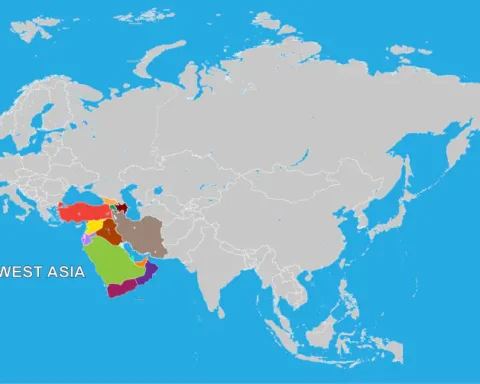
A key dimension of the war is the involvement of regional actors, particularly Gulf states, whose competing interests have contributed to the internationalization of the conflict.
The United Arab Emirates and Saudi Arabia have both developed strategic relationships with different elements of Sudan’s military and economic structures. These relationships are often interpreted as part of broader regional competition over influence, security priorities, and access to strategic corridors along the Red Sea.
The Rapid Support Forces (RSF), which have become a central actor in the conflict, are widely reported to be embedded in Sudan’s gold economy and informal cross-border trade networks. Various investigations and reports have suggested that these networks intersect with external financial and logistical channels connected to regional actors, including Gulf-based intermediaries.
At the same time, the Sudanese Armed Forces (SAF) maintain closer institutional ties with Saudi-aligned regional security frameworks. These overlapping relationships have not created direct control over the conflict, but they have contributed to its persistence by embedding local actors within wider regional systems of support.
Sudan’s Strategic Position and the Political Economy of Gold
Sudan’s geopolitical importance is shaped not only by internal fragility but also by its location along the Red Sea corridor and its resource base, particularly gold.
Over decades of military rule and economic restructuring, state capacity has been weakened and formal economic institutions have partially fragmented. In this context, survival increasingly depends on informal extraction networks, especially in peripheral regions.
Gold extraction has become a key pillar of these networks. These flows are not purely domestic: they are integrated into transnational trade circuits, where regional financial hubs—particularly in the Gulf—play an intermediary role in processing, trading, and circulating value.
This does not imply a single centralized command structure. Rather, it reflects a fragmented political economy in which armed groups, intermediaries, and financial centers each occupy different positions within a broader system of extraction and circulation.
External Powers and the Internationalization of the War Economy
Western governments have consistently called for ceasefires and humanitarian access in Sudan. At the same time, they remain structurally connected to regional security arrangements and arms transfers that shape the broader environment in which the conflict unfolds.
This tension between humanitarian diplomacy and strategic partnership reflects a broader pattern seen in other regional conflicts, including Libya and Yemen, where external involvement has contributed to both containment efforts and the reproduction of instability.
In parallel, emerging global actors such as China and Russia have expanded their engagement in Sudan, primarily through infrastructure projects, resource agreements, and arms-related cooperation. Rather than resolving instability, these engagements have added additional layers to an already fragmented conflict economy.
From Political Transition to Military Fragmentation
The 2019 uprising against Omar al-Bashir briefly opened a period of political transition and raised expectations of civilian governance. However, the absence of durable institutional restructuring, combined with the entrenched power of military and economic networks, left the transition highly vulnerable.
The 2021 coup and the outbreak of full-scale war between the SAF and RSF in 2023 marked the collapse of this transitional process. Since then, Sudan has experienced a deepening fragmentation of authority and increasing competition over territorial, economic, and logistical control.
War as an Economic System
One of the defining features of the current conflict is the extent to which it has become economically self-reproducing.
Gold extraction, smuggling routes, taxation systems imposed by armed actors, and external financial flows have together created a war economy that operates with a degree of autonomy from any unified political project.
In this context, violence is not only a means of accessing political power. It also functions as a mechanism of economic accumulation. This dynamic makes the conflict particularly difficult to resolve, as multiple actors derive material benefit from its continuation.
Conclusion: Fragmented Sovereignty and Prolonged Instability
Sudan illustrates a broader transformation in contemporary conflict dynamics, where internal wars are increasingly shaped by external networks of influence, extraction, and finance.
Sovereignty in this context remains formally intact but is practically fragmented. The distinction between internal and external conflict has become increasingly blurred, as domestic actors are embedded in transnational systems of support and accumulation.
The future of Sudan will depend not only on military developments on the ground, but also on whether these intersecting networks of extraction and external involvement can be meaningfully restructured.
Without such a transformation, any political settlement is likely to remain fragile, and the cycle of fragmentation may persist in new forms.