 Harlan Ullman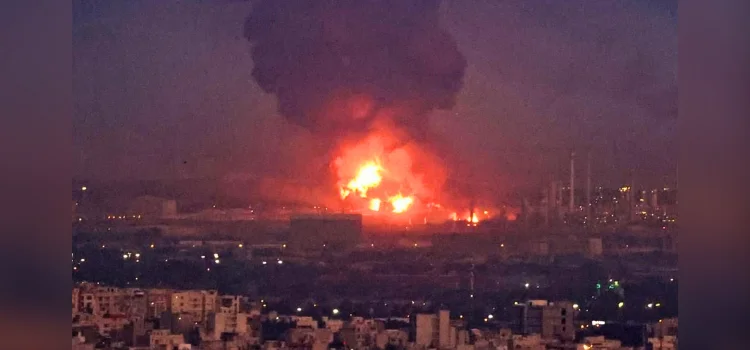

President Trump has called for Iran’s “unconditional surrender” in the war. He has demanded that he choose the next leader. And Trump has told Iran’s military and security structure to “lay down their arms,” or be killed.
The missile and bombing campaign, undertaken in concert with Israel, is meant to compel the Iranian leadership to capitulate. This is known as “strategic bombing.” And only once in history has strategic bombing forced surrender.
The history of strategic bombing dates back to World War I. In its first use, German Gotha bombers and Zeppelins attacked London, causing panic. In the 1920’s, the Italian strategist Giulio Douhet described the theory of using air power to deliver victory from the skies, obviating the need for large land armies and navies. Douhet believed that the use of poison gas, the first weapon of mass destruction, would be so deadly as to produce surrender.
During the interwar period, strategic bombing was hotly debated. In 1921, World War I U.S. Army Air Force Bombers, led by Brigadier General Billy Mitchell, sank the German battleship Ostfriesland as part of an exercise, demonstrating the vulnerability of warships to air power. All the major powers began investigating the utility of strategic bombing.
During World War II, both Nazi Germany and Imperial Japan believed that the best use of air power was tactical in destroying the enemy’s military. For Germany, air power became vital to the success of the Blitzkrieg with Stuka bombers providing close air support to armored and ground forces. Japan executed the attack on Pearl Harbor that sank the U.S. battleship fleet but missed the aircraft carriers and submarines that ultimately would send the Japanese Navy to the bottom.
After France fell in June 1940, Hitler concentrated German bombing attacks on British airfields and the Royal Air Force. But following the bombing of Berlin ordered by Churchill, Hitler retaliated by bombing British cities in what became known as the Blitz that spared the Royal Air Force, allowing it to win the decisive Battle of Britain. And other than launching a few balloon carried bombs against the U.S. West Coast that did no damage, Japan had no strategic bombing campaign.
The U.S. Army Air Force became the acolyte for strategic and daylight bombing, using Britain as its base throughout the war and islands in the Pacific that had been captured by the allies. The question was, which strategic targets would most damage the enemy? Britain’s Air Chief Marshal Sir Arthur “Bomber” Harris believed that bombing the civilian infrastructure would provide the greatest leverage. Many generals concurred.
Beyond striking German military targets in occupied France and Europe as well as Germany, B-17’s, B-24’s and British Lancasters dropped millions of bombs on Germany. Raids on Dresden, Berlin and Hamburg killed close to 100,000 people with firebombs. The same was true in Japan. As Marines occupied more islands, B-29 strikes firebombed Tokyo, Nagoya and Haruna, killing more than 100,000 Japanese in a single night.
In Germany, at the height of the bombing campaign in the fall of 1944, German industry produced more planes, ships and equipment than at any time in the war, revealing the flaws in strategic bombing. Japan, however, presented a more serious problem. Despite the deadly bombing attacks, Japan refused to surrender.
President Harry Truman was confronted with the choice of invading Japan, risking possibly a million U.S. and allied casualties. Given Japan’s suicidal resistance, millions of Japanese deaths were anticipated. Truman had no choice. He authorized the dropping of the first atomic bomb.
Hiroshima and 70,000 Japanese were eviscerated. Still, Japan refused to surrender. A second bomb destroyed Nagasaki. After the emperor broke the tie in the war council, Japan surrendered unconditionally.
Why? Japan’s leaders could tolerate thousands of plane raids killing hundreds of thousands in its cities. But one plane, one bomb, one city gone was inconceivable. That was pure shock and awe. And only nuclear weapons could produce that.
The lesson is clear. Strategic bombing with conventional weapons has never worked. It did not work in Vietnam, Iraq or Afghanistan. It will not work in Iran. Ground forces are needed. And it is far from clear despite concerns that the 82nd Airborne Division may be diverted to the Gulf that the Trump administration will use ground forces.
As the war continues, the U.S. may soon run out of targets for air power. Then what? The administration has not answered that question.
*Harlan Ullman, Ph.D., is UPI’s Arnaud deBorchgrave Distinguished Columnist, a senior adviser at the Atlantic Council, the chairman of two private companies and the principal author of the doctrine of shock and awe. He and former United Kingdom Defense Chief David Richards are the authors of a forthcoming book on preventing strategic catastrophe.
Source: https://thehill.com/opinion/national-security/5773793-history-strategic-bombing/