

 Adnan Boynukara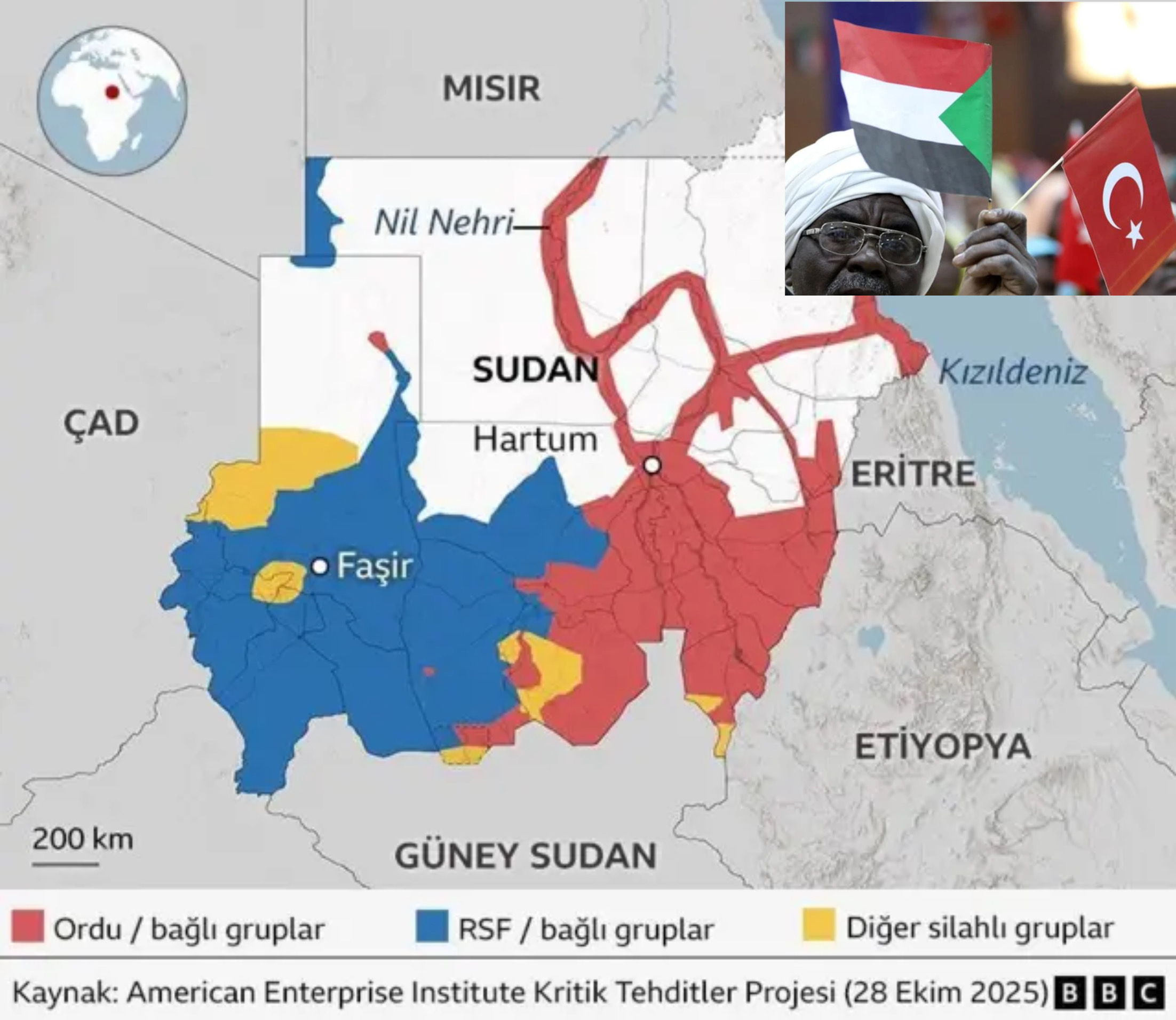

When states face prolonged internal conflicts, their first reflex is to seek security and resolve the issue through military means. Armed struggle is seen as the most direct means of restoring public order and maintaining sovereignty. However, modern political history shows that armed struggle alone is often insufficient to produce a lasting solution. Military methods may suppress, balance, or freeze a conflict. Yet without transforming the political ground, it is difficult to make social peace permanent. Here, state reason refers to the capacity for rational assessment that prioritizes long-term institutional sustainability over short-term military reflexes.
Therefore, many states, strong or weak, are forced to ask themselves at a certain point: “Is there an alternative to armed struggle?” The search for a political solution is precisely the answer to this question. This pursuit is often wrongly interpreted as a sign of weakness, due to nationalist reflexes and the fear of losing power. However, historical examples show that political solutions generally emerge not when state capacity collapses, but at junctures where the risks generated by the conflict are rationally reassessed.
Political Solution is not Weakness, But Rather the Activation of Statesmanship
Prolonged internal conflicts force states to think not only in terms of military capacity, but also in terms of a more manageable balance of solutions. Because prolonging the conflict, after a certain point, generates five fundamental problems. The increasing loss of life, the country becoming ungovernable, institutional decay, erosion of international legitimacy, and economic problems. Of course, the state can remain militarily afloat despite the ongoing conflict. However, when the social cost of the conflict outweighs the potential gains, a strategic reassessment becomes inevitable. The search for a political solution often emerges as a result of this rational calculation. It is useful to consider this through several examples.
The long-standing conflict between the United Kingdom and the IRA did not end solely through security policies. The 1998 Good Friday Agreement was not the result of military exhaustion, but of political rationality. In other words, the British government turned to negotiation not because it had lost state capacity, but because of the need to reduce the economic, social, and international costs of sustained low-intensity violence. A similar threshold emerged in South Africa. The apartheid regime maintained itself for a long time through security-oriented reflexes. However, international sanctions, economic contraction, and internal instability eroded the system’s sustainability. What is notable is that the state transformed without completely collapsing. The institutional structure was not destroyed; the political architecture was redesigned. Here too, the political solution was the result not of military collapse, but of crossing a political threshold.
The negotiation process with FARC in Colombia is based on a similar logic. The Colombian state turned to negotiations at a time when it had achieved a certain level of military superiority. The aim was not to accept military defeat, but to reduce the long-term burden of the conflict on the rural economy, public security, and state capacity. Here, the political solution became an instrument of strategic balancing. Türkiye’s struggle with the PKK has also, at different times, witnessed similar efforts. The simultaneous exploration of political solution channels while security policies continue shows that states are not solely insistent on resolving conflicts through military means, and that assessments of the problems generated by the conflict are re-evaluated at certain thresholds.
Although these examples come from different geographies, their common point is that states activate political channels when the cost of managing conflict begins to threaten institutional sustainability. They begin to search for solutions beyond armed struggle. The key issue at this point is that a political solution requires both the willpower to stop violence and the capacity to address the causes of the conflict. Armed struggle can suppress security threats. However, it does not eliminate the factors that give rise to conflict, the demands they raise, or the power-sharing issues; negative aspects such as economic inequalities and institutional exclusion remain. These matters can only be negotiated on a political ground. What is clear is that an order that cannot discuss the causes of conflict may freeze it, but cannot resolve it. Therefore, a political solution is less a ceasefire mechanism and more a restructuring process that makes it possible to discuss the structural problems that produce the conflict within an institutional framework. When the number of lives lost increases, when living becomes impossible, when institutional structures collapse, and when society grows exhausted, a political solution ceases to be an option and becomes an inevitable necessity.
Sudan: Armed Balance, Political Vacuum
The current situation in Sudan differs from the historical examples above in a significant way. Although the conflict has produced a military balance, this balance has not yet evolved into a political framework. The real threshold forstates is not the end of military capacity, but when the rate at which conflict erodes institutional, social, and political structures becomes unmanageable. At this point, the issue is one of strategic sustainability. Looking at the ongoing conflict in Sudan, it is clear that institutional erosion and social suffering are deepening within the armed balance. This situation seriously weakens the state’s capacity for governance.
The civil war that has been ongoing since April 2023 is often presented as a power struggle between two military forces. However, the presence of dozens of different groups clustered around the two main actors reveals that the current conflict stems from a variety of social, political, and societal problems. As the conflict approaches its third year, neither side has been able to completely eliminate the other militarily. Although the resulting situation has produced a kind of armed balance, this balance has not been translated into a political ground. The fundamental problem here is not that the conflict has not yet reached a political turning point, but rather that the actors lack an understanding and willpower for a political solution. However, a prolonged war is not merely a military struggle. It also signifies the erosion of state capacity, the collapse of the economic structure, and the disintegration of the social fabric.
There are two main reasons why the issue has stalled at this point. Firstly, the parties have not yet concretized their will for a political solution. The second reason is that the countries that sometimes intervene to find a solution have different agendas and different priorities. For these two reasons, no positive development emerges. This becomes clear when examining the positions of the countries involved in the Jeddah talks and the Sudan Quad (United States, Saudi Arabia, the United Arab Emirates (UAE), and Egypt). The security priorities and regional competition dynamics of the United States, Saudi Arabia, Egypt, and the UAE make it difficult to form an inclusive political solution perspective.
From the perspective of the SAF (Sudanese Armed Forces), the current strategy appears to be based on the assumption of military victory rather than a political projection. The SAF defines its main objective as preserving its existing institutional and hierarchical position, viewing the solution as the elimination of the opposing side. However, the pursuit of military superiority and the vision of a political order are not the same thing. Unless a clear political framework emerges regarding the state architecture to be established after the conflict, how power will be shared, and how the civilian sphere will be rebuilt, even military success may not produce institutional stability. In this sense, the problem is not only the continuation of the war, but also the absence of a political vision for the post-war period.
A similar deficiency applies to the RSF (Rapid Support Forces) as well. This structure, a ‘subsidiary’ military organization of the Sudanese state, failed to present or convince society of a comprehensive political program regarding institutional state architecture. This reduces the conflict to a power struggle between two military apparatuses, leaving the reconstruction of the political sphere an uncertain issue. Therefore, the crisis in Sudan is not merely a matter of the parties’ inability to reach an agreement, but rather a structural deficiency in the political framework. Nevertheless, the civil mobilization that emerged after 2019 and the experience of the transition period show that the demand for political transformation in society has not completely disappeared. However, the inability of this civilian sphere to transform into an institutional political actor remains a genuine problem.
If the conflict cannot be moved into a political framework, the idea of an institutional state in Sudan may weaken. If the dual power structure becomes permanent, the country may drift into a de facto fragmented sovereignty order. This situation could evolve into a fragmented sovereignty model reminiscent of the multiple authority structure in Libya. In short, it’s a chaotic situation with multiple armed authorities, limited central capacity, and the agendas of external actors playing a decisive role.
The Risk of a “Third Path” in the Absence of a Political Solution
For Sudan, the most critical risk in the absence of a political solution is the possibility of an external intervention scenario. Such intervention does not necessarily have to take the form of a direct military occupation in the classical sense. A more sophisticated model may come into play. In the international system, especially when a humanitarian crisis deepens and the state becomes dysfunctional, “transitional governance” formulas are brought to the agenda. In such scenarios, external actors step in because local military actors are unable to provide a solution, civilian areas collapse, and an international legitimacy vacuum emerges. This model often operates by supporting a civilian figure of diaspora origin who is aligned with international circles. Such a “technocratic transitional leadership” may provide short-term stability. However, it largely makes the country’s political solution dependent on external actors.
If the two military forces in Sudan fail to reach an agreement and the civilian political sphere cannot be rebuilt, the theoretical basis for such a scenario may emerge. This situation represents not only a matter of sovereignty but also a risk of long-term institutional dependency. In practice, it could give rise to a structure open to international tutelage mechanisms. The two closest examples of this are Hamid Karzai’s rise to power in Afghanistan after 2001 with international support, and the shaping of Nouri al-Maliki’s era in Iraq under strong external influences, demonstrating that externally supported transition models can generate long-term fragility.
Sudan’s Threshold
Sudan today stands at a threshold between military balance and political vacuum. While the likelihood of a complete military resolution to the conflict seems slim, the political willpower to resolve the conflict has yet to emerge. Historical examples show that even powerful states have, at a certain point, tried the path of political resolution. This choice is not a sign of weakness, but a process of reassessing the costs, chaos, and risks produced by conflict. It is precisely at this point that Türkiye, which has the capacity to communicate with the parties, is one of the rare actors that can contribute to the political solution process. It must do this for the people of Sudan.
The fundamental question for Sudan is this: Can the willpower for a political solution be generated internally, or will a solution be imposed from the outside? The first path ensures sovereignty and institutional continuity. The second path, even if it produces short-term stability, increases the risk of dependency and fragility in the long term. Sudan’s stability depends not on military superiority, but on whether political reason can be institutionalized. The core issue facing the country is not the military balance, but the ability to generate the institutional willpower needed to fill the political vacuum.