 Turan Kışlakçı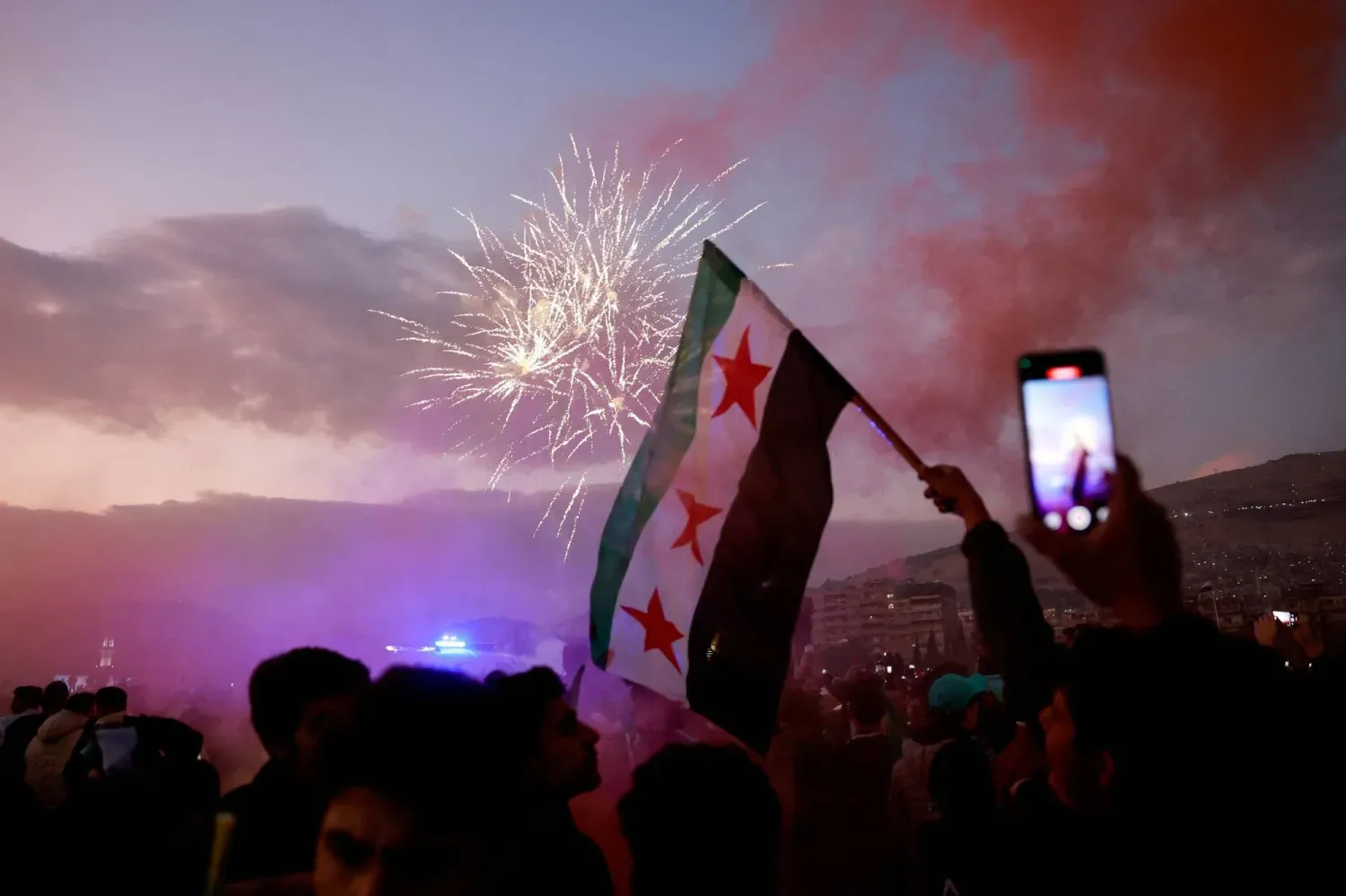

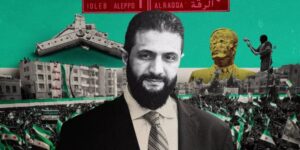
On December 8, Syrians celebrated in all their cities the first anniversary of the morning that was born after one of the heaviest and longest nights in their history. Exactly one year earlier, on December 8, opposition forces had entered the capital Damascus, and the 54-year Assad dynasty along with the 61-year Baath order had been buried in one of the darkest pages of history. This calendar page was no longer just a date; it was the turning point in the destiny of a people, shaped by blood, patience, exile and ruin…

For years, no one truly believed this revolution would happen. Because they were facing not just a government but a half-century-long state of fear. The oppression committed by the Bashar al-Assad regime throughout the 13-year of civil war had become one of the most systematic scenes of destruction the world had ever witnessed. Yet there were those who heard the footsteps of this revolution. Syria Revolution: The Epic of the Century and the Path to Victory, a book by one of the symbolic figures of the Syrian revolution, Dr. Abdulmunim Zayn al-Din, translated into Turkish in 2022, whispered the spirit of this inevitable march even when victory was nowhere in sight.
Today, the Syrian people celebrate the revolution they won by watering every corner of the country with their blood. I hope the people of this ancient land, ravaged by two centuries of tyranny, occupation, coups, and proxy wars, will soon rise again. For Syria is not merely a country; it is one of the oldest crossroads of civilization. The recovery of Damascus will be a source of inner calm not only for neighboring countries but for the entire region…
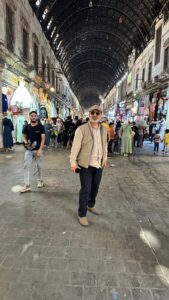
I was in Damascus last month. Despite all its wounds, life was once again vibrant in this ancient city… History, mixed with the smell of exhaust, filtered through the centuries-old walls in the narrow streets and touched the tired faces of today. With one step we could smell the destruction, and with the next step we witnessed life continuing persistently…
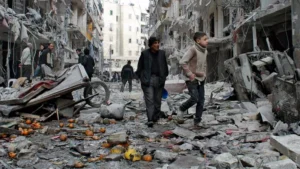
Walking on these lands that had witnessed unparalleled brutality, one stepped on traces of sorrow with every footfall. Yet the faint smile that appeared on the faces of those I spoke with around the Umayyad Mosque signaled the presence of a hope that remained alive amid all the devastation. It was as if the stones had been shattered, but the will to live within people had not.
Almost every official we spoke to said that despite the year that had passed, dozens of new mass graves were still being uncovered every day. After the fall of the Bashar al-Assad regime, Syria continues, in a sense, to open the archive of death.
What they call “mixed mass graves” are pits where bodies were thrown on top of each other, without identification, without names, and without prayers. Human bones are emerging from all corners of the country. These bones most likely belong to thousands of people murdered during the eras of Bashar al-Assad and his father Hafez al-Assad, who ruled Syria for more than half a century. The Assad regime, in the full sense of the word, had turned the country into a massive cemetery…
The Syrian Identity Verification Center, established by the new Syrian government, is trying to determine identities from these thousands of bone fragments. Experts recall that even in the Bosnian War, new mass graves were still being found years later and emphasize that this process will continue for many years in Syria.
The Syrian regime was not only the center of massacres but also of assassinations. During the reign of the father and son Assads, tens of thousands of people from all walks of life in both Syria and Lebanon were seen as “future possibilities” that needed to be silenced and were eliminated. Every voice that cast even a glimmer of hope on the country’s horizon was silenced by the regime’s bullets and bombs…
One of them was Luna al-Shibil, a Druze journalist who served as an adviser to Bashar al-Assad. The footage from 2018, which has been leaked to the world media in recent days, contains a clear record of the words he said about Assad, Putin, Iran and Hezbollah. Interestingly, a few years after these recordings, Luna al-Shibil died in a suspicious car accident in Damascus on July 5, 2024. Only six months after Luna’s death, on December 8, 2024, the Assad regime collapsed.
Who hadn’t the Assads killed… The mass graves uncovered every day are the sealed witnesses of this barbarity…
Today, Syrian President Ahmed Shara, his government, and the countries of the region must clearly understand this: Israel will never abandon its games in either Lebanon or Syria. Israel’s Middle East policy focuses on its direct neighboring regions, especially Lebanon, Syria, Iraq, and Jordan.
This policy has three fundamental principles. Its architect, since the 1950s, is David Ben-Gurion. The published memoirs of Moshe Sharett, Israel’s first foreign minister and prime minister between 1953 and 1955, have revealed these principles without dispute. These texts, translated into Turkish under the title Israel’s Sacred Terror, clearly expose the region’s master plan:
- To produce chaos in neighboring countries, push minorities toward separation, and create fragmented mini-states.
- To establish a Maronite state in Lebanon loyal to Israel and make the idea of a non-Arab entity in the region permanent.
- To increase contact channels between Israel and regional powers, first through indirect economic ties, then through direct relations.
In short, despite all this suffering, the Shara government stands at the threshold of a historical opportunity to reverse the game. Daring to challenge is the mark of leadership; and leadership always demands risk. Before Syria today lies not only the task of building a state, but also the responsibility of rebuilding a regional ethic.
The Shara administration, together with the countries that support it, primarily Türkiye, Qatar, and Saudi Arabia, must establish a strong Palestine-centered alliance along the Baghdad–Damascus–Beirut–Cairo axis. For the future of Palestine is also the future of this axis. As Damascus heals its wounds, Gaza’s breath will also grow stronger…
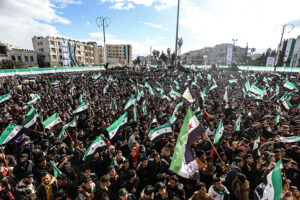
On the 13th anniversary of the popular uprisings in Syria, anti-regime demonstrations were held in Idlib in the country’s north. At the protests, which were attended by thousands, slogans such as “The murderous Assad regime must be held accountable” and “We want the regime to fall” were chanted. In some district centers, “revolution flags” adopted by the opposition were raised on flagpoles. (Izzettin Kasım – Anadolu Agency)
Let us end this article with a poem by Nizar Qabbani, the legendary poet of Syria, titled Min Mufakkirat Ashiq Dimashqi (From the Diary of a Lover of Damascus):
From the Diary of a Lover of Damascus
I spread my eyelashes upon your sacred soil,
O Damascus… why do we begin with reproach again?
You are my beloved…
Lean against my arms like a song,
Ask not the reason for my return.
You are the sum of all women,
And those I thought I loved after you
Were nothing but lies to me.
O Damascus, the shores of my wounds are endless,
Wipe the sorrow and weariness from my forehead.
Return me to my school walls,
Give me back the ink, the chalk, the books.
To those narrow streets…
So many treasures I buried there,
So many childhood memories I left in their stones.
How many drawings I sketched on your walls,
How many of my toys broke on your steps.
I came from the womb of sorrow… O homeland,
I kiss your soil, your doors, your oil lamps.
My love was here…
Those I loved were born here.
But the life that has passed
Who will return to me?
I am, from head to toe,
A tribe of lovers.
And with my tears
I watered both the sea and the clouds…