 Eleanor M. Owens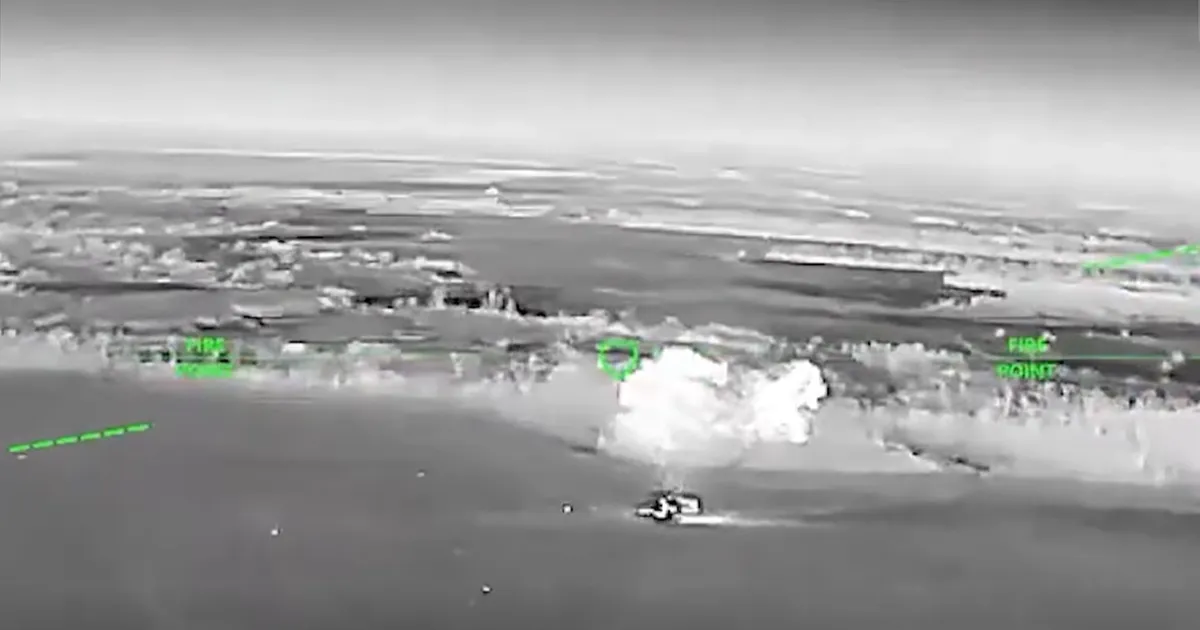

Historic roots and warnings against a wider European war
In Kit Klarenberg’s recent report on Operation Aerodynamic and Operation Gladio (which I’ve also explored before), he presents declassified CIA documents which detail how American intelligence stoked tensions within Ukrainian émigré populations in North America to cultivate Ukrainian ethnic nationalism and anti-Russian sentiment. The CIA achieved this by manipulating and collaborating with Ukrainian nationalist and anti-Soviet émigré groups, including OUN-B/UPA factions and Nazi collaborators responsible for human rights abuses and the massacres of Poles and Jews. The CIA thus was involved with long-term psychological warfare and cultural and ideological subversion amongst North America’s Ukrainian diaspora, which sowed the seeds for the war in Ukraine today. Per the CIA: “it is considered important to continue to encourage divisive manifestations amongst Ukrainians which in turn exert pressure on the Soviet regime.”
According to the documents, Canada was one of the countries that provided logistical support within Operation Aerodynamic’s propaganda distribution. Home to one of the largest Ukrainian diasporas outside of the USSR, Canada’s geographic proximity to America made it a natural hub for CIA-allied printing and mailing operations. “Well-known sadist and Nazi collaborator” Mykola Lebed, key agency asset for the CIA, had activities linked to offices in Munich and Toronto, and Chronicle of the UPA, a multi-volume documentary series which whitewashes OUN/UPA violence, was published primarily in Toronto and Kyiv. The series presents the UPA as heroic freedom fighters while downplaying or framing atrocities against Poles or Jews as defensive. As we’ve discussed previously, Canada too received thousands of Nazi collaborator émigrés in the postwar period.
Civil tensions in Canada’s Ukrainian diaspora were already brewing in the postwar period, however, these documents suggest that intelligence exploited and exacerbated this ideological environment. Prior to CIA meddling, the Ukrainian diaspora in Canada were heavily left-leaning and socialist, especially among working-class immigrants. The Ukrainian Labour-Farmer Temple Association (ULFTA) for example was affiliated with the Communist Party of Canada, and had 187 branches by 1929. Tensions between the communist and far-right nationalist elements of the Ukrainian diaspora can be seen in the example of Volodomyr Kossar, a founder of the far-right OUN/UNF in Canada who angrily recalled seeing portraits of Lenin and Trotsky hanging on the wall of a ULFTA building in Winnipeg in 1927.
Due to left-leaning Ukrainian communities’ connection to the Canadian Communist Party, the Canadian federal government was inclined to curb leftist sentiment in the Ukrainian diaspora. The Communist party opposed the war that Canada declared on Germany in September 1939, so to bolster war support, the Federal Government of Canada banned the ULFTA on June 4th, 1940, seizing the organization’s assets and confiscating their property under the War Measures Act. They then pushed Ukrainian groups to unify under an umbrella organization called the Ukrainian Canadian Committee (later Ukrainian Canadian Congress), which was meant to “unify” the community to be aligned with government war efforts.
The UCC however worked to reduce the “communist threat” in Ukrainian communities by also lobbying for political refugee status for OUN/UPA veterans and consolidating right-wing nationalist factions in Canada. This resulted in the Simon Wiesenthal Center charging the Canadian government with admitting more than 2,000 members of the Ukrainian Waffen-SS division in 1950, and 60 Minutes reporting how 1000 SS men and Nazi collaborators immigrated to Canada about the same time. While the modern-day Ukrainian Canadian Congress is non-partisan, it does exist to this day. The messaging has developed, however it remains aligned with Canadian government rhetoric and narratives.
Given our historic meddling with Ukraine, Canada would be wise to be more careful regarding the contemporary situation in the proxy war and our participation within it. This week, Ukraine celebrated one of their largest attacks on Russian soil with the targeting of a Moscow oil refinery. While Ukraine supporters and Western hawks have found this encouraging, this is likely to end only in short-term gains with no clear path to peace. Rhetoric amongst all parties has been increasingly belligerent lately, risking a wider, direct war between Russia and the West.
Russian Foreign Ministry spokeswoman Maria Zakharova has recently criticized Canada’s support for a new drone production partnership with Ukraine, accusing Ottawa of being “warmongers” who profit from continuation of the conflict. Canada’s constant suggestions that they should join the EU as an equivalent member is also coming at a time where direct conflict between Russia and NATO countries is becoming more likely. A Politico article quoted an unnamed senior Ukrainian defence official who declared that Ukraine planned to seek $20 billion from NATO allies in emergency defence aid so that Russia would “burn even more;” allies indeed pledged support at their meeting at Brussels on June 18th. A recent report from the Dutch newspaper AD indicates that the Dutch army are testing a new prisoner-of-war camp to prepare for the possibility of holding captured Russian soldiers, and Lt Gen Holder Neumann, chief of the German Luftwaffe, have said that they are “ready to fight Russia tonight” if Russia “attack[s] the Western alliance.”
Then, following an attack on a Belarusian bus of schoolchildren—which Russia and Belarus blame on Ukraine and to which Ukraine denies responsibility—Volodomyr Zelensky provided an ultimatum to Belarusian leader Lukashenko, telling him that he must remove Russian-used drone relay and signal equipment along their mutual border. Zelensky claims that the equipment directs strikes that kill Ukrainian civilians, and has advised Lukashenko that failure to comply will result in Ukrainian strikes on Belarusian territory. He is requesting Lukashenko do so within a week.
While Zelensky has framed this request as “protecting civilians,” this is likely to draw more civilians into the conflict. It is unclear why he would make a public demand like this, which risks direct Belarusian retaliation and invocation of Russia-Belarus mutual defence ties. Belarus is Russia’s closest military ally. If Ukraine attacks targets in Belarus, for reasons of “defence” or not, it will almost certainly trigger a direct Russian response and widen the war by involving another state. The involvement of Belarus could lead to other countries in Europe (or eventually the EU-adjacent Canada) to getting more directly involved. One could argue we may as well already be directly involved. European Council President António Costa recently emphasized in brief phone calls with a senior Russian official close to Putin that the EU is not acting as a mediator and remains firmly on Ukraine’s side.
This war cannot go on indefinitely. All parties would be wise to practice more caution for all of our sakes. If peace is not negotiated soon, we will eventually reach a point of no return, where more countries will be drawn into the conflict. Hopefully we have not passed that point already.
*Eleanor M. Owens is writer of the Anti-Zionist and anti-globalist Canadian newsletter.
Source: https://eleanormowens.substack.com/p/operation-aerodynamic-and-western