

 Ahmet Özcan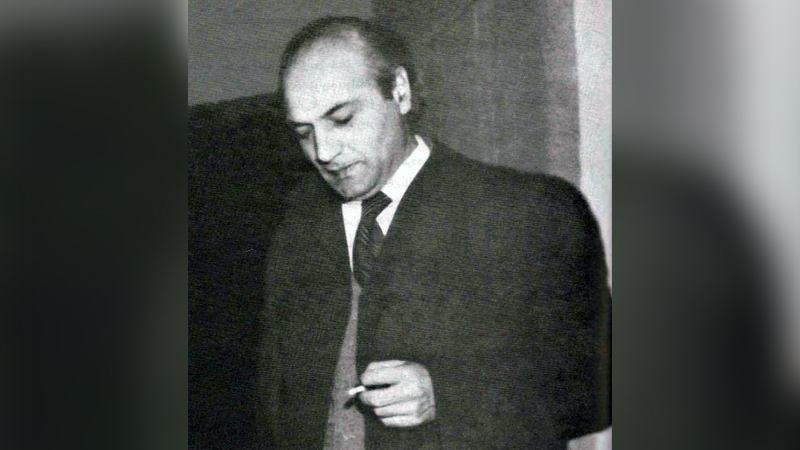

We were born from loneliness, from that turbulent water
We, that is Erdoğan, Ayşenur, Ali, and Ahmet
A few liters of blood, quite a lot of bone, plenty of fear
As if a rosary broke apart and we scattered bead by bead
Village to village, district to district, country to country
That is; Afyon, Adilcevaz, Akçadağ, Turgutlu
A few liters of blood, quite a lot of bone, plenty of fear
An icy moonlight treacherously cut our path
We had been explicitly turned away from every door
Our weapons stuck to our palms from the cold
We, that is Erdoğan, Ayşenur, Ali, and Ahmet
A few liters of blood, quite a lot of bone, plenty of fear
We could not determine what we were doing, who we were
As if a rosary broke apart and we scattered bead by bead
Village to village, district to district, country to country
That is; Afyon, Adilcevaz, Akçadağ, Turgutlu
A few liters of blood, quite a lot of bone, plenty of fear
How frightened we were; no one held our hands
True, we were suffocating within ourselves
Who defended what, and how far, no one knew
We, that is Erdoğan, Ayşenur, Ali, and Ahmet
We drowned in another loneliness, from lack of air
As if a rosary broke apart and we scattered bead by bead
Village to village, district to district, country to country
Neither our leftism was truly leftism, nor our rightism
They closed upon us like a dark door
No one loved us
We are a heavy loss of blood
Attila İlhan / Heavy Loss of Blood
Dear Dr. Ali Shariati,
We first met you in the early years of the 1980s. The wave of translations that came with the winds of the Iranian Revolution had first brought you to us. Later we learned that you were the true ideologue of the revolution.
But the news coming from Iran said that reading your books had been banned by the mullahs and that a systematic embargo was being imposed on your ideas. Iran, the storehouse of Eastern philosophy, the land of wisdom and poetry, had overthrown the Peacock Throne’s regime but had established a system of Mullahist Peacock Throne in its place. So Ali Shariati was forbidden. The great teacher, who dedicated his life to fighting the Shah’s regime with his pen and heart, who enlightened tens of thousands of young people in civilian schools called ‘Husseinieh Irshad’, who was repeatedly imprisoned, exiled, left hungry and unemployed, who couldn’t even afford treatment for his sick child, but who still wrote and spoke tirelessly, and who was martyred in London in 1977 under suspicious circumstances with the help of British intelligence and the Shah’s agents, was subjected to an embargo after the ‘Islamic Revolution’. Why?
As for us, we had just discovered the Iranian sociologist, intellectual, and activist Ali Shariati. Türkiye was transitioning from the regime of September 12 toward democracy, and in order to limit the influence of the Iranian Revolution, a right-wing Islamism was being promoted in these lands. Was the state afraid? America? Israel? England? I do not know which feared it most, but the only weapon they could find against the spirit of the revolution was a soulless green-belt Islam. At the time we called it American-style Islam.
Some people unfortunately became pro-Iran in the enthusiastic atmosphere of the revolution, but we were revolutionaries, we loved not Iran but the Islamic revolution itself, the fact that millions of people overthrew an oppressive regime with Islamic slogans and challenged imperialism. Thanks to the literature of Shariati, the revolutionary essence of Islam we discovered prevented us from becoming any ideological puppet, and it also provided a shield protecting us from the domination of any state, authority, or political power. Despite Shariati’s perspective that transcended both Iran and Shiism, his populism, which embraced tradition while filtering it, influenced our own outlook on our country and our people along a native and patriotic line, preventing us from becoming alienated from our nation like the Westernizers. In Ali Shariati’s books, we discovered the virtue of being able to call an oppressor an oppressor, whoever they may be, and the oppressed the oppressed, whoever they may be; the courage to bravely defend truth and justice; and the faithful discernment to look at the world, things, and events from a higher perspective and he gave us a tremendous spirit and taught us a path and method that we could not find in other books. For this reason, with the same spirit and method, we also criticized many of Shariati’s ideas and interpretations.
The name Ali Shariati, just like it disturbed Iran’s Shiite mullahs, also disturbed our Sunni mullahs. Without reading even a single sentence of his, all kinds of slanders were thrown at him; “Shariati was Shiite, a secret Marxist – whatever that means -, he had deviant ideas, he made unorthodox interpretations about God, the Prophet, the Qur’an, and Islam, he confused the minds of the youth, and so on.” It was interesting, the religious mullah regime in Iran and the so-called Sunni mullah circle in Türkiye feared the same person, worried about him for the same reasons, and attacked him with almost the same accusations. Why?
Despite everything, we kept reading Ali Shariati. ‘The Four Prisons of Man’, ‘We and Iqbal’, ‘Prayer’, ‘Hajj’, ‘Civilization and Modernism’, ‘Marxism and Other Western Thoughts’, ‘Kavir’, ‘Red Shi’sm vs. Black Shi’ism’, ‘Islam and Science’, ‘What Is to Be Done?’, ‘Return to the Self’, ‘Religion Against Religion’, ‘Fatima is Fatima’, ‘Abu Dharr’, ‘History of Religions…’ Our minds were turned upside down; everything we thought we knew was reshaped. Shariati created an earthquake effect.
History, he said, was the struggle between good and evil colored by class conflict, the fight between master and slave. Oppressors and oppressed were the sides of a struggle that began with the conflict between Abel and Cain. Humanbeing is a species where the evil stemming from the sub-human (beşer) side clashes with the goodness emanating from the spirit of God, and only by prevailing over the sub-human (beşer) side in this conflict can humanbeing become truly human. The human being that existed was not the human being that ought to be.
We lived within four prisons; nature, history, society, and our own selves. We could free ourselves from nature, history, and society through science and reason. But from our own prison, from our sub-human (beşer) weaknesses, selfishness, ambitions, and destructive passions, we could be liberated only through Love. Love was the essence of existence, and all the prophets had come, with their experience of desert, shepherdhood, and migration, to renew this love. This was the true religion; to liberate the human being. However, human systems based on wealth (gold, property), power (authority and might), and deception (false gods and false religions) had enslaved, subjugated, and stripped humanity of its agency. Islam was the final link in the chain of the message of love and freedom brought by Abraham, Moses, Jesus, Buddha, Zoroaster, Socrates, and Mani, and this was its essence. Mevlana had said, “We took the essence of the Qur’an and threw its shell to the dogs.” Ali Shariati was in pursuit of this essence and called us to relearn and reinterpret everything we thought we knew about Islam.
He spoke of Marx, Sartre, Alexis Carrel, Louis Massignon, Frantz Fanon, Mahavira, Tagore, Pascal. He gave examples from Greek mythology and quoted from the Upanishads and the Vedas. He explained Confucius, Lao-Tzu, Plato, Aristotle, Descartes, Hegel. He lined up concepts such as Atman, Samsara, Brahman, dialectics, the monad, love, reason, science, philosophy, ethics, aesthetics, and art, speaking continuously. Our heads spun, our hearts fluttered, and our minds were pushed to their limits.
Shariati had a style that we lacked or had very little of. Beginning with Ali he would leap to Prometheus; starting from Fatima he would move to Mary, then to Cybele; from Jesus to Buddha; from India to Athens, from Paris to Africa, from Mecca to Mashhad, from desert to city, from revolution to love and he spoke of poetry, music, painting, sculpture, classes, and exploitation. ‘The intellectual’, Shariati said, ‘has a prophetic mission; he must be a person of cause and action. He must awaken society, show the way, and be a pioneer. The intellectual must be contrary, alone and foreign, intertwined with the people yet one step ahead of them…’
Ali Shariati was a qualitative level of consciousness. At that level, rightism, leftism, Islamism, and nationalism lose their meaning, and the search for humanity, existence, history, justice, freedom, and truth gains a universal significance. He spoke to Muslims, atheists, Christians, and Buddhists alike, using a shared and universal human language. He questioned institutional religions, dogmatized ideologies, and all established institutions and rules, giving us the confidence to look at everything from above and in depth. Critical thought, dialectics, and praxis blended with the wisdom and spiritual insight of Islam changed the way we looked at everything, including religion itself.
In the end, it was no coincidence that Ali Shariati had so many and such similar enemies in both Iran and Türkiye. (In Iran they called him a Sunni agent; in Türkiye they called him a secret Shiite, a Zoroastrian, a green communist, and so on.) Because he pulled the carpet from under their feet and liberated and awakened the type of human being they had enslaved. There was always a difference in level, intelligence, and consciousness between those who read Shariati and those who did not. Those who did not read him easily became prey to the ‘green-belt Islamism.’ Because their concerns, causes, and intellectual levels remained stunted. With traditional religious literature, habitual clichés, and a heap of taboos, it was neither possible to understand the world nor to design a meaningful future. Perhaps that is why green-belt Islamism received more than its share of local and general power, social wealth, status, and fame, but it never truly became powerful, never produced people of character, and never inspired trust or hope, and it never could…
Dear ‘Doctor’,
Through ‘Words of Loneliness/Goftoguhâ-ye Tanhâʼi’ which consists of your personal notes and the articles you did not publish while you were alive, we enter your inner world and come to know you more closely. It turns out that you were created from the same fabric, the same pain, the same love as those who read and admire you. What you wrote and spoke were not the result of a role or mission, as with many other intellectuals, but rather sincere, heartfelt, and natural outbursts. This is the aspect of you that I loved the most. For we Eastern people often like exaltation; we easily attribute unreachable and superior qualities to individuals and attach great importance to fame, reputation, and status. Because of this, we raise our intellectuals and scholars to the skies, but when we encounter even the smallest human flaw, we experience a kind of disillusionment that makes us turn away even from knowledge and thought itself. Our intellectuals, unfortunately, often try to play roles suited to these imagined positions and begin walking around in the false clothing of personalities that are not truly their own. This game causes personalities to come before ideas and actions in our societies, and after a while we forget what we believe and start talking instead about whom we are attached to.
Your life and personality, consistent in essence and word, your sincerity in confessing your weaknesses, doubts, and hesitations, and that pure and natural inner world of yours truly impressed me. For a moment I imagined that there were five or ten intellectuals in our country at the level of Ali Shariati. Then I abandoned that thought and imagined that there might be just one. I do not usually believe in absolute transformations caused by a single factor, but if this country had produced even one Ali Shariati, I thought many things would truly have been different. At the very least, something very different and more advanced would have emerged from the enormous Islamist energy of the past thirty or forty years. Perhaps this great movement, built with the sweat, labor, tears, bracelets, earrings, pocket money, hopes, and prayers of millions of people, would not have become prey to Green Belt policies. Or perhaps it would not have turned its helm toward Europeanism, Israelism, Americanism, or Anglophilism; it would not have frightened a segment of society or unnecessarily alarmed the sensitive interests of the West. It would not turn religion into a peasant ideology and material for new classes demanding a share of the system; rather, it would transform into an accumulation of knowledge that would offer the entire society and humanity an advanced and high-quality philosophy and ethics of life in every aspect of life. Islamism could have struggled for a more civilized, more natural form of Muslim life and for a more democratic country, becoming a guiding lighthouse for many existing movements and political trends. Even leftist and nationalist circles might have drawn nourishment from such a level and quality; the struggle for labor and equality and the struggle for homeland and independence might have become not conflicting causes but subjects of a pleasant competition that complemented and enriched one another. People might have been ashamed to speak in terms of ethnic or sectarian identities and instead developed a style of speech producing the language of Adam, the common language of life and freedom. I wish we had an Ali Shariati… If only…
Then I awoke from this dream. I said, perhaps it is better that we did not have one, dear doctor. It is good that people like you have not yet emerged here. If they had, we would have tried to suffocate them and exile them with baseless slanders. If we had a writer who influenced the masses, especially the youth, as much as you did, the state would not remain idle and would say, ‘If this country needs an Ali Shariati, then I will create one myself’ and it would surely let you rot in prisons. Or it would ask, ‘Who is really behind him?’ and would certainly find a foreign hand somewhere. Our scholars would declare you an unbeliever, our intellectuals would envy you, and our organizations and religious communities would first try to pull you to their side and steal your charisma; if that failed, they would turn into enemies and begin to slander you. Those who are so hostile to your books and ideas, if you had lived here, who knows what they would have done to you.
Ali Shariati, Frantz Fanon, Karl Marx, Kant, David Hume, Weber, Gramsci, Kemal Tahir, Cemil Meriç, Mehmet Akif Ersoy, Sezai Karakoç… The fact that societies can produce intellectuals and poets of this caliber certainly indicates a high level of development. But more important than that is the ability to protect and sustain intellectuals of this caliber. We have not yet reached that stage. We have not yet overcome our suspicions toward knowledge, philosophy, and art. Perhaps our collective subconscious has not yet satisfied its needs for security and sustenance sufficiently to move on to the act of creating civilization. For this reason, whenever we hear a different voice, we first ask what it is trying to take away from us then if we are convinced it takes nothing, then we ask whether it fills our stomachs. In the end, what we are left with is a crowd of intellectuals who take nothing from us, do not disturb our memorized certainties, do not disrupt the comfort of our minds, and who occupy positions in artificial polarizations, playing roles in mutual conflicts and eventually earning their livelihood from them. Ali Shariatis, of course, are a bit too much for our societies.
Dear Doctor,
In the end, only we read you, and you spoke only with us. We are those who have no master but God. We are a strange generation of the 1980s that bows to no one, pledges allegiance to no one, attacks all dogmas and taboos, and cannot be placed anywhere by anyone. Only those who are like us can understand us. Our conversations are a symphony of loneliness. They are quiet, deep, and meaningful. We recognize one another by our eyes, by the sadness and weariness in our pupils. The steam rising from a well-brewed cup of tea is our code, or the curve of cigarette smoke. The deepest moments of our conversations are those when we drift away for no apparent reason. We build our longest sentences with sighs. We have never been painters capable of painting the picture of happiness, nor sculptors capable of carving life into a form for ourselves. We do not know how to trade; our only commerce has been giving away our youth in exchange for an uncertain future. And we know that the future will likely be nothing more than a repetition of what we have already lived. For we have experienced everything; struggle, love, anger. ‘Death comes to us with hackberries and ivies’, because we no longer have expectations either from life or from death. Our path is our destination, and we walk it, so downhearted and so honorably. The snowdrop is our flower, the eagle our bird. We stand against every current and look down on everything from above. Freedom is first, and it is the essence of our faith. We fear the snake that seems to be one of us the most, the opportunist and the traitor… The desert and the sea are our nature. We try to live between two infinities. We care neither about palaces nor idol temples… Neither the state loves us nor the ‘religious churches.’ Our road is an endless loneliness, and its destination is infinite freedom. We say homeland and freedom, reason and love. We say both the people and the individual… Our country is both East and West… Our guide is Muhammad (pbuh) and also Jesus (pbuh). Our heart is both Spartacus and Ali. Our heroes are Enver, Kuşçubaşı Eşref, Omar Mukhtar, Che Guevara, Sheikh Shamil, Osman Batur, Malcolm X, Izetbegović, and Dudayev… From all these verses we make a single poem; from all these sonatas we compose a single symphony; we fit life into a single frame of a film. Neither America nor Patagonia understands us.
We hold only onto each other and burn together. Our fire burns our water; our breath feeds the fire.
We will always read you, doctor, and we will always make others read you. It was we who introduced you to the heart of this land, and we will keep your idol-breaking banner waving. Our children will say, Ali Shariati, they will say, I became Adem, real human because I read Ali Shariati. They will say, I read and I matured. And those who neither read nor teach others to read, those ignorant, bigoted, mentally retarded merchants, those who boast about the depth of the pit they’ve fallen into, they will one day be devastated when they see Ali Shariati’s books in their children’s hands. Ali Shariati will be their Grim Reaper.
Dear doctor, we kiss your hands that held the pen and thank you endlessly for the blessing flowing from the blood of your martyrdom.
May God’s mercy never cease to be upon you. Farewell.
* Ali Şeriati, Yalnızlık Sözleri/ Goftoguhâye Tanhâʼi Anka Yayınları, Istanbul, 2004
**First Publication: Yarın Magazine, 2005
Source: Açık Mektuplar (Open Letters), Ahmet Özcan, Yarın Yayınları, 2010.