 Doç. Dr. Mehmet Rakipoğlu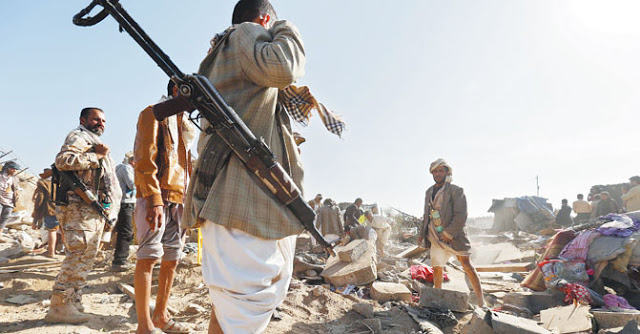

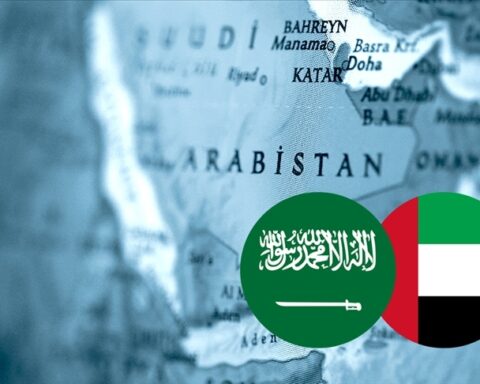
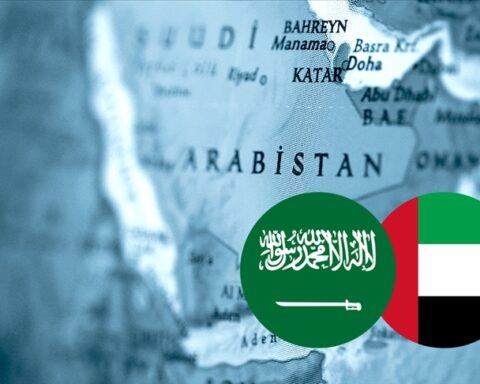
While Israel’s genocide in Gaza continues despite the ceasefire, a critical development occurred in Yemen in the first days of December. As the civil war in Yemen increasingly takes center stage in global politics—largely due to the Houthis’ activities in the Red Sea—a new phase is unfolding. Seen as the most vivid reflection of the Iran–Saudi Arabia rivalry in the region, Yemen’s conflict is now deepening the fragmentation among local actors. In this context, the Southern Transitional Council (STC), backed by the United Arab Emirates and a member of the Presidential Council established in 2022, has made significant gains in Hadramaut and al-Mahra. Although these cities have not been fully captured by the STC and Saudi Arabia has increased its military deployments, the process signals a qualitative rupture in the conflict dynamics that have shaped the country for more than a decade. Therefore, the UAE-backed STC’s rapid military advance toward Hadramaut and al-Mahra is not merely a tactical territorial gain, but rather a restructuring process that accelerates Yemen’s evolution into a de facto fragmented state. This move transcends the question of “who controls where” in Yemen and brings to the forefront the deeper issue of “who wants which Yemen.”
The New Map on the Ground: Who Controls Where?
Today, de facto control in Yemen is structured around two—but in practice, three—main actors.
First, the Houthis (Ansarullah) control Sana’a in the north, the Red Sea coastline, Saada, and the country’s most densely populated regions. These areas also constitute Yemen’s administrative, symbolic, and demographic core. With its capacity for tax collection, judicial authority, security provision, and ideological mobilization, the Houthi administration has moved beyond a conventional insurgent movement and acquired the characteristics of a quasi-state.
Second, as of December 2025, the Southern Transitional Council (STC) has established de facto military control over all eight provinces that made up the former South Yemen, including Aden, Lahij, Abyan, Shabwah, Socotra, Hadramaut, and al-Mahra. The capture of Hadramaut, in particular, has granted the STC access to a large share of Yemen’s oil reserves, strategic ports, and geographical depth. Although the STC holds a seat in the Presidential Council—established in 2022 to represent the Yemeni government—it is taking steps that further deepen the country’s division.
Third, the Yemeni government, regarded by the international community as the sole legitimate actor, can only maintain a presence in limited parts of Marib and Taiz. Its withdrawal from Aden, which should serve as the political center of the state, has effectively ended its legitimacy on the ground. The Yemeni government has now become more of a diplomatic label than a governing apparatus. This picture indicates that Yemen is, in effect, divided into the north (Houthis), the south (STC), and a “stateless zone” caught in between.
Why Did the Southern Transitional Council Act Now?
The STC’s move in Hadramaut and al-Mahra is not sudden; rather, it reflects a strategy that has been in preparation for a long time. This strategy is driven by three main motivations.
First, the issue of territorial integrity comes to the forefront. Since 2017, the STC has been constructing a southern project centered on Aden. However, Hadramaut and al-Mahra were the missing links in this project. These two regions are seen as significant both because they were historically part of South Yemen and due to their strategic importance with respect to oil resources, ports, and the Omani border. Without control over these areas, the discourse of a “southern state” remained hollow. By taking control of these regions, the STC aims to build South Yemen and complete its project of dividing the country.
Second, Saudi Arabia’s growing inclination to withdraw from Yemen has created a window of opportunity for the STC. In recent years, Riyadh has shifted its approach toward negotiations with the Houthis, prioritizing border security and cost reduction. This shift has decreased Saudi Arabia’s willingness to take military risks in the south, making it easier for the STC to establish a de facto situation on the ground. Nevertheless, Saudi Arabia is attempting to halt the STC’s advance by providing additional military support to the Homeland Shield forces. Therefore, from Riyadh’s perspective, the STC’s advance is far from acceptable.
Third, the UAE’s regional strategy is also shaping the process. Rather than aiming to rebuild Yemen as a unified state with territorial integrity, Abu Dhabi prioritizes controlling ports, sea lanes, and energy corridors through reliable local partners or proxies. In this context, the STC functions as a strategic proxy actor for the UAE’s interests along the Gulf of Aden–Bab el-Mandeb–Red Sea corridor.
The Saudi and Houthi Perspective
The STC’s advance has coincided with a period of strategic retreat for Saudi Arabia. Riyadh’s primary objective is to halt missile and UAV threats originating from Yemen, secure its northern border, and prevent the fragmentation of the country. Achieving these goals necessitates some form of compromise with the Houthis. However, the growing power of the STC in the south effectively undermines the single-Yemen narrative that Saudi Arabia has supported. Riyadh can no longer control the field in the south, nor can it build a functional state through the Presidential Council or the Yemeni government. This situation is forcing Saudi Arabia—albeit reluctantly—to accept a balance based on two Yemens: Houthis in the north, STC in the south. This de facto situation in Yemen should not be interpreted as a defeat in Saudi foreign policy, but rather as a relinquishment of maximalist ambitions.
From the Houthis’ perspective, the process presents a rather ironic scenario. Paradoxically, the fragmentation in the south brought about by the STC’s advance works in favor of the Houthis. The ongoing conflict between the STC and the Yemeni government eliminates the possibility of forming a unified front against the Houthis. In other words, every conflict environment in Yemen that excludes the Houthis drains the energy of potential anti-Houthi coalitions while simultaneously benefiting the Houthis.
Second, the conflict between the STC and the Yemeni government reinforces the Houthis’ claim to ‘legitimacy’. In this sense, instability in the south strengthens the Houthis’ narrative of being “the only actor capable of state-building.”
Third, this climate of conflict in the south empowers the de facto Houthi administration in the north. Thanks to this instability, the Houthis—who already control the north—no longer face competition from an alternative central authority. For this reason, the Houthis have not directly opposed the STC’s southern advance; in fact, they have indirectly preferred this process to continue.
What is currently unfolding in Yemen is not a new phase of civil war—it is a transformation in the very meaning of the state. Yemen is no longer a single domain of national sovereignty; it has become a geography divided into spheres of influence by regional actors. This indicates that the 1990 unification has effectively come to an end, even though it has not yet been legally declared. The emerging structure is not so much a classic case of partition, but rather a “suspended state.”
Therefore, the current picture does not suggest any imminent declaration of southern independence. The STC has no international recognition, and its ability to manage the region in a sustainable economic manner is quite limited. However, in the long term, the possibility of Yemen being permanently divided into two—or even three—political entities is growing stronger. For the Yemeni people, the core issue is not who wins, but who will redefine the concept of the state, how, and at what cost. The current trajectory suggests that this redefinition is being shaped less by Yemenis themselves and more by Riyadh, Abu Dhabi, and Tehran. This, in turn, reveals that the Yemen crisis is no longer an internal war, but a byproduct of the regional order.