

 Hilal Çıbık
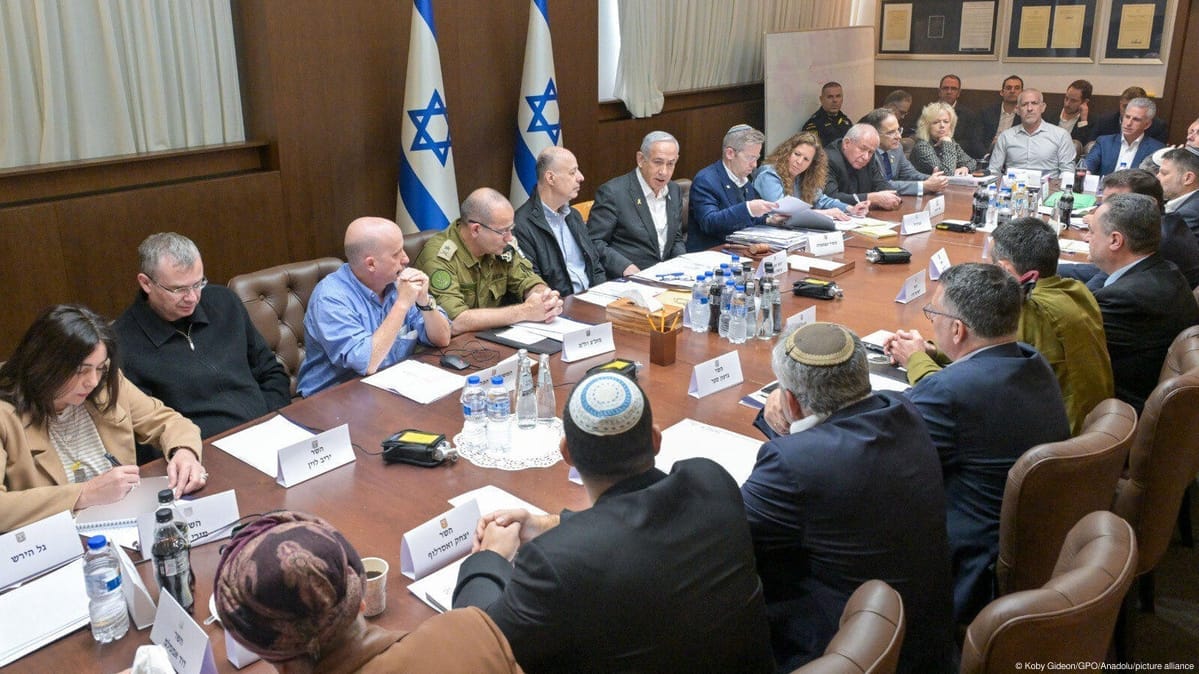

More than three weeks have passed since Israel’s parliamentary elections on 27 October, and the country has yet to form a new government. While Benjamin Netanyahu has lost his parliamentary majority, he remains in office, and Israeli military operations in the occupied Palestinian territory continue.
Much of the international attention surrounding the elections has focused on Netanyahu’s political future. But what did these elections mean for Palestinians? Was there ever a reason to believe that Netanyahu’s removal from office could change their circumstances? And, given the current political uncertainty in Israel, is there anything the international community can do differently?
The Limits of Electoral Hope
Before the elections, Palestinians had little reason to be optimistic. Reporting from Gaza and the West Bank revealed considerable anxiety about the policies of Israel’s next government, regardless of who would lead it.
A Reuters analysis published on 22 October demonstrated the extent to which Netanyahu and his principal challenger, Gadi Eisenkot, shared similar positions on Palestine. Both opposed the establishment of an independent Palestinian state and expressed willingness to resume the war in Gaza should Hamas fail to disarm. Eisenkot himself served in Israel’s wartime cabinet during the military campaign in Gaza.
There are, of course, differences between the two politicians. Eisenkot has criticised settler violence and opposed certain settlement expansion plans, including the controversial E1 project. A change of government could also bring improvements concerning Palestinian tax revenues and the treatment of Palestinian prisoners. Given the severity of the current humanitarian crisis, even limited changes in Israeli policy could make a considerable difference to Palestinian lives.
Nevertheless, none of these prospective changes necessarily challenge the occupation itself or address the denial of Palestinian self-determination.
What is particularly troubling is that millions of Palestinians remain subject to decisions made by a government whose composition they cannot influence through elections. For Palestinians living in Gaza and most of those in the West Bank, political change in Israel remains something they can observe but cannot directly participate in.
Three Weeks After the Elections
On 8 November, Israeli President Isaac Herzog formally entrusted Eisenkot with forming a new government. Four days later, Defence Minister Israel Katz declared that the outgoing government did not require the approval of either the opposition or legal authorities to carry out military operations, including targeted killings in Gaza.
His statement came after Eisenkot warned against using security forces for non-urgent operations during the transitional period.
Meanwhile, according to figures from Gaza’s Ministry of Health reported by the United Nations, 36 Palestinians were killed in conflict-related incidents between 27 October and 2 November, and another 22 between 3 and 9 November. As of 9 November, the reported death toll since the October 2025 ceasefire had reached 1,613. Heavy rainfall has further aggravated the humanitarian crisis, damaging shelters and leaving displaced families exposed to increasingly difficult living conditions.
On 18 November, Israel launched another ground operation in central Gaza, forcing Palestinians to flee yet again.
The situation in the West Bank is equally concerning. An Israeli military operation in Hebron, following a deadly attack on Israeli soldiers shortly before the elections, reportedly displaced approximately 3,000 Palestinians, according to preliminary UN figures. Settlement expansion, home demolitions and settler violence continue.
In September 2025, the UN Independent International Commission of Inquiry concluded that Israel had committed genocide in Gaza. In June 2026, the Commission reiterated its findings, drawing particular attention to the continued killing and serious injury of Palestinian children despite the ceasefire.
Although Israel rejects these findings and the International Court of Justice (ICJ) has yet to deliver its final judgment in the case brought by South Africa, the international community cannot use the absence of a final judgment to justify delaying preventive action.
From a legal perspective, Israel’s political crisis changes very little. International obligations are incumbent upon states, irrespective of changes in their governments. Under Articles 4 and 7 of the International Law Commission’s Articles on State Responsibility, the conduct of state organs acting in their official capacity remains attributable to the state, even when they exceed their authority.
The ICJ’s binding provisional measures remain in force, as do Israel’s obligations under international humanitarian law.
If, as Katz claims, the outgoing government can undertake military operations, why should the international community wait for a new government before demanding compliance with international law?
Could Israel’s Political Crisis Offer an Opportunity?
Although Eisenkot’s position on Palestine offers little ground for optimism, his political circumstances deserve closer examination.
Netanyahu is one of Israel’s most experienced politicians. Over decades, he has established personal relationships with world leaders, survived domestic political crises and managed to remain in power despite considerable international criticism. He has also demonstrated an ability to exploit international pressure for domestic political purposes.
Eisenkot, on the other hand, entered parliamentary politics in 2022. Although he has considerable experience within Israel’s military and security establishment, he has never served as prime minister and has yet to establish the political influence Netanyahu has accumulated over the years.
More importantly, the two politicians appear to approach Israel’s growing international isolation differently.
Shortly before the elections, Netanyahu suggested that Israel should prepare its economy to circumvent potential international sanctions, including through the use of cryptocurrency. Eisenkot strongly criticised this proposal, arguing that Netanyahu’s approach was endangering Israel’s economy and national security.
In his speech accepting the mandate to form a government on 8 November, Eisenkot acknowledged the severity of Israel’s diplomatic crisis and the deterioration of its relations even with its closest allies.
If restoring Israel’s international standing is to become one of the priorities of a government led by Eisenkot, foreign governments may find themselves in a better position to influence certain Israeli policies. Eisenkot’s political credibility will depend, at least in part, on his ability to address the very problems for which he has held Netanyahu responsible.
There is, however, a danger that Western governments, eager to see Netanyahu removed from office, will welcome his successor and seek to restore their relations with Israel without demanding any substantial change in its treatment of Palestinians. A government with a less confrontational diplomatic approach could prove more successful than Netanyahu’s in securing international acceptance while maintaining many of the same policies.
This is precisely why the current period of coalition negotiations matters. Foreign governments can make their expectations clear while the policies of the next administration are still being negotiated. Once a coalition agreement has been reached, policy changes may become considerably more difficult, particularly if the government’s survival depends upon parties opposed to them.
Recent developments concerning the E1 settlement project are worth considering in this respect.
On 17 November, the British government imposed sanctions on eight Israeli construction and property development companies involved in settlement expansion, as well as a group obstructing humanitarian assistance to Gaza. Israel’s attorney general subsequently suspended the E1 tender process until a new government was formed.
The project threatens the territorial continuity of the West Bank and the viability of an independent Palestinian state.
Although Israeli diplomats have denied that the postponement was a response to British sanctions, the combination of international economic pressure, domestic legal constraints and Eisenkot’s own opposition to the project is significant.
There is an opportunity here to turn a temporary postponement into a permanent abandonment of the project. Much will depend on whether foreign governments maintain their pressure once a new administration takes office.
What Can the International Community Do?
After 7 October, we are entering our fourth winter. Although we have witnessed the international community’s inaction time and again, I do not hesitate to ask the question: ‘What can the international community do?’ Just as I will continue to speak out for Palestine until the world comes to an end, so too will I continue to ask this question until the world comes to an end. As we say in Turkish, for I am not responsible for victory, but for the struggle, and this is my struggle: to remind people, time and again, of our personal responsibilities and those of the international community.
First and foremost, states must take their obligations under the Genocide Convention seriously.
In its 2007 judgment in Bosnia and Herzegovina v. Serbia and Montenegro, the ICJ established that the duty to prevent genocide requires states to act as soon as they know, or ought to know, of a serious risk of genocide. What can reasonably be expected of each state depends, among other factors, on its capacity to influence the actors concerned.
This is particularly relevant to the United States and other countries providing military, economic and diplomatic support to Israel. Their duty to take preventive action does not depend upon the delivery of a final judgment against Israel.
Military assistance and arms exports must therefore be reassessed. For states party to the Arms Trade Treaty, Articles 6 and 7 establish further obligations concerning the prohibition of certain arms transfers and the assessment of risks associated with arms exports.
The European Union, meanwhile, has considerable economic influence over Israel. Article 2 of the EU–Israel Association Agreement identifies respect for human rights and democratic principles as an essential element of the agreement. The European Commission has already proposed suspending certain trade-related provisions on human rights grounds.
Furthermore, in its July 2024 advisory opinion, the ICJ concluded that states have an obligation neither to recognise the situation arising from Israel’s unlawful presence in the occupied Palestinian territory as lawful nor to provide assistance in maintaining it.
Restrictions on economic activities sustaining the unlawful occupation should therefore not be regarded merely as instruments of political pressure.
Safe and unhindered humanitarian access, the protection of Palestinian civilians, the cessation of settlement expansion and compliance with the ICJ’s orders should be central to decisions concerning future cooperation with Israel.
Where international law already requires restrictions, those restrictions must be implemented. They should not become bargaining instruments in negotiations with the next Israeli government.
Another important avenue is the ongoing judicial process. In August 2026, South Africa submitted additional evidence to the ICJ concerning Israel’s alleged failure to comply with the Court’s provisional measures.
Military operations and restrictions on humanitarian assistance during the transitional period should also be documented and, where relevant, brought before the Court. Articles 76 and 78 of the Rules of Court allow for the modification of provisional measures in response to changes in circumstances and for requests for information concerning their implementation.
The effectiveness of these proceedings will nevertheless remain limited unless states are prepared to act upon them.
Finally, Palestinians themselves must have a meaningful role in determining the objectives of international diplomatic initiatives. It would be profoundly wrong for the international community to negotiate the future of Palestine exclusively with Israel, particularly when Palestinian self-determination is among the very rights international law seeks to protect.
More than three years into the devastation of Gaza, it is difficult to identify grounds for hope in Israeli electoral politics. Yet the current political crisis presents an opportunity for those states that have so far failed to translate their commitments to international law into action.
Whether Netanyahu remains in power or Eisenkot succeeds in forming a government, the international community has both the responsibility and, in many instances, the means to influence Israeli conduct.
The question, once again, is whether it has the political will to do so.
