 Eric Ciaramella - Sophia Besch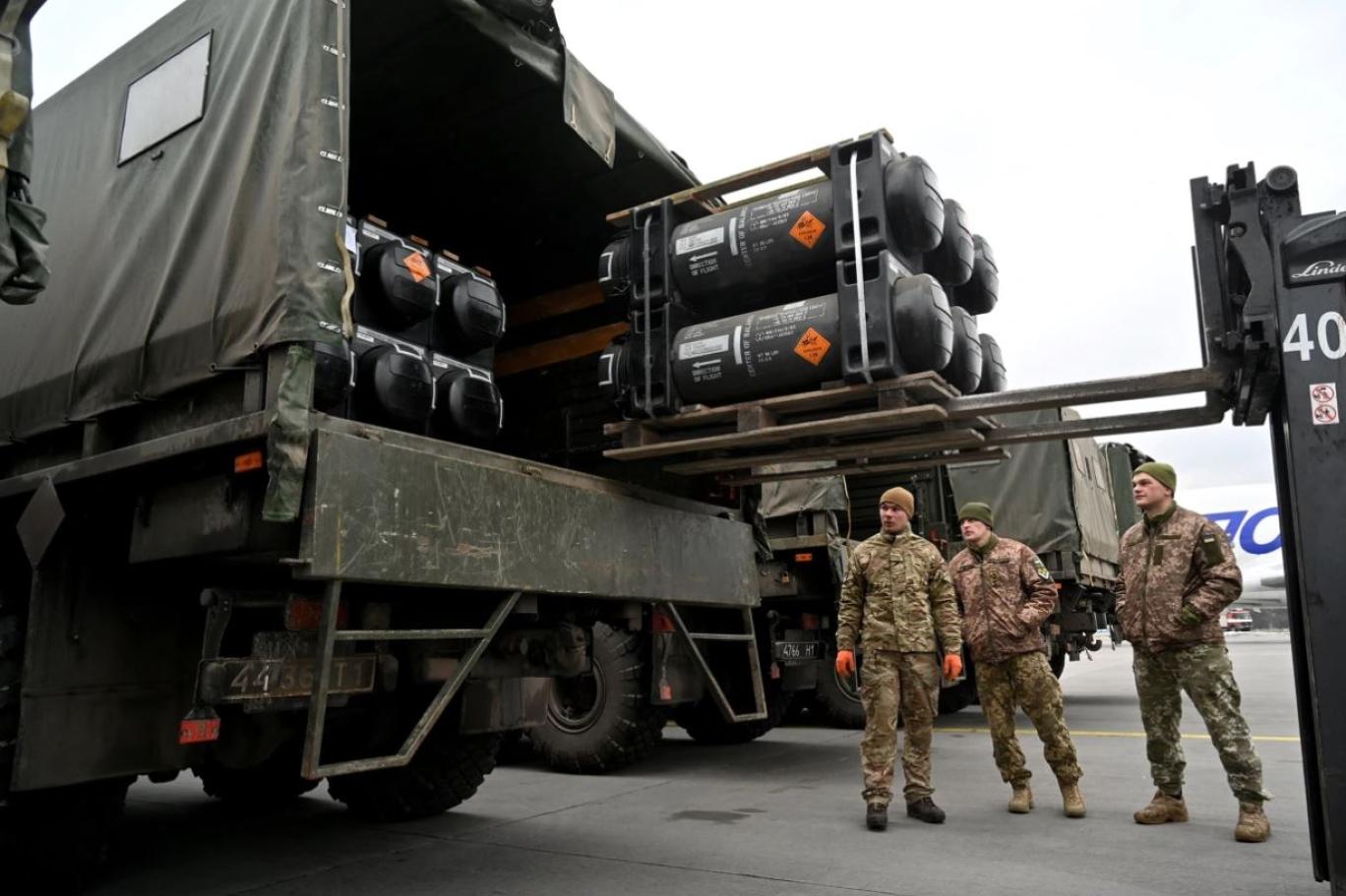

In January, amid Russia’s continued assault on Ukraine and U.S. President Donald Trump’s haste to reach a peace settlement, the leaders of more than two dozen European countries and Canada gathered in Paris to discuss security guarantees for Kyiv. Although European leaders hailed this “coalition of the willing” summit as a breakthrough, its publicly known outcome was a frustratingly familiar, if slightly more detailed, repetition of previous commitments.
The coalition’s signature idea is a multinational European-led force that will deploy to Ukraine if a cease-fire is reached. Planning for this force, which will include land, sea, and air components, is already underway among European militaries and defense ministries, with a headquarters set up near Paris. The force’s mission is twofold: to “support the rebuilding of Ukraine’s armed forces and support deterrence.” Ukraine’s European partners are also discussing a set of binding commitments modeled after NATO’s Article 5 guarantees to come to the country’s defense if it were attacked again after a cease-fire.
The discussions have prompted a sober-minded evaluation of what will be required to deter Russia and convince war-weary Ukrainians that a cease-fire will last. But the guarantees for Ukraine under discussion depend on two contingencies that Europe does not control: sustained U.S. backing and Russian acquiescence.
With or without a cease-fire, Kyiv and its partners need a concrete plan to build up and sustain Ukraine’s military strength. Troop deployments and postwar commitments to act in the event of another invasion will be useful components of such a plan, but they should support what will be the crux of long-term deterrence: Ukraine’s own combat capabilities and defense technological prowess. Kyiv needs a program of partner support that combines major aid packages, investments, acquisitions, intelligence cooperation, and training pipelines as part of a larger plan to strengthen its armed forces and industrial base—ideally an effort that will continue for at least five years.
The price tag for underwriting Ukrainian rearmament will be steep, and Europeans have struggled so far to provide the funds required for long-term planning. But the alternative—a Ukrainian military perpetually in survival mode—would be far costlier. If Europe is as serious about preventing Ukraine’s defeat as it now appears to be, a coordinated long-term strategy will do more to help Kyiv, not to mention signal Western resolve, than its current practice of lurching from one aid package to another.
DON’T TRUST, BUT VERIFY
Ukrainians often warn Western leaders against repeating the mistakes of the Budapest Memorandum, the 1994 agreement under which Russia, the United Kingdom, and the United States agreed to respect Ukraine’s borders in exchange for the surrender of the nuclear arsenal Ukraine inherited from the Soviet Union. Although Ukrainian leaders in subsequent decades let the country’s armed forces fall into disrepair, the vague and unenforceable memorandum has nonetheless become shorthand in Ukraine for the empty promises that made Russia’s 2022 full-scale invasion possible.
Today’s discussions among Europeans, Americans, and Ukrainians, however, are far removed from those of the early 1990s. The once-implausible idea that Western governments would ship hundreds of billions of dollars in advanced military equipment to Ukraine has become the baseline for Kyiv and its partners.
The Trump administration has signaled that it is open to participating in a security framework for Ukraine that includes both a European-led troop deployment and so-called Article 5–style guarantees. European leaders are angling for Trump’s agreement to use U.S. intelligence, logistics, and command capabilities to support the multinational force, which European nations would have a hard time deploying on their own, as well as to backstop it if Ukraine comes under attack. Europe and Ukraine are convinced, with good reason, that any guarantee lacking U.S. backing stands little chance of being taken seriously by Moscow. Europe lacks Washington’s record of making and enforcing guarantees on its own: since the end of World War II, European leaders have conducted defense policy largely within U.S.-led frameworks such as NATO, in which Washington ultimately manages escalation and warfighting.
Yet even with U.S. involvement, the credibility of European guarantees would remain uncertain. NATO and U.S. defense guarantees in Asia, two models for successful deterrence, are less functions of finely tuned treaty language than of decades of integrated planning, joint exercises, high-level consultations, and the persistent presence of combat-capable U.S. troops. Simply put, any would-be aggressor understands that an attack on a treaty ally of the United States would invite a U.S. military response. In Ukraine’s case, however, neither Europe nor the United States has shown a willingness to fight on Ukraine’s behalf. On the contrary, since 2022 both have repeatedly and deliberately communicated that avoiding direct war with Russia is a central objective of their policy.
The uncertainty is compounded by Trump’s mercurial nature, his conciliatory views on Russia, and his inflaming of tensions in the transatlantic relationship by threatening to seize Greenland. Even if Trump were to agree to a U.S. backstop on paper, little would stop him from reneging on his promise in the event of a Russian attack. He could easily declare the deal null and void, repeating his frequent claim that Ukraine bears responsibility for provoking Russian aggression. Aware of this risk, Europe and Ukraine have proposed that the United States lead a cease-fire monitoring and verification mechanism, and Kyiv has also requested that the U.S. Congress codify the agreed guarantees, something that Trump appears open to. In December, U.S. officials signaled that the administration would submit what they termed a “platinum standard” package of guarantees for Ukraine to Congress, although Washington has not revealed what legal vehicle it would use or what the contents of the guarantees would be.
But even with Congress’s imprimatur, the execution of any guarantees will depend on the whims of a president whose hostility toward Europe and its security and economic interests is a defining feature of his foreign policy and only appears to be growing. Europeans have few illusions about Trump. At the same time, the U.S. force posture in Europe has so far hardly changed, and military leaders and diplomats in the Trump administration continue to engage constructively within NATO. European leaders are left attempting to account for an uncertain U.S. role in a long-term security arrangement for Ukraine that will depend primarily on Trump’s caprices. Kyiv and its partners would be better served using the emerging security guarantee framework as a way to organize themselves and mobilize resources to bolster Ukraine’s defense posture.
VETO OVERRIDE
Another problematic aspect of the coalition of the willing’s security guarantee framework is that it would take effect only after the cessation of hostilities, giving Moscow leverage to hold it hostage or water it down. Puzzlingly, senior U.S. officials, including the Trump administration envoy Steve Witkoff, appear convinced that Russian President Vladimir Putin will acquiesce to the European troop deployment and Article 5–style guarantees as part of a cease-fire agreement. It is unlikely that Putin would sign a document handing over Ukraine’s long-term security to the West, even if this bespoke arrangement fell short of NATO membership for Kyiv. Still, Putin could unexpectedly consent to the coalition’s proposals if he felt an agreement would not hinder his long-term aims—or if he had no other choice.
If, for example, Putin thought the guarantees were a bluff, he might agree to Europe’s conditions to end the fighting, believing that Russia could use military threats to defang any Western troop deployments and commitments to intervene on Ukraine’s behalf. If Putin intended to strike Ukraine again in violation of a cease-fire, he might bet that coercive tactics and nuclear saber-rattling would force Ukraine’s guarantors to back down out of fear of a direct war with Russia. Should such a Russian challenge reveal that Europe and the United States are unwilling to enforce their own guarantees, NATO allies could lose faith in the credibility of Article 5 itself.
Putin might also conceivably acquiesce if he felt a cease-fire agreement included such profound concessions from Ukraine that Western security guarantees would not hinder his long-term aim of subjugating Kyiv. The Trump administration appears to believe that cajoling Ukraine to withdraw from the remainder of the Donbas region would be enough to persuade Putin to end the war. But Russia has consistently laid out more sweeping demands, including major limitations on Ukraine’s armed forces and security partnerships with Western countries, that in effect would render Ukraine permanently vulnerable to Russian coercion. For the United States and Europe, agreeing to these provisions while offering a security guarantee would be self-defeating, undercutting Ukraine’s deterrent power and making Kyiv’s future security even more reliant on the West’s ill-defined pledge to come to its defense if attacked again.
Neither of these scenarios would leave Ukraine or Europe better off. The best case for Kyiv and its partners would be if Putin concluded that a strong Ukrainian military, backed by a European deployment and Article 5–style guarantees, was unavoidable. That assessment would require Moscow to change its current view that Russia can grind out a victory. Putin would need to recognize that Ukraine and its backers have enough resources and willpower to foil Russia’s military objectives in perpetuity and that Russia would therefore be better off agreeing to a cease-fire on the West’s preferred terms than continuing to sacrifice people and resources in an unwinnable war.
The reality on the battlefield, however, is still far from that scenario. With Russian forces slowly advancing on the ground while they immiserate Ukraine’s population from the air, Putin still believes victory is within reach. No policy shortcut or negotiated text will convince him otherwise. Only Ukraine’s own military strength, backed by credible Western guarantees of resources and sustained pressure on the Russian economy, could alter that calculus. Europe has a concept on the table. It now needs the money and self-confidence to execute it.
STEELING THE PORCUPINE
In March 2025, the president of the European Commission, Ursula von der Leyen, laid out a vision to turn Ukraine into a “steel porcupine” by significantly building up its defense capabilities, making it “indigestible” to Russia. Trump’s return to the White House forced European leaders to step up their material support to Ukraine, tapping into the continent’s expanding defense production capacity in order to keep Kyiv supplied. For capabilities that Europe cannot produce, such as Patriot air defense interceptors, NATO allies and partners have financed purchases from the United States. They have also taken on greater responsibility for coordinating training and aid for Ukraine, a task the United States had led during the Biden administration.
These measures have kept Ukraine in the fight. But Ukraine and Europe’s inability to marshal their combined production capacity to meet Kyiv’s basic defense needs four years into the war reflects the limits of an ad hoc strategy. Europe must now help Ukraine shift from survival to long-term force regeneration by crafting a coordinated multiyear rearmament strategy, with a clear vision for force structure and budgeting for acquisitions, sustainment, and defense industrial production to equip Ukraine to defend against a permanent Russian threat. This will be no small task. Previous efforts stalled as a result of Ukraine’s severe budget constraints and its need to bargain with partners for support, which demanded Kyiv’s immediate focus and prevented it from planning beyond the war itself.
For any long-term rearmament strategy to work, Ukraine must first address its own challenges, particularly manpower shortages and force quality. Ukraine’s ability to recruit, train, rotate, and retain troops has been stretched thin by the attritional nature of the war, laying bare the difficulty of forging a resilient, sustainable defense posture while under fire. A multiyear planning framework that links Ukraine’s vision for its future military posture explicitly to realistic funding streams would help the country begin creating the infrastructure for a pipeline of reserve soldiers.
Ukrainian forces must remain the first and decisive line of defense in such a plan. A multinational troop deployment, focused on strengthening Ukraine’s staff planning capacity, recruitment and training pipelines, logistics, and situational awareness rather than the vague task of “reassurance,” should function as one layer in a wider security architecture designed to reinforce, rather than substitute for, Ukrainian forces.
Elements of a long-term planning framework already exist. NATO, the EU, the Ukraine Defense Contact Group, and U.S. European Command have already launched a patchwork of initiatives focused on forecasting Ukraine’s military needs beyond the immediate battlefield. But these well-intentioned efforts remain loosely connected, underresourced, and politically secondary to day-to-day warfighting. Moreover, these planning groups are not connected to a wider European strategy for long-term financing and postwar security guarantees. Ideally, all these initiatives would be brought under a single institutional roof, with a dedicated staff overseen by a steering group of senior military and civilian officials from Ukraine and key partner nations. The group should develop a coherent long-term vision for the Ukrainian armed forces that can inform decisions on funding, acquisitions, training, and reforms. It should also arbitrate between the competing national industrial interests of Kyiv’s many partners, for example, by helping Ukraine’s air force select one major Western fighter jet to procure rather than a costly and inefficient collection of disparate aircraft from partners.
This new group should also bolster Ukraine’s industrial base and integrate its production and supply chains with those of Europe. The shift from donating equipment to financing production, pioneered in 2024 by Denmark and emulated by others since, has proved to be one of the most effective ways to translate European resources into Ukrainian combat power. By funding Ukrainian manufacturers rather than deliveries from abroad, European countries give Kyiv flexibility to prioritize urgent needs, shorten supply chains, and sustain output even as battlefield conditions change. And for European countries with limited defense-industrial bases or depleted stockpiles, direct financing offers a way to contribute without waiting for domestic production to ramp up. Such a policy should be part of a larger strategy to build Ukraine’s long-term capacity, with predictable multiyear funding that allows Ukrainian manufacturers to scale production sustainably.
Joint defense production and joint ventures on European NATO territory would also benefit Kyiv and its partners. Ukrainian firms would secure safer operating conditions and access to capital, labor, and infrastructure that are difficult to sustain in wartime, and European ministries of defense would accrue the hard-won battlefield insights of Ukrainian defense manufacturers. Denmark’s “Build With Ukraine” initiative, for example, has allowed a Ukrainian rocket and drone-fuel manufacturer to establish operations on Danish soil. The United Kingdom followed suit by concluding an agreement with Kyiv to produce Ukrainian-designed interceptor drones, the first Ukrainian combat system licensed for production in a NATO country. The EU’s new Security Action for Europe (SAFE) defense loan facility, designed to mobilize large-scale investment in European defense production and encourage participation by Ukrainian firms, could further deepen Kyiv’s defense-industrial integration with allies on the continent.
Kyiv and its European partners have already overcome a number of bureaucratic and legal obstacles to defense industrial cooperation, but more work needs to be done. Europe’s defense procurement landscape remains fragmented, with differing national priorities for military acquisitions and export control rules, frictions over intellectual property rights, and risk-averse, often protectionist contracting practices preventing rapid co-production. Unless these barriers are addressed, European-Ukrainian defense-industrial cooperation will remain stunted.
THE $390 BILLION QUESTION
All these efforts ultimately hinge on Europe’s ability to fund them. As the United States recedes from its traditional leadership role, Europeans have not yet matched their declared objectives on Ukraine with the financial resources required to achieve them. At the European Council meeting in December, leaders agreed to jointly borrow money to provide Ukraine with more than $100 billion in support, putting on indefinite hold a more ambitious plan to use Russia’s immobilized sovereign assets. That sum should be enough to keep Ukraine afloat for the next year or two but is hardly a sustainable solution. Ukraine and its partners need predictable, codified multiyear commitments, embedded in national budgets and European financing instruments, that lock in military assistance, industrial investment, and training over time.
According to estimates by The Economist, Ukraine will need close to $390 billion in combined budget support and military assistance between 2026 and 2029, including roughly $50 billion a year to cover Kyiv’s budget deficit. Meeting this figure would require European NATO members to roughly double their current level of Ukraine-related support, from about 0.2 percent of GDP to around 0.4 percent. That may be a tough sell in an era of tight budgets, but the alternative is a degradation of Ukrainian combat power that leaves the rest of Europe much more vulnerable.
At the World Economic Forum in Davos this month, Ukrainian President Volodymyr Zelensky urged Europeans to “stand up for yourself” and break what he described as the continent’s dependence on Washington’s lead. Many leaders felt unjustly admonished. Already, the coalition of the willing is beginning to adopt the habits of a more formidable security apparatus: regular detailed military exchanges among Europeans, the construction of a new command-and-control framework outside NATO, and early efforts to coordinate force generation and sustainment among a core group of willing states. But Europe’s broader rearmament drive is still largely unfolding within NATO frameworks. To become truly strategically self-reliant, the continent will need to develop the capacity to plan, command, and sustain operations at scale and to anchor Ukraine’s security in a long-term rearmament strategy that does not rely on the shifting preferences of Washington. Europe has begun to organize itself for a new era. Whether that effort succeeds will depend on its capacity to sustain Ukraine’s defense.
*Eric Ciaramella is a Senior Fellow in the Russia and Eurasia program at the Carnegie Endowment for International Peace and was previously Deputy National Intelligence Officer for Russia and Eurasia at the National Intelligence Council.
*Sophia Besch is a Senior Fellow in the Europe Program at the Carnegie Endowment for International Peace and an Adjunct Lecturer at the Johns Hopkins University School of Advanced International Studies.
Source: https://www.foreignaffairs.com/ukraine/fortress-ukraine