

 Enes Gündoğdu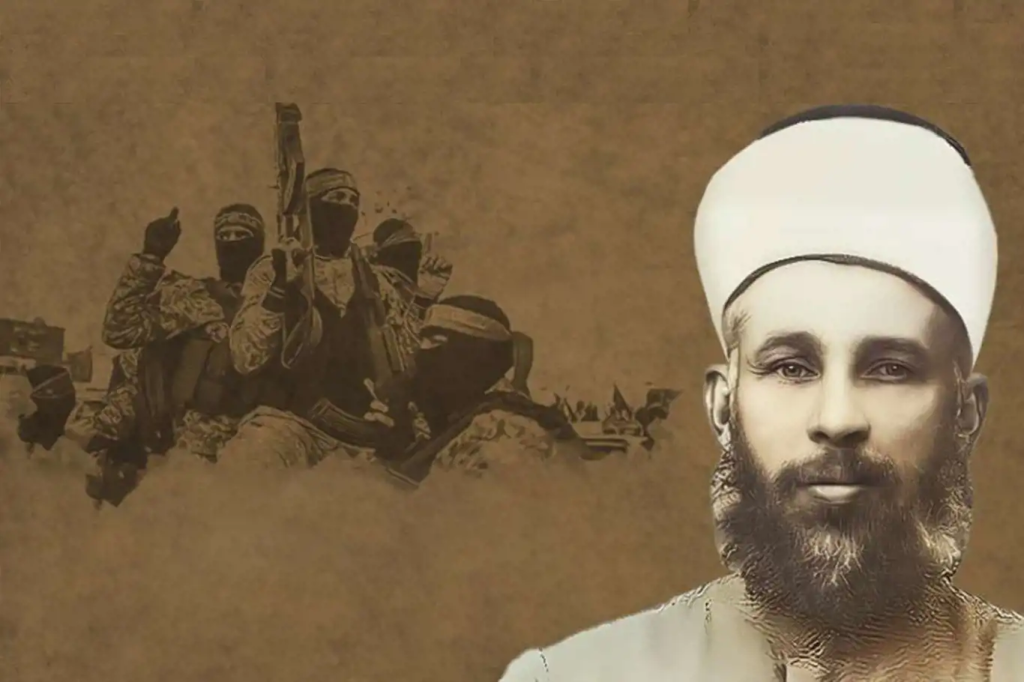

What would you say if I told you that Izz al-Din al-Qassam fought in the Turkish War of Independence? You would probably be surprised, as this is likely the first time you have heard it—but it is true. Unfortunately, when the life story of Izz al-Din al-Qassam is told in Türkiye, its most important chapter is overlooked: the Hananu Revolt, also known as the Northern Syria Revolt. This revolt was the only significant military experience of al-Qassam’s life and, technically speaking, it was part of the Turkish War of Independence. Today, I will recount one of the lost, yet important, chapters of our War of Independence.
The Syrian National Forces (Kuva-yı Milliye)
At the end of 1918, the French began landing troops in and around Latakia, Alexandretta (İskenderun), Mersin, and Adana. In response, independent local resistance movements emerged in these cities. Following the French occupation, Shaykh Izz al-Din al-Qassam sold his house on the coast of Latakia, used the proceeds to purchase weapons, and moved to Haffa, which he considered more suitable for guerrilla warfare. Together with Umar al-Bitar, he assumed the leadership of the resistance in Latakia.¹ Shaykh Yusuf al-Sadun also took up arms against the French in Antioch (Antakya), at Qisr al-Hadid (now known as Demirkapı).
Throughout 1919, these spontaneously formed bands began carrying out night raids against French detachments and sabotaging railway and telegraph lines. Although the guerrilla attacks succeeded in slowing the French advance for a time, the resistance remained fragmented and lacked coordination.
Ibrahim Hananu, one of the leading bureaucrats of the Committee of Union and Progress, sought to coordinate the local bands. Through both the weapons and financial support provided by the National Defense Committee in Aleppo and the ties he established with local leaders across the region, he emerged as a central figure in this process. Although the bands operating around Aleppo, Antioch, and Latakia were not fully united under a single command, they gradually began to operate within a loose structure that increasingly recognized his leadership.²
Meanwhile, in Damascus, the Syrian National Congress had been established under the leadership of Faysal, the son of Sharif Hussein, to advocate for Arab independence; Hananu was initially affiliated with this body. However, the Syrian National Congress soon found itself under mounting pressure from the great powers.
The fate of the Arab lands was to be determined at a conference to be held in San Remo, Italy, on April 18. One month before the conference, on March 8, the Syrian National Congress convened in Damascus and proclaimed Faysal king. This overt fait accompli was promptly rejected by Britain and France; both powers believed that an independent Arab state would set a dangerous example for the peoples of their colonies. Indeed, the San Remo Conference produced a decision fully in line with this thinking, rejecting Arab independence. Arab nationalists were deeply disillusioned.³
On July 14, General Gouraud issued Faysal an ultimatum demanding the dissolution of the Arab army and the acceptance of the French Mandate. On July 18, the Arab cabinet, convening in an emergency session, bowed to the ultimatum despite the opposition of Minister of War Yusuf al-Azma and announced the abolition of the Arab Kingdom. Faysal first withdrew to Daraa and then sought refuge in England.
Yusuf al-Azma had no intention of surrendering. He assembled a detachment composed of soldiers loyal to him and volunteer militias and marched to the Maysalun Pass on the Beirut–Damascus road to confront the French army. Opposing him was a French force of 12,000 soldiers, supported by tanks, aircraft, and artillery; al-Azma’s forces numbered fewer than five thousand.
The battle began on the morning of July 24 and lasted four hours. Although the Syrian fighters managed to put up strong resistance during the first hours, they could no longer withstand the French artillery and tanks. Yusuf al-Azma was martyred by machine-gun fire from a French tank while attempting to fire a cannon; the battle ended with his death.⁴
Al-Azma’s martyrdom deprived Hananu of his greatest supporter. The resistance forces in the north, lacking regular troops and heavy weapons, had already been pushed to the breaking point. Aleppo had fallen under French control one day before Maysalun. Maysalun, in turn, dealt a severe blow to Hananu’s hopes.
At this very time, however, just a few kilometers north of Idlib, the uprising that had begun in Maras was spreading across a vast area from Urfa to Cilicia (Çukurova). The city of Antep, besieged by tens of thousands of soldiers, continued to resist for months despite heavy artillery fire. The Turks had turned Cilicia into hell for the French.
With the opening of the Grand National Assembly in Ankara, the Anatolian resistance, under the leadership of Mustafa Kemal Pasha, began to be directed from a single center, thereby creating a powerful political and military center of resistance against the Allied Powers.
Following the fall of Aleppo on July 23, Hananu withdrew to Kafr Takharim and, together with Najib Uwayd, decided to reorganize the revolt. Acting in his capacity as the representative of the civil government based in Armanaz, he sent Cemil Ibrahim Pasha into Turkish territory to seek assistance. Cemil Ibrahim Pasha, one of Aleppo’s leading landowners and a veteran of the First World War, met with Selahattin Adil Pasha, commander of the 2nd Corps, in Maras. At this meeting, an agreement was reached to launch a new movement, financed by Ankara, against the French occupation.
In addition to providing weapons and ammunition, Ankara also placed Turkish officers and soldiers under Hananu’s command. With this extensive support, the movement ceased to be merely a collection of scattered bands and was transformed into a military organization comprising four separate fronts. Shaykh Yusuf al-Sadun commanded in the Antioch region, Najib Uwayd in the Harim region, Mustafa Hajj Hussein in Jabal Zawiya, and Umar al-Bitar in Jabal Sahyun; during this period, the insurgent force grew to nearly five thousand volunteers.
Toward the end of November 1920, Shaykh Salih al-Ali, the leader of the Alawite (Nusayri) revolt in the coastal mountains, sent an envoy to Hananu proposing the unification of their two movements. According to the plan, the northern forces would capture Jisr al-Shughur, thereby establishing a geographical link between the two areas of revolt. Hananu set out with 250 fighters from Aleppo and Kafr Takharim, 400 from Salqin and Alexandretta, and 150 from the coastal mountains. On the night of November 27–28, the force reached Mazraat al-Shagharna, three kilometers from Jisr al-Shughur, where they encountered a French detachment stationed at the opposing farm. While Yusuf al-Sadun outflanked the enemy from the rear, Hananu attacked from the front; the pincer maneuver succeeded, and the French detachment—consisting of one officer and twenty-five soldiers—surrendered together with its weapons.⁵
With this victory, the towns of Harim and Jisr al-Shughur, together with their surrounding villages, had fallen into the hands of the insurgents by the end of the month. Elated by their victory, the Arab militias joined forces with the Turkish bands advancing from the south and launched a large-scale offensive along the Harim–Jisr al-Shughur–Idlib line. The complete expulsion of the French army from the region now seemed entirely within reach.
In response to these developments, the Cilicia Command requested reinforcements for the region. The French military presence increased from 30,000 to 40,000, and then to 80,000. With the arrival of these reinforcements, France launched a large-scale offensive. Throughout December, it reestablished its control over the three towns. Nevertheless, at the height of the revolt, it succeeded in establishing a de facto state over a vast area stretching between Aleppo and the coast of Latakia.
During the same period, Antep also fell in February after a prolonged resistance. But Türkiye had no intention of conceding defeat. The Grand National Assembly assigned Özdemir Pasha, the leader of the Antep resistance, the task of carrying the war deeper into Syria. To fulfill this mission, Özdemir Pasha established a new organization called the “Ottoman National Forces of Syria and Palestine” (Suriye ve Filistin Kuva-yı Milliye-i Osmaniyesi). The corps in Diyarbekir allocated funds and weapons to him, and he distributed one-quarter of the ammunition he received to the insurgent groups in Syria. This Turkish initiative immediately made its impact felt on the ground, and the revolt flared up once again.⁶
In March 1921, a French unit advancing from Jisr al-Shughur toward Darqush was ambushed near the village of Duwaylah by fighters commanded by Shaykh Yusuf al-Sadun. In the clash, a large number of French soldiers, including a colonel, were killed. General de Lamothe dispatched his personal aircraft to recover the colonel’s body from the area.
France’s losses in Cilicia over the course of two years exceeded eight thousand. Owing to the reinforcements it had sent to the region, it had almost no forces left in Morocco or the Balkans. Nevertheless, it was forced to withdraw from Maras and Urfa. Its campaign into Cilicia ended in a major debacle; at Karboğaz, forty fighters inflicted more than two hundred casualties on a French battalion and captured nearly six hundred and eighty soldiers. Moreover, guerrilla warfare had begun to spread farther south, into the interior of Syria. In France, the voices calling for withdrawal from Cilicia grew steadily louder. Finally, following the Turkish victory at the Battle of Sakarya in August 1921, the time came for the French to accept defeat.
With the Treaty of Ankara, signed on October 20, the French agreed to withdraw from Cilicia. This enabled them to concentrate on the revolt in Aleppo. A similar situation applied to Türkiye. The closure of the Southern Front made it possible to concentrate on the Western Front. With Istanbul still under British occupation, the closure of the Southern Front was essential for Türkiye.
In fact, the revolt had effectively come to an end before Sakarya, with the fall of Jabal Zawiya in July. In this defeat, not only France’s increasing military pressure but also its strategies aimed at undermining the revolt’s social base proved effective. France succeeded in cutting off support by persuading the local aghas, who supplied the revolt with militias, money, and logistical support, sometimes through threats and sometimes through concessions; it then filled the resulting local security vacuum with militias recruited from those same elements.
On July 12, 1921, Ibrahim Hananu withdrew with fifty-five soldiers to Salamiyya in the countryside of Hama; on August 10, he crossed into Jordan on his way to Jerusalem. The French, however, had concluded an extradition agreement with the British authorities, and Hananu was their primary target. On August 13, 1921, he was arrested in front of the Jerusalem Hotel where he was staying and transferred to Aleppo. During the four-day trial held on March 15–18, 1922, he was acquitted thanks to the defense mounted by the young lawyer Fathallah al-Saqqal. After spending several years under house arrest, he was released during the Syrian Revolt of 1925 and entered politics, becoming one of the founders of the nationalist National Bloc (Kutla al-Wataniyya). He died in Aleppo in 1935.
Najib Uwayd and Yusuf al-Sadun continued launching attacks against the French from bases in Türkiye until 1926. At Türkiye’s request, they ceased their attacks in 1926. During the Hatay question in 1937, Atatürk informed them that, should the French refuse to withdraw, they were to be ready to attack with their fighters. Al-Sadun died years later in Aleppo while traveling on party business, whereas Uwayd died in his hometown of Kafr Takharim.
Umar al-Bitar fled to Türkiye with his thirty-two fighters, who had been excluded from the general amnesty. A French military court sentenced him to death in absentia and requested his extradition from Türkiye, but Türkiye refused. Shortly afterward, al-Bitar moved to Iraq, where he joined Shaykh Ahmad, the chief of the Kurdish Barzani tribe, in fighting against the British. Following the 1936 Treaty, he returned to his homeland, and in 1937 he was elected deputy for Latakia on the National Bloc list. Owing to French pressure, he returned to Türkiye once again in 1939. He died in Antioch in 1945 and was buried in the Cemetery of the Indigent.
Izz al-Din al-Qassam was sentenced to death in absentia by the French and fled to Palestine in the summer of 1921 with a few companions. He settled in Haifa and began serving as imam at the Istiqlal Mosque. In 1926, he became president of the Muslim Youth Association, and in 1932 he established his own organization. He was martyred in a clash with British forces in 1935; his death ignited the Great Palestinian Revolt.
Conclusion: “Our Forces”
Although the Hananu Revolt is now regarded in the literature as a Turkish-backed Syrian revolt, it is clear that this is the product of a retrospective perspective. The revolt first began in Hatay, which today is Turkish territory. The area of the revolt encompassed not only Northern Syria but also Southern Anatolia and, technically speaking, it was part of the war in Cilicia. This indicates that we must consider it part of the Turkish War of Independence. Indeed, Hananu himself stated in court that he had acted in connection with Türkiye and had received his orders from Ankara.⁷ Likewise, in a secret session of the Grand National Assembly on February 14, 1921, Fevzi Çakmak declared: “Our forces have spread as far as the gardens of Aleppo, in the direction of Idlib and Jisr al-Shughur.”⁸ Among the forces to which he referred were Izz al-Din al-Qassam and his fighters.
Unfortunately, after the passage of so much time, we have forgotten this shared national struggle of Türkiye and Syria. Yet our geography reminds us of the history we have forgotten. If you look at the geography of the revolt, you will see the very region in which the opposition remained confined for a long time during the Syrian Civil War. A century later, in the same place, the blood of Turks and Arabs once again mingled. The Turkish aircraft that bombed regime positions in Idlib on March 5, 2020, paved the way for the march on Damascus on November 27, 2024. We would not be wrong to say that today’s Free Syria is the fruit of Operation Spring Shield. We hope that Free Syria will also open the road to Free Palestine. They are all “Our Forces”; as it was yesterday, so it is today, our destinies are one.
Sources:
- Abdullah S. Schleifer, “The Life and Thought of Izz al-Din al-Qassam,” The Islamic Quarterly, vol. 23, no. 2 (1979), pp. 61–81.
- Philip S. Khoury, Syria and the French Mandate: The Politics of Arab Nationalism, 1920–1945 (Princeton University Press, 1987), pp. 103–106.
- Hasan Kayali, Imperial Resilience: The Great War’s End, Ottoman Longevity, and Incidental Nations (Berkeley: University of California Press, 2021), pp. 130–131.
- Hasan Kayali, Imperial Resilience: The Great War’s End, Ottoman Longevity, and Incidental Nations (Berkeley: University of California Press, 2021), p. 136.
- Philip S. Khoury, Syria and the French Mandate: The Politics of Arab Nationalism, 1920–1945 (Princeton: Princeton University Press, 1987), p. 109.
- Hasan Kayali, Imperial Resilience: The Great War’s End, Ottoman Longevity, and Incidental Nations (Berkeley: University of California Press, 2021), p. 139.
- Philip S. Khoury, Syria and the French Mandate: The Politics of Arab Nationalism, 1920–1945 (Princeton: Princeton University Press, 1987), p. 110.
- Grand National Assembly of Türkiye, Secret Session Proceedings, Vol. 1, Session: 15, Meeting: 13, pp. 482–483.