 Karam Nama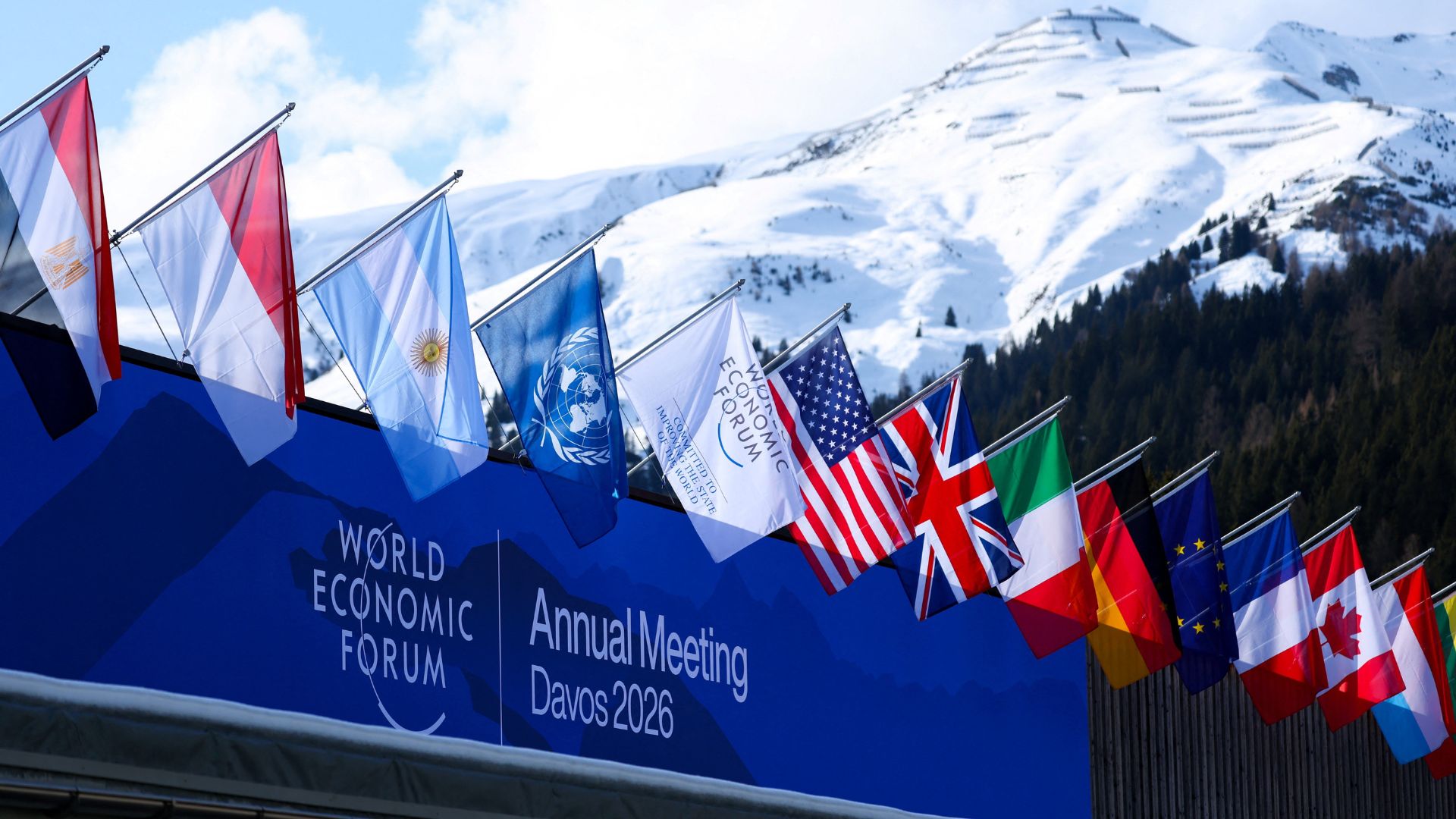

Global billionaire wealth reached an unprecedented peak in 2025. Oxfam described this as a moment that “undermines political freedom” and deepens inequality. The organisation’s annual inequality report presented shocking numbers and offered a diagnosis of a global pathology. When twelve billionaires own more wealth than the poorest half of humanity — four billion people — the language of democracy becomes a polite fiction rather than an accurate reflection of political reality. Yet these same individuals, and those within their sphere of influence, gather each winter in Davos beneath a banner bearing the words: ‘Committed to improving the state of the world’. The phrase is as hollow as it is polished.
This contradiction is what makes Davos the perfect stage for global hypocrisy. The forum, which claims to debate solutions, is itself a symbol of the problem: power without accountability, wealth without limits and elites who speak of justice while benefiting from its absence. So it’s no surprise that Chloe Hadavas of Foreign Policy wrote about the forum’s duplicity, or that her colleague Michael Hirsh described Davos as ‘a group of billionaires and elites pretending to solve the world’s problems when, in fact, they are often the very culprits who perpetuate them’. This is not hyperbole, but a concise summary of a system that hides its interests behind the language of salvation.
Hirsh poses a pertinent question: why does the world need ‘the Davos men’ at all?
The question highlights the fundamental paradox. The world is facing real crises, from climate collapse to economic fragmentation, yet the people dominating the global problem-solving stage are the same people who profited from the policies that created these crises. Criticising Davos is not a moral indulgence, but an analytical necessity. Those responsible cannot be the architects of repair.
The rhetoric that fills the corridors of Davos each year may sound grave, but it evaporates when confronted with the realities of a world marked by widening injustice and growing arrogance. The wealthy retreat further into isolation while the poor are forced to comply with policies drafted behind closed Western doors. Consider former German finance minister Christian Lindner, who attempted to trivialise Germany’s economic stagnation by insisting the country was merely “a tired man who needs a coffee”, not “a sick man”. This is the language of elites who treat structural crises as momentary fatigue — language designed to soothe, not illuminate.
Meanwhile, Argentine president Javier Milei declared socialism to be a threat to the West, denouncing ‘social justice’ and ‘radical feminism’ while praising entrepreneurs as ‘heroes’. His speech was not a contribution to solving global problems, but an ideological performance. When entrepreneurs are portrayed as saviours and structural inequality is reframed as the moral failing of the poor, Davos becomes a theatre of dogma rather than a forum for solutions.
This raises the unavoidable question: how can the wealthy and powerful fix a world they helped break?
The answer came from within the forum itself, in the form of a call by Greek Prime Minister Kyriakos Mitsotakis to confront the ‘arrogance of Davos’. This was more than just a rhetorical jab; it acknowledged that the forum had drifted far from the issues it claims to address. The liberal order that Western elites nostalgically invoke was built not on slogans, but on a sober understanding of power, responsibility and limits. If today’s elites understood this, they would hesitate before demanding the renewal of a system whose tools no longer function.
Africa offers the clearest evidence of the emptiness of Davos. Despite the annual rhetoric about debt relief and support for emerging democracies, no meaningful solutions materialise. Ghanaian economist Charles Abugre described the situation plainly: rising interest rates are crushing African economies; currencies are volatile; inflation is relentless; and the poor are bearing the daily burden of transport, food and housing costs while real wages are stagnating. Amine Idriss Adoum of the African Union’s development agency added that the real question is not how to escape debt, but how to borrow intelligently and restructure debt without sacrificing infrastructure, health or energy.
These testimonies are not mere footnotes; they are damning indictments. They reveal that Davos does not solve problems, but rather manages them in ways that preserve the status quo. And when the conference halls empty and the private jets take off from the Alps, one truth becomes impossible to ignore:
The guilty cannot fix the world. They can only ensure that its problems endure.
Source: https://www.middleeastmonitor.com/20260119-the-guilty-cannot-fix-the-world/