 Janet Daley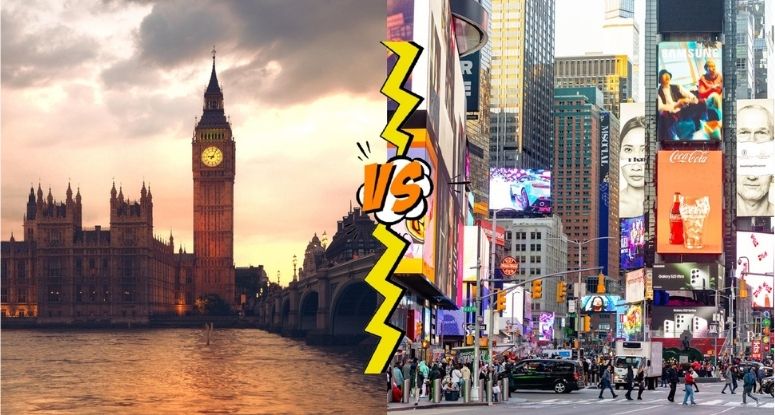

As someone born in the United States who has spent most of her adult life in Britain, I have coped for years with bewildered queries from both national camps about the social attitudes of the other. Americans are particularly mystified by the British obsession with class and the British are startled by the obsessive work ethic which seems normal to most Americans. The mutual incomprehension that arises from this disconnect might explain a lot about the Trump presidency which seems, on the face of it, so inexplicable. How can a man who behaves like that possibly be credible as leader of the most powerful democratic nation that has ever existed?
The answer goes deeper than the immediate issues suggest. There is a sense in which the bizarre Trump phenomenon can be seen as a logical conclusion of the American project. His alienation from old Europe is not just about unfair defence spending, and the imposition of punitive tariffs is not merely traditional protectionism. He has made electoral capital from the fact that something has gone badly wrong with the American dream. The country no longer provides the endless opportunity that was once offered to the poor who were prepared to risk everything to arrive on its shores. It has become clear to an angry generation that they are not going to have the chance to improve themselves – to rise above the living standards of their parents – that they had been led to believe was their birthright.
The bitterness and frustration of those who have been let down produced a tidal wave of fury, sweeping in a president who swore to avenge them. That campaign of vengeance was called Make America Great Again because it was clear to everyone that the country was now in decline. It took aim at those who were described as destroying the country from within (criminal migrants) and from without (foreign competitors who were undermining the economy). It is vital to understand that there was something uniquely American about this rage. The poor in most countries become bitter if their government seems to have abandoned them, and they often take their revenge at the ballot box. But in America, people were not supposed to be poor if they were determined not to be.
Poverty was not a permanent fate which required assistance. It was something that you escaped from as an act of your own will, through ambition and hard work. The poor were not to be pitied and patronised: for the sake of their moral redemption, they should be made to raise their sights and improve their own lives. That was the whole point of the American dream. Self-determination was the highest objective of the human condition. Then, quite suddenly, it became impossible. The jobs and the industries which had created those life expectations were gone, driven out by other countries which “unfairly” competed with American products. The social effect of this was uniquely calamitous in America which had no cultural history of a “deserving poor”. There was no feudal past or hereditary guilt which obliged the well-off to care for those who had always been below them in rank. That sort of paternalism would be demeaning and destructive of the spirit of the individual. Even minimal forms of socialist intervention – like state medical care for the very poorest – are contentious.
Which brings us to the concept of class in the UK. To most Americans, the idea of social hierarchy – identifiable fixed strata of society into which people are born and are likely to remain by choice – is almost incomprehensible. It is generally the first thing most newly-arrived Americans ask me to explain. It is not disparities of wealth or material success that shock them. They are accustomed to that in the United States. It is the idea that the limits of your ambition could be dictated by assumptions considered normal in your original community, and that you might regard those limitations as perfectly acceptable. (Which may well be because it is not the working class who suffer from the most egregious snobbery. It is the lower middle class – aspirational strivers like the famous greengrocer’s daughter – who are cruelly ridiculed.)
In recent years, American social commentary has become more sophisticated about these things. The word “class” now appears regularly in public discourse although there are confusing differences of meaning. “Middle class” in the US means what used to be known here as the “respectable working class”. Those who do not work and are dependent on welfare or crime – or a mixture of the two – are the underclass. Higher paid professionals are upper middle class. There can be no genuine upper class because there is no aristocracy so at the top, there are simply the rich, and their status depends on how much money and power they have. There is no such thing as “genteel poverty”, and vulgarity – as Donald Trump repeatedly shows – is not a disqualification from the ruling elite.
There was a time when the children of even the richest American parents were expected to work for a living, possibly in the family business. Now there is a breed of “trust fund babies” who live on inherited money. This phenomenon is very controversial and widely regarded as alien to the American tradition. But the idea that a working class family might actively discourage a child from moving away from his old community or from the social expectations of his parents – even if that means a lifetime of low achievement – is scarcely credible in America where traditionally it was race, not class, that was the great barrier to self-advancement.
The Trump solution, however, may be about to crash against the very rock on which it was built. The measure of a successful life in America is financial independence. The Iran war is playing havoc with the cost of living and most critically, endangering the stability of the stock market. When Bill Clinton’s presidency was threatened by sex scandals, it was understood that none of that mattered if Wall Street was unaffected. “They don’t care about Paula Jones. They care about the Dow Jones”, went the saying. Be warned.
Source: https://www.telegraph.co.uk/news/2026/04/04/britons-and-americans-will-never-understand-each-other/