 Cato Dezorra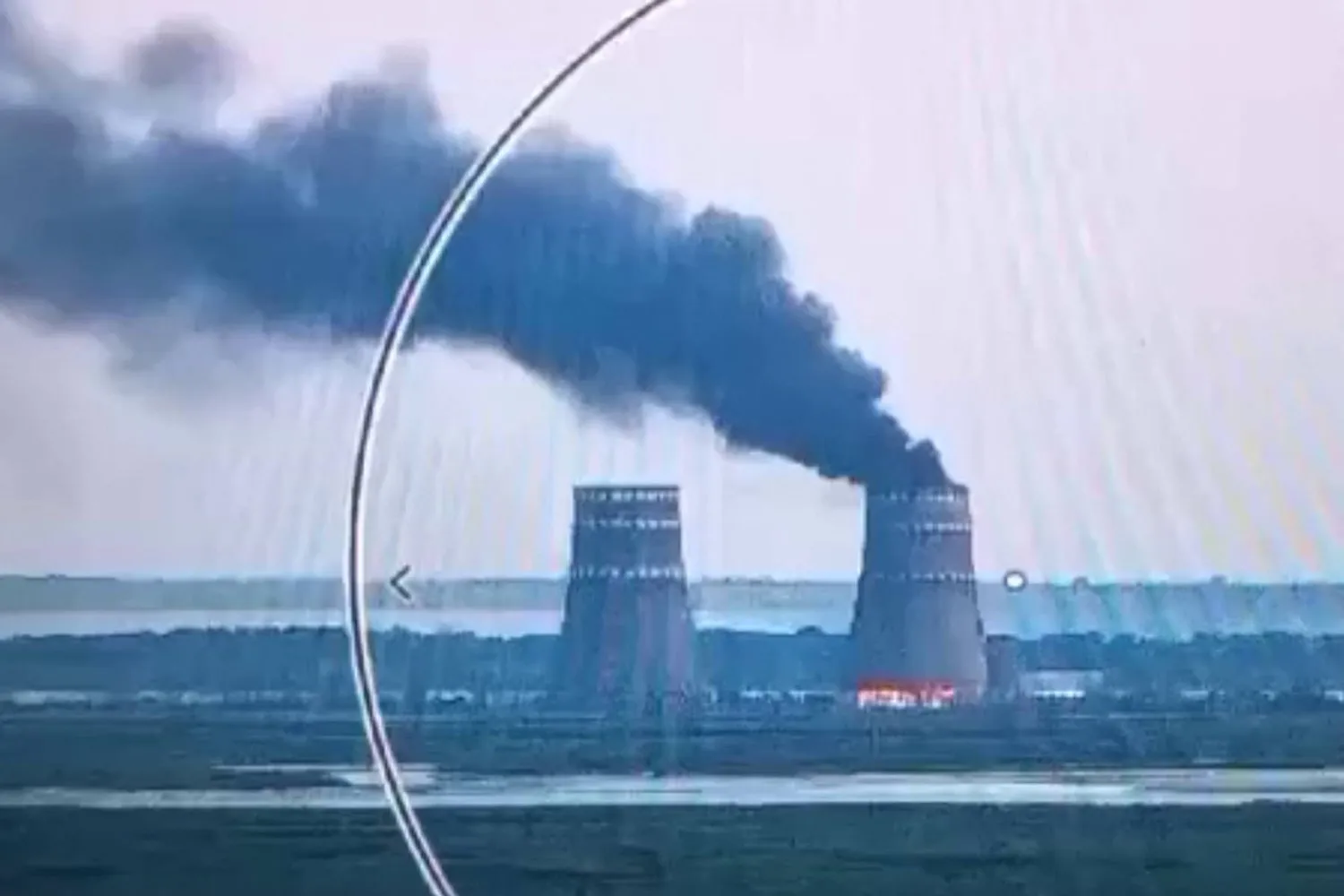

For a while earlier this year, people who pay attention to international news were waking up every morning to another eerily similar headline. A refinery explodes in Russia. A power plant catches fire in India. Another refinery blows up in Romania. Multiple oil terminals are blown up up in the Middle East. And then another sudden refinery fire in Australia. One fire? Ok. Normal. Two fires? That’s a little strange. But 45 fires in 45 days? And only is every one of these incidents affecting energy infrastructure, these incidents are all happening at the same as the US-Iran war and the closure of the Strait of Hormuz which has already sent energy prices skyrocketing all over the world.
If you think all of that doesn’t sound like it could possibly be a coincidence, I would agree with you. Well, according to the viral social media posts and alternative media reports, that’s exactly what happened. In the first month and a half of the US-Iran War, the world experienced a massive and unprecedented wave of refinery and power infrastructure fires. Not just in the Middle East but everwhere, from Russia to Ausralia to Texas. Some accounts claimed there had been a 1.800% increase in refinery fires compared to normal years. So naturally people began asking questions. Was this a result of aging infrastructure being overworked due to cuts in oil supply elsewhere? The predictable chaos of wartime sabotage? Just bad luck? Or was it something else happening entirely?
Well, I decided that I was going to investigate that claim myself. Look at the evidence both for and against an organized global conspiracy and then leave the final conclusion up to you. But I will tell you this. Once you start digging into these fires the existence of a pattern becomes impossible to ignore. The original claim appeared in late April 2026 and spread rapidly across X, Telegram, Instagram and geopolitical forums. One thing that seemed suspicious to me was that the wording was almost identical everwhere.
Since the start of the war, over 45 cases of fires have been reported across the globe in oil refineries or power plants. This is a roughly 1.800% jump from the sporadic 9 to 10 fires usually reported in a year.
At first glance, it sounds insane. 45 major fires in just over a month? That would imply an unprecedented global industrial crisis. But here’s the first problem. The fact that this claim was repeated using the exact same wording so frequently implied that either people were reposting it without vetting it after seeing it elsewhere, or that bots were doing the same thing. As far as I could see, nobody and yet when researchers and independent analysts around social media started digging into actual incidents during that period they found something unsettling. Perhaps the percentage increase was exaggerated but there really had been an unusually high number of fires in a very short amount of time. That was undeniable.
So let’s start with Russia. By early 2026, Ukraine had dramatically escalated long-range drone attacks against Russian energy infrastructure, oil depots, refineries, pipelines, storage terminals. The Tuapse refinery caught fire after reported drone strikes. Facilities in Perm also experienced major disruption. Storage terminals and export infrastructure acroos Western Russia were repeatedly being targeted. This wasn’t rumored. These attacks were confirmed. And strategically, they make perfect sense.
Modern warfare no longer targets only armies. It targets logistics, energy, supply chains, economic arteries designated to destroy not only the enemy’s military, but its very ability to even financially sustain a war. But Russia wasn’t the only place experiencing problems. In Saudi Arabia and the Gulf region, reports emerged of attacks and fires on critical energy infrastructure as well. Once again, this was in an active war zone. And the fact that it was happening was not surprising. Like it or not, this is part of modern warfare now. And it will be in the future. But then came Australia. In April 2026, a major fire hit the Viva Energy refnery in Geelong disrupting production and sending shockwaves through local fuel markets. Then in India, multiple industrial incidents were reported around the same timeframe, including power plant explosions and refinery fires that circulated heavily online. Then even the United States started appearing in the headlines. A refinery explosion in Louisiana, transformer and substation fires, reports of multiple incidents in Texas even chemical fires.
Suddenly, independent researchers on social media began compiling maps, plotting the incident locations and their exeptional frequency. There is no doubt that it began to look highly suspicious and suggested coordination. It was also not unprecedented because we have seen this exact same pattern take place with food supply infrastructure in recent years. Now, to some extent, there probably is a psychological bias at play here. Because once people start looking for patterns, thay start seeing them everywhere. Every industrial fire becomes part of the same narrative. Every refinery outage becomes suspicious. So here’s where the story becomes a bit muddled. The high incidence of refinery fires all over the world was undeniable. But the actual statistics behind that viral claim of a 1.800% increase is potentially very misleading. The biggest red flag is the last line. Only nine to ten refinery or power plant fires normally occur per year. That is almost certainly false because in reality, industrial fires happen very frequently across the world but they aren’t always major.
Refineries are exraordinarily dangerous environments. They contain high-pressure systems, volatile gases, extreme heat, complex electrical systems, and they get pushed hard in around-the-clock operations. Add to that the aging infrastructure in many of these facilities, and their location in parts of the world where, let’s just say, safety is far less important than in developed countries, and it becomes no surprise that such fires occur far more frequently than you might think, until you start paying attention. Many would never even make the news.
So in fairness, the claim of a 1.800% increase likely came from selectively grouping together refinery fires along with incidents in other areas of energy infrastructure, then adding in drone and misilse attacks in active war zone and comparing all that to an unrealistically tiny baseline. So the percentage numbers themselves are probably exaggerated. But here’s the important takeaway. That does not mean the broader concern is false. And that also does not mean a systematic pattern doesn’t genuinely exist. Because there are very real reasons why these incidents may genuinely be increasing. First, we have onviously wartime sabotage. The Russia-Ukraine conflict normalized energy infrastructure attacks in a way not seen in generations. But second, we have aging infrastructure being pushed to its limits. Many global refineries are old, and years of underinvestment have left energy infrastructure increasingly fragile. And there’s been an increase in operational stres, especially since the beginning of the US-Iran War. Since supply from the Middle East has been cut off, refineries elsewhere are running harder and longer to pick up the slack, with less downtime for maintenance. That creates exactly the kind of environment where accidents multiply.
But even after acknowledging all that, some still believe something darker may be happening. And as for me, after doing many years of research into globally organized crime and conspiracy like I have, and realizing that government and media narratives are coordinated and intentionally usually misleading, it’s not difficult to discern why. Think about strategic reality of the modern world. Civilization depends on a surprisingly small number of critical infrastructure nodes. From oil wells to shipping lanes and pipelines to refineries to regional power plants, most of these are actually very likely defended. Many are decades old. Some requires years to replace if destroyed. And now cheap drone technology has made attacks against these facilities easier than at any point in history. And that changes everthing. Because for decades major powers avoided directly targeting critical energy systems because escalation risks were too high. But now we are in an era where intelligence agencies, non-state actors and proxy groups can potentially inflict strategic level economic damage, with tools costing only thousand of dollars.
And given today’s fully integrated nature of business and financial markets with real-time development and wars there are real incentives present for groups connected not just to governments, but to international financial institutions to manipulate and even sabotage things like energy infrastructure. That reality alone should be enough to make you uneasy. Because if infrastructure warfare becomes not just normalized, but is in fact a profit generation scheme done by collusion between intellegence agencies, international financial firms and establisment banks and we know this is happened many times before, then we have to confront a dark reality. That the future of global conflict will probably not look like tanks rolling across borders or aerial bombing raids. It will more than likely begin with rolling blackouts, fuel shortages, power grid instability and mass-scale cyber warfare campaigns.
And on the other end of all these infrastructure attacks will always be people and institutions harvesting massive profits from these events, whether they engineer them or not. A perfect example of how this is done is the sudden spike in put options placed on stocks in United Airlines and American Airlines in the several days leading up to the 9-11 attacks. Essentially, bets that their stock prices would fall. And of course they did, making those lucky investors tens of millions of dollars worth of profits at a minimum. One of the firms that made these highly unusual trades was Deutsche Bank Alex Brown, the US private client arm of Deutsche Bank.
Interestingly, that firm was run by Alvin Bernard Krongard, a Princeton man who, wouldn’t you know it was also executive director of the CIA when the 9-11 attacks happened. His name was redacted from the 9-11 Commision Report, of course one of the biggest jokes of an investigation in Congressşonal history. And Krongrad later went on to become an executive at Apollo, one of the US’ largest private equity firms, headed by Leon Black, who himself way very close to Jeffrey Epstein as a client of both his sex trafficking and his consultant services, paying him over 150 milion dollars for estate planning services. All these people and incidents always connect and there are always fortunes being made by them in background.
So where does that leave us? Was there really a coordinated global campaign behind the fires of 2026? Well, it’s difficult to point to hard evidence proving that. But was there a genuine increase in energy infrastructure incidents during this period? Absolutely there was. And more importantly they give the world a preview of how vulnerable modern civilization truly is to attacks on our energy infrastructure, which typically also involve coordination between operatives on the ground carrying them out and financial firms bankrolling and profiting from them. And given the track record, it’s actually much more likely that these financial firms are operating out of the United States or one of its so-called allies than in one of our supposed enemies. So whether these fires were caused by war, aging infrastructure, operational stres or intentional and organized sabotage the implications for us are the same.
The systems we depend on are far more fragile than most people realize. And once you see how interconnected everthing is, it becomes impossible to stop asking the questions. Who is really responsible for hese infrastructure attacks? Who is responsible for preventing them? And are they doing their jobs? And here’s the big one. Who actually has our best interests at heart when our so-called leaders, lile Congress and people connected to the Trump administration are in an even better position to directly benefit financially from these kind of attacks via the stock market than our so-called enemies are? The unfortunate answer is only us and each other. That is precisely why I started my private group, combining geopolitical and conspiratorial perspective to dig up what is really happening in the worlds of politics, economics and business and to help you find ways to either protect yourself from it or benefit financially. That group is called Forbidden Finance Group and if you are interested in joining the link to do so is in the description. Forbidden Finance Group is only one section of what I call my Info Warfare Armory, a collection of four groups and a bunch of resources that will help you make sense of all of this daily. Because you have to understand, absolutely nothing in our world works the way you think it does. And the way things really works is hard to find. It’s hidden knowledge reserved for a chosen few, who are tyically born it or invited via intellegence agencies, secret societies or certain religious groups.
But once you do understand it you will never look at the world the same way again. And you will definitely make financial decisions an deven life decisions very differently.
*Cato Dezorra is a former military/security professional turned independent commentator.
Source: https://catodezorra.substack.com/p/45-energy-infrastructure-fires-in