 J. N. Figgis
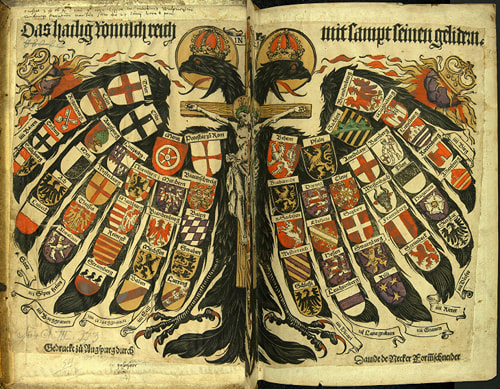

The mediaeval notion of an ideal state is embodied in the theory of the Holy Roman Empire. The failure of events to give practical effect to the theory generated controversies, out of which was developed the root idea of the later doctrine of the Divine Right of Kings. The dream was a noble one, of a perfect state with two elected heads, one temporal and one spiritual, working in harmony for the maintenance of peace and for the ordered conduct of life among Christians, in a polity that should combine all that was of lasting value in the system of the Roman Empire with all that was essential to the realization of the City of God. But for the most part it remained but a dream, save for a few fitful intervals of brilliancy under Charles the Great or Otto III. or even Henry III. Yet the controversies of the seventeenth century took the shape they did owing to the earlier struggles between Popes and Emperors. If there had been no Holy Roman Empire, or if there had been no failure to realize the ideal embodied in it, there would have been no theory of the Divine Right of Kings.
The whole standpoint of political thought during the period of the Reformation is explicable only by being referred to its counterpart in the ideas and the methods of the men, who wrote on behalf of the Papal or Imperial pretensions to sovereignty. One, who has not entered into the feelings of the earlier age, can scarcely fail to be hard put to it to comprehend those of the later. A study of the controversies that raged around the claims of Pope and Emperor, will reveal the genesis of most of the notions embodied in later theories; and will bring us into contact with the mental atmosphere, in which alone such theories could take shape.
The Holy Roman Empire, however shadowy its power, was, so long as men made it an aim to work for, a testimony to the most important characteristic of political thought till the close of the seventeenth century—the belief in the intimate connection of politics and religion. The ideal of the Empire, with Christ as its King and His two vicegerents upon earth, was that of a theocracy. This is the explanation of the otherwise strange fact, that men should ever have believed in so unworkable a theory, as that of two equal heads of the State. Christ is the real head of the Empire, and Pope and Emperor are both conceived rather as executors armed from above with administrative powers than as themselves ultimate authorities. There is no difficulty in having two superior officials independent of one another, if they are both regarded as essentially subordinate to a single supreme governor. It was the vividness with which men realized the position of Christ as Lord of the Christian commonwealth, that could alone render possible, as an ideal, a state in which temporal and ecclesiastical jurisdiction existed side by side, and each claimed ‘coactive’ power.
That the ideal State is the kingdom of God upon earth, and that no other can be an object of veneration to a Christian, is the notion that lies at the root of the Holy Roman Empire. It is only as the immediate character of Christ’s Kingship is lost sight of, and the two subordinate authorities begin to claim, each for itself, perfect independence and supremacy, that there is revealed the insoluble character of the problem involved in the recognised positions of the Pope and the Emperor. As this process continues, first the Pope, as most plainly the depositary of Divine Authority, afterwards the Emperor, as called to his office by God’s election and appointment, claims to be the true and supreme head of the Christian commonwealth, by Divine Right Lord of the world. But the notion of an earthly polity has for neither party disengaged itself as yet from that of the heavenly kingdom. Both Emperor and Pope are forced to claim Divine Right for their pretensions, for each believes himself to be head of something more than a temporal state founded from motives of human convenience. They are not merely the directors of an artificial contrivance for satisfying ephemeral needs; they conceive themselves the chosen captains of the divine organization revealed by Christ, as part of the eternal order of the universe.
And thus, whatever claims of supremacy are made for either Pope or Emperor, it remains that the theory upon which they are based is essentially religious. Neither side dreams for a moment of asserting, that the sphere of theology can be separated from that of politics, or that the source of political theory is to be found save in revelation. Neither side imagines that the views of its opponents can be discredited, unless their opinions as to religious duty and the drift of Christ’s teaching can be shewn to be false. Those who deny the political supremacy of the Pope are heretics, says Boniface VIII. Those who affirm it are heretics, says Marsiglio of Padua. Theology can in some way teach men the true theory of government, the relations between various powers in the State, and the mutual duties of sovereign and subjects. No one doubts this, and it remains, with whatever admixture of philosophical and historical argument, the fundamental basis of political controversy, not only throughout the Middle Ages, but until the theory of Divine Right has passed away, and men have abandoned the attempt to defend or controvert a doctrine, which has disappeared.
Further, the position of the Emperor as in theory, lord of the world, must have had an influence, however slight, in retarding the development of any clear notions of sovereignty in the national states. In England, with its belief in the Imperial position of English kings, this influence may have been small or virtually non-existent. Yet the fact that an ignorant writer in the fourteenth century can declare that a statute which he dislikes is invalid, because it has received no confirmation from the Emperor, is evidence not indeed of the truth of his statement, but of the existence in men’s minds of some lingering belief, a relic from earlier times, in the Imperial claims to universal sovereignty. In regard to France the writings of William of Ockham are evidence of a belief equally untrue to actual fact, that the Emperor in the fourteenth century was still possessed of inalienable rights of sovereignty over the French kings.
Moreover, in the notion that the Holy Roman Empire was but the continuation of the Empire of the Caesars, the Flavii, and of Justinian, there was the material for a theory of sovereignty, which the nations did not as yet possess. But, if the action of any power should operate to lower the prestige of the Emperor and to place kings upon a level with him, so that an English, or French king can speak of himself as Emperor, it would be only natural for the pretensions asserted by the civilians on behalf of the Emperor to pass over to them, and to be regarded as of the essence of all kingship that is real, i.e. Imperial. The mere use in later times of the phrase Imperial rights as equivalent to sovereignty is evidence of the source, from which the theory was derived.
This work was performed by that power in the Empire, which overshadowed and eventually destroyed for all practical purposes that of its temporal head. It may indeed be doubted, whether the claims of the Emperor as lord of the world, to be universal sovereign and international arbiter, could ever have been brought into effect, as the new peoples awoke to the consciousness of national life. As a fact, however, it is certain that this was prevented by the action of the Papacy. In order to establish their own claims to supremacy, the Popes were driven to minimize the prerogatives of the Emperor, and to recognise in him less instead of more authority, than they did in the case of other kings. Thus all monarchies were free to appropriate such rags and trappings of his ancient majesty, as still belonged to the ‘ever august increaser of the Empire’ in the shape of theories of power that was never exercised and claims of sovereignty that was never effective. In the contest of the Popes with the Emperors was evolved a theory that was destined to play an important part in future anti-papal conflicts, and to perform during the period of the Reformation, the work that was too hard for it, when Pope John XXII. crushed Lewis of Bavaria. This theory was the divine right of secular governments to be free from Papal control. It took shape in the fourteenth century as the Divine Right of the Emperors. With various additions, of less importance than is commonly supposed, it was to re-form itself in the sixteenth and seventeenth centuries as the Divine Right of Kings.
It is in the gradual rise of Papal claims to universal supremacy, that are first put forth those notions which form the basis of all theories of Divine Right; the conception of sovereignty, of the absolute freedom from positive laws of some power in an organized human society; the claim that this sovereignty is vested in a single person by God, and that resistance to the sovereign is the worst of sins. With two powers within the State in the relative positions of Pope and Emperor, it was inevitable that sooner or later there should arise between them a struggle for supremacy. The condition of coordinate authority in two diverse but ill-defined spheres could not be one of lasting duration. Sooner or later the desire of power, coupled with a sense of the need of unity in the society, must bring either temporal or spiritual head to claim for itself absolute supremacy. There could not fail to be awakened the sense, that the unity of the Christian commonwealth, whether as an earthly state or as a reflection of the Divine order, could be secured only by the recognition of the ultimate authority as vested in one or other of the two powers. Nor was it doubtful which of them had, as a fact, the best claim to superiority. At the best of times, the Emperor was hard put to it to maintain his position, even as king of Germany, against the disintegrating tendencies of feudalism; while his authority over other nations as lord of the world, was, save perhaps under Charles the Great, of the most shadowy kind. The Pope on the other hand could allege that with some limitations his jurisdiction was admitted by all western nations; and was effectively exercised. In every nation there was a large class of men subject to his tribunals, and exempt from the ordinary law, while in a number of matters only constructively ecclesiastical, such as testamentary and matrimonial cases, the Canon law regulated the lives of the laity, and drove numbers of them to the curia to buy justice. It is not surprising that there was developed against the Imperial claims a complete theory of Papal sovereignty. Later ages might dispute as to whether this sovereignty was direct or indirect, immediate or constructive. But, from the days of Hildebrand to those of Boniface VIII. and John XXII., the theory goes on developing and it is of course a theory of sovereignty by Divine Right. The doctrine of the ‘plenitudo potestatis’ is an assertion of the Pope’s claim to sovereign power, as a direct grant from God to S. Peter and his successors.
The canonist could allege the donation of Constantine as evidence of temporal dominion, and with good show of justice point to the ‘translation of the Empire’ from east to west, as proof that from the time of Charles the Great, the Emperor’s authority was derived from the Pope. In support of the Pope’s claim to judge of the fitness of the Electors’ choice, he could urge the fact that no Emperor was more than Emperor-elect, until he had received coronation at the hands of the Pope. He could find in Scripture many passages asserting the superior dignity of priestly power to royal; and could explain away, as he pleased, any which bear at first sight an opposite sense. The image was ready to hand of the greater and the lesser lights signifying (it was plain) the spiritual and the temporal power; the two swords which Christ declared to be “enough, not too much” in the hands of His disciples, would form an apt illustration of the Papal authority in temporal as well as spiritual matters. And so it is proclaimed that the Pope cannot be bound by the Emperor, that Imperial laws are void, if they conflict with the Canon law, although the Church may employ the laws of the Emperor to assist her, that the Emperor as the son, not the sovereign, of the Church is subject to the Pope, for did not Constantine give the Crown and all kingly dignity to Pope Sylvester? Further, the translation of the Empire is a final proof of the Pope’s supremacy over the Emperor whom he had set up of his own mere and proper motion. Against the Latin Emperor of Constantinople urging the command of S. Peter to obey the secular prince, Innocent III. can answer, that it applies only to those who hold their temporalities from him, or else that obedience is enjoined only for the Lord’s sake and may therefore presumably be neglected, if the Lord speaking through His vicar should order otherwise, or, thirdly, that the command to obey him is not without qualification. He can point to the commission of Jeremiah, “I have set thee over the nations and over the kingdoms to root out and to pull down, and to destroy,” and, after drawing edifying conclusions from the lights in the firmament, finally crush his Imperial disputant with the commission to S. Peter.
It is no new doctrine, that the theory of Papal supremacy, with the power of releasing subjects from their allegiance and deposing kings involves a claim to universal monarchy. It is clear, that the doctrine of the plenitudo potestatis embodies the most important elements of the theory of sovereignty; the notion that is, that unity in a state is only to be obtained by the unquestioned supremacy of some one authority, whose acts are subject to no legal criticism. Further, it asserts the Divine institution of monarchy, as a form of government. This was the position claimed by the Papacy; men were driven then to formulate its pretensions by the sense of the need of unity in the commonwealth. They do so by asserting the unity of the Church and of the universe, the claims of the Pope to derive his power immediately from God alone, and to be subject to none other. This is expressed most clearly in the Bull Unam Sanctam. There Boniface VIII. after asserting emphatically the unity of the Church and of all government and speaking of the unrent coat of Christ, declares that a body politic with two heads is a monstrosity. He employs the illustration of the two swords, declaring that the material sword is to be used for, not by the Church; and goes on to proclaim that the temporal power must be subject to the spiritual, that derelictions on the part of the temporal power may be judged by the spiritual, but that the supreme spiritual power is accountable to God alone. He quotes the commission to Jeremiah as proof that he is invested immediately by God with sovereign authority; and closes by applying to himself the command, “Whoso resisteth the power, resisteth the ordinance of God.”
Now, here, it is to be noted, are the methods and arguments, which subsist until the close of the seventeenth century. The Pope proclaims for himself a theory of complete sovereignty; he is king, the one true king, accountable to God alone; he asserts that unity is the soul of government, and that every government must have some supreme head as the centre of its unity; that the Christian commonwealth is a monarchy with this supreme authority vested in himself; he denies that there can be two ultimate authorities in the commonwealth, one temporal, one ecclesiastical; one must be subject to the other. He claims that his power comes from God alone, and is derived from no earthly intermediary. He declares that, on no pretence whatsoever, is resistance allowable to this divinely ordained sovereign; while, in order to prove his doctrine of non-resistance to Papal commands, he employs the very text, which a later age makes the bulwark of its defence against the Pope in the claim that resistance to the king as God’s vicar is worthy of damnation.
Here then is a theory of government by Divine Right, the exact converse of the theory of the Divine Right of Kings. It will be strange if the latter doctrine is not found to have its raison d’être as a contradiction and a counter-theory to that of Papal supremacy.
Once more, it is to be remarked that the theory described above is essentially one of obedience, and of obedience from motives based upon religion. It is needful to bear this fact in mind. In the pursuit of their own aims the Popes were frequently driven to dissolve the bonds of allegiance in communities. Their supporters will speak slightingly of the duties of subjects to their sovereign. In their zeal for Papal authority, they will be found developing that theory of an original compact, which lies at the root of all theories of popular rights in the seventeenth century. Yet this was but an accident of the Papal position. Of its essence was the claim to the implicit obedience of all men, based upon even stronger sanctions of eternal punishment, than was the Divine Right of Kings.
Hildebrand indeed may argue that all secular government is of diabolic origin; John of Salisbury may quaintly decide the question as to whether it be lawful to flatter a tyrant, by the suggestion that it is lawful to flatter a man whom it is lawful to kill. With evident leaning to the more lenient view, S. Thomas Aquinas may debate the point as to whether a nation acting in common may restrain the excesses of a tyrant, and declare in an obiter dictum that regal as distinct from political power is a consequence of the Fall. Lastly, John XXII., who in the Bull Si fratrum takes up a position of complete sovereignty and claims that, the Imperial authority being merely a delegation from the Pope, it reverts to him during an interregnum, may seem to ascribe to the Emperor the same merely official position as delegate of another earthly power, as was attributed to kings by Whig theorists. Yet all this is not because these men believe government and obedience to be things of small importance with ‘the trail of the serpent over them all.’ It is because government is in their eyes a sacred thing, and obedience an integral part of the Divine Law, that they cannot conceive of secular government, as possessing any beyond subordinate authority. All power is of God; therefore the temporal power is only secondary, and must be subject to the spiritual. Obedience to governors is a Divine injunction; therefore in the last resort all men must obey the Pope, the depositary of Divine authority as against King or Emperor, whose position is either, as some say, of merely human origin, or, as in another view, a grant from God through the mediation of the Pope. Men must obey a king, although obedience involves disloyalty to an immediate lord, the king’s vassal; but the Emperor is God’s vassal, therefore he may be deposed at the bidding of the Pope, whose word is the voice of God. So far indeed were the Popes from claiming on behalf of subjects any general rights against their sovereign, that, as in the case of John or Henry III. in England or of the Spanish monarchy, they ever shewed themselves stern supporters of royal rights, where they felt sure of the king. The very claim to release subjects from their oath of allegiance implies that the oath is binding without such release on the part of the Pope. In essence the theory of Papal sovereignty is a doctrine of obedience, of the Divine institution of all government, ‘simply and strictly so called,’ and of perfect sovereignty vested in a single head. It is merely an accident that the theory was accompanied by views of the rights of resistance against governors of the secondary order, whose authority is merely delegated. Absolute monarchy deriving its title from God alone, and obedience as a Divine command, are the root ideas of Papal theories of dominion.
Now against these claims it was needful for the Imperialists to manufacture some weapon. The materials were ready to hand. The Pope had claimed entire sovereignty because the commonwealth was one, and two authorities in it are a monstrosity; the Imperialists must do the same. The Pope had claimed rights of jurisdiction over the Emperor as shewn by the donation of Constantine and the translation of the Empire; the Imperialists must argue that the donation of Constantine if a fact, was invalid, and that the translation of the Empire had been misinterpreted. They could maintain that, since the Empire was inalienable, Constantine could not have given lasting authority to the Papacy, and that the Pope, far from creating Charles the Great Emperor, had merely assented to a fait accompli; that so far was the Pope from possessing a right to review the choice of the electors of the Holy Roman Empire, that the Emperor possessed the right of reviewing the choice of the conclave, and of examining into the fitness of a proposed occupant of the Papal chair; and that, as a fact, this right had been exercised. Lastly, the Pope had claimed Divine Right for his sovereignty, the Emperor must claim it for his. He must demonstrate that the Empire is held of God immediately and not of the Pope; that, since the Emperor is God’s vicar, he cannot be the Pope’s vassal; that the passages of Scripture alleged in support of the duty of unlimited obedience to the Pope are, if rightly interpreted, evidences of the unconditioned authority of the Emperor; that the words “my kingdom is not of this world” shew the falsity of the pretended Papal supremacy; that the true heretic is not he who denies, but he who asserts that supremacy; that the command to “Render unto Caesar the things that are Caesar’s,” and the words of Christ to Pilate, “Thou couldest have no power at all against me, unless it were given thee from above,” prove at once that the Pope has no universal sovereignty and that secular government is of Divine appointment. In a word, to the Divine Right of the Pope must be opposed the Divine Right of the Emperor.
Imperialist writers claim in the first place that “unity, the soul of government” is entirely lost, if there be two distinct powers with competing systems of law and jurisdiction claiming authority at the same time; for “every kingdom divided against itself cannot stand.” This is the burden of a great part of the Defensor Pacis of Marsiglio of Padua, of the great Dialogus of William of Ockham, and of the De Monarchia of Dante. A large section of the work of William of Ockham could have no more appropriate title than “the anarchy of a mixed monarchy.”
This passionate sense of the importance of unity in the State is the ground of much of the sentiment not only against the Pope, but also against those who propose any but a single person as head of the State. It cannot be denied that “unity, the soul of government,” is theoretically more completely realised in a monarchy than in any other form of government. At least there is no danger of the sovereign power dividing from within and splitting into two hostile factions, as may be the case with government under a representative system. There could be no fear of a schism in Prince or Pope as there might be in Parliament or Council. If this be taken into account, and the reaction against Papal claims be admitted as a ground of the feeling that unity in the State must be secured at all costs, there will be less inclination to blame the men in the seventeenth or the fourteenth century, who argued that not only must there be one sovereign and not two, but that the sovereign must be one person, or else unity cannot be secured. The noteworthy fact is that the arguments employed are precisely the same in the fourteenth as in the seventeenth century. Ockham’s long argument to shew that the Emperor is “over all persons and all causes supreme,” is on exactly the same lines as those of later times on behalf of royal authority against Papal interference; save that Ockham treats the Pope as an authority within the State, while English writers regard him as a foreign sovereign.
There appear other elements of the theory of sovereignty. It is a maxim with anti-papal controversialists that sovereignty is inalienable. Thus Dante and Ockham are found arguing that the donation of Constantine must be invalid, for the Emperor may not destroy the Empire. Ockham declares that sovereignty can neither be divided, nor diminished, nor alienated; although his notions of obedience are not those of later times. In the seventeenth century all these notions reappear. The king grants privileges to Parliament, but sovereignty is inalienable, therefore they may be revoked. He governs by the law, because he is virtuous, not because he is obliged by it. He cannot by diminishing his sovereignty prejudice the rights of his successors.
Even the special points, around which later controversy rages, are discussed. The importance of coronation is insisted upon by Papalists, as a means of proving that the Emperor holds his office from the Pope, exactly as in the later times it is held to be evidence of a compact between king and people. The author of the latter part of the De Regimine Principum regards the ceremony of unction, as evidence of the authority over kings vested in the Pope, the interpreter of the Divine Law; the king is the Lord’s anointed; and therefore the Lord by means of His vicar may exercise authority over him. Controversialists assert, on the other side, precisely as those of later times, that coronation has no necessary place in conferring royal or imperial power, which exists equally before it. There are arguments, quite in the manner of Hickes, to prove that an infidel may be the lawful recipient of obedience; special stress is laid on the case of Julian the Apostate, just as French writers on behalf of Henry IV. and English opponents of the Exclusion Bill were to argue, that since the primitive Christians were loyal to Julian, the fact of the heir being a heretic could not bar his claim to the succession.
But this was not enough. It was vain to demonstrate the necessity of unity in a stable commonwealth. The Papalist was as ardent an enthusiast for unity as the Imperialist. Indeed, had the dream of Papal sovereignty ever been entirely realised in practice, it would not have been of the lack of unity in the governing authority that men would have complained. It was useless to prove the inconvenience of the Papal claims or the utility of the Imperial power. What could avail considerations of expediency and theories of utility against an opponent, who claimed to exercise power derived by a direct grant from God? The only effective method of controverting the Papal pretensions was to elaborate a counter theory that the Emperor’s rights came direct from God.
Dante perceived the necessity of this more clearly than some other Imperialist writers. This it is, which gives to the De Monarchia a value, as a controversial treatise, far above that of other works in many ways more interesting. Dante meets the Papal claim to a universal sovereignty by Divine Right with a direct counter-claim on behalf of the Empire. He shews that a universal monarchy is ordained by God, that the Roman Empire won its position through God’s grant, and that the Emperor derives his authority not from the Church, but immediately from God. Since all power is of God, if the Emperor’s power be lawful at all, the only question is whether it comes from God directly, or through the medium of the Church. Dante occupies himself with a careful demolition of the Papalist arguments, thus proving indirectly that the Emperor holds his crown immediately from God alone; he finally proves this directly. Even had Dante written no other work than the De Monarchia, it would be hard to refrain from admiration of the mind, which struck out with such force and lucidity the line of argument, which was to remain for centuries the one effectual answer to all claims of the right of Papal or clerical interference with the freedom of secular governments. By its intellectual grasp and breadth of treatment, the De Monarchia, despite its scholastic character, is raised far above the great majority of controversial treatises on the same subject.
It is easy for us to admire the political philosophy of Marsiglio, to hail him as the earliest upholder of religious toleration and to recognise his acuteness in striking out the notion of representative democracy. Yet it is impossible not to feel that this very fact, the modern character of the Defensor Pacis, which renders its interest so great, must have detracted from its controversial value. As a counterblast to the Papal claims, it is far less effective than Dante’s short work, and lacks the ring of enthusiasm which vibrates through every page of the De Monarchia.
Moreover, both Marsiglio of Padua and William of Ockham are largely, though not exclusively, concerned with utilitarian arguments, and utilitarian arguments must ever appear beside the point to an opponent arguing on behalf of an authority which he believes to be Divine. Again, both these authors allow to subjects some right of resisting the sovereign. Such an admission made immensely in favour of the Papacy. For if resistance or coercion of the prince be justified at all, clearly it must be so in defence of the Divine Law, and who is to interpret the Divine Law save the vicar of Christ? Further, the notion of Marsiglio that the true legislative authority is the people may have the merit of anticipating modern ideas; but it weakened his position as a controversialist. For it detracted from the dignity and authority of the Emperor, the only power whom it was possible to regard as upon a level with the Pope. If, as Marsiglio claimed, the Emperor was to have coercive authority over the Pope, he needed every possible accession of dignity and prerogative. It was absurd to lay claim to this position, for one who is not conceived as truly sovereign, but is merely an official executing the will of the true sovereign, the people. So exalted a privilege as that of judging the vicar of God, asserted on behalf of a merely representative Emperor, must have appeared supremely ridiculous in the eyes of men, for whom Canossa was the terminus a quo of Papal assumption, while their theory of ecclesiastical dominion exceeded the wildest dreams of Gregory VII. or Innocent III.
Both William of Ockham and Marsiglio of Padua assert, that the Emperor’s power is from God. But both of them regard the constitution of the Empire and even its existence as of human institution; if in the future it should transgress the principle of utility, it may be abolished. For both of them it arises by human, not Divine ordinance. Yet Marsiglio regards the Emperor as God’s vicar in a far fuller and truer sense than is the Pope. With the rights of the Electors still effectively exercised, it was plainly impossible to assert any such claim of immediate investiture by God, as might be claimed for hereditary monarchs. Although, however, Marsiglio and William of Ockham are aware that some Divine authority must be asserted on behalf of the Imperial power, they are far too much governed by the notion of utility to make this the kernel of their work. Ockham indeed, in a passage that sounds to modern ears like an echo of Hobbes, places the origination of the Empire in the people. The account, as may be supposed, is far less historically accurate, than is that of Dante. The latter is so deeply wedded to the notion that the Empire is held immediately from God alone, that he regards the electors, not as themselves choosing the Emperor, but as merely announcing God’s choice.
In asserting his claim to supremacy the Pope came into collision not merely with the decaying forces of the Empire, but with the rising nationalities of Europe, which were growing stronger every year, as feudalism gave way before the central power. Perhaps the most dramatic achievement of the middle ages, if the journey of Henry IV. to Canossa be excepted, was the repudiation by Philip the Fair of the claim of Boniface VIII. to a position of complete supremacy over all earthly potentates. In the Bull Unam Sanctam Boniface VIII. had carried Papal assumption to its highest point; and the ruin, that in consequence befell him, forms the starting-point of all later French argument against the political claims of the Papacy.
From this time forth the freedom of France from Papal interference is the despairing admiration of Imperialist authors. It is not then a matter for surprise, that writers in France begin to develope the same notions of the Divine Right of secular governments, as are to be found in the Empire. One author in the fourteenth century asserts with emphasis, that the French king holds his kingdom immediately from God alone. Another argues, that, all priesthood before Christ being merely typical, kingship is the older and therefore the superior of the two. He declares, that the Papal authority cannot come immediately from God, for in that case the prince would be the servant of the Pope, as he is of Christ, and this would be to contradict the xiiith of Romans, where the king is spoken of as the vicar of God, not the Pope; he goes on to argue in the usual manner from the words, “Touch not mine anointed” and other texts.
Thus it appears that from the beginning of the middle ages politics were conceived as essentially a branch of theology; that the Popes were gradually driven by the exigencies of their position to claim for themselves a position of perfect sovereignty, sovereignty by Divine Right, disobedience to which is a mortal sin; that, as against this doctrine, the supporters of the Emperor formulated a theory of sovereignty based upon the ground of the necessity of unity in the state; that they met the Pope’s pretensions to supremacy as God’s vicar by asserting, all of them in some measure, Dante most clearly and completely, that the Emperor’s authority exists by Divine Right and comes by grace of God, not of the Pope; that they applied to him the scriptural injunctions to obedience, which Boniface VIII. made bold to wrest into a command of unlimited obedience to the Papacy; and, lastly, that this or a similar position was taken up by writers on behalf of the French king. The necessity of unity as the foundation of sovereignty, and the Divine Right of secular governments to be free from Papal interference are the root ideas of Imperialist writers. The Divine Right of the Emperor is asserted not for its own sake, but against a similar claim to Divine Right put forward by the Pope. Both sides recognise that power is of God, both are aware that there must be in the state some supreme authority above the law. But in one view the Divine source of all authority is held to carry with it the supremacy of the spiritual power. These pretensions could only be met by the assertion, that secular government was not merely allowed but was actually ordained by God, and that the secular prince held immediately of Him with no intervening authority; or in the words of John of Jandun, Potestas imperialis est immediate a Deo, non a Papa.
Source : https://archive.org/details/divinerightofkin00figguoft