 Constantinos Filis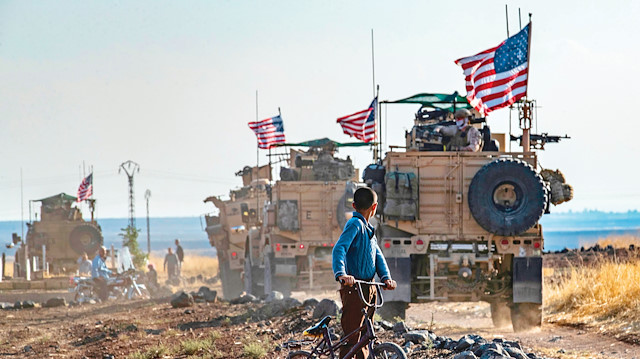

During the 81st UN General Assembly in New York, the rifts between key Middle East actors were once again highlighted and confirmed. The flamboyant US president, employing his trademark style of negotiating in the public eye, sent an optimistic message about an imminent end to the crisis with Iran, while simultaneously threatening the country with annihilation.
As the midterm elections approach, and with the majority of Americans having opposed military action against Iran from the outset, Donald Trump’s approval ratings are plummeting, partly due to the fallout from the now seven-month-long Middle East crisis and its visible impact on the US economy. Consequently, the search for a solution – even a temporary one – to reopen the Strait of Hormuz is to be expected. This need of the US president is well understood by the Iranians (who are, however, facing severe economic hardship) as well as by their allies, such as Russia and China; while not directly involved in the conflict, these nations support Tehran in various ways (with the economic dimension being particularly significant in China’s case). Russian and Chinese satellites have been utilized to enhance the effectiveness and precision of Iranian attacks against US bases in the region; furthermore, Iran continues to be supplied with military hardware by Moscow and Beijing, which also provide classified intelligence regarding US troop movements.
It is widely acknowledged that both powers benefit from the United States being bogged down on a front that imposes a financial burden, depletes defense stockpiles – part of which Ukraine is being deprived of – strains the armed forces’ resilience during a protracted conflict (as evidenced by the eight reported suicide attempts of sailors onboard the USS Abraham Lincoln aircraft carrier strike group), undermines the US image as a security guarantor in the eyes of host nations, severely damages Washington’s prestige, and thereby creates conditions that could alter the status quo in the Middle East.
In fact, the US president recently refused to assist Saudi Arabia in its conflict with the Houthis in Yemen, a critical juncture for Riyadh, given that it is facing attacks on its oil facilities, its capacity to bypass the Strait of Hormuz via the East-West pipeline is being drastically curtailed, and vessels transporting Saudi-linked oil and goods have been targeted, effectively shutting down the vital Bab al-Mandab Strait. Trump’s message is twofold: he has no desire to become embroiled in yet another front in the broader Middle East – by expending any more diplomatic, military, and economic capital to deal with the fallout of a war that was, after all, a personal choice – and, more importantly, he prioritizes American interests over the responsibilities and commitments inherent in his role as an ally to the Gulf states.
The latter are certainly concerned by the general stance of the US, starting with the failure to inform them about military operations against Iran, the reluctance or inability to “finish the job” by overthrowing the regime or at least neutralizing its operational capabilities, and, of course, the failure to defend them against Iranian attacks and, above all, to restore the Strait of Hormuz to its prewar operational state.
Although there is no external power capable or willing to replace, or even partially substitute, the role of the Americans, it is not an exaggeration to assess that US hegemony in the Middle East has begun to wane.
Washington’s initiative to establish a $10 billion investment scheme with eight regional partners is significant; it aims to restore energy infrastructure damaged over the past seven months and to construct and expand pipelines that bypass the Strait of Hormuz. However, implementing this plan will require considerable time and funds nearly 10 times greater than those initially pledged. Given the often superficial manner in which various US-brokered agreements are publicized, there is currently nothing tangible to cement the ties between regional states and the US, or to foster a deeper level of commitment toward Washington.
However, US forces currently stationed at 19 bases, eight of which are permanent, are expected to be withdrawn. This is, first, because these bases have proven highly vulnerable to attacks by low-cost drones and missiles and, second, because they are scattered across various locations; consolidating them geographically makes sense, as it would also facilitate the shift of strategic focus and military resources toward Southeast Asia.
For the time being, whether before or after the US midterm elections, the aim is to find a temporary, transitional framework of understanding rather than a definitive settlement. The issues to be resolved are multifaceted and interconnected, requiring the establishment of a baseline level of trust before gradual resolution can begin and positive momentum can be built. President Trump has realized that starting a war is easier than ending one; a fact borne out by history, given that the majority of armed conflicts over the past 80 years have not resulted in a sustainable diplomatic solution. This is all the more true in today’s Middle East, where numerous scattered fronts, capable of igniting at any moment, remain unresolved.
*Constantinos Filis is an associate professor at the American College of Greece and director of its Institute of Global Affairs.
Source: https://www.ekathimerini.com/opinion/1316908/the-end-of-us-hegemony-in-the-middle-east/