 Emzari Gelashvili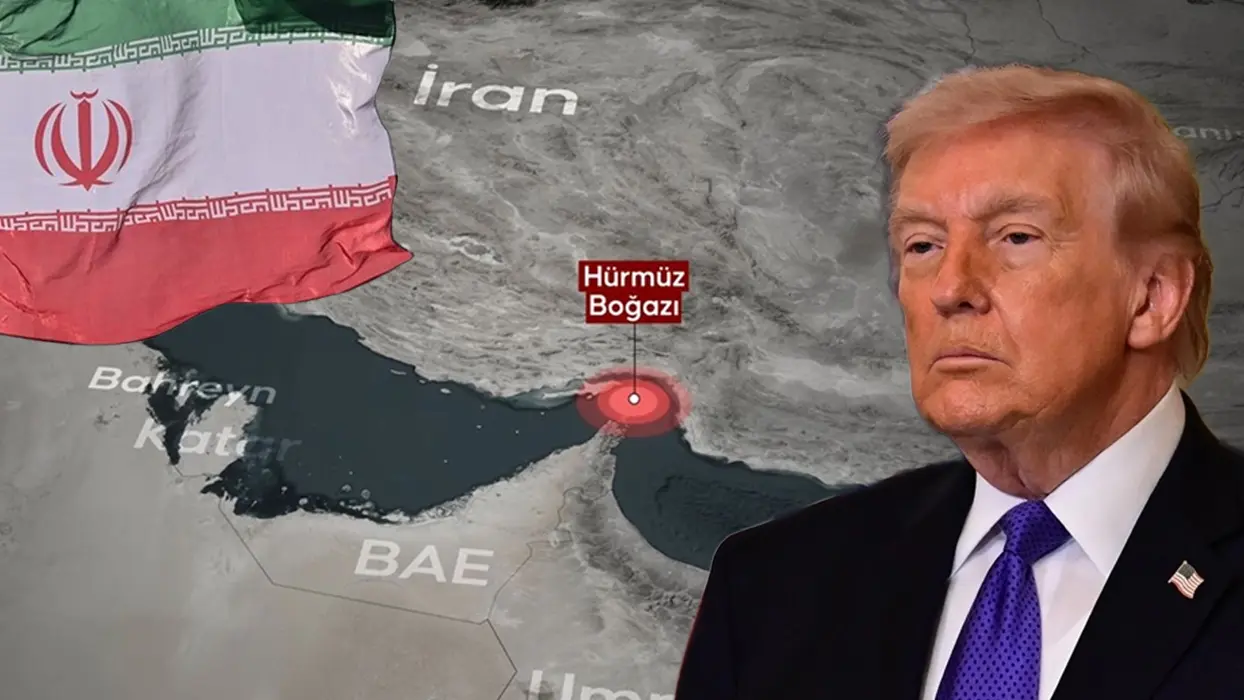

How sanctions, insurance and contracts can shape the Strait of Hormuz before sovereignty does
On August 14, at a police training center in Garden City, New York, the president of the United States told a room of law enforcement officers that he intends to annex a strait.
“After we finish defeating Iran, which is being very badly defeated, pretty soon I’ll be declaring the Hormuz Strait a territory of the United States.” He said it with a chuckle, then added the part that was not a joke: “We have the blockade. No ships get through unless we want them to.”
Four days later he posted a graphic of the strait beneath a banner reading NEW U.S. TERRITORY. Tehran answered that the waterway has been Iranian, is Iranian and will remain Iranian, accusing him of fanciful delusions.
Both men were describing water neither of them owns. Meanwhile the instrument that would actually decide who could afford to sail had already been published in London, in July, in a few lines of contract language that nobody outside marine insurance bothered to read.
I spent my career in Georgia’s security services watching an adversary work this way. Russia rarely announced that it was closing a road. It adjusted a customs regime, found a technical fault in a pipeline, discovered that a border crossing needed maintenance. Later, as a member of parliament for a district on the administrative boundary with the occupied territories, I watched the same method from the receiving end. When a state wants leverage and does not want a war, it reaches for the paperwork.
The method has a name
American and Israeli strikes opened this war on February 28, and it has not ended since. It has paused, resumed, and paused again. I have argued elsewhere that these are not hesitations but operational pauses — intervals in which the bombing stops and nothing else does. The sanctions, the blockade, the corridors and the contracts keep moving on schedule.
The wider method I have called controlled chaos. It does not mean every event is scripted from a single desk. It means the visible signal and the eventual result do not arrive in the order observers expect. One thing is thought, a second is said, a third is done — and a fourth result arrives, which is the one that serves the United States.
The cost of sorting out which signal is operative falls on whoever has to respond. That is not a side effect. That is the product. And on the evidence of the past six months, the fourth result has been arriving with some regularity: an adversary’s export routes narrowed, a proxy’s patron shown to be unable to help, an ally’s unilateral strike converted inside a day into an American-chaired mechanism.
It also explains why the Mecca agreement has been so hard to place. The serious readings of it ask what the document is: whether three states with divergent interests have really built something, whether the institutions will hold, whether the Baghdad Pact is the precedent. Those are the right questions to ask of a treaty. They are the wrong unit of analysis for a week in which a treaty was one of six things that happened, and not the loudest.
So watch the week instead.
On August 14 came the annexation line and the blockade sentence. On the fifteenth, a photograph of the president beside Kim Jong Un and the note that the two of them get along great. On the sixteenth, Jared Kushner sat for two hours in Cairo with Khalil al-Hayya, who became Hamas’s senior political leader in July, to discuss disarmament. On the seventeenth, a meme of Kim at a telephone captioned “we cool, right,” with no text attached — and Kushner in Jerusalem with Netanyahu. On the eighteenth, the NEW U.S. TERRITORY graphic, and Israeli aircraft striking a Syrian airbase a Turkish delegation had inspected the day before. On the nineteenth, the president declared the June understanding with Tehran finished.
Six signals, five days, and at least five capitals with something to work out. Most of it was typing.
Who each signal was for
The blockade language was aimed at Tehran, and past Tehran at Beijing, which takes more than eighty percent of Iran’s oil exports. Pyongyang got two friendly posts inside three days, at the moment American pressure elsewhere was at maximum — a cheap way to keep one adversary quiet while the others are busy.
And Hamas got the president’s son-in-law in a room. That deserves more attention than it received. Hamas did not send a spokesman; Kushner sat with its most senior political figure, and the subject was disarmament. Organizations do not open that conversation while they still believe a patron is coming. Hezbollah has watched the Lebanese army begin locating its weapons. What both now share is the discovery that neither Tehran, nor Beijing, nor Moscow is positioned to shield them.
The instrument that does not look like one
None of that is the most consequential thing that happened, and this is where the method is clearest.
Iran created an entity called the Persian Gulf Strait Authority to collect payments from ships transiting Hormuz. On May 27 the Treasury Department designated it under counterterrorism powers for supporting the Revolutionary Guard, which turned a fee into a sanctions exposure. On July 23 the Lloyd’s Market Association published model wording for marine hull underwriters that excludes cover for fees, tolls and other payments made to facilitate passage through Iranian waters, and the sanctions exposure became an insurance exposure. An insurance exposure, for anyone who has chartered a vessel, is a shipping problem.
Iran can still tell an owner to pay and pass. The market can answer that paying can cost him his cover. Tehran keeps its patrol boats, and the owner keeps his captain, but the arithmetic of the voyage has changed, and not one American warship had to appear to change it.
Then the detail that should have been news and was not. The Joint War Committee, which sets the listed high-risk areas driving war-risk pricing, extended those areas to the Gulf states hosting American bases — on the stated reasoning that those states had become Iranian targets. A commercial risk map, redrawn along the geography of American basing.
And the market did not simply flee. In June, Lloyd’s announced a new marine war-risk consortium for Hormuz traffic. Lloyd’s did not disappear; an American insurer, Chubb, took the lead underwriting position inside a new Lloyd’s market consortium.
The president says he will declare the strait American. The underwriters did not need a declaration.
What the paperwork cannot do
An argument this tidy deserves the objection it invites, and the market supplied it. In March the Lloyd’s Market Association rejected the claim that a shortage of cover was emptying the strait. Underwriting appetite was intact; masters and owners simply did not want to sail into an active war. Of the vessels that kept transiting, more than sixty percent had an Iranian connection or had negotiated Iranian consent.
A contract binds the party who intends to comply with it. It does not reach the party already inside Iran’s system. The instruments do not shut Hormuz. They sort it.
A clause cannot close a waterway. It can change who bears the cost of crossing one, and therefore who is willing to cross. That is power without sovereignty, and it is available to a government long before any territory changes hands.
Where the method shows its seams
On August 18 that argument met its hardest test. Israeli aircraft struck the Abu al-Duhur airbase in Idlib, some forty-five miles from the Turkish border, hours after a Turkish military delegation had left it. Israel did not acknowledge the strike; a military censor barred reporting that confirmed it. What broke the silence was Washington. Tom Barrack, the American ambassador to Ankara and envoy to Damascus, named Israel publicly and called it an unnecessary escalation, later noting that Turkish forces, unaware Israeli aircraft were inbound, might well have scrambled their own.
So much for tidy alignment. Two American partners came within a scramble order of firing on each other, and Washington sided publicly against Jerusalem. Anyone selling a coalition across this region should read that week and stop selling it.
But note what Barrack announced in the same breath: that the United States was standing up a trilateral deconfliction channel between Israel, Syria and Turkey. A unilateral strike by one ally produced, inside a day, a standing mechanism with Washington seated between all three.
One thing was thought, a second said, a third done — and the fourth result put an American chair in the middle of a quarrel it did not start.
The documented case
There is a cleaner example, and it is on paper.
In August 2025, after Ukrainian strikes disrupted the Druzhba pipeline and cut crude to Hungary and Slovakia, Viktor Orban wrote to Trump to complain: Hungary supports Ukraine with electricity and fuel, and in return they bomb the pipeline that supplies us. A very unfriendly move. Trump answered in handwriting on the letter itself — he did not like hearing about it, he was very angry about it, and Orban should tell Slovakia he was a great friend.
The anger was recorded. The strikes continued. And on August 7 of this year the Senate passed the Lindsey O. Graham Sanctioning Russia and Iran Act, naming Hungary and Slovakia among the buyers of Russian oil the president would be authorized to tariff at up to 100 percent. The House must still act before any of it becomes law.
I do not claim the president was insincere. I claim something narrower: his statement was the visible part, and it was not the part that determined the outcome. Analysts who grade this administration on its announcements will go on being surprised by its results.
The campaign describes itself
On August 19 the president supplied the clearest statement of the method anyone could ask for. Announcing what he termed an economic D-Day against Iran — “the most crushing economic operation ever taken against any country,” in his words — he declared the June understanding finished and promised consequences for any nation whose institutions keep Tehran afloat. Then he listed what he meant: oil smuggling, swap lines, cash transfers, exchange houses, ship registries, front companies. It all needs to stop now, he wrote. You know who you are.
Read that list again. Not one item on it is a weapon. Every item is a piece of paper, and the largest audience for the warning is Beijing.
Which is precisely why the fragility of this layer matters more, not less.
The contractual layer of this campaign runs across agencies and across private institutions that no agency commands. Treasury designates an entity. State funds a corridor. The Pentagon supplies deterrence. Underwriters price risk. Shipowners choose routes. Each actor decides rationally, and the aggregate can still be incoherent. Private capacity also moves faster than any government can react to it: a consortium can add capacity in June and withdraw it in a week.
The United States is assembling a strategy out of other people’s contracts, but Washington appears to have no single mechanism tracking when those contracts begin pointing in different directions.
So here is the recommendation, and it is cheap. The administration should stand up an interagency body — housed at the National Security Council, drawing on Treasury, State, Defense and Commerce — that reads sanctions designations, insurance capacity, corridor commitments and maritime traffic as one strategic system rather than four separate files. Its task is not to direct underwriters; that would defeat the purpose. Its task is to know, in something close to real time, where private risk decisions are reinforcing American objectives and where they have quietly stopped.
Without such a body, Washington will learn that its leverage has shifted the way Tbilisi always learned. The pressure never announced itself. It arrived as a tariff schedule, a maintenance notice, a customs form — and by the time anyone named it as coercion, the leverage had already moved. Administrative leverage runs both ways. It is extraordinarily effective, and it is entirely reversible the moment the market changes its mind.
The president can declare a strait American. He cannot declare an underwriter.
That is the part of this war Washington risks undercounting.
*Emzari Gelashvili is a former senior official in Georgia’s state security, defense, and interior ministries, with a career in counterintelligence focused on Russian and Iranian intelligence operations. He served in the Georgian Parliament from 2008 to 2012, representing Kareli, on the administrative boundary with the Russian-occupied territories. His work has appeared in Newsweek, The Hill, the Washington Examiner, RealClearDefense, and RealClearWorld.
Source: https://www.realcleardefense.com/articles/2026/09/02/the_paperwork_got_there_first_1203824.html