 Tanya Goudsouzian - Ibrahim Al-Marashi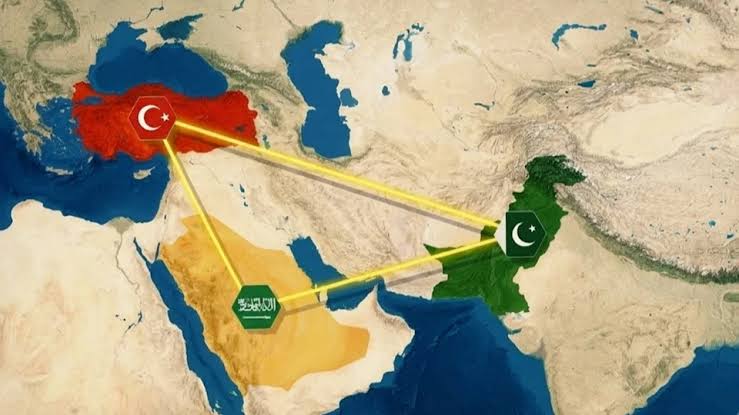

The history of the Middle East is littered with defunct security pacts.
In late 2004, Jordan’s King Abdullah II coined a phrase that would come to define how many viewed the Middle East’s emerging power struggle. Alluding to Iran’s growing regional influence, after the fall of its regional rival, Saddam Hussein’s Iraq, the Jordanian monarch warned of a “Shia Crescent” stretching from Tehran through Baghdad and Damascus to Beirut. This corridor, he declared, threatened to disrupt a longstanding balance of power, albeit one that had arguably served Western interests as well as those countries under the US security umbrella. Two decades later, the regional landscape is once again in flux.
On August 7, Pakistan, Saudi Arabia, and Turkey signed a joint defense agreement pledging that an attack on one will be treated as an attack on all, much like NATO’s Article 5. As it was signed in Mecca, Islam’s holiest city, almost immediately, some began describing it as the beginnings of a “Sunni NATO,” or more provocatively, resurrecting talk of a new “Sunni Crescent.” The comparison makes for great headlines, but is this really a sectarian realignment, or something more pragmatic?
It is telling that neither Egypt nor Iraq has yet signed on to the grouping, while Azerbaijan, a Shia-majority state, is reportedly considering joining. A closer look at the three countries, and at the history of past alliances, shows that this new triumvirate has far more in common than faith.
International relations theory can offer a lens to examine whether the alliance will endure. A realist view holds that fundamental security concerns in a competitive international environment ultimately drive a nation’s foreign policy. A liberal institutionalist view, by contrast, focuses on how cooperation and international organizations can help manage conflicts through collective security. Constructivists take a different approach, arguing that ideas of competition and cooperation are constructs, imagined by political elites and publics.
For example, for two decades, the phrase “Shia Crescent” has been casually invoked by Western journalists and policy analysts when interpreting conflicts in Iraq, Syria, Lebanon, Bahrain and Yemen. It framed these conflicts as contemporary manifestations of an epic sectarian showdown between Sunni and Shia powers, a view that some have rightly dismissed as fearmongering. The “Arab Spring” uprisings that swept the region after 2011 further entrenched this interpretation, with the resultant conflicts described as part of a “sectarian Cold War.” Such language implied that sectarian conflicts were primordial and rooted in an irreconcilable Sunni-Shia divide.
The constructivists critically examine how these sectarian identities are constructs used by elites to mobilize political actors in response to specific crises. Constructivists would argue this framing is inaccurate and misleading. Iran’s support for Christian Armenia over Shia Azerbaijan, for example, is often cited as evidence that Tehran’s foreign policy cannot be reduced to sectarian solidarity. At the same time, there have been intra-Arab Sunni fights, whether between Saudi Arabia and Qatar, and later between the United Arab Emirates and Saudi Arabia. The same distinction applies when assessing the Mecca Pact. Pakistan, Saudi Arabia, and Turkey may be Sunni majority countries, but faith alone does not explain or ensure the durability of the alliance.
From a realist perspective, the behavior of all three countries makes more sense in terms of their interests than in terms of their identity or sect. Saudi Arabia is looking for credible security guarantees after years of regional wars, and attacks on Gulf infrastructure have raised questions about the reliability of American security umbrellas.
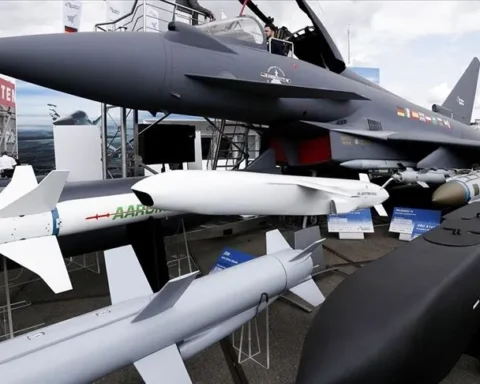
Turkey doubts whether its fellow NATO members will come to its defense. Pakistan brings a large and experienced military, including a nuclear arsenal, defense ties with Beijing and Riyadh, and strategic links across the Gulf. Turkey adds NATO membership, a substantial military, a growing defense industry, and its own ambitions for a greater regional role. These national interests can overlap without being reducible to sectarian solidarity, which renders premature any talk of a new “Sunni Axis.”
Pakistan, which maintains longstanding ties with Iran, has stressed that the agreement is “purely defensive,” while Turkey has said explicitly that it is not directed against Tehran. Nor are any of the three signatories seeking to confront or encircle Iran. Pakistan and Turkey both maintain substantial political, economic and security ties with Tehran, while Saudi Arabia restored diplomatic relations with Iran in 2023 thanks to Chinese mediation.
All three Mecca Pact states also have significant Shia populations, further complicating any attempt to cast the agreement as a straightforward Sunni counterweight to Iran. None of the three countries endorsed the US-Israeli war against Iran, with Pakistan sending its premier to attend the Supreme Leader’s funeral. As such, what is emerging is a hedging exercise by three powers that no longer assume regional security can rest on a single external guarantor.
There is a clear contrast between the Mecca Pact and the Abraham Accords, the latter being another example of constructivism that leverages the Abrahamic faiths to build a political alliance. It sought to reshape West Asia through diplomatic normalization with Israel, opening new channels for trade, investment, and security cooperation. The Mecca Pact takes a different route, building a security relationship among three Muslim powers around mutual defense.
The Abraham Accords represented one vision of a new regional order, while the Mecca Pact represents another. The distinction is ultimately between two different approaches to regional alignment, one centered on normalization with Israel and the other on Muslim collective security cooperation.
The liberal institutional school focuses on the role of international organizations, such as the United Nations, the European Union, and NATO. A historical precedent offers a cautionary note of constructing the Mecca Pact as a “Sunni NATO.” Egypt, once the leader of the Arab world, was the linchpin of the 1945 Arab League, which included all 22 Arabic-language states. Still, it did not join the Mecca Pact—and not “for lack of an invitation.” The 1955 Baghdad Pact brought Iraq, Turkey, Iran, Pakistan and the United Kingdom together in a Western-backed security arrangement to prevent Soviet influence from reaching the Middle East. On paper, it looked formidable. In practice, competing interests, nationalist opposition and a rapidly changing regional environment weakened it, while Iraq’s 1958 revolution effectively destroyed its original political foundation.
The Mecca Pact may not be destined to follow the same path, but it is worth remembering that alliances built around a shared threat can prove less durable than those grounded in genuinely shared interests. Mecca is also different in that it is not a Western-sponsored containment pact, but an effort by regional powers to build their own collective security architecture. Still, the Baghdad precedent counsels against declaring a new axis before the agreement’s institutions, military coordination and political commitments have been tested.
The wars in Gaza, Iran, Syria, Yemen and elsewhere have challenged the assumption that regional security can be outsourced to Washington. Saudi Arabia, Pakistan, or Turkey are not necessarily abandoning their relationships with the United States, but they want to avoid dependence on a single external guarantor. It is too simplistic to label the Mecca Pact a “Sunni Axis,” when it is part of a larger shift away from a US-dominated security architecture towards a more crowded, flexible, and self-reliant regional order.
The three signatories have distinct national interests, nuanced relationships with Iran and the United States, and different ambitions for the region. The agreement could ultimately become a powerful new security arrangement. It could also become another historical footnote like the Baghdad Pact. Its durability will depend on whether Saudi Arabia, Pakistan, and Turkey can turn a common sense of insecurity into shared strategic interests.
*Tanya Goudsouzian is a Canadian journalist who has covered Afghanistan and the Middle East for over two decades. She has held senior editorial roles at major international media outlets, including serving as opinion editor at Al Jazeera English. Her work has also appeared in The National Interest, Responsible Statecraft, War on the Rocks, The New Arab, and Engelsberg Ideas.
**Ibrahim al-Marashi is an associate professor of Middle East history at California State University, on the board of the International Security and Conflict Resolution (ISCOR) program at San Diego State University, and a visiting faculty member at The American College of the Mediterranean and the Department of International Relations at Central European University. His publications include Iraq’s Armed Forces: An Analytical History (2008), The Modern History of Iraq (2017), and A Concise History of the Middle East (2024).
Source: https://nationalinterest.org/blog/middle-east-watch/why-the-mecca-pact-is-not-a-sunni-nato