 Arash Beidollahkhani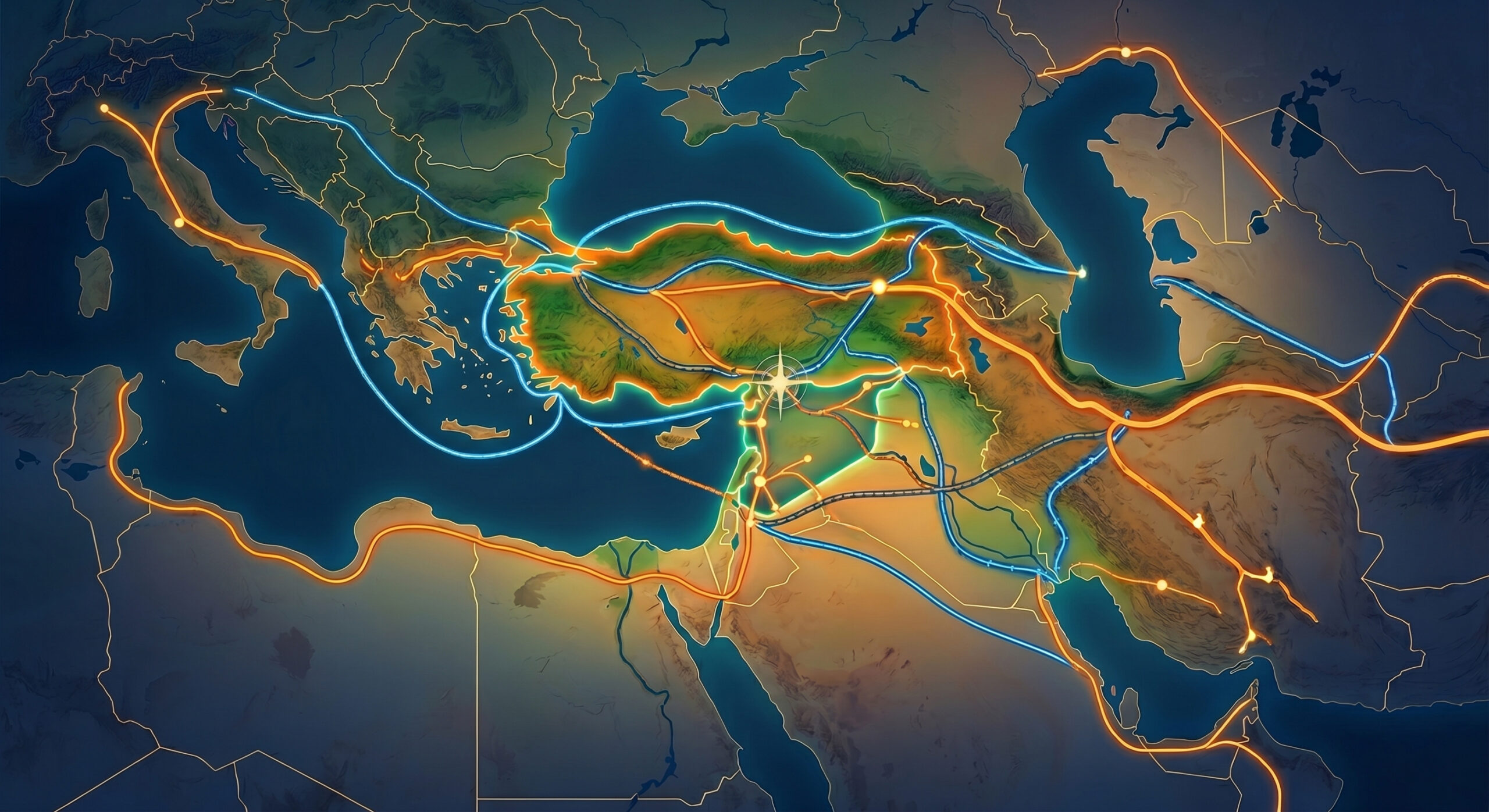

The Iran war has not made Afghanistan and Pakistan central battlefields, but it has turned them into exposed pressure points: Pakistan as a constrained mediator, the Taliban as a pragmatic neighbor of Tehran, and the wider region as a corridor of refugee, maritime, and militant risk.
The Iran war is usually read westward: toward Israel, the Gulf, Washington, and the Strait of Hormuz. But its quieter eastern front runs through Herat, Quetta, Karachi, Gwadar, Chabahar, and Kabul. Afghanistan and Pakistan are not peripheral observers. They are shock absorbers. Every escalation around Iran travels east through fuel prices, refugee expulsions, border anxieties, militant narratives, and competing corridor politics.
Pakistan’s role is the most visible. Islamabad has tried to present itself as a mediator rather than a party to the war. That posture is not empty. Pakistan has repeatedly sought diplomatic space between Tehran, Washington, Riyadh, and Beijing, while also trying to protect maritime trade and energy flows. The Pakistan Navy’s launch of a shipping-security operation amid Middle East tensions showed that Islamabad understood the crisis first as a sea-lane problem, not just a diplomatic one. Pakistan’s economy cannot easily absorb a prolonged disruption in Gulf energy routes; about this, Islamabad’s mediation is inseparable from its vulnerability.
Yet Pakistan is not a neutral Switzerland of South Asia. Its Gulf ties, especially with Saudi Arabia, complicate any claim to impartiality. Its strategic geography pulls it toward Iran; its military and financial networks pull it toward the Gulf monarchies; its dependence on China pushes it toward stability in maritime and overland corridors. The result is a double game that is not necessarily cynical, but structurally unavoidable: Pakistan must talk like a mediator while behaving like a state under economic siege.
For the Taliban, the Iran war has produced a different calculation. Kabul has not become an Iranian proxy. That claim would exaggerate the relationship and ignore the deep ideological, sectarian, border, and water tensions between the Taliban and Tehran. What has emerged is narrower but still important: a working arrangement of necessity. Iran’s foreign minister visited Kabul in January 2025, the first such visit in eight years, and discussed border tensions, Afghan refugees in Iran, water rights, and economic ties with Taliban officials. That visit established the basic pattern: neither recognition nor alliance, but practical coordination under pressure.
During the Iran-US/ Israel war, Afghanistan’s exposure became immediate. Iran is a key commercial route and supplier for Afghanistan, and Kabul began looking to Russia for some food supplies as the conflict threatened trade and basic commodity flows. This was not ideological alignment with Tehran; it was emergency hedging by a landlocked regime whose economy remains dependent on neighbors it does not fully trust.
During the June–July 2026 war, Afghanistan emerged as one of Iran’s quieter but more reliable eastern partners. Kabul did not become an Iranian proxy, but the Taliban’s conduct helped keep Iran’s eastern frontier relatively stable at a moment when Tehran was under pressure elsewhere. Moreover, many Afghan political figures from different groups supported Iran during the war and condemned the US attack.
Iranian officials appear to have responded with a more accommodating posture toward Kabul, including promises to expand visa and labor arrangements for Afghan migrants, maintain practical channels over fuel and oil supplies, and preserve cross-border trade. Tehran also facilitated Afghan participation in Khamenei’s funeral ceremonies, reportedly issuing special entry permits and allowing large numbers of Afghans to travel to Iran.
Shifting Risk Outlooks in South Asia
This bargain also changes the risk map of South Asia. If Afghanistan is increasingly pulled into Iran’s postwar security orbit, while Pakistan remains locked in coercive border politics and India and China compete over corridor access, the eastern front of the Iran war becomes less a battlefield than a zone of cumulative destabilization.
This is where the war becomes dangerous for South Asia. The risk is not simply that Iran’s conflict expands militarily into Afghanistan or Pakistan. The more plausible danger is cumulative destabilization: refugee surges, food insecurity, energy security, anti-Shia and anti-Western militant propaganda, Balochistan insecurity, cyber-espionage, and maritime disruption feeding into one another. In Pakistan, instability in Balochistan already intersects with Chinese interests, CPEC infrastructure, and the security of Gwadar. Any perception that Iran is weakened, Pakistan overstretched, or Afghanistan permissive can be exploited by militant actors moving between ideological theatres.
India’s exposure is different but serious. New Delhi is vulnerable to energy-price shocks, threats to Indian seafarers, and disruption in the western Indian Ocean. It also has strategic investments in Iran’s Chabahar port, which India has long viewed as a route to Afghanistan and Central Asia that bypasses Pakistan. The recent US strikes on Chabahar have therefore deepened Indian anxieties: the very port India has invested in as an alternative to Pakistan is now being pulled into the war. For Islamabad, this is not an unwelcome development. The weakening of Chabahar indirectly strengthens the relative value of Pakistan’s rival Gwadar port, giving Islamabad a strategic advantage in the corridor competition between the two ports. If Chabahar becomes riskier while Gwadar remains securitized and Pakistan-aligned, India’s westward connectivity narrows. That affects not only trade but India’s geopolitical imagination of access to Afghanistan after the Taliban’s return.
China’s risk lies in the opposite direction. Beijing wants calm: secure energy, protected Pakistani infrastructure, no militant spillover into CPEC, and no wider maritime crisis that raises the cost of Gulf dependency. China can tolerate authoritarian regimes, ideological contradictions, and pragmatic bargains. What it dislikes is corridor unpredictability. The Iran war places pressure on every corridor China cares about: Hormuz for energy, Pakistan for CPEC, Afghanistan for minerals and security depth, and Central Asia for overland alternatives.
The Taliban may try to benefit from this environment by presenting itself as a necessary regional interlocutor. Kabul can tell Iran it is a responsible border partner, tell China it can provide security guarantees, tell Pakistan it can help manage militancy, and tell Russia or Central Asian states it can diversify trade routes. But this is a fragile performance. The Taliban’s domestic repression, especially against women, its treatment of returnees, and its inability to govern a massive humanitarian influx all weaken its claim to regional responsibility.
The Iran war therefore should not be read only as a Middle Eastern war with South Asian side effects. It is becoming a corridor war: a struggle over who can keep routes open, populations contained, borders quiet, and political narratives under control. Afghanistan and Pakistan sit precisely where these pressures meet. Pakistan wants to mediate without being dragged in. The Taliban wants to coordinate with Iran without becoming subordinate to it. India wants access without exposure. China wants corridors without chaos.
That balance is unlikely to hold cleanly. The eastern front of the Iran war will not be defined by tank battles or formal alliances. It will be defined by deportation buses, escorted tankers, closed crossings, delayed wheat shipments, militant communiqués, and anxious diplomats trying to keep corridors alive. In that sense, the war’s most durable consequences may be felt not in Tehran or Tel Aviv, but along the roads and borders that connect Iran to Afghanistan, Pakistan, India, and China.