 Dr. Ralph L. DeFalco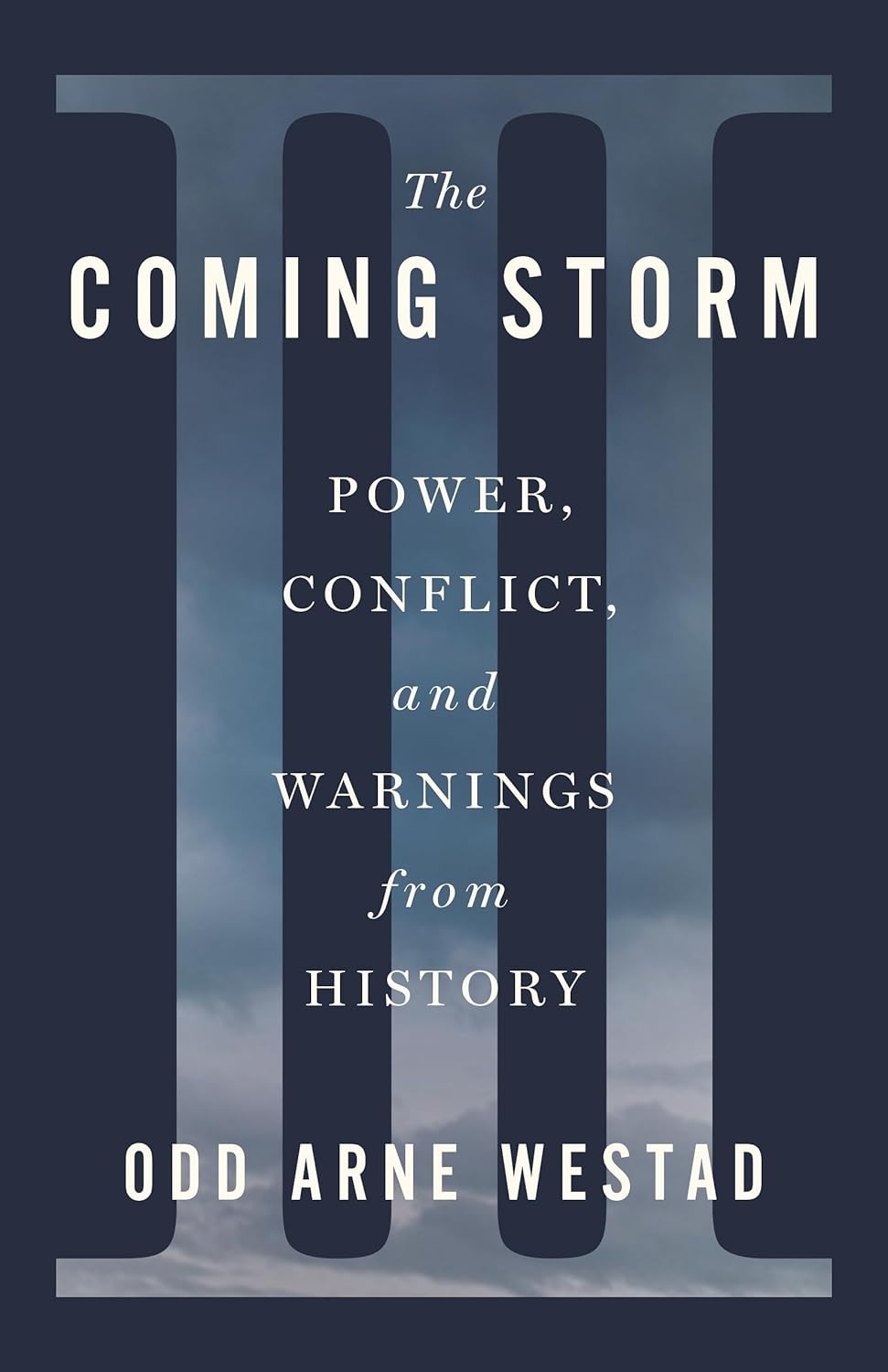

In our present moment of global upheaval, it’s becoming fashionable to invoke parallels to previous episodes of global crisis. Commentators routinely compare the United States’ political situation to the late Roman Republic just before its slide into Caesarism. Others suggest 1920s Weimar Germany is a more apt comparison with its violent factionalism and loose morals. At the international level, one can find as many comparisons to the Cold War as one can to nineteenth-century Europe. Some, however, are now suggesting that the international situation bears a more striking resemblance to the years preceding the First World War. That period in history—fraught with the rise of strident nationalism, fears of globalization, economic disparities, and ethnic tensions—is not unlike the present day. This, at least, is the argument of noted historian Odd Arne Westad in his most recent book, The Coming Storm: Power, Conflict, and Warnings from History.
Given Westad’s established expertise in international history and contemporary international affairs, the book holds the promise of genuine insights. Westad is the Elihu Professor of History and Global Affairs at Yale University and author of several volumes that include works on the Cold War and Chinese and East Asian history. His book, The Global Cold War (2006), won the Bancroft Prize for its examination of Third World interventionism and recast the prevailing Euro-centric interpretations of that era with original perspectives on proxy wars and outright engagement in Africa and Asia. It has become one of the standard histories of the conflict.
The Coming Storm, as described in Westad’s introduction, is a book in three interlinked parts. The first part is intended to describe the emergence of today’s multipolar world and especially of China’s rise to power. The second part is supposed to deal with the “fears that the rise of other powers, and especially China,” has created around the globe and especially in the United States. The third part of the book is retrospective. It explores the risks of Great Power conflict today in the light of lessons learned from the outbreak of World War I. The problem here is that these linkages are frail, not wholly developed, and interlaced with a narrative that bogs down in a tedious recital of the origins and personalities of the First World War.
Historical Analogy
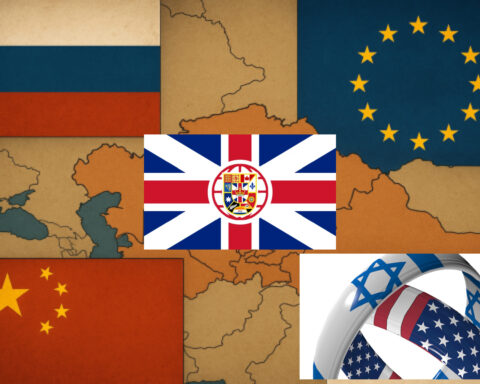
Westad’s central thesis is that the world today is perilously positioned in a time of rising Great Power competition, much like the period leading up to the First World War. In this analogy, China is the rising continental power, like Germany at the beginning of the twentieth century, self-assured but anxious, entitled to regional influence, eager to expand its growing economic and military power, and wary of being encircled by potential adversaries. Russia is compared to the fading Austro-Hungarian empire, with Putin fired by an ethno-religious “Russian nationalism … to control as much as possible of the territory that belonged to the Russian Empire and to be recognized as a Great Power.” In this scenario, the United States is likened to a declining Britain, beset by economic and social ills, and riven by political factionalism.
The problem with this approach, as Miles Kahler has written, is that “toying with historical analogies is at best an imprecise exercise, at worst a polemical game.” In this case, Westad repeatedly undercuts his analogous arguments. For example, he readily acknowledges that the United States is “still the most important global power,” but then hedges that assessment by claiming—largely based on Pew surveys—that the country is “deeply uncertain about its role in the world and insecure about its domestic and imperial order.” He also claims the United States today has relations with its allies that can be likened to Britain’s relations with France and Russia after 1907. Then the author backtracks by admitting “the NATO alliance and the alliances with Japan and South Korea are much more established and integrated than the Triple Entente.”
Westad also devotes nearly a third of the book to revisiting the causes of World War I and the “political aims, alliances, and military planning” that constituted Great Power strategy one hundred years ago. This attempt to illustrate how the “fears and resentments” and personalities of that time are comparable to our own time is, instead, a ponderous and repetitive narrative that adds little to our understanding of the threats to peace and stability in today’s multipolar world. In one such instance, likening the “authoritarian instincts” of Xi Jinping to those of the mercurial and hot-tempered Kaiser Wilhelm II because of their shared “dislike for democrats, business leaders, working-class organizers, student activists, and regional power-holders,” obscures Xi’s coldly calculated use of his dictatorial powers and his ruthless control of the Chinese Communist Party. Any comparison between the two is extremely limited, even misleading.
Flashpoints
The Coming Storm only offers genuine insights when it moves from historical analogies to a sharper, more direct analysis of contemporary issues. For example, Westad examines the likely flashpoints for conflicts among rising states and Great Powers. He argues that economic growth, demography, education levels, market integration, and rising prosperity in Southeast Asia will make this “the most important region of the world” in the twenty-first century. It will also be, he claims, a region “caught in the increasingly intense geopolitical rivalries between the United States, China, and India,” and an “enduring fear of Chinese domination.”
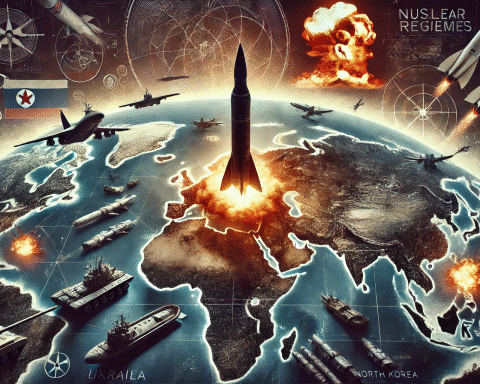
Westad makes the case that Taiwan, Korea, the Philippines (South China Sea), and the Sino-Indo-Pakistani regions are primed to be the catalyst for conflict with China that would lead to wider wars and Great Power confrontations. Against this backdrop, and while acknowledging the war in Ukraine and continued upheaval in the Middle East, Westad contends that a curious complacency has lulled world leaders into believing that Great Power war in the twenty-first century is highly unlikely. Accordingly, “the belief that there are only a couple of issues for which the major powers may go to war is less and less accurate and … the chances of leaders being blindsided … are increasing.” What issues warrant open warfare are left unsaid.
Unfortunately, only a portion of the book includes this welcome level of contemporary analysis on the heightened risk of Great Power conflict. Nor does the author fully expand on his suggested five-part plan to avoid war—including compromise, arms limitations, and cooperation—hinted at in the book’s introduction. The currency of Westad’s commentary on the sources, causes, and ways to head off Great Power war in the twenty-first century is tiresomely interrupted by a return to the century past. The historical analogy Westad crafted here is muddled and, at best, only tangentially applicable to the current geopolitical setting. The author repeatedly hedges his assessments in a narrative threaded with equivocations and guarded qualifications. As a result, The Coming Storm is a book that struggles to find its footing as either warnings from history or as a warning of war on the near horizon.
Source: https://lawliberty.org/book-review/are-we-back-to-1914/